'%3E%3Cpath d='M16.3574 35.6519H12.9537L15.0491 18.8873L16.3574 35.6519ZM30.4229 54.0093L22.309 0.994385H7.91795L0 54.0093H10.6634L11.5802 46.3855H17.4014L17.9914 54.0093H30.4229Z' fill='%23971B20'/%3E%3Cpath d='M48.2073 41.8813C48.2073 43.4049 47.4892 44.0011 46.1144 44.0011H43.7595V11.0687H46.1144C47.4892 11.0687 48.2073 11.6636 48.2073 13.1885V41.8813ZM59.5273 43.6695V11.3326C59.5273 3.71323 53.5729 0.994385 47.8157 0.994385H31.7213V54.0093H47.8157C53.5729 54.0093 59.5273 51.29 59.5273 43.6695Z' fill='%23971B20'/%3E%3Cpath d='M90.183 0.994385H78.6039L75.0711 30.6157L71.9955 0.994385H59.4346L69.2474 54.0093H80.373L90.183 0.994385Z' fill='%23971B20'/%3E%3Cpath d='M107.063 42.3448C107.063 43.7359 105.951 44.5974 104.643 44.5974C103.269 44.5974 102.157 43.7359 102.157 42.3448V12.658C102.157 11.2676 103.269 10.4058 104.643 10.4058C105.951 10.4058 107.063 11.2676 107.063 12.658V42.3448ZM119.233 43.2723V11.7312C119.233 6.36384 112.952 -3.8147e-06 104.643 -3.8147e-06C96.2667 -3.8147e-06 89.9867 6.36384 89.9867 11.7312V43.2723C89.9867 48.6393 96.2667 55 104.643 55C112.952 55 119.233 48.6393 119.233 43.2723Z' fill='%23971B20'/%3E%3Cpath d='M150.976 43.9349V33.7309H139.069V42.3448C139.069 43.7359 137.957 44.5974 136.582 44.5974C135.076 44.5974 133.964 43.7359 133.964 42.3448V12.658C133.964 11.2676 135.076 10.4058 136.582 10.4058C137.957 10.4058 139.069 11.2676 139.069 12.658V21.2723H150.976V11.0687C150.976 5.70107 145.283 -3.8147e-06 136.582 -3.8147e-06C127.75 -3.8147e-06 121.796 5.70107 121.796 11.0687V43.9349C121.796 49.3022 127.75 55 136.582 55C145.283 55 150.976 49.3022 150.976 43.9349Z' fill='%23971B20'/%3E%3Cpath d='M167.478 35.6519H164.076L166.17 18.8873L167.478 35.6519ZM181.544 54.0093L173.432 0.994385H159.037L151.123 54.0093H161.785L162.704 46.3855H168.523L169.114 54.0093H181.544Z' fill='%23971B20'/%3E%3Cpath d='M205.412 10.4058V0.994385H177.081V10.4058H185.392V54.0093H197.428V10.4058H205.412Z' fill='%23971B20'/%3E%3Cpath d='M230.002 54.0093V43.9349H218.914V31.8746H226.635V21.8028H218.914V10.4058H230.002V0.994385H206.875V54.0093H230.002Z' fill='%23971B20'/%3E%3C/g%3E%3Cdefs%3E%3CclipPath id='clip0_260_7080'%3E%3Crect width='230' height='55' fill='white'/%3E%3C/clipPath%3E%3C/defs%3E%3C/svg%3E)
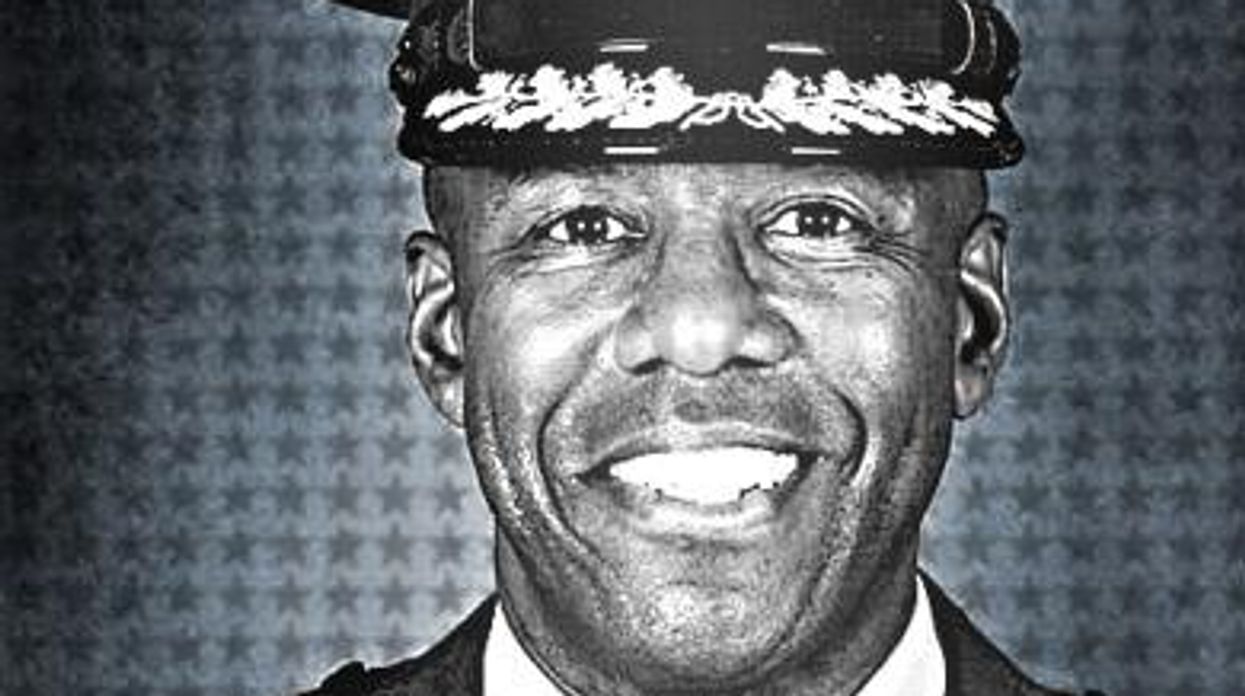

The Senate Armed Services Committee held a confirmation hearing Thursday for Clifford Stanley, a retired Marine general who has been nominated as undersecretary of Personnel and Readiness within the Department of Defense -- the position that oversees the "don't ask, don't tell" policy.
Stanley served 33 years in the U.S. Marine Corps, became the Marines' first African-American regimental commander, and retired in 2002 as a two-star general. Most recently, he was the president of Scholarship America, the nation's largest nonprofit, private-sector scholarship organization.
The military's gay ban was one of the main points of inquiry during the hearing, with Republican senator John McCain of Arizona, ranking member on the committee, providing the opening salvo on the issue.
"I would be remiss if I didn't mention a challenge that will probably fall under your purview, and that would be changing the DOD's homosexual conduct policy," McCain said during his opening statement, adding that he believes the current policy works. "I would be opposed to any attempt at modifying the existing policy in ways that will harm military readiness, placing upon the shoulders of military leaders an extra burden they simply do not need."
But Democratic senators were the only members of the committee who directed questions on the matter to Stanley, whose answers generally provided little insight into his personal views.
Sen. Carl Levin of Michigan, the committee's chairman, noted that Stanley would be responsible for implementing any change in the policy as well as studying the issue and making recommendations.
"Will you give us your best objective opinion on the question of whether or not 'don't ask, don't tell' should be maintained or dropped," asked Levin.
"Yes, senator, I will," Stanley answered.
Sen. Mark Udall of Colorado said that when President Barack Obama pledged last month to end the ban, he "sent a clear message to every service member in uniform -- straight and gay, regardless of service or rank -- that this change was coming."
Udall noted that some Congress members believe the president may include repeal of the policy among the recommendations he submits to Congress for next year's Defense budget.
"Is that a recommendation that you are prepared to support?" Udall asked.
"Senator, I clearly recognize that this is a very sensitive issue, it is an issue that I'm prepared to address if confirmed," Stanley answered. He listed a number of sources from whom he would seek input on the matter, including the Pentagon, Congress, the respective service chiefs in particular, and military experts.
"This is a very very challenging subject, but one that I know we can get our arms around," said Stanley. "I have to provide, based upon that input, a recommendation to Secretary Gates."
Sen. Roland Burris of Illinois questioned Stanley about how he would treat pending discharges, a potential reference to the fact that Defense secretary Robert Gates is looking into ways to soften implementation of the policy.
"They would fall under the existing statute, as I understand it," said Stanley.
Burris responded, "We're hoping we can get something done in this Congress with reference to that that would free up your hands, because we need all volunteers who will commit to serve this country of ours to be able to serve and to serve in a capacity that's honorable."
Nearly every senator expressed concern about the stress and strain of
conducting two wars on the troops and their mental health. Stanley
shared their concern and said that maintaining an all-volunteer force
was his "number 1" priority.
Following the hearing, Aubrey
Sarvis, executive director the pro-repeal lobby group Servicemembers
Legal Defense Network, said he was disappointed but not surprised that
Stanley wasn't more definitive in his answers on the policy.
"Obviously,
General Stanley's objective today was to get through the hearing and to be
confirmed without any controversy," Sarvis said.
Sarvis added
that he was not personally aware of Stanley's view on repeal but that
sources on the Hill have suggested he supports overturning the policy.
"I
understand that the president's views on 'don't ask, don't tell' were
discussed with Dr. Stanley and that they are in alignment," said Sarvis.
Sarvis
expects that the Senate's first "don't ask, don't tell" hearing will
take place next month, and he said congressional leaders were in the
process of figuring out how to formulate the panels.
"I think
they are talking about Secretary Gates or Admiral Mullen, so just those
two by themselves could be a full hearing," he said, adding that the
Senate may in fact hold more than one hearing.
If the president
does include repeal of the gay ban in his policy recommendations to the
armed services committees, Sarvis said that would happen around January
or February of next year.
"I think that would be a real viable
place for the president and for the Defense Department to indicate
clearly and precisely what they want to receive on 'don't ask, don't
tell,'" he said.