

Once a star high school quarterback, transgender filmmaker Kimberly Reed wants to march in your pride parade and wield her newfound power like Oprah.
February 26 2010 12:00 PM EST
November 17 2015 5:28 AM EST
By continuing to use our site, you agree to our Private Policy and Terms of Use.
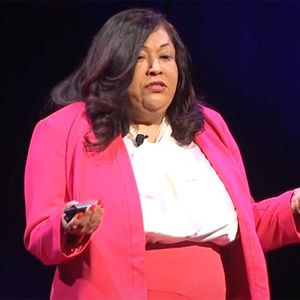
Remember the hot captain of your high school football team -- the class president and valedictorian voted most likely to succeed? If you grew up in Helena, Mont., that might be Kimberly Reed, a lesbian filmmaker now living in Brooklyn. Born Paul McKerrow but no longer hiding behind the drag of helmets and cleats, Reed displays her true identity at her 20-year high school reunion in Prodigal Sons, which reconciles her male past with her female present. Reed's documentary and directorial debut also explores her relationship with her younger gay brother and a longtime rivalry with her adopted older brother, a brain injury survivor who -- no joke -- discovers he's the grandson of Orson Welles and Rita Hayworth. An international film festival favorite opening February 26 in New York City, Prodigal Sons will air this summer on the Sundance Channel. Reed explains the politics of "passing" and why she's no Chaz Bono.
Advocate.com: Before we discuss your film, let's talk about the fact that you recently appeared on The Oprah Winfrey Show, where Oprah sang Beyonce's "If I Were a Boy" to your face.
Kimberly Reed: [Laughs] That was really weird. That was the only time I was afraid up there, because I was afraid she was going to ask me to sing. That whole experience was pretty intense -- it was my first trip to Chicago -- and it all happened very fast. I really think my mom stole the show; what she said was awesome. But this whole thing's like a roller-coaster ride, so I'm just trying to hang on.
I first learned about you and Prodigal Sons from reading your six-page profile in the January issue of Details. Since it's a men's magazine, the article focuses heavily on your previous life as a golden-boy jock. How did you feel about that piece as an introduction to much of the world?
Rick Moody is a great writer, so it was an honor to have him tell my story. I was a big fan of his writing even before I met him at the Yaddo artists' colony. I love his elevated style of writing -- he gets enamored with his subjects and runs wild with them -- so it was cool to see him do that with our story. A lot of the article was about my days in high school -- the glory days and stuff like that -- but that is a big part of my story and a big part of the film.
The Details piece points out that you can "pass," which is a term you use yourself in the film. Talk to me about your idea of passing, because that notion is often considered counterproductive or offensive within the gay community.
In the trans community, it may be issue number 1 -- a big, big issue. It's exhilarating when you do pass, and it feels so right, so it's something that you really love. I don't really think about it anymore, but I certainly did at first. That idea operates differently in the trans community. If you're gay and trying to pass as straight, it might seem like you're trying to fit in and pretending to be something you're not. But in the trans community, passing isn't about being something you're not; it has more to do with being seen for who you really are.
You speak in the film about how the majority of trans people don't acknowledge their pre-transition lives, even going so far as to burn childhood photos in some cases. So it's safe to say that there are very few trans people who would not only attend their high school reunion but also make a documentary about reconciling with that past.
Yeah. And I think part of the audacity to do that involves erasing the issue of me being trans and speaking to human issues that we all have. We all have a history, and we all grow, change, and then have to figure out how to fit back into our families, which causes an enormous amount of tension. On one hand, our film is very specific and unique with a lot of crazy stuff going on -- my story and my brother's story is not typical -- but we've been taking the film to festivals all over the world, and it's really cool to see audiences of different cultures and religions connect with a message that isn't lost on those specifics. There's a much bigger, more universal story about family.
Because that sort of self-reflection isn't typical trans behavior, have you gotten any negative feedback from the trans community?
I can honestly say -- and I'm knocking on wood here -- there has been a flood of e-mail and Facebook messages, and I haven't gotten a single negative comment. I forward the messages to my mom because they've all been so great. A lot of people tell me about how they couldn't talk to their parents about being trans, but then they watched the film together and now they can talk about it. Somebody even said to me, "You just made life easier to live." I mean, how can you beat that?
Calpernia Addams, a trans entertainer, has a popular YouTube video called "Bad Questions to Ask a Transsexual," which details the many taboo topics to avoid when speaking to a trans person. Are there things that one should just never ask you, or do you welcome natural curiosity about your situation?
Both. Curiosity is good, but there are certain things you wouldn't ask any other stranger you bumped into on the street, so I do draw lines. In general, people put too much emphasis on the surgery -- and there are probably multiple surgeries, and it's not all about the genitals. That's private. It is odd to have a complete stranger come up and initiate a conversation about your genitals. That's an awkward position to be in.
You could have used your film as an opportunity to answer a lot of questions people have on the actual transition process, but you skipped over those details.
It was a conscious decision to not get bogged down in that. There are films that do that very well, but there aren't a lot of films that talk about the post-transition experience, especially a decade later. But that sense of renewal, change, and reinvention is something anyone can relate to on some level. You don't have to change your sex to reinvent yourself. Some people do it with a haircut or a new pair of socks.
Oprah, of course, went there with those personal questions. Was it difficult to discuss details of your physical transition on national television?
This film is the hardest thing I've ever done, and it involves me being really open about my story. We've been showing this film all over the world for the past year and a half, so I'm used to putting my story out there. I've made peace with my past, even if part of it was male. So I wasn't really breaking new ground on Oprah, but it did feel like I was reaching new people, which was incredible.
When it comes to your particular story, people seem most fascinated with the fact that you identify as a lesbian. Why can't people wrap their brain around that?
Because people conflate your identity with your sexual preference. A lot of gay people have to sort those two things out -- just because you're a man doesn't mean you can't fall in love with a man or sleep with a man, and just because you're a woman doesn't mean you can't fall in love with a woman or sleep with a woman. So if you can accept homosexuality, you should be able to accept that someone would change their gender but still be attracted to the same people.
Whether you like it or not, your film makes you a poster child for the trans community. Are you comfortable being a role model and becoming more involved with trans activism? You'll no doubt be asked to march in pride parades all over the land.
Yeah, and I will. Call me! I'm ready. I remember when I was first trying to figure all this out. I was in, like, sixth grade, sneaking into the local public library to look at all the horrible '50s books on "transvestism" -- such a horribly outdated clinical term -- hiding them behind a magazine so no one would see me reading every single word. There was no Internet, so I felt like I was the only one going through this, and it was so alienating and difficult. I wish I had had role models when I was growing up. So if the film gets exposure and some of that exposure falls on me, I've got to do something with that, right? The coolest thing about Oprah is that she uses her influence to empower people and make the world a better place, which I applaud. So whether or not the attention is inordinate, and even if I don't consider myself the best role model, I do think it's incumbent on me to step into that position if other people think it's appropriate.
How do you feel about the current representation of trans people in television and film?
In general, trans issues are lagging behind the portrayal of lesbian and gay characters, but my response to that in our film is to let that issue recede. Just because a person is trans doesn't mean that's what the whole film has to be about and the only thing anybody talks about. It's important to let that become just an aspect of who someone is instead of the entirety of who someone is. That's not to say that you don't talk about these issues directly, but there have to be other issues as well.
I'd argue that Chaz Bono has given transgenderism more mainstream visibility than it's gotten in years.
Absolutely, except for whatever Michael Jackson was doing. I'm really impressed with Chaz. That's a lot of pressure no matter who you are or how you go through it, so for Chaz to do it in the public eye is incredible, and I really respect that courage. When I transitioned, I couldn't even do it at the same job -- I was an editor of digital films and became an editor of a magazine about digital films -- so I basically jumped careers because I wanted to start over with a new group of people. I wish I had been courageous enough to do what Chaz is doing.
Are you already feeling the pressure to follow up Prodigal Sons with a second film?
Absolutely. I'm working on a couple other character-based documentaries, but who knows what will come to fruition first, so stay tuned. You know the Caster Semenya story -- the South African runner who had the gender testing? About five years ago, I wrote a fictional screenplay that was precisely about that: It's about this Olympic athlete who takes a drug test, finds out about her chromosomes, which makes her wonder about her gender as a result. She's not sure what sex she is, so it deals with the implications that has on her relationship and her ability to get married on a state-by-state basis. So it's kind of this road trip romp through different Midwestern states where her gender switches with each state line she crosses. It's interesting in terms of biography because that was my first step to talk openly and publicly about the issue.
Because you were born a biological man, could you legally marry Claire, your biologically female partner of more than 10 years?
It's confusing and complicated, and it depends on the state. For a second I thought it would be kind of funny for us to do what I was talking about in that screenplay -- go to Texas to try to get married, then go to Arizona and try to get married ... There's a lot more gray area in gender than many of us recognize, and when you try to polarize gender, it becomes really unhealthy. Any time we can blur those lines, there are valuable lessons to be learned.
Are cameras still rolling on any new milestones like film festival premieres, your TV appearances, or your family's reaction to seeing the finished film? That could make for an interesting Prodigal Sons sequel.
Our cameras aren't, but everybody else's cameras seem to be. I'm tired of being in front of the camera. You can see in the old Super 8 films used in our film -- the ones that I shot, directed, and wrote when we were kids -- that I've always been more comfortable behind the lens.
Want more breaking equality news & trending entertainment stories?
Check out our NEW 24/7 streaming service: the Advocate Channel!
Download the Advocate Channel App for your mobile phone and your favorite streaming device!