CONTACTStaffCAREER OPPORTUNITIESADVERTISE WITH USPRIVACY POLICYPRIVACY PREFERENCESTERMS OF USELEGAL NOTICE
© 2024 Pride Publishing Inc.
All Rights reserved
All Rights reserved


By continuing to use our site, you agree to our Private Policy and Terms of Use.

Although the effort to pass the Employment Non-Discrimination Act this year has been declared dead by Capitol Hill insiders on occasion, signs of life are starting to emerge. Strategists say a smooth and successful vote in the House could give the bill momentum in the Senate, where securing the votes is still an uphill battle but not impossible.
Lawmakers expect the bill -- which would prohibit employment discrimination on the basis of a person's sexual orientation or gender identity -- to get a vote in the House Education and Labor Committee sometime in the next several weeks, with a floor vote coming shortly thereafter.
"There's no barrier to getting it to the floor," said Rep. Jared Polis, who sits on the committee. "I would expect that it would be scheduled within a week or two of coming out committee."
In fact, a source with knowledge of the process said the floor vote was likely to be scheduled first at which point the committee vote would then be coordinated to precede it by about a week.
The source said that representatives Barney Frank, Tammy Baldwin, and Polis would undertake an informal vote count (known as a "whip count" in Hill patois) upon returning from recess on April 12 and, assuming the numbers look good, majority whip Jim Clyburn would launch an official whip count while the Democratic leadership worked on scheduling a floor vote. The legislation, H.R. 3017, has 198 cosponsors in the House.
Allison Herwitt, legislative director for the Human Rights Campaign, was optimistic about the prospect of passage in the House and said the two votes were being scheduled tightly together so that those who oppose the bill would have only a narrow window in which to organize.
"We are confident that as the caucus looks at where the vote count stands, we will have the support we need to pass a fully inclusive ENDA," she said.
But Herwitt also acknowledged that the Senate poses more hurdles than the House for multiple reasons.
"We still need to continue to do education in the Senate around the gender identity language," she said, adding that House members were much more proficient on the issue.
She also singled out the Senate's process as an equal challenge:
"Moving a freestanding bill, regardless of whether it's LGBT or any
other progressive bill, is fraught with danger based on the ability of
any one senator to go down to the floor and muck up the process."
Herwitt said a freestanding ENDA could very well attract a poison-pill amendment, such as legalizing same-sex marriage or liberalizing gun laws, that would force members who might otherwise support ENDA to vote against the bill.
The Senate bill, S. 1584, has 45 cosponsors, and its chief sponsor is Sen. Jeff Merkley of Oregon, but Sen. Tom Harkin of Iowa is also playing a central role in shepherding the measure since he chairs the Health, Education, Labor, and Pensions Committee (HELP).
In 1990, Harkin sponsored and helped pass the Americans With Disabilities Act, which prohibited discrimination against people with disabilities.
"He's a passionate advocate for the underdog," said Richard Socarides, a former Harkin political director who also served as LGBT adviser to President Bill Clinton. "Passing ENDA, especially when coupled with championing the ADA, would be a very important exclamation point to his career."
Mara Keisling, executive director of the National Center for Transgender Equality, said she was increasingly optimistic about prospects for passage in the Senate, though she certainly wasn't counting any chickens.
"We've been having great conversations and meeting with lots of Senate staffers," she said. Keisling noted that Sen. Jim Webb of Virginia had recently signed on to the bill amid the brouhaha after Virginia's new governor, Bob McDonnell, rolled back discrimination protections for gay state employees.
A source familiar with the Senate strategy said the bill was not likely to be brought through HELP for a vote but would more likely be attached to another piece of legislation.
The source, who spoke on the condition of anonymity, said that
regardless of what vehicle was used, 60 votes would still be required in
order to attach the measure. The source put current support around the
low-to-mid 50s but stressed that getting the last votes would be a heavy
lift.
"It's doable this year, but far from assured," said the
source, adding that Harkin has personally vowed to help lobby his
colleagues one-on-one for the bill. "He's committed to working on it.
It's going to require a lot of work with the moderates to convince them
that this isn't an election loser."
But the source echoed
Herwitt's sentiment that getting the bill through the House would tee it
up in the Senate.
As Herwitt noted, "It's hard to make the
argument to Senate leadership to look for a vehicle before it passes the
House. So I think a strong house vote will help us go into the senate
with some momentum."
Herwitt added that LGBT groups as well as
Rep. Barney Frank and others have encouraged Congress members to push
for a vote on the legislation.
"We need them to go to leadership
and advocate for it to come up," she said.
Want more breaking equality news & trending entertainment stories?
Check out our NEW 24/7 streaming service: the Advocate Channel!
Download the Advocate Channel App for your mobile phone and your favorite streaming device!

From our Sponsors
Most Popular


Here Are Our 2024 Election Predictions. Will They Come True?
November 07 2023 1:46 PM
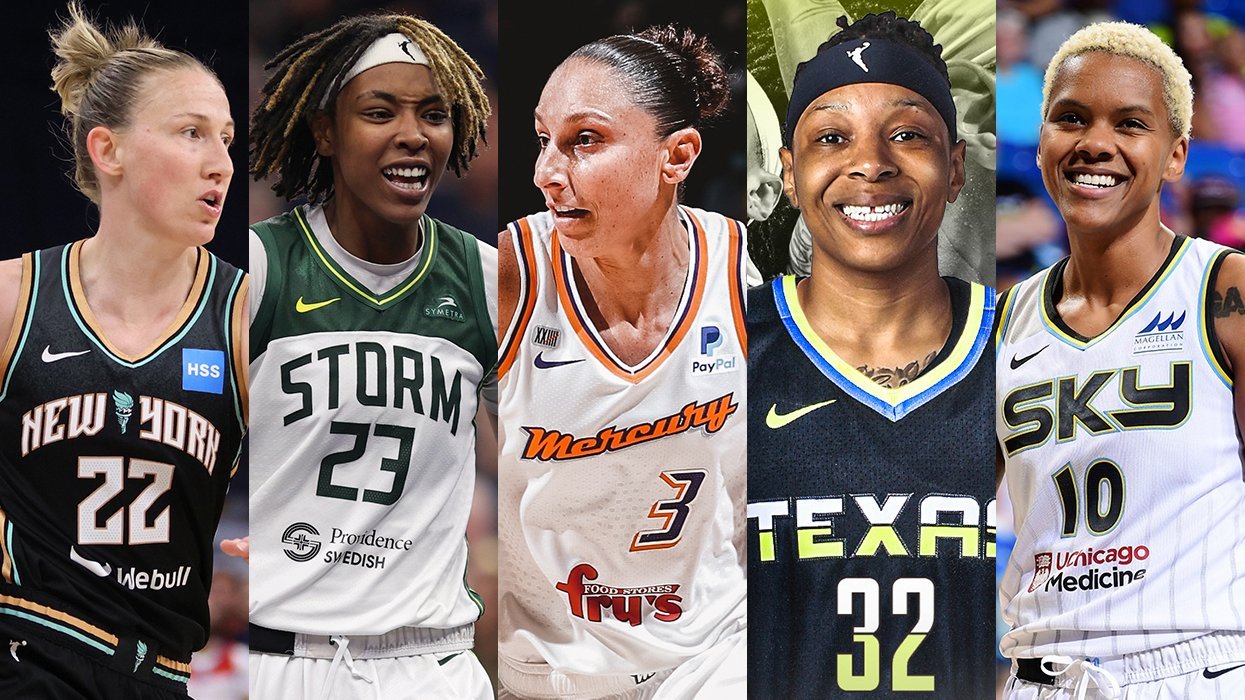
Meet all 37 of the queer women in this season's WNBA
April 17 2024 11:24 AM

17 Celebs Who Are Out & Proud of Their Trans & Nonbinary Kids
November 30 2023 10:41 AM

Here Are the 15 Most LGBTQ-Friendly Cities in the U.S.
November 01 2023 5:09 PM
Which State Is the Queerest? These Are the States With the Most LGBTQ+ People
December 11 2023 10:00 AM
These 27 Senate Hearing Room Gay Sex Jokes Are Truly Exquisite
December 17 2023 3:33 PM

10 Cheeky and Homoerotic Photos From Bob Mizer's Nude Films
November 18 2023 10:05 PM

42 Flaming Hot Photos From 2024's Australian Firefighters Calendar
November 10 2023 6:08 PM

These Are the 5 States With the Smallest Percentage of LGBTQ+ People
December 13 2023 9:15 AM

Here are the 15 gayest travel destinations in the world: report
March 26 2024 9:23 AM
Watch Now: Advocate Channel
Trending Stories & News
For more news and videos on advocatechannel.com, click here.
Trending Stories & News
For more news and videos on advocatechannel.com, click here.
Latest Stories



Tristan Snell, who brought down Trump University, sees conviction in hush money case
April 22 2024 7:36 PM

Joe Biden admin marks Earth Day with major environmental initiatives
April 22 2024 4:18 PM

Texas Gov. Greg Abbott: 'We want to end' trans and gender nonconforming teachers
April 22 2024 4:13 PM

Nonbinary 17-year-old killed two years after being reported missing
April 22 2024 3:46 PM

Pride
Yahoo FeedIndulge in luxury and sensuality with The Pride Store’s Taurus gift guide
April 22 2024 11:46 AM

The gay man leading the Earth Day Initiative offers hope for the future
April 22 2024 9:00 AM

Pattie Gonia takes drag and fierceness to Capitol Hill to voice environmental concerns
April 22 2024 8:23 AM

Jodie Foster leaves her mark in cement at L.A.'s Chinese Theatre
April 22 2024 7:55 AM

Climate change has a bigger impact on LGBTQ+ couples than straight couples. Here's how
April 22 2024 7:42 AM

Iraq postpones vote on bill punishing gay sex with death
April 20 2024 1:31 PM

Russian poetry contest bans entries from transgender poets
April 20 2024 1:25 PM

Here's who won 'RuPaul's Drag Race' season 16
April 20 2024 1:01 PM

The Tip Off: A beginners guide to the WNBA
April 20 2024 11:06 AM

John Fetterman challenges Pa. school board’s cancellation of talk by gay actor
April 19 2024 2:39 PM
Trending stories






















Most Recent




















Recommended Stories for You
