

CONTACTStaffCAREER OPPORTUNITIESADVERTISE WITH USPRIVACY POLICYPRIVACY PREFERENCESTERMS OF USELEGAL NOTICE
© 2024 Pride Publishing Inc.
All Rights reserved
All Rights reserved
By continuing to use our site, you agree to our Private Policy and Terms of Use.
Retired New York City firefighter Tom Ryan remembers sitting at the computer on his day off the morning of September 11, 2001, when he received an instant message that a plane had struck the World Trade Center. He immediately called his firehouse, Ladder Company 12 in Chelsea, where a colleague relayed information that prompted him to race toward the site and reach the scene of devastation shortly after the second tower collapsed.
The voice on the other line belonged to Angel Juarbe, one of few firefighters to have expressed support for Ryan, the first and at that time the only openly gay man with the New York Fire Department. Juarbe would perish later that day, one of five members lost from Ladder Company 12, and among nearly 3,000 who died in the terrorist attacks in New York, Washington, D.C., and Pennsylvania that touched LGBT people individually and collectively as Americans.
"They were there as firefighters, they were there as cops, they were the victims and the rescuers," says Ryan. "It's just like in the rest of life."
In interviews leading up to the 10th anniversary of 9/11, LGBT voices in New York recalled a time of shock, chaos, and compassion when they came together to help the wider community while tending to the unique needs of their own population laid bare by the unprecedented disaster.
Because of its location, the LGBT Community Center in the West Village of Manhattan became a gathering place for those seeking to offer assistance and grieve on September 11 and in the following days. The center is located steps from St. Vincent's, a hospital that closed last year but at the time of the attacks offered a Level I Trauma Center less than two miles north of the World Trade Center.
"We were right next to St. Vincent's, so when this happened a lot of staff members went right in line," says executive director Glennda Testone. "There was a line around the block to give blood. We know now that wasn't actually needed because there were not as many survivors as one would hope from 9/11."
Workers from the center also provided impromptu assistance to survivors as they streamed north, covered in debris. Water, snack bars, and shoes were in high demand, and in the following days, calls for counseling came, some from people who lost their partners with nowhere else to turn, others from traumatized witnesses at elevated risk for substance abuse.
"I think in many ways the response was very unified as New Yorkers, as Americans, people were just shocked," says Testone, who at the time worked for the Gay and Lesbian Alliance Against Defamation, which joined more than 30 LGBT groups in organizing a memorial at the center. "There was a lot of trauma and a lot of sadness. But there was a moment when the additional barriers that LGBT people face were raised in this time of crisis at 9/11. It was another example of yes, when something terrible happens, as LGBT people we experience it, but there's an added impact that comes from not having equal rights and protections."
One of the organizations that sponsored the memorial at the center on October 1 was the Gay Men's Health Crisis. By then, Jeff Rindler, who worked as assistant director of program volunteers had experienced weeks of working around the clock to serve clients affected by the disaster.
"We were obviously in shock but we made a decision not to close," says Rindler, now the managing director of program services and evaluation. "Clients were really experiencing this on a very, very deep level because it was bringing back that huge loss all at once that so many felt all at once in the early stages of the epidemic. GHMC was ground zero in 1981."
The 18-year veteran of the HIV/AIDS services agency recalls performing three intakes of new people on September 11, serving more than 150 meals, and bringing tuna fish sandwiches to first responders the next day. Staff members continued to provide in-demand mental health and prevention services, and somehow they came up with 60 cell phones so that clients could stay in touch.
"What I remember is a real sense of community and a real sense of coming together," says Rindler. "It brought clients closer, made them more tolerant, more open, more understanding. It certainly changed how I viewed the world, people, the human spirit."
Others remember the interminable waiting. Deanna Croce, then a case manager at the Hetrick-Martin Institute for LGBTQ youth, made her way to the organization's East Village headquarters after witnessing the devastation downtown just seven blocks from the World Trade Center. She arrived to find the chaos of phone calls as staff members and youths in attendance for the regular school day froze to await news of loved ones who worked at the Twin Towers.
Now a supervising counselor at Hetrick-Martin, Croce recalls that the violence and bullying faced by many of the youths on a daily basis did not cease during the disaster.
"One of the kids was gay-bashed in the middle of it," she says. "Their nose ring was ripped out. Tensions were high, and people saw this group of kids and then attacked. It was in the middle of the day."
Croce worked with the students that day, but she did not see the homeless population served by Hetrick-Martin in the afternoons as the city shut down on September 11 and in the following days. Their absence raised a haunting question faced by homeless LGBTQ youths in any disaster that tests the limits of a society.
"You've got really resourceful young people, but when you're hit with these extraordinary times, the plans don't work anymore," says Croce. "What if you're LGBT? Where do you go?"
Ryan, who retired from FDNY in 2003 after more than 20 years, remained at ground zero for eight days performing the "devastating work" of rescue and recovery while spending nights in the firehouse. Later in the week, he attended the funeral for Father Mychal Judge, the gay FDNY chaplain killed by debris on 9/11 when the South Tower collapsed. Although the men were not close, he became a pallbearer for Judge by accident when another person carrying the Franciscan priest's casket wavered.
A former president of Fireflag/EMS, a group for LGBT first responders, Ryan believes the shock of losing 343 firefighters and the wave of retirements in subsequent years ushered in change marked by new, younger recruits that has made it somewhat easier to be openly gay in the FDNY. However, every year on the anniversary, he remembers those whose contributions go unspoken.
"I think the part of 9/11 that we still need to talk about is that there were gay people there," he said. "You can't lump 9/11 into one category. It was an attack on America, but it goes to the issue of what America is."
Want more breaking equality news & trending entertainment stories?
Check out our NEW 24/7 streaming service: the Advocate Channel!
Download the Advocate Channel App for your mobile phone and your favorite streaming device!

From our Sponsors
Most Popular


Here Are Our 2024 Election Predictions. Will They Come True?
November 07 2023 1:46 PM
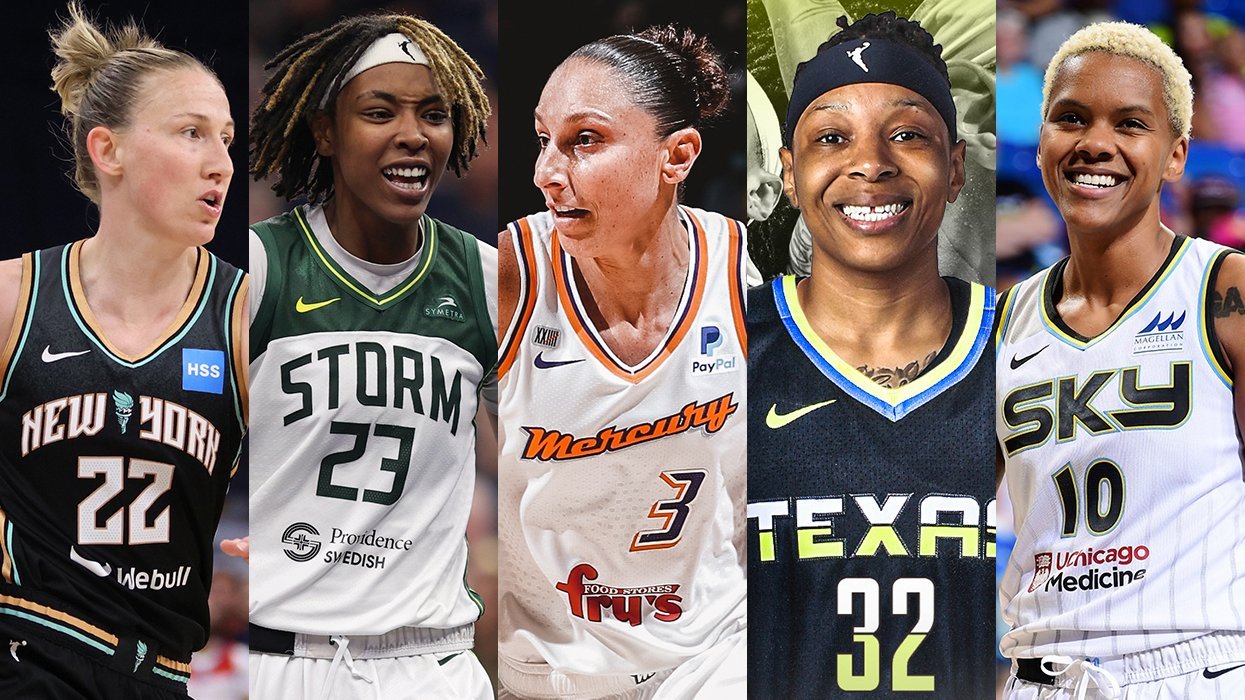
Meet all 37 of the queer women in this season's WNBA
April 17 2024 11:24 AM

17 Celebs Who Are Out & Proud of Their Trans & Nonbinary Kids
November 30 2023 10:41 AM

Here Are the 15 Most LGBTQ-Friendly Cities in the U.S.
November 01 2023 5:09 PM
Which State Is the Queerest? These Are the States With the Most LGBTQ+ People
December 11 2023 10:00 AM
These 27 Senate Hearing Room Gay Sex Jokes Are Truly Exquisite
December 17 2023 3:33 PM
10 Cheeky and Homoerotic Photos From Bob Mizer's Nude Films
November 18 2023 10:05 PM

42 Flaming Hot Photos From 2024's Australian Firefighters Calendar
November 10 2023 6:08 PM

These Are the 5 States With the Smallest Percentage of LGBTQ+ People
December 13 2023 9:15 AM

Here are the 15 gayest travel destinations in the world: report
March 26 2024 9:23 AM
Watch Now: The Daily
Trending stories from our video partner Advocate Channel.
For more videos and shows go to advocatechannel.com.
Trending stories from our video partner Advocate Channel.
For more videos and shows go to advocatechannel.com.
Latest Stories





Biden will hammer Trump over abortion bans in Florida speech
April 23 2024 5:00 AM
Tristan Snell, who brought down Trump University, sees conviction in hush money case
April 22 2024 7:36 PM

Joe Biden admin marks Earth Day with major environmental initiatives
April 22 2024 4:18 PM

Texas Gov. Greg Abbott: 'We want to end' trans and gender nonconforming teachers
April 22 2024 4:13 PM

Nonbinary 17-year-old killed two years after being reported missing
April 22 2024 3:46 PM
Trending stories





Most Recent






Recommended Stories for You
