

CONTACTStaffCAREER OPPORTUNITIESADVERTISE WITH USPRIVACY POLICYPRIVACY PREFERENCESTERMS OF USELEGAL NOTICE
© 2024 Pride Publishing Inc.
All Rights reserved
All Rights reserved
By continuing to use our site, you agree to our Private Policy and Terms of Use.
COMMENTARY: "Why do gay men always act like black women?" a former coworker, a white woman, once asked me. After whipping my head around, snapping sassily in her face, and then rolling my eyes, I said, "Huh? How do African-American women act?"
I have a high tolerance for really stupid questions. And that question is one I've heard all my life. In sixth grade, I distinctly remember another boy asking me, alarmed, "How did you do that?"
"Do what?" I asked.
"You...like, rolled your head around. Like a black woman." And yes, I did it, unconsciously, while saying something sarcastic. These were the days of In Living Color, of ShaNayNay and "Men on Film," which hilariously conflated gay and black stereotypes. ("Two snaps up in a circle!")
Was I born this way? I don't know; I will have to wait until Lady Gaga's new album comes out to find out if "Sassy Black" Woman comes part and parcel with being gay (Lady Gaga being the definitive source of all things gay, circa 2009-?). Maybe it's the effect of my isolated youth in front of the television. Too many bad talk shows exploiting ridiculously stereotyped hillbillies, trailer-park dwellers, and inner-city black women who have four children, each of which has six potential fathers. Or maybe it's a direct influence of Oprah Winfrey--today's greatest rags-to-riches story, complete with a tragic upbringing and a complex psychology based on equal parts of racial identity, body image issues, and narcissism. She's poised, articulate, understands the power of words, never stops trying to save the world, and she doesn't take anything (except herself) too seriously.
I have always looked up to Oprah and other--as my fellow Irish American and faux gay man Kathy Griffin has ridiculously called herself--strong black women.
In seventh grade English class, my teacher--an African-American woman, Ms. Jones--made all the students in the class write a fan letter to our favorite celebrities. Most of the kids wrote to Magic Johnson, Marilyn Manson, Vanilla Ice, or some similar adolescent hero. I chose Whoopi Goldberg. At least one kid suggested I was kissing up to Ms. Jones by writing to a black woman. The truth is, I've just always admired Goldberg because she's smart, funny, and defiantly weird. She doesn't fit in and she doesn't give a damn.
And it's not like this is something specific to me: Look at Glee. The original token gay character Kurt's best friend is Mercedes, the (still solo) token black character. They just relate, somehow, and that's believable. They're both outcasts--Kurt because of his sexuality and Mercedes primarily because of her above-average weight, but racial issues are occasionally brought into play on the show.
So maybe that's it. (Is it, Gaga?) I can consciously recognize that as a gay man, I have confronted some similar social challenges, simply by not being part of the mainstream norm and by having been crammed into a sack of stereotypes by American culture. But maybe my identification with black women goes even deeper and makes me "act like black women," as my former coworker claimed to have observe.
I hold many black women in the highest esteem. Some, like Oprah Winfrey and Whoopi Goldberg, I would love to emulate. (Who wouldn't?) But I've never tried to act like a black woman. I just act like myself.
Nevertheless, I do tend to have an affinity to black women. One of my very best friends, a former roommate, comes from West Africa. And two of my closest colleagues at work are African American, both from the Washington, D.C. area. One thing we all have in common is that we are all comfortable speaking frankly, in politically incorrect terms--but we all have sensitivities, as well. This often leads to shockingly honest, and sometimes revelatory and challenging, discussions. For example:
Several weeks ago, one of my coworkers (Let's call her "Lisa") struck a nerve. I walked by Lisa's desk and asked about the strange expression on her face. Her reply: "David. You're not, like...out. Right?" I laughed. When you listen to Tori Amos, Gaga, and Britney Spears at your desk all day, well, this question doesn't come up often. "Yes," I said. "I'm out."
"Oh," she said. "But you're not...like [let's call him] Josh."
My organization recently hired a young gay man. Unlike me, he is well adjusted and has a normal social life. "No, I'm not," I said. "He's 24. I'm almost 33. And we're different people."
"Oh," she said. And rolled her eyes.
"What are you talking about?"
"Nothing," she said. And then, reluctantly, "He's...you know. He's way out. I just think it's..." She went on to explain how I don't "advertise" myself the way he does. It's true that I don't call people "girl," which I once heard him do, but that's about the only way he out-stereotypes me. Except that he dates, and he talks about his dates--just like every other young person in the office, including Lisa, does. As in, "I had such a great date last night! We saw Black Swan! It was so romantic!!" Admittedly, thinking of Black Swan as a date movie is creepy, but the comment isn't inappropriate for work.
Lisa's remark ate at me for a couple of weeks. A few days ago, another of my coworkers--another African-American woman who, by the way, is always looking out for the diversity of the organization--mentioned Josh in passing. I told her [let's go with "Renee"] about Lisa's comment. Renee laughed. "Well," she said. "I guess it's true."
"What's true?"
"You're not as open as he is."
"Yes, I am!" I protested. "I just don't have a life! But I'm not hiding anything. If I were dating somebody, I wouldn't make a point not to talk about it."
"No, no," Renee said. "It's not a bad thing. It's a good thing. You're more respectful."
"Respectful?"
"Yeah, you know, you respect other people who might be uncomfortable hearing about..."
"About? About what?" I asked. "About a date--dinner, a movie, just like everyone else does? Just like you do?"
"You know what I mean," she said.
"You are wrong," I said and demanded to know what she meant by calling me "respectful."
"You're more considerate," she said. I thought the sound of my jaw cracking on the floor would cue her in that her compliment was fiercely insulting, but no. She persisted: You're more considerate of other people, she explained, because you keep your private life private. But other people in the office talk about their husbands, wives, girlfriends, boyfriends--so what's the difference if Josh does the same? Well, Renee said, some people just aren't comfortable with that. "Well," I explained, making myself increasingly comfortable for the words I was about to utter, "some people might not be comfortable with your talk about your African American sorority." We have a meeting coming up this summer in the deep south, I reminded her. She might want be considerate of the people down there and, you know, consider being seen and not heard.
Renee is sensitive, very sensitive, to racially biased remarks, and I know it. I kind of couldn't believe what I had just said, but I had a point to make.
Renee's reaction is unforgettable.
"You might have a point," she said. She contemplated, staring at me. I could see the gears cranking in her mind. "You might be right. I'll have to think about that."
Now, this exchange should have been more awkward than it was, but the unforgettable part of it was how Renee seemed to be taken aback only for an almost imperceptible second. I am accustomed to speaking my mind and, therefore, accustomed to people's reactions. Almost inevitably, when I challenge someone's prejudices, they react defensively and then go on the offense. I do the same in that position. Even when I know I'm wrong. But Renee didn't--she just took it in and then said she'd think about it. That's something.
Not long ago, The Advocatedeclared on its cover, "Gay is the New Black?" In some ways yes, and in some ways no. America's history with African Americans is pretty black and white--pun inevitable. Institutionalized slavery is an undeniable part of American history. Hurricane Katrina and the U.S. prison system are modern indicators that African Americans absolutely are treated as second-class citizens in an institutionalized, mechanistic way that is at once impossible to disprove and at the same time virtually invisible and generally tolerated. Yes, I'm calling you out, Birthers.
On the other hand, many laws still exist that allow for or even encourage discrimination against gay people. And by "gay people," I am simply abbreviating the full spectrum--transgender, bisexual, homosexual women and men, and anything other than the normalized man-woman partnership. If we're going to compare and contrast gay vs. black, it's really rainbow versus black and white. We're still in a time of general ignorance about who LGBT people are. It's really simple: we're just people. But other people don't seem to get it. All but the most bigoted among us really do understand that black people are normal human beings. No white person in 2011 would ever think to whisper to an African American person that he or she is more likable or considerate than another in the office because he or she is less obviously black.
Just imagine it.
Now imagine that that black person told another white person in the office and that white person cheerfully and genuinely said, "Well, it is true that you act less black and people really appreciate it because some people are really uncomfortable around black people!"
In many areas of the U.S., an employer can still fire an employee for "making others uncomfortable," conceivably by simply talking about a date. Are there any places where an employer can legally fire a person for being black?
So gay is not the new black--except that we are, in a sense. We're in the midst of our own civil rights movement, and we should look at the African American civil rights movement for inspiration. And we should make every effort possible to get closer to the African American community at large, too.
So what do all these tangents add up to? It's not just I am still told from time to time that I "act like a black woman," and I have a number of black female friends--we do seem to gravitate toward one another for a reason nobody seems to have been able to pinpoint empirically. Maybe someone at the Kinsey Institute can get a grant to figure this out. The real point is, I am grateful for these relationships, and I think that the conversation I recounted above--the one with Renee in which she was surprisingly understanding and thoughtful when I basically called her a bigot--was reassuring. Why? Because we really need to figure this out and move on. And not just so that LGBTQA, etc., can be on equal footing, but so that we can keep any other group from falling victim to the same circumstances. It can happen again, easily.
It will only stop when we talk openly about this disturbing side of human nature--about our compulsion to allow ourselves to be collectively "uncomfortable" with other people. So I am grateful for my relationships with Lisa and Renee, with our mutual affinity and understanding, because it lets us have these conversations and, maybe, learn from one another. So let's be politically (and factually) incorrect and say this is how all black women and, therefore, gay men act; if that's the case, then it explains why gay men act like black women--because why would you want to behave any other way?
Want more breaking equality news & trending entertainment stories?
Check out our NEW 24/7 streaming service: the Advocate Channel!
Download the Advocate Channel App for your mobile phone and your favorite streaming device!

From our Sponsors
Most Popular


Here Are Our 2024 Election Predictions. Will They Come True?
November 07 2023 1:46 PM

17 Celebs Who Are Out & Proud of Their Trans & Nonbinary Kids
November 30 2023 10:41 AM

Here Are the 15 Most LGBTQ-Friendly Cities in the U.S.
November 01 2023 5:09 PM
Which State Is the Queerest? These Are the States With the Most LGBTQ+ People
December 11 2023 10:00 AM
These 27 Senate Hearing Room Gay Sex Jokes Are Truly Exquisite
December 17 2023 3:33 PM
10 Cheeky and Homoerotic Photos From Bob Mizer's Nude Films
November 18 2023 10:05 PM

42 Flaming Hot Photos From 2024's Australian Firefighters Calendar
November 10 2023 6:08 PM

These Are the 5 States With the Smallest Percentage of LGBTQ+ People
December 13 2023 9:15 AM

Here are the 15 gayest travel destinations in the world: report
March 26 2024 9:23 AM
Watch Now: Advocate Channel
Trending Stories & News
For more news and videos on advocatechannel.com, click here.
Trending Stories & News
For more news and videos on advocatechannel.com, click here.
Latest Stories


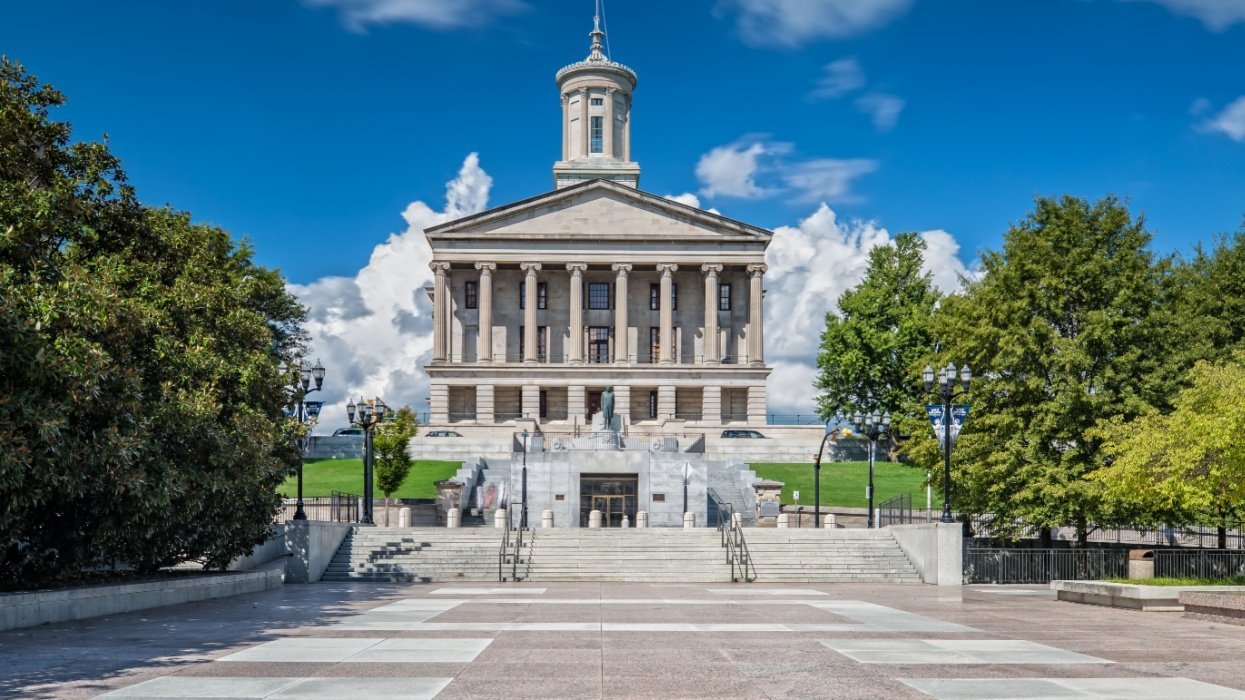
Tennessee Senate passes bill making 'recruiting' for trans youth care a felony
April 14 2024 11:17 AM
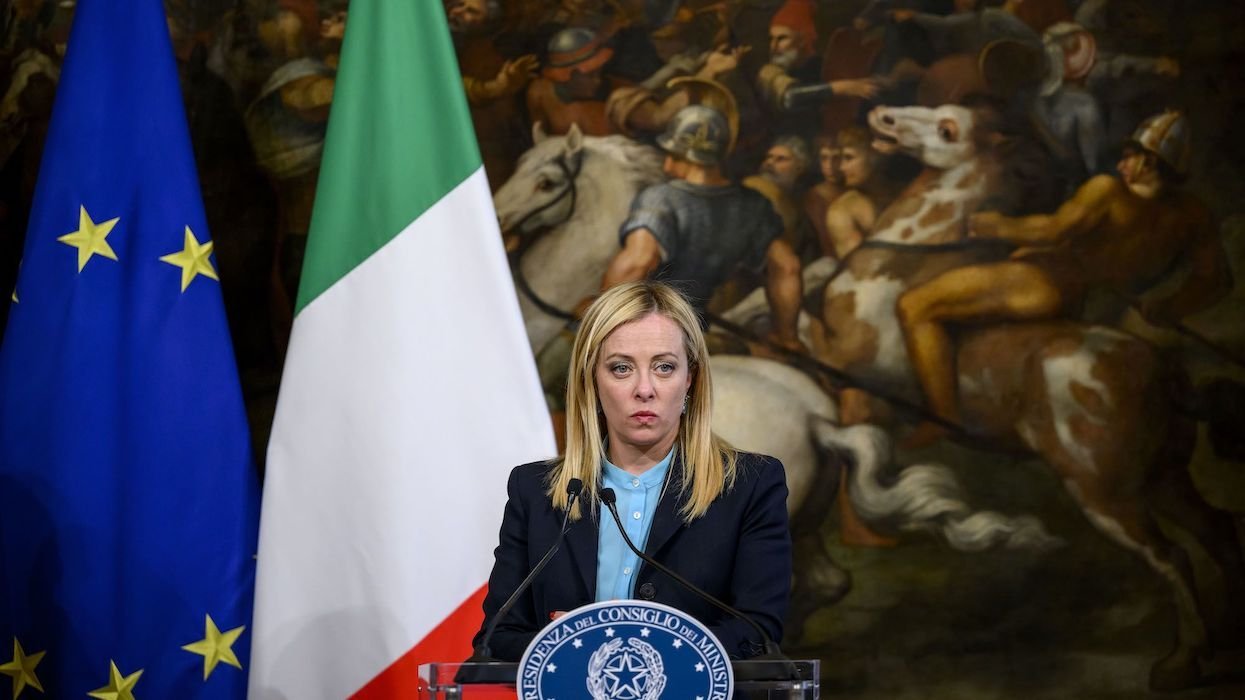
Italy’s prime minister says surrogacy ‘inhuman’ as party backs steeper penalties
April 14 2024 10:36 AM
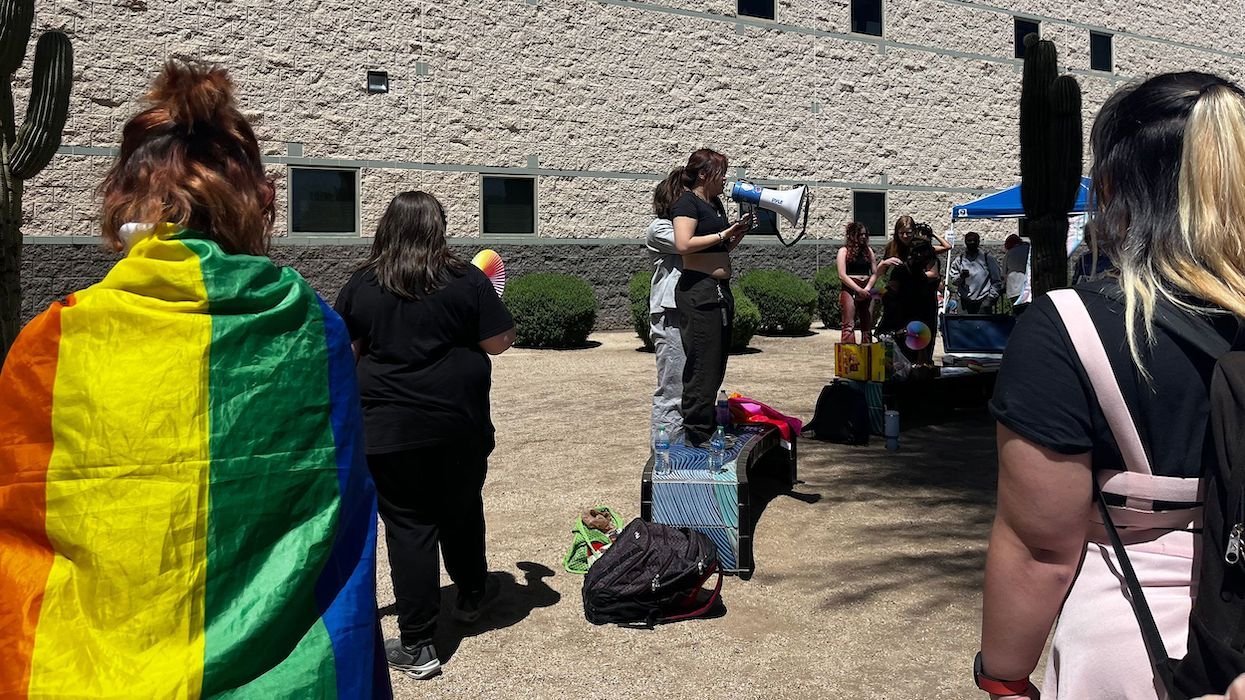
After decades of silent protest, advocates and students speak out for LGBTQ+ rights
April 13 2024 10:52 AM
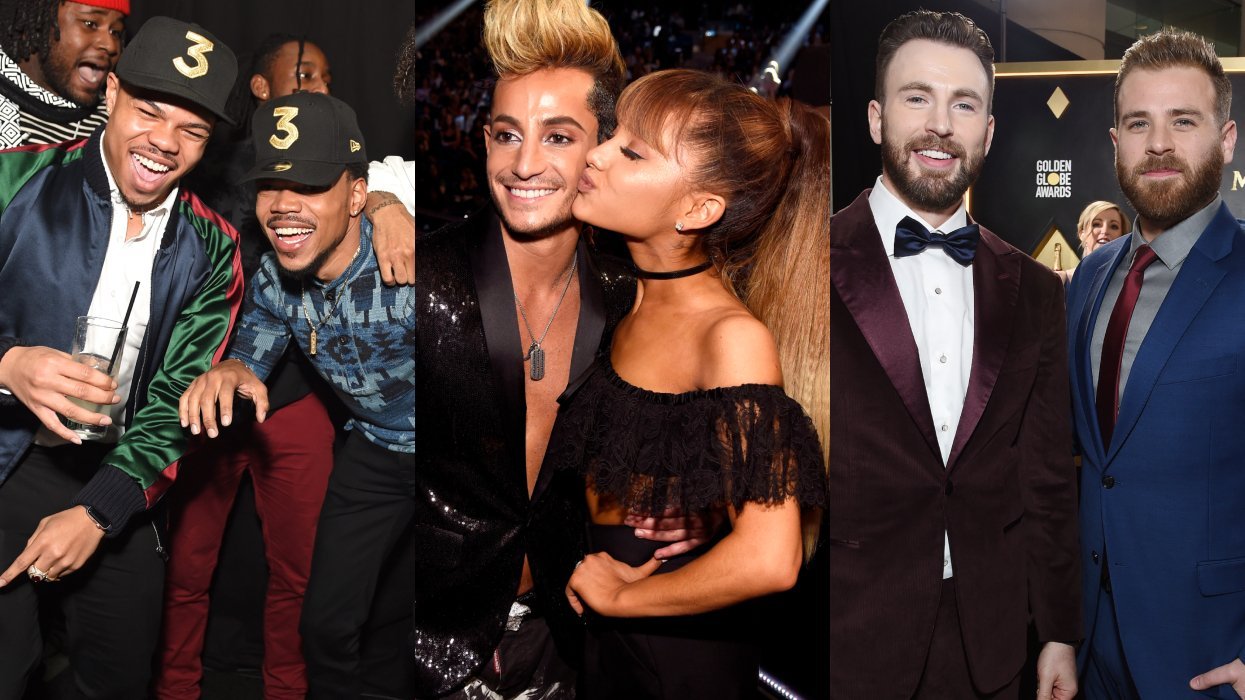
11 celebs who love their LGBTQ+ siblings
April 13 2024 10:33 AM
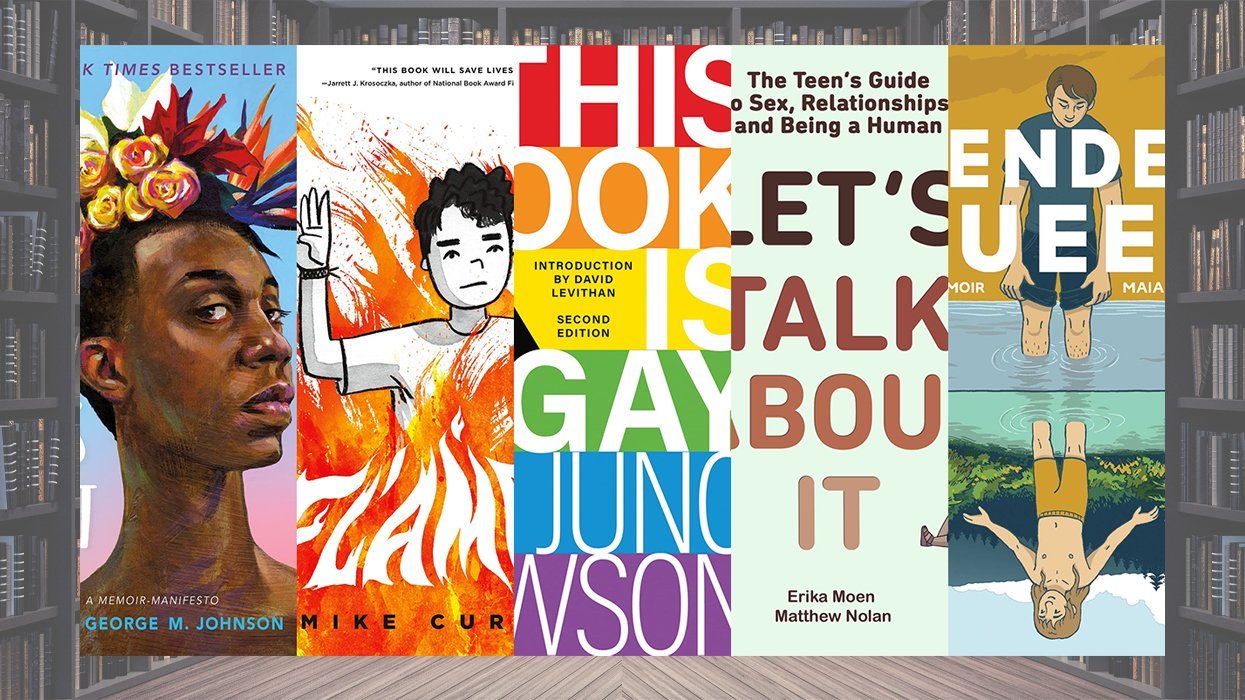
The 10 most challenged books of last year
April 13 2024 10:06 AM
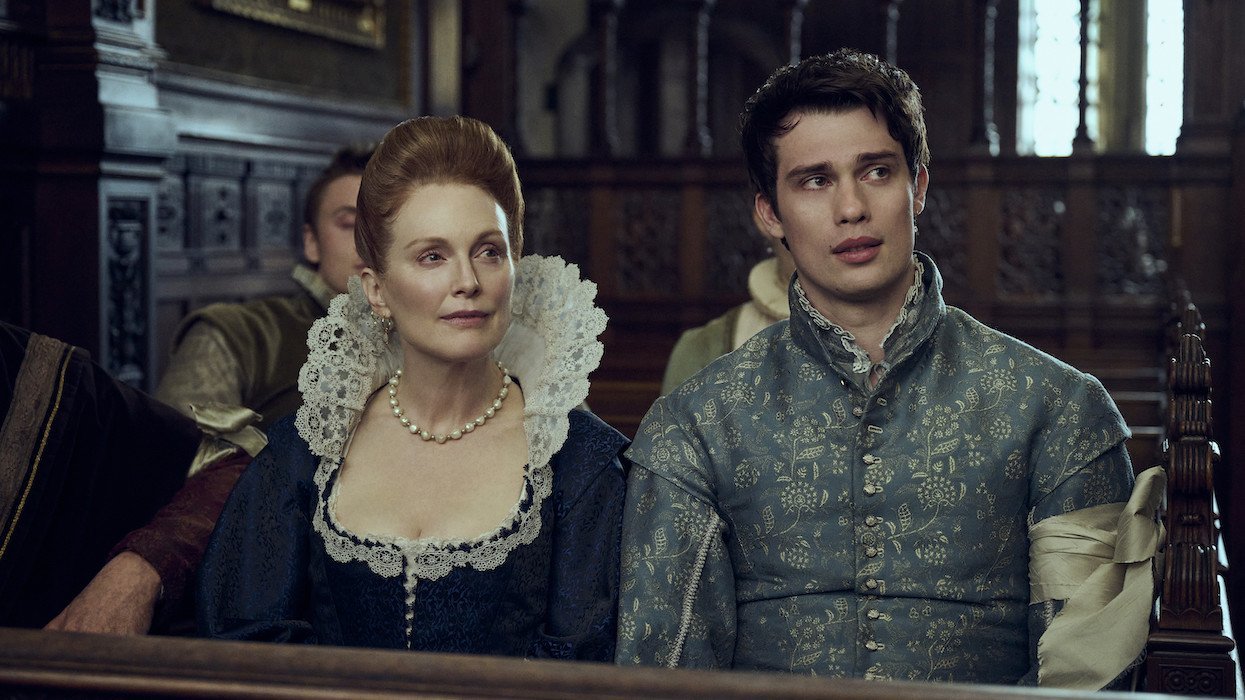
Mary & George's Julianne Moore on Mary's sexual fluidity and queer relationship
April 13 2024 10:00 AM

Investigation launched after man screams homophobic slurs at queer couples on D.C. metro
April 13 2024 9:59 AM

Germany makes it easier to change gender and name on legal documents
April 12 2024 6:06 PM
A youth's call to action on this Day of NO Silence
April 12 2024 5:00 PM
Democrats introduce resolution in support of LGBTQ+ youth
April 12 2024 4:35 PM
Trending stories





















Most Recent
















Recommended Stories for You
