The Dutch/French island of Saint Maarten/Martin, parsed in Advocate Travel last year by Don Romesburg, is one of the most gay-friendly destinations in the Caribbean. Saint Maarten is extremely cosmopolitan, with duty-free shopping, abundant nightlife, multilingual locals, and stylish visitors. Its also a convenient destination from North America, served by direct flights from New York and Miami as well as San Juan.
Within minutes from Saint Maarten/Martin by air (and just slightly longer by sea) are four culturally and physically divergent islands: Saint Barts (a French territory), Saba and Saint Eustatius (both part of the Netherlands Antilles), and Anguilla (a British overseas territory). I visited two of these islands, Saba and Anguilla, over the course of five days in September. Despite their proximity to each other, Saba and Anguilla differ dramaticallywhich is illustrative of a pervasive dynamic in the Caribbean, namely that the vagaries of colonialism, geography, and settlement patterns are such that even neighboring Caribbean islands can vary significantly.

A serene valley view
While neither Saba nor Anguilla is a place to meet your pick of dashing strangersalthough I suppose the story I heard about the lesbian who hooked up with her diving instructor and is now contemplating a move to Saba somewhat contradicts this assertionboth islands are exceptionally beautiful destinations worthy of day trips and extended vacations alike. So if youre looking for an off-the-beaten-path destination or if youve simply tired of Saint Maarten/Martins glitz, hop aboard a Winair flight or grab a ferry and get yourself to a quieter island.
Saba: The Mountainous Caribbean
Saba is breathtaking. From the moment the 19-seat Winair airplane begins its steep descent toward a cliff, angling a turn toward a tiny runway only at the last second, the uniqueness of the island is engulfing. A five-square-mile island with several mountainous peaksthe highest of which reaches nearly 2,900 feet above sea levelthe island seems much bigger than its geographic area. With its absence of beaches, well-swept winding roads, lush hillside foliage, and perched villages, Saba is a very unusual island. Its improbably tropical settlements are strung together by one winding, steep road. Just four small villages of white cottages with red roofs and green shutters dot Saba: Hells Gate, Windwardside, Saint Johns, and the Bottom.
Though Saba is part of the tenuously bound five-island Netherlands Antilles federation, English is the medium of communication on the island. Historically, very few people from the Netherlands have lived on Saba. Aside from a few official signs, Saba is blanketed in English. I had to fish around to find people willing to let me practice my Dutch on them. Theres just one Dutch cable television channel available on Saba, and U.S. culture clearly dominates. In the recreation center, kids sing karaoke to Destinys Childs Say My Name. The Netherlands Antilles has a currency of its own, the Netherlands Antilles guilder, and you may of course use it if you like, but most hotel and restaurant prices are quoted in U.S. dollars.
Without beaches and resorts, Saba is an unusual island. First off, its an uncannily close-knit and relaxed place. I wanted to visit the Harry L. Johnson Museum, an island history museum, but I missed its limited open hours. Glenn Holm, the director of tourism on Saba, simply tracked down a key for me, and I visited on my own. Secondly, Saba draws active, energetic tourists. Most tourists traveling to Saba go for the diving. The waters off Saba are generally regarded as providing some of the best diving in the Caribbean. With the recent decision to promote rock-climbing, the tourist board is working toward securing an eco/adventure reputation for the island. Two eco-hotels on Saba are helping the island strengthen its appeal to the adventure set. Saba also provides a range of hiking trails, which provide another draw for active tourists.
My first morning on Saba I set out for the hiking prize: Mount Scenery, reaching an elevation of 2,877 feet, is the mountain crowning Saba. I was warned that the climb was extremely strenuous, and it was certainly not an easy stroll. The climb passes through dense foliage, eventually hitting clouds and a secondary rainforest. By the time I reached the summit I didnt know if I should rejoice or curl up in a wet ball and take a nap. The views were extraordinary, even with Montserrats volcano 90 miles away spitting ash into the sky. On my walk down I ran into three brave hikers heading up the mountain, but aside from them the trail was all mine.
Not that I ever need an excuse to summon up an appetite, but the hike certainly inspired my desire to pig out. Happily for me, the restaurant selection on Saba is remarkable for such a small island. Three restaurants in Windwardside were especially fantastic. Swinging Doors served an excellent Saba-style barbecue. YIIK fed me an outstanding jerk chicken bettered only by their chocolate-banana cake. Brigadoon did me right with a gumbo and homemade soursop ice cream for dessert. Two lunch meals were particularly noteworthy: a seafood pasta by Algernon Charles at Mango Royale Restaurant at Queens Gardens Hotel and seafood in a béchamel sauce prepared by Michel Job at the Gate House. Mango Royales Charles hails originally from Dominica. One Saban pronounced him to be the best chef on the island, and Im in no position to argue. The Gate House, above the airport in Hells Gate, is run by chef Michel and innkeeper Lyliane, a deeply charming and friendly French-by-way-of-Boston couple whose wine list has won Wine Spectators Award of Excellence two years in a row. Michel also made me extremely happy with a flourless chocolate cake graced with freshly whipped cream. They call this cake the Queen of Saba. I wanted to eat 20 slices, but to do so would surely have meant stretching Michel and Lylianes hospitality beyond the breaking point. My only regret as far as culinary concerns go is that I didnt get to the highly touted Lime Time Bar and Restaurant, located on the road above the administrative town of the Bottom.
On Saba I stayed at Julianas Hotel in Windwardside. Julianas was perfect for my needs. Manager Johanna vant Hof has spent much of her life on Saba and is both friendly and knowledgeable about the island. Julianas, like many other hotels on Saba, offers economical dive packages. My room had a perfect view of the Caribbean, framed by peaks on both sides, and a balcony with a hammock. Next door to Julianas is Tropics Café, a little health food restaurant open for breakfast and lunch. Julianas features doubles with ocean view in high season (November through April) for $125 per night.
Hotels on Saba span the gamut from reasonable to extremely spendy. At the low end of the spectrum, theres the charming eco-traveler haunt El Momo, with hillside cottages, stunning views, and a friendly atmosphere. The mood at El Momo is reminiscent of an organic grocery store cooperative, down to the tasty homemade banana rum available at the office desk. A double room with a shared bathroom at El Momo can be as inexpensive as $50 a night in high season. Queens Gardens and Willards crouch at the other end of the scale. The former, nestled on Troy Hill above the Bottom, offers spacious studios and hosts the Dutch royal family on their visits; the latter, off on its own on a steep cliff, provides stunning views. The least expensive double room in high season at Queens Gardens goes for $285 per night; the least expensive high season double at Willards is available for $400 per night. Toward the middle of the range there are a number of comfortable hotels, including the Gate House (from $130 for a double room), Scouts Place (from $75 for a double room), the Cottage Club (from $118 for a double room), and the Eco-Lodge Rendez-Vous (from $85 per cottage per night).
To call Saba gay-friendly is probably to understate matters. With a population of 1,500, Saba sent four athletes to the Gay Games in Sydney in 2002. The Director of the Saba Tourist Bureau, the knowledgeable and charming Glenn Holm, is himself gay. I called Glenn my publicist because he got a short blurb about my visit into the Saint Maarten paper and carted me around like a visiting dignitary. On the plane ride from Saint Maarten, I sat next to one of Sabas two doctors, an English lesbian living on Saba with her South African partner. Windwardside restaurant YIIK is owned by a gay couple as well. A recent arrival on the island explained to me that Sabans welcome a range of people and value quirkiness. There are certainly norms on Saba, but eccentric folksnative islanders and expats bothseem to thrive on the island. Saba will never show up on the circuit party map, but for gay and lesbian travelers seeking adventure or simply a quiet and unusual vacation, Saba is a friendly destination. In fact, the only smirky homophobia I encountered on Saba was generated by two American tourists, both men, who appeared to be sharing a room. I heard one of them explaining how the two of them met and came to the decision to vacation together. It was an elaborate story.
Should Saba establish a different relationship with the Netherlandsa likelihood given the fragility of the Netherlands Antilles federationSabas laws may very well take the same general shape of those in the Netherlands. This scenario could render Saba a same-sex wedding destination, albeit a low-key one. But before you think about booking your wedding/honeymoon vacation on Saba, realize that the political situation of the near future is anything but clear-cut. The Netherlands Antilles federation may be on its last legs, but theres quite a distance to go before the five islands in the federation work out different relationships to one another and to the Netherlands. And then theres the question of the current conservative political climate in the Netherlands, lately hardly generous toward the Antilles. During my visit, the Dutch government abruptly withdrew funding for an afterschool program. Just prior to my visit, a Dutch parliamentary delegation visited Saba, among the other Netherlands Antilles islands. Most press reports indicated a significant degree of antagonismbetween the Netherlands and the Antilles government in Curaçao and also between Saint Maarten and Curaçao. So while its quite likely that Saba will soon be attached to a different political unit, the precise orientation of its future is not yet clear.
Anguilla: The Quintessential Beach Caribbean
I was having such a great time on Saba that I canceled my reservation at the Holland House on the Dutch side of Saint Maarten and spent another night on Saba. I flew back one day late to Juliana Airport on the Dutch side of Saint Maarten and grabbed a cab to Marigot, the capital of the French side of the island. The journey by ferry from Marigot, Saint Maarten, to Blowing Point, Anguilla, only lasts 25 minutes, but the two islands are worlds apart. Marigot feels unequivocally French, from the architecture to the billboards to the standard-issue French street signage, the likes of which you see throughout France. Prices are listed in euros and you feel, more or less, as if youre in a sunny, warm corner of France.
The charming and extremely beautiful British overseas territory of Anguilla, by way of contrast, is neither reminiscent of Britain nor infrastructure-rich. Many secondary roads are unpaved, houses stand uncompleted, and the island bakes under the bright sun, basically unadorned. Historically, the United Kingdom has neglected Anguilla pretty thoroughly. In fact, it was only last year that British parliament finally reversed a 1981 Thatcher-era law that rescinded citizenship rights for residents of British overseas territories. The island may be British, with cars careening down the left side of a road obligatorily named after Queen Elizabeth, but culturally it is more oriented toward the rest of the Caribbean and the United States than it is to the United Kingdom. According to one of my taxi drivers, most Anguillans head to other Caribbean islands for education and work. The result of all this is that the United Kingdom is kind of a phantom presence on Anguilla.
The dry, wild beauty of much of the islands interior coexists with the extremely pricey resorts and hotels that dot its coastline. I visited the vast, grand villa of a Texan on my second day. His intention is to rent the villa out for $4,000 a night during high season (January to April). Its a four-bedroom house and its easy to imagine how lovely and restful it might be to spend a week there with a bunch of good friends. Its also a stark shock to think about that nightly rate in the context of Anguillas per capita income of $8,600, which could get an average Anguillan two nights in the Texans villa during high season with change left over for a dinner or two.

The Arawak Inn
I opted for less extravagant accommodation at the Arawak Beach Inn. Perched near the northeastern corner of Anguilla, the Arawak is managed by British expat innkeeper Maria Hawkins. Maria smokes Silk Cuts, calls you by your first name, and runs the place with a relaxed, addictive affability. Marias three children live at the hotel as well, and they mix ably with guests. While I was at the Arawak Beach Inn, co-owner Maurice Bonham-Carter (Helenas first cousin once removed) was also onsite, concocting near-lethal rum punches and generally being jolly.
The Arawak Beach Inn is both relatively affordable and extremely comfortable, with high season doubles starting at $175 per night. In contrast to the hermetically sealed nature of many resorts on the island, the Arawak is full of actual Anguillans. At midday, polite schoolchildren in uniforms pop in for lunch. Villagers join tourists for dinner. A lawyer from Trinidad and another from the British Virgin Islands, both on Anguilla for work, were staying at the Arawak Beach Inn while I was there, intensifying the sense of the Arawak as catering to local and regional guests as well as to North American and European tourists. The mood is relaxed, breeze does the work of air conditioning, and the Caribbean and American meals, courtesy of Kittitian cook Maude, are delicious.
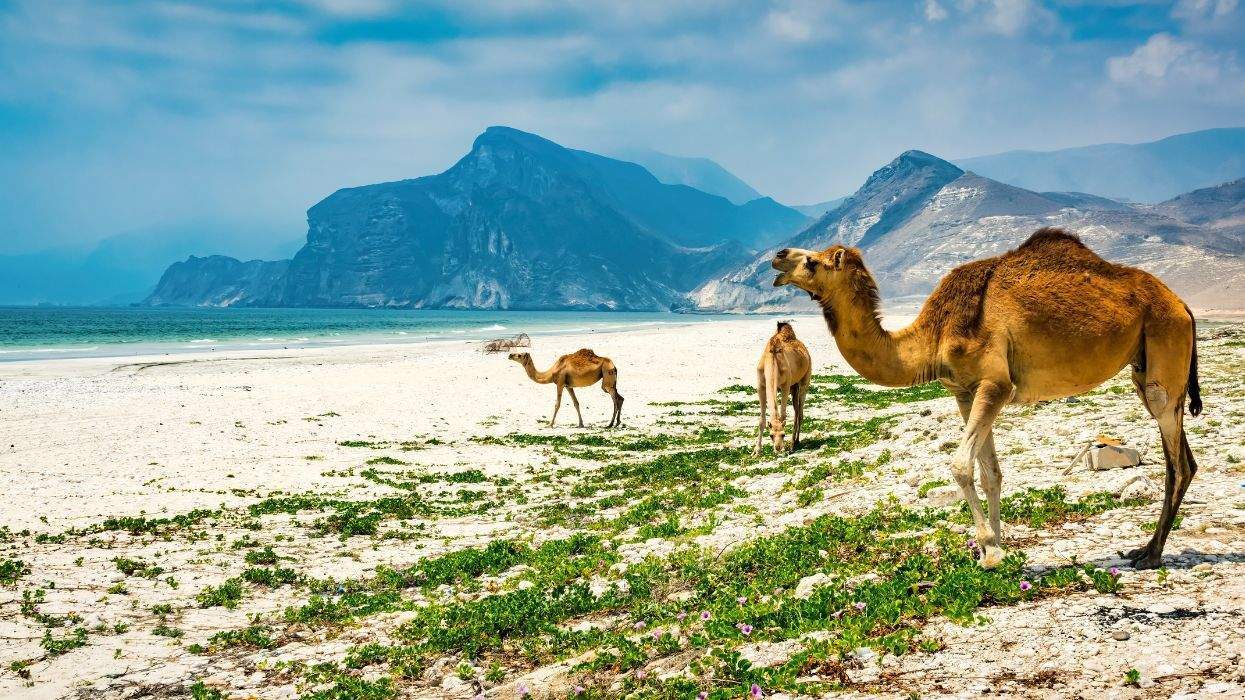
Just a few minutes walk from the inn is a small, uncrowded cove. Used only by hotel guests, it was completely empty during my afternoon visit. I whiled away my time under the sun, drinking Carib beers, swimming, resting, and waving at passing fishermen. And if the little cove isnt big enough for you, perhaps the most perfect beach in the world is just 10 minutes away from the Arawak Beach Inn by car. Youve seen perfect beaches in photos and in your mind, but how often have you plunked yourself down on one, much less one completely deserted at midday? Shoal Bay East is debatably the most gorgeous of Anguillas 30-odd beaches. The tourist board has come up with the tagline tranquility, wrapped in blue to brand the island, which is a borderline trite way of describing the stunning brightness of the seas blue. Marketing strategy or no, Shoal Bay East is stunning, and in September at least it was deserted.
Anguilla is not a specifically gay-friendly destination by any standard definition. The Arawak Beach Inn is the only hotel on the island that advertises on the Purple Roofs Web site, which is where I found out about it in the first place. Nonetheless, either for day trip jaunts or as a destination unto itself, Anguilla offers among the best beaches around and much more. For those with cash to burn, Anguillas upscale resorts and restaurants certainly provide a draw, with an upscale and celebrity clientele to match their exorbitant rates. For the rest of us, Anguilla sports a few affordable hotels, a few affordable villas for rent, and an arts scene to take over when youve just had enough perfect beach time. I unfortunately didnt make it to the Devonish Art Gallery. Run by local artists Courtney and Carrolle Devonish, this gallery is located near the Valley, Anguillas administrative capital, and is generally regarded very highly. Incidentally, the Valley is also a good place to find affordably priced snacks and meals, with locals stopping by during the day to pick up fresh fish.
Returning to Saint Maarten to catch my flight home, I stopped for an espresso at little café in Marigot before catching a cab to the airport. I marveled again at the cultural and physical range of the three islands I had visited and did the only sensible thing: made a pact with myself to return as soon as I could to visit the other islands in close range of Saint Maarten/Martin.
These comments are reproduced as written by visitors to this Web site. They have not been edited for content, grammar, or spelling. The viewpoints appearing here are those of the writer, and do not necessarily reflect the opinion or views of advocate.com, The Advocate, or its affiliates.
Be the first to comment on this story.
If you would like to submit a comment for posting, please fill out the form above.
All comments submitted via this form are subject to posting or publication. (To send a private letter to an Advocate editor or writer, please use the e-mail button at the top of the page, or use snail mail.) If you would like your comment considered for publication in The Advocate magazine, please include your full name, your city of residence, and a phone number where you can be reached during business hours so that we can confirm your identity. Your e-mail address and telephone number are strictly confidential and will not be shared or used for any purpose other than to contact you about your comment.
See the Contact page for sending comments for reasons other than responding to Advocate editorial and news stories.
Please note that comments sent by fax or snail mail are unlikely to be posted, although they will be considered for publication along with all letters received via e-mail or via this Web page. Comments that chiefly concern Advocate.com content will be considered for posting only on the Web site. The Advocate reserves the right to edit submitted comments for grammar, spelling, obscenities, or libel; we will, however, do our best to preserve the original comment's style and intent. Comments considered for publication in The Advocate magazine may also be edited for length.