'%3E%3Cpath d='M16.3574 35.6519H12.9537L15.0491 18.8873L16.3574 35.6519ZM30.4229 54.0093L22.309 0.994385H7.91795L0 54.0093H10.6634L11.5802 46.3855H17.4014L17.9914 54.0093H30.4229Z' fill='%23971B20'/%3E%3Cpath d='M48.2073 41.8813C48.2073 43.4049 47.4892 44.0011 46.1144 44.0011H43.7595V11.0687H46.1144C47.4892 11.0687 48.2073 11.6636 48.2073 13.1885V41.8813ZM59.5273 43.6695V11.3326C59.5273 3.71323 53.5729 0.994385 47.8157 0.994385H31.7213V54.0093H47.8157C53.5729 54.0093 59.5273 51.29 59.5273 43.6695Z' fill='%23971B20'/%3E%3Cpath d='M90.183 0.994385H78.6039L75.0711 30.6157L71.9955 0.994385H59.4346L69.2474 54.0093H80.373L90.183 0.994385Z' fill='%23971B20'/%3E%3Cpath d='M107.063 42.3448C107.063 43.7359 105.951 44.5974 104.643 44.5974C103.269 44.5974 102.157 43.7359 102.157 42.3448V12.658C102.157 11.2676 103.269 10.4058 104.643 10.4058C105.951 10.4058 107.063 11.2676 107.063 12.658V42.3448ZM119.233 43.2723V11.7312C119.233 6.36384 112.952 -3.8147e-06 104.643 -3.8147e-06C96.2667 -3.8147e-06 89.9867 6.36384 89.9867 11.7312V43.2723C89.9867 48.6393 96.2667 55 104.643 55C112.952 55 119.233 48.6393 119.233 43.2723Z' fill='%23971B20'/%3E%3Cpath d='M150.976 43.9349V33.7309H139.069V42.3448C139.069 43.7359 137.957 44.5974 136.582 44.5974C135.076 44.5974 133.964 43.7359 133.964 42.3448V12.658C133.964 11.2676 135.076 10.4058 136.582 10.4058C137.957 10.4058 139.069 11.2676 139.069 12.658V21.2723H150.976V11.0687C150.976 5.70107 145.283 -3.8147e-06 136.582 -3.8147e-06C127.75 -3.8147e-06 121.796 5.70107 121.796 11.0687V43.9349C121.796 49.3022 127.75 55 136.582 55C145.283 55 150.976 49.3022 150.976 43.9349Z' fill='%23971B20'/%3E%3Cpath d='M167.478 35.6519H164.076L166.17 18.8873L167.478 35.6519ZM181.544 54.0093L173.432 0.994385H159.037L151.123 54.0093H161.785L162.704 46.3855H168.523L169.114 54.0093H181.544Z' fill='%23971B20'/%3E%3Cpath d='M205.412 10.4058V0.994385H177.081V10.4058H185.392V54.0093H197.428V10.4058H205.412Z' fill='%23971B20'/%3E%3Cpath d='M230.002 54.0093V43.9349H218.914V31.8746H226.635V21.8028H218.914V10.4058H230.002V0.994385H206.875V54.0093H230.002Z' fill='%23971B20'/%3E%3C/g%3E%3Cdefs%3E%3CclipPath id='clip0_260_7080'%3E%3Crect width='230' height='55' fill='white'/%3E%3C/clipPath%3E%3C/defs%3E%3C/svg%3E)
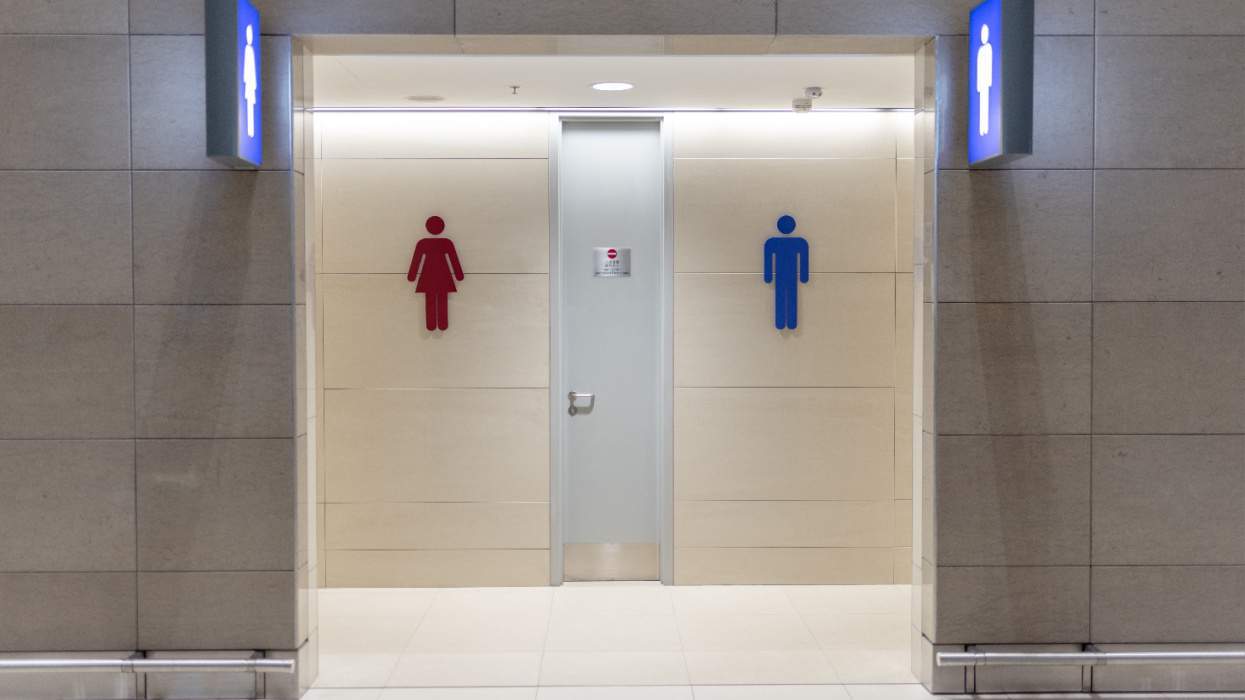

A new statutory code of practice is now in effect across England, Scotland and Wales that says bathrooms, changing rooms and hospital wards designated for women or for men must exclude transgender men and women. Effective Wednesday, the code issued by the U.K.'s Equality and Human Rights Commission says use of those facilities must be based on a person’s birth sex, and not the gender with which they identify.
On that basis, trans people can be lawfully excluded from using those single-sex facilities. However, demanding that an individual provide verification of their birth sex or questioning them at toilet doors is expressly considered inappropriate under the code. And that raises the question: How will the code be enforced?
This all follows a ruling in 2025 by the U.K.’s Supreme Court that said that only cisgender women fit the legal definition of a woman in the country. In its 88-page decision announced on April 16, 2025, the court’s five judges said the “concept of sex is binary, a person is either a woman or a man.”
Related: Which country is about to implement a nationwide transgender bathroom ban?
The decision was unanimous, declaring that the terms "woman" and "sex" refer only "to a biological woman and biological sex," said Judge Patrick Hodge, the deputy president of the Supreme Court.
As the Advocate reported, anti-trans groups cheered that ruling. It followed years of anti-trans organizing within the U.K. and as trans people in the U.S. grapple with similar ramifications, between the Trump administration’s declaration that there are “only two genders” assigned at birth, and its subsequent attempts to enforce that executive order across a wide range of governmental agencies, as Them reported.
The biggest exception to the ruling and the code can be found in Northern Ireland, which is part of the U.K. but is still reviewing the changes in England, Scotland and Wales. Northern Ireland has distinct and separate legal frameworks regarding transgender people's access to single-sex spaces like bathrooms and changing rooms.
A report by CNN posted to Instagram explained the potential impact in England, Scotland and Wales: "A transgender man could be placed on a female-only hospital ward based on his sex assigned at birth," reported CNN's Ben Hunte. "But here's where it gets tricky: That same man could be barred from accessing a women's locker room on the basis that his presentation as a man could make others uncomfortable."
Related: U.K. Prime Minister pushes to ban trans people from single-sex bathrooms, sports, and beyond
The code stresses that organizations need to find a balance between privacy and dignity, Hunte added, and encourages mixed-sex or individual lockable facilities to ensure that trans people are not left without legitimate access. The code's authors wrote that their aim was to adhere to the ruling but prevent discrimination and harassment of trans people and the disabled.
Clubs and associations could, for example, remain trans inclusive, according to the Guardian, by making themselves open to several protected characteristics at once. However, since mixed-sex accommodation is not available in some hospital wards, trans patients must be accommodated on the single-sex ward that matches their biological sex. That's why the code states a trans man cannot be excluded from obstetrics and gynecology outpatient services based solely on the objections of female patients.
When it comes to bathrooms and changing rooms, the burden is on private business owners in England, Scotland and Wales. According to the code, they must decide whether other users of their facilities will "object" to the presence of a trans person. And if those service providers allow trans women into women-only spaces, it's "very unlikely" those facilities will be regarded as a woman-only space under the law, going forward.
Related: Women's Institute to ban transgender women after U.K. Supreme Court ruling
The other complication is money. Thousands of bathrooms and changing rooms had to be changed to meet the new code, SkyNews reported.
The cost of modifying those nearly 13,000 toilets and more than 5,000 changing rooms at gyms, hospitals and leisure centers across Great Britain was estimated to cost millions of British pounds, with at least 18,000 signs needing to be changed as well.
As for schools, no child should be made to feel unsafe through “inappropriate” mixed-sex sport, according to The Independent. The report also says schools and colleges are barred from providing mixed-sex toilet facilities for children aged over eight years old, or mixed sex sleeping arrangements on trips.
The code advises both schools and teachers to make themselves aware of every child’s birth sex, in order to take "appropriate action" where needed; That information is expected to be added to all school and college records.
Transgender advocacy groups had pushed for amendments to the code in April, hoping it might result in a less blanket exclusion, but failed to win support, according to the Guardian.
The government’s own equality impact assessment acknowledged that the likely impact on transgender people is “negative”, but highlighted mitigating factors, such as the ability of service providers to create a “third-space” provision such as a unisex bathroom or private changing room.
The U.K. Supreme Court ruling did not mention intersex people and made only a reference to nonbinary people and their lack of a nonbinary choice on U.K. gender recognition certificates. The Advocate’s search of the code's 142-page document for the words "nonbinary" and "intersex" came up with zero results.