'%3E%3Cpath d='M16.3574 35.6519H12.9537L15.0491 18.8873L16.3574 35.6519ZM30.4229 54.0093L22.309 0.994385H7.91795L0 54.0093H10.6634L11.5802 46.3855H17.4014L17.9914 54.0093H30.4229Z' fill='%23971B20'/%3E%3Cpath d='M48.2073 41.8813C48.2073 43.4049 47.4892 44.0011 46.1144 44.0011H43.7595V11.0687H46.1144C47.4892 11.0687 48.2073 11.6636 48.2073 13.1885V41.8813ZM59.5273 43.6695V11.3326C59.5273 3.71323 53.5729 0.994385 47.8157 0.994385H31.7213V54.0093H47.8157C53.5729 54.0093 59.5273 51.29 59.5273 43.6695Z' fill='%23971B20'/%3E%3Cpath d='M90.183 0.994385H78.6039L75.0711 30.6157L71.9955 0.994385H59.4346L69.2474 54.0093H80.373L90.183 0.994385Z' fill='%23971B20'/%3E%3Cpath d='M107.063 42.3448C107.063 43.7359 105.951 44.5974 104.643 44.5974C103.269 44.5974 102.157 43.7359 102.157 42.3448V12.658C102.157 11.2676 103.269 10.4058 104.643 10.4058C105.951 10.4058 107.063 11.2676 107.063 12.658V42.3448ZM119.233 43.2723V11.7312C119.233 6.36384 112.952 -3.8147e-06 104.643 -3.8147e-06C96.2667 -3.8147e-06 89.9867 6.36384 89.9867 11.7312V43.2723C89.9867 48.6393 96.2667 55 104.643 55C112.952 55 119.233 48.6393 119.233 43.2723Z' fill='%23971B20'/%3E%3Cpath d='M150.976 43.9349V33.7309H139.069V42.3448C139.069 43.7359 137.957 44.5974 136.582 44.5974C135.076 44.5974 133.964 43.7359 133.964 42.3448V12.658C133.964 11.2676 135.076 10.4058 136.582 10.4058C137.957 10.4058 139.069 11.2676 139.069 12.658V21.2723H150.976V11.0687C150.976 5.70107 145.283 -3.8147e-06 136.582 -3.8147e-06C127.75 -3.8147e-06 121.796 5.70107 121.796 11.0687V43.9349C121.796 49.3022 127.75 55 136.582 55C145.283 55 150.976 49.3022 150.976 43.9349Z' fill='%23971B20'/%3E%3Cpath d='M167.478 35.6519H164.076L166.17 18.8873L167.478 35.6519ZM181.544 54.0093L173.432 0.994385H159.037L151.123 54.0093H161.785L162.704 46.3855H168.523L169.114 54.0093H181.544Z' fill='%23971B20'/%3E%3Cpath d='M205.412 10.4058V0.994385H177.081V10.4058H185.392V54.0093H197.428V10.4058H205.412Z' fill='%23971B20'/%3E%3Cpath d='M230.002 54.0093V43.9349H218.914V31.8746H226.635V21.8028H218.914V10.4058H230.002V0.994385H206.875V54.0093H230.002Z' fill='%23971B20'/%3E%3C/g%3E%3Cdefs%3E%3CclipPath id='clip0_260_7080'%3E%3Crect width='230' height='55' fill='white'/%3E%3C/clipPath%3E%3C/defs%3E%3C/svg%3E)

Our culture has abandoned its closets. And this is a good thing -- but in doing so, we've lost the bathhouse. In the beginning, gay bars had mysterious names like Incognito and The Mask and rarely had windows. So many of them have vanished from our cities thanks, in no small part, to the easy availability of sex via apps and websites. Bathhouses are in severe decline, and the few that remain are widely seen as centers for illicit drug use and transmission points of STIs.
They were always sexy cruizing zones and always home to some mind-altering substances, but in decades past, that made little difference -- the bathhouse was the place to be. The bathhouse has a long, storied history as not only a place of sexual assignation but as a cultural hub -- Bette Midler, after all, started her career singing in them. Let's take a trip down the slippery tiles of memory lane.
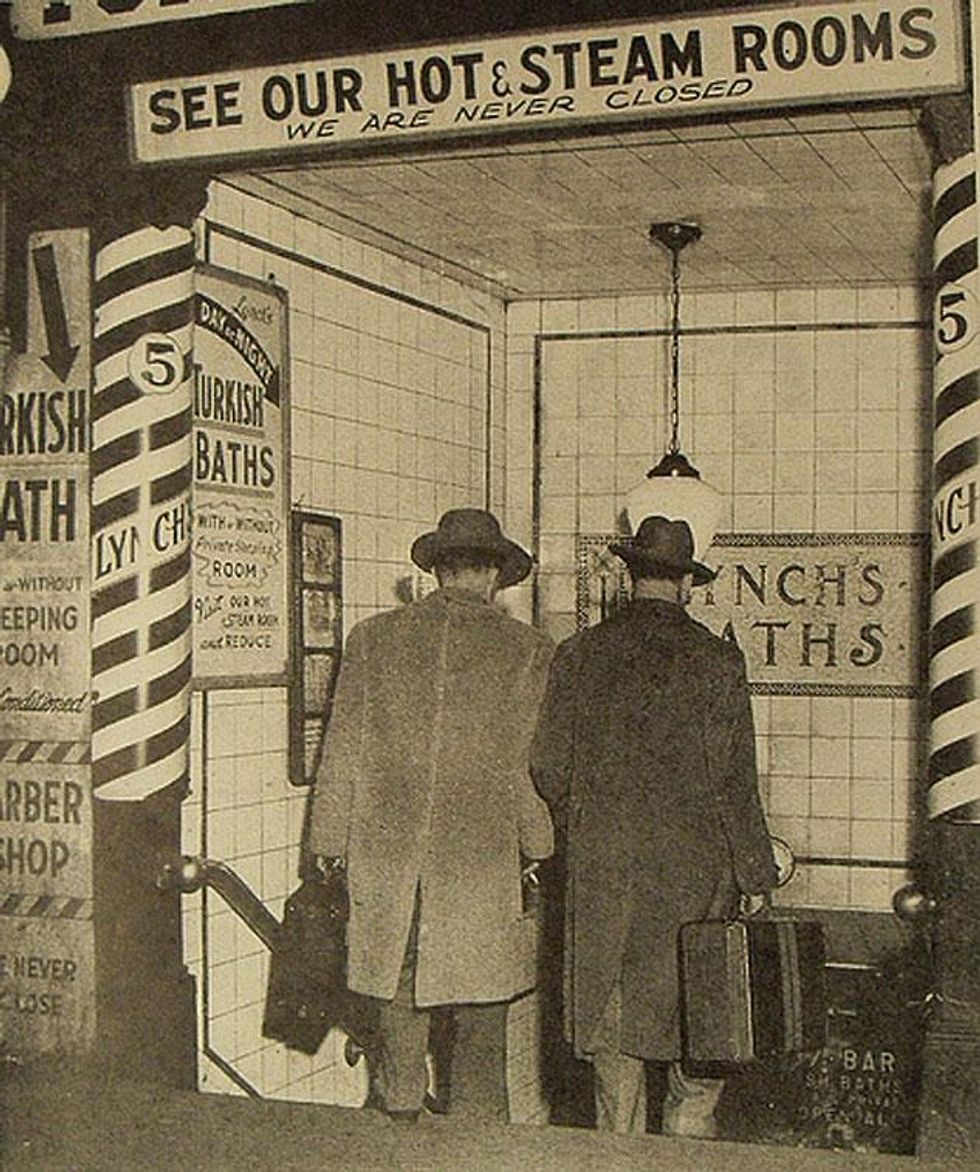
Just a couple of executives looking for a relaxing evening at the baths in Times Square in the 1950s.
See more bathhouse history on the following pages >>>
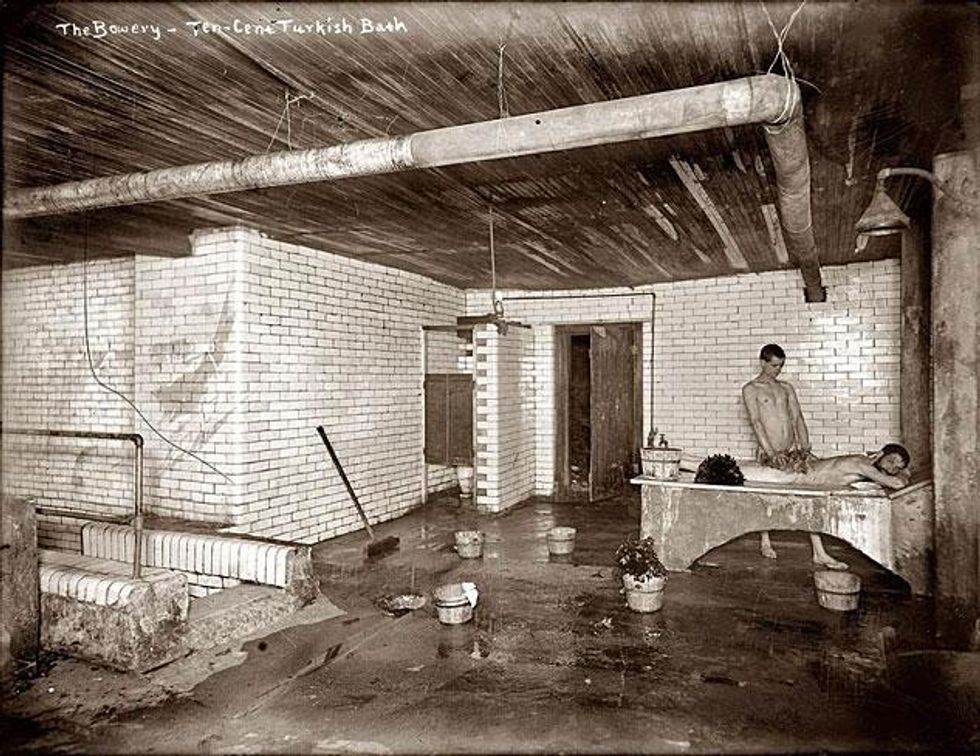
The baths in the Bowery, about 1910. A bit rough around the edges, but still fun.
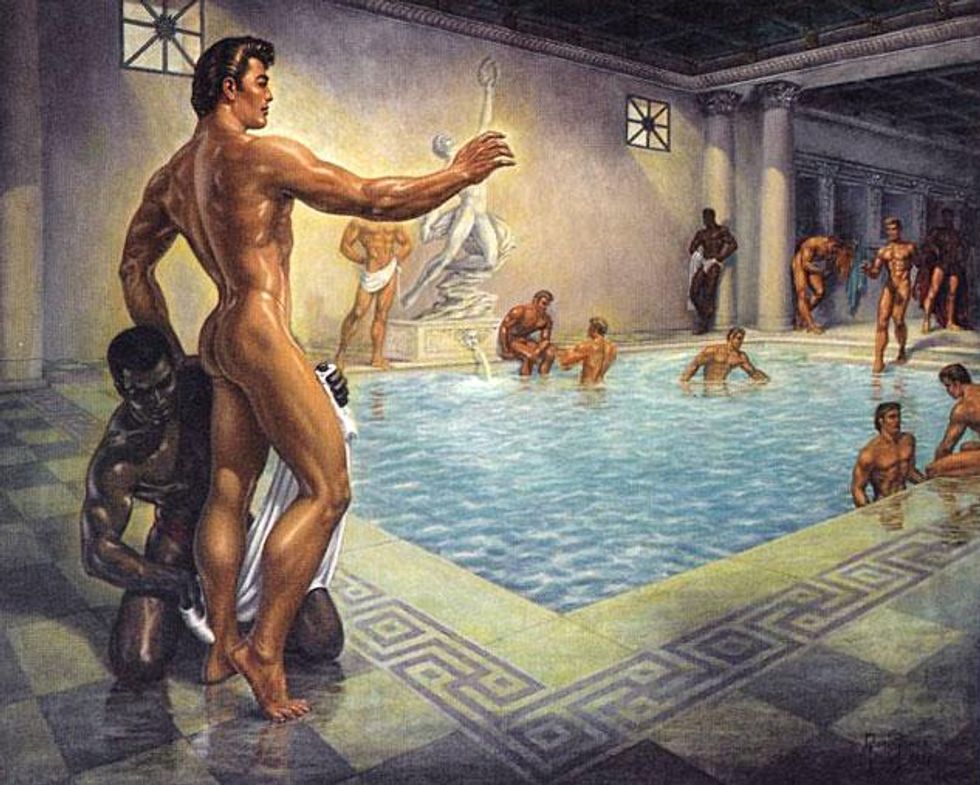
This piece was painted by mid-century physique artist Quaintance. Thankfully there were always a few friends to help you dry off.
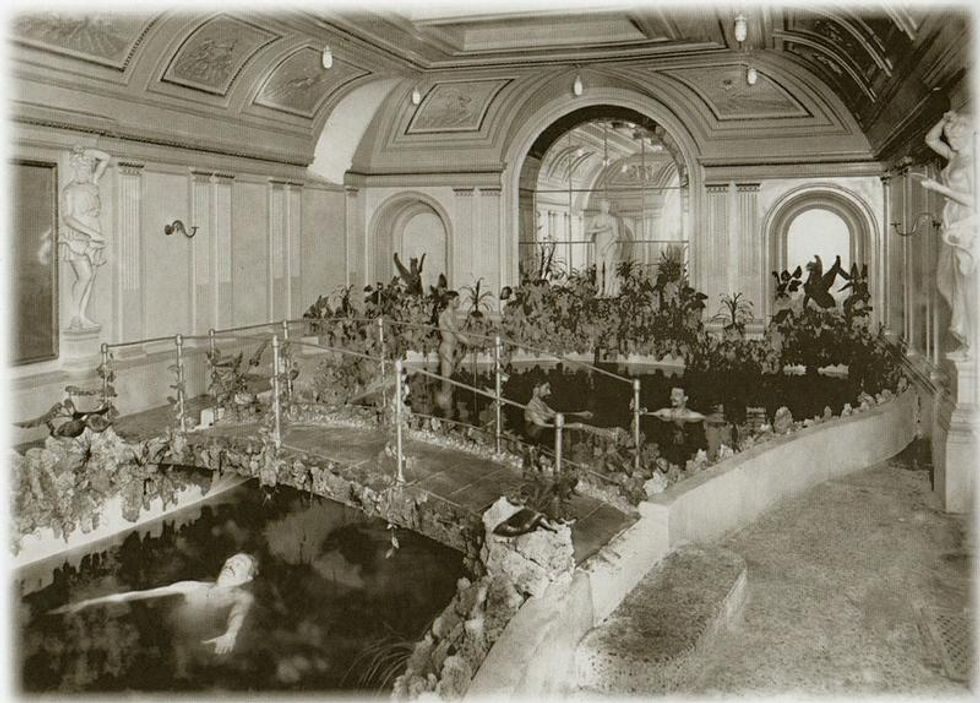
In Russia at the turn of the last century, there were enormous and luxurious bathhouses for wealthy men. Seen here: the Yegorev brothers' swanky joint.
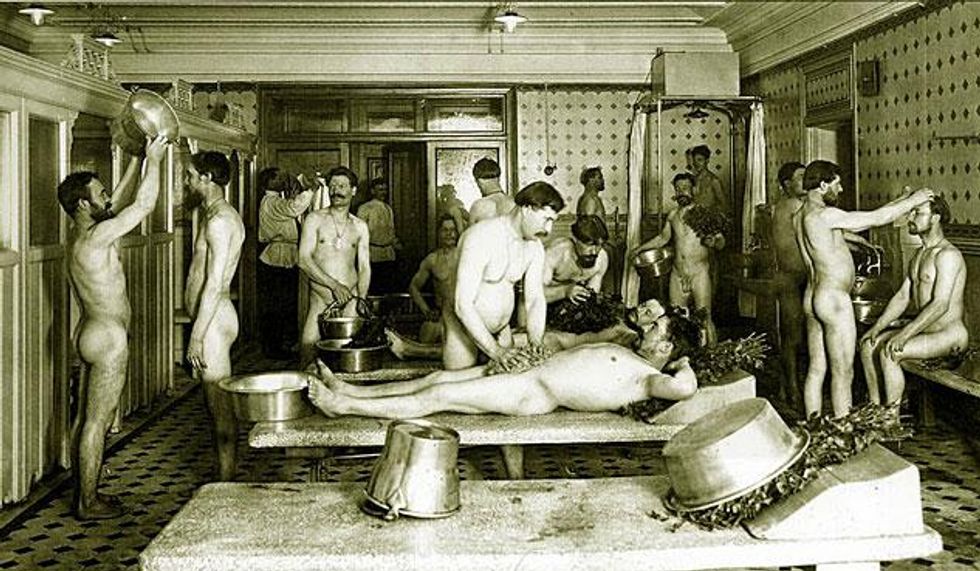
Naked attendants washed and massaged the patrons in this Russian bathhouse.
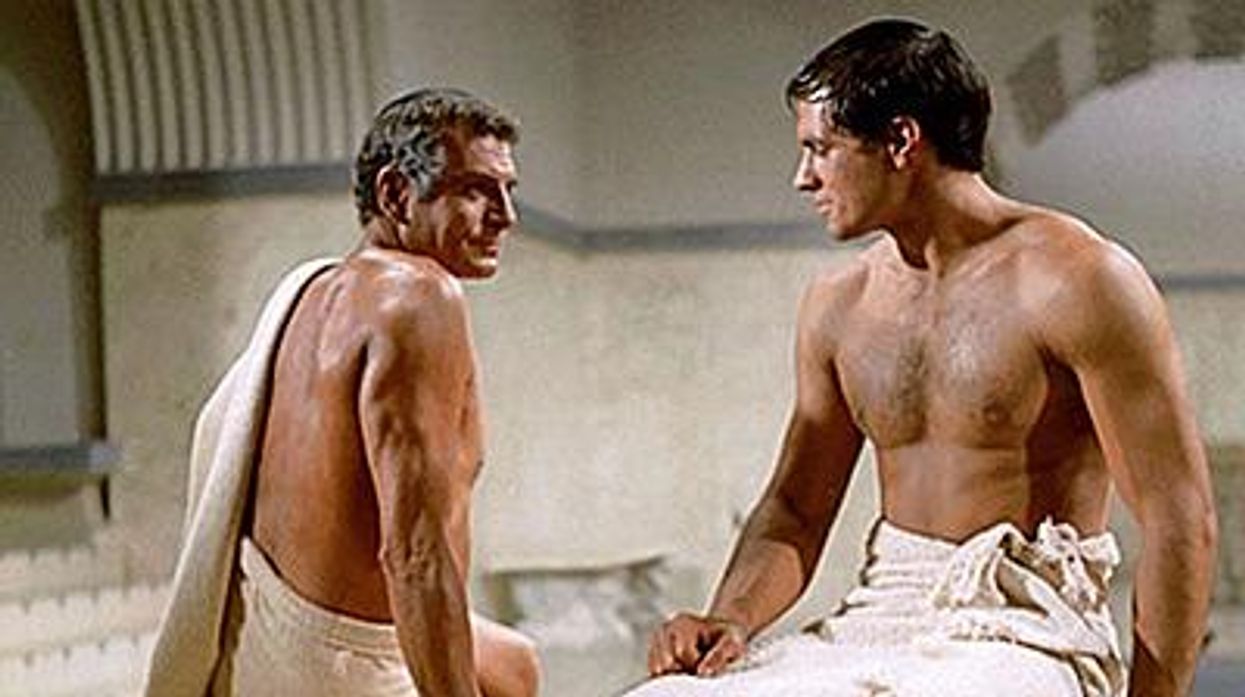
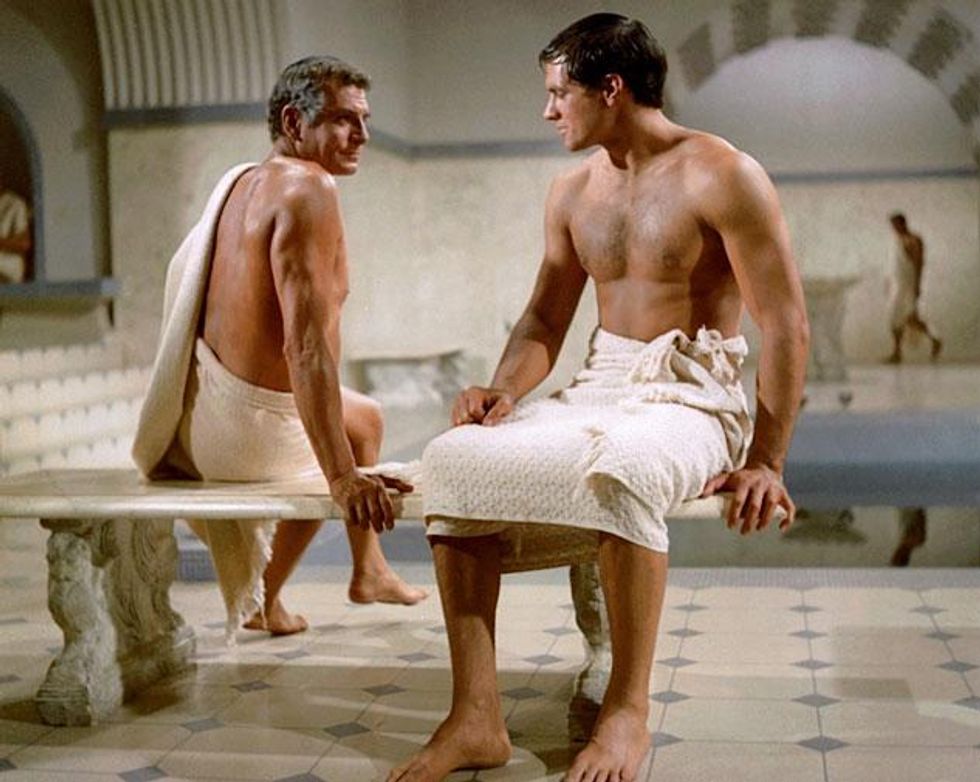 Sir Laurence Olivier gives John Gavin the eye in Spartacus. Oh, what fun Olivier, Charles Laughton, and John Dall must have had in this 1960 epic.
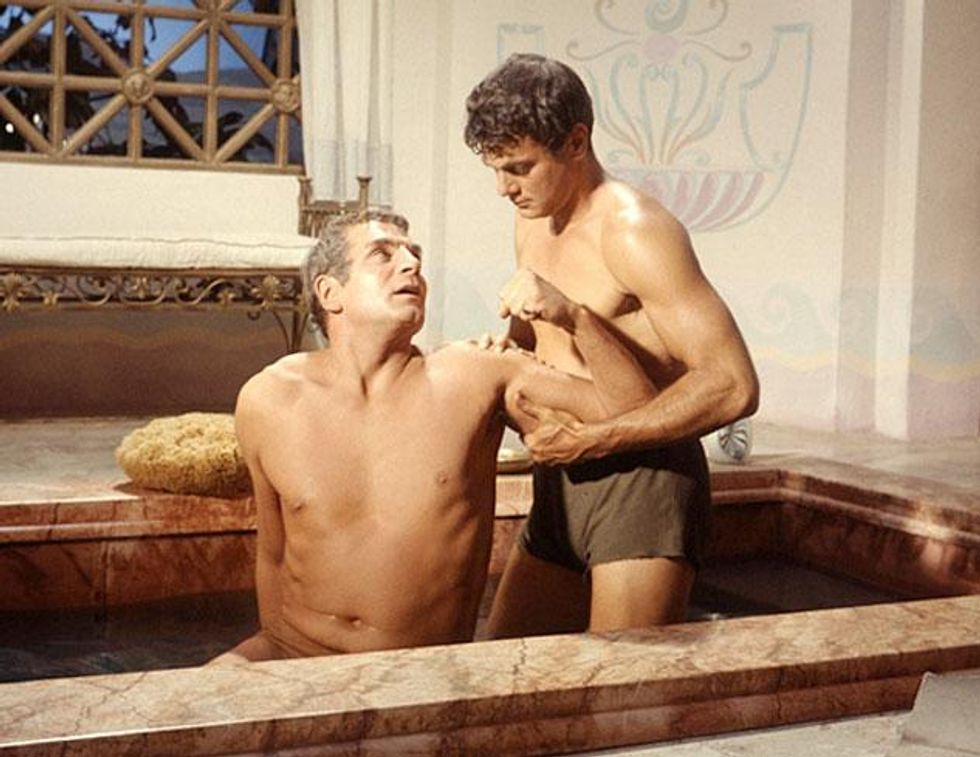 And Tony Curtis! Don't forget Tony Curtis.
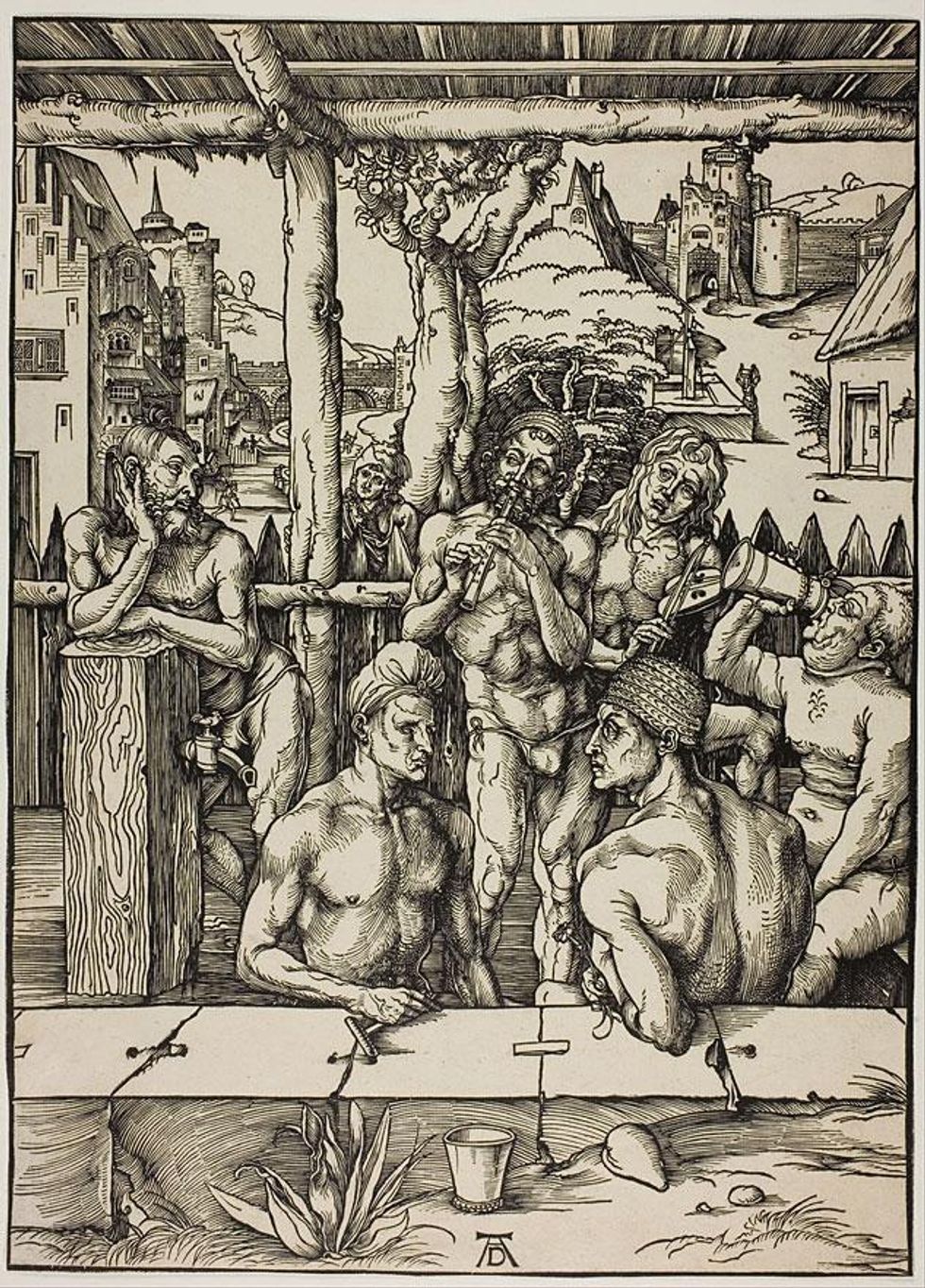 Hard to figure out who the buyer would be for Albrecht Durer's Nuremburg Bath House, 1496. The bloggers here tell us: "It is believed that the figure in the center playing the flute is Durer himself because he is bearded, with only a risque codpiece covering his genitals. The two men in the foreground are believed to be the very sexually permissive, patrician (the ruling families of Nuremberg) Paumgartner brothers, Stephen and Lucas, who Durer depicted in the Paumgartner Altar." Please note the location of the spigot near the man's junk on the upper left. We had to be subtle then.
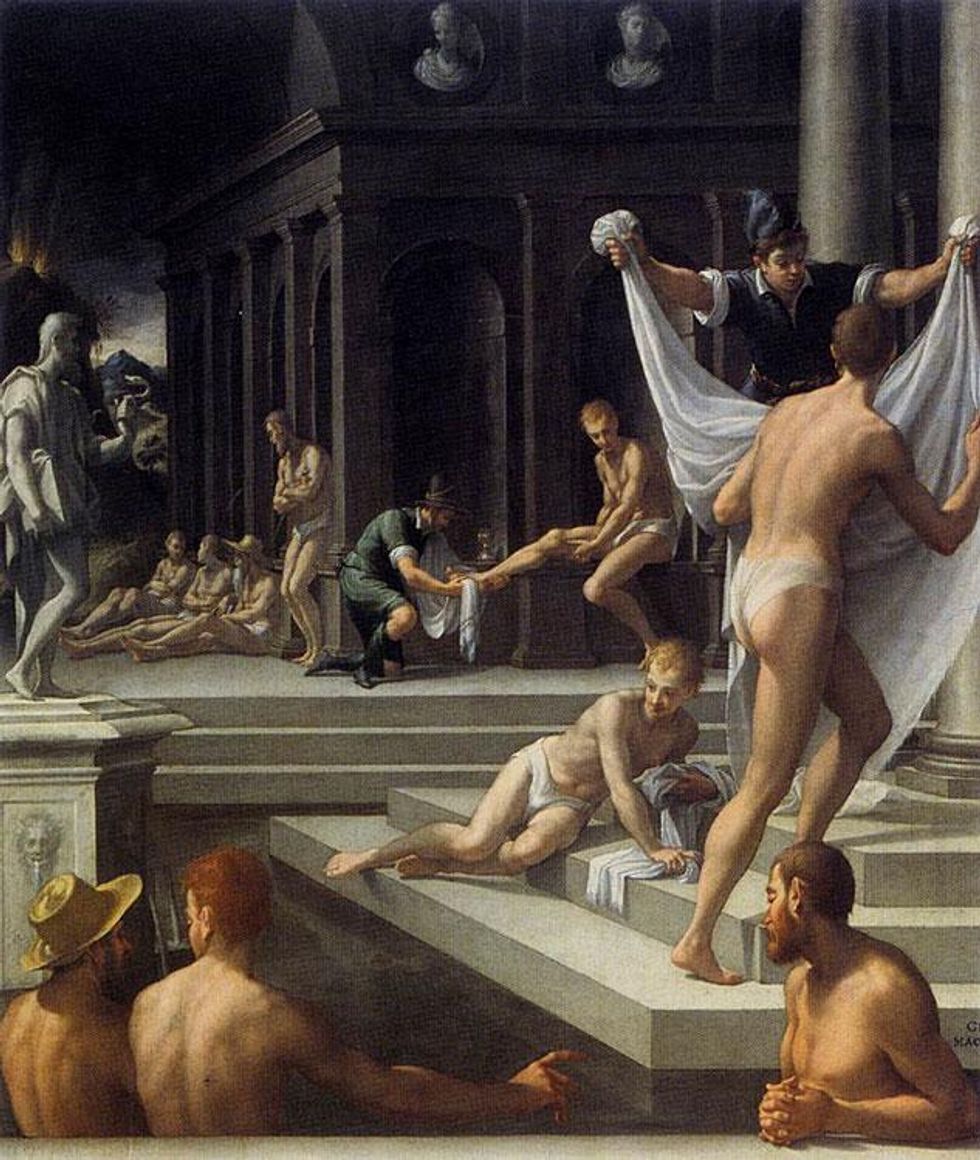 Flash forward to 1592, to Girolamo Macchiette's Firenze Baths at Pozzuli. A bit more modest, especially the attendants' Peter Pan-style outfits.
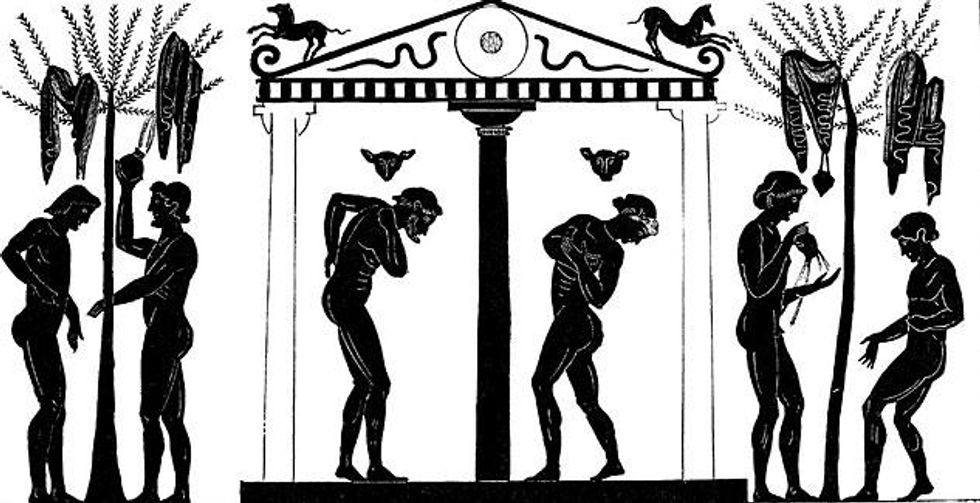 Woodcuts from Daremberg-Saglio, Dictionnaire des Antiquites Grecques et Romaines I (1877) s.v. Balneae
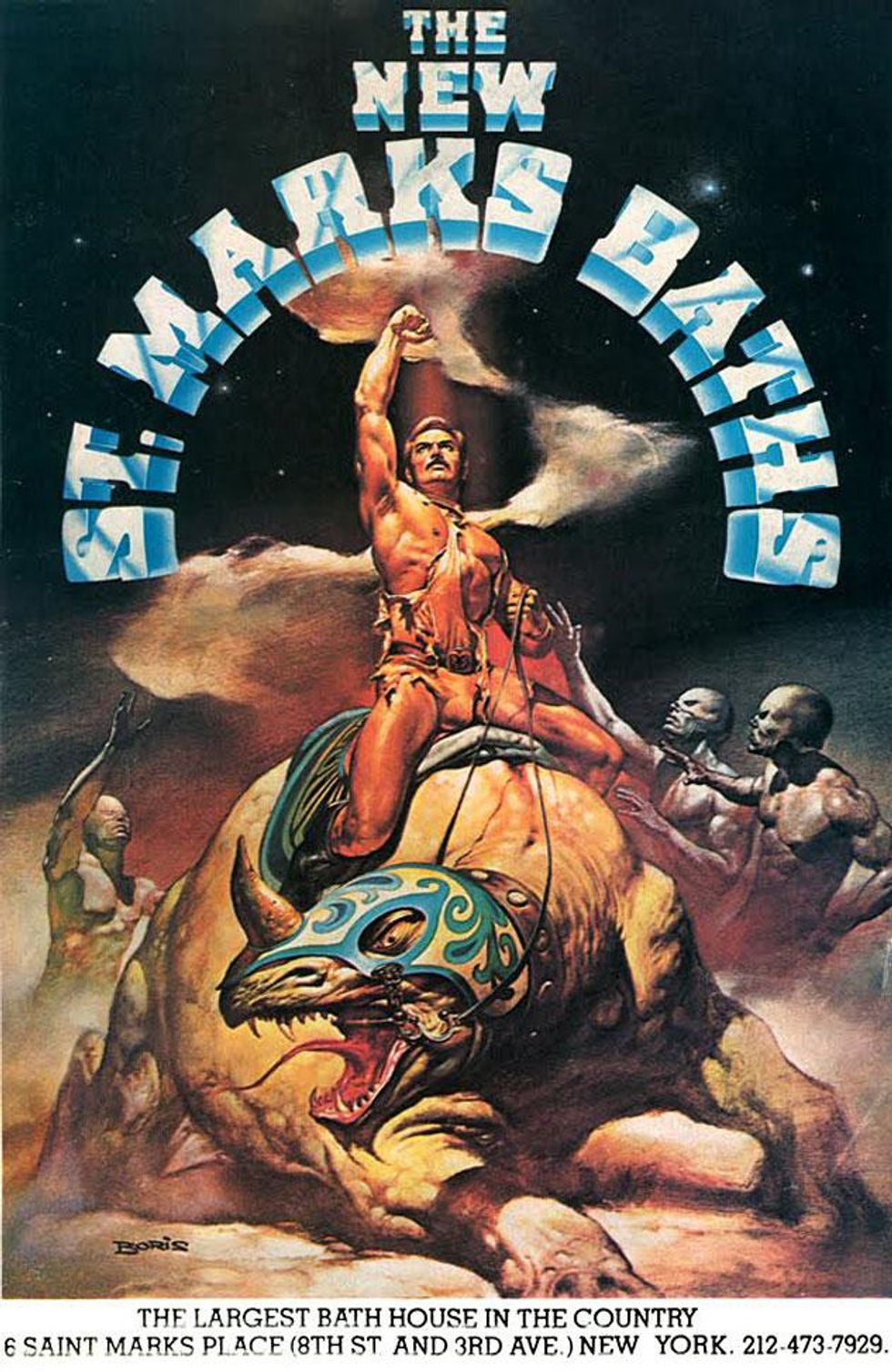 After viewing a few of the antique images of bathhouses, this 1978 poster for the infamous St. Marks Baths in New York City makes a bit more sense. The man who opened the baths would go on to launch a notorious nightclub in New York City, widely considered the mother of all dance palaces: The Saint.
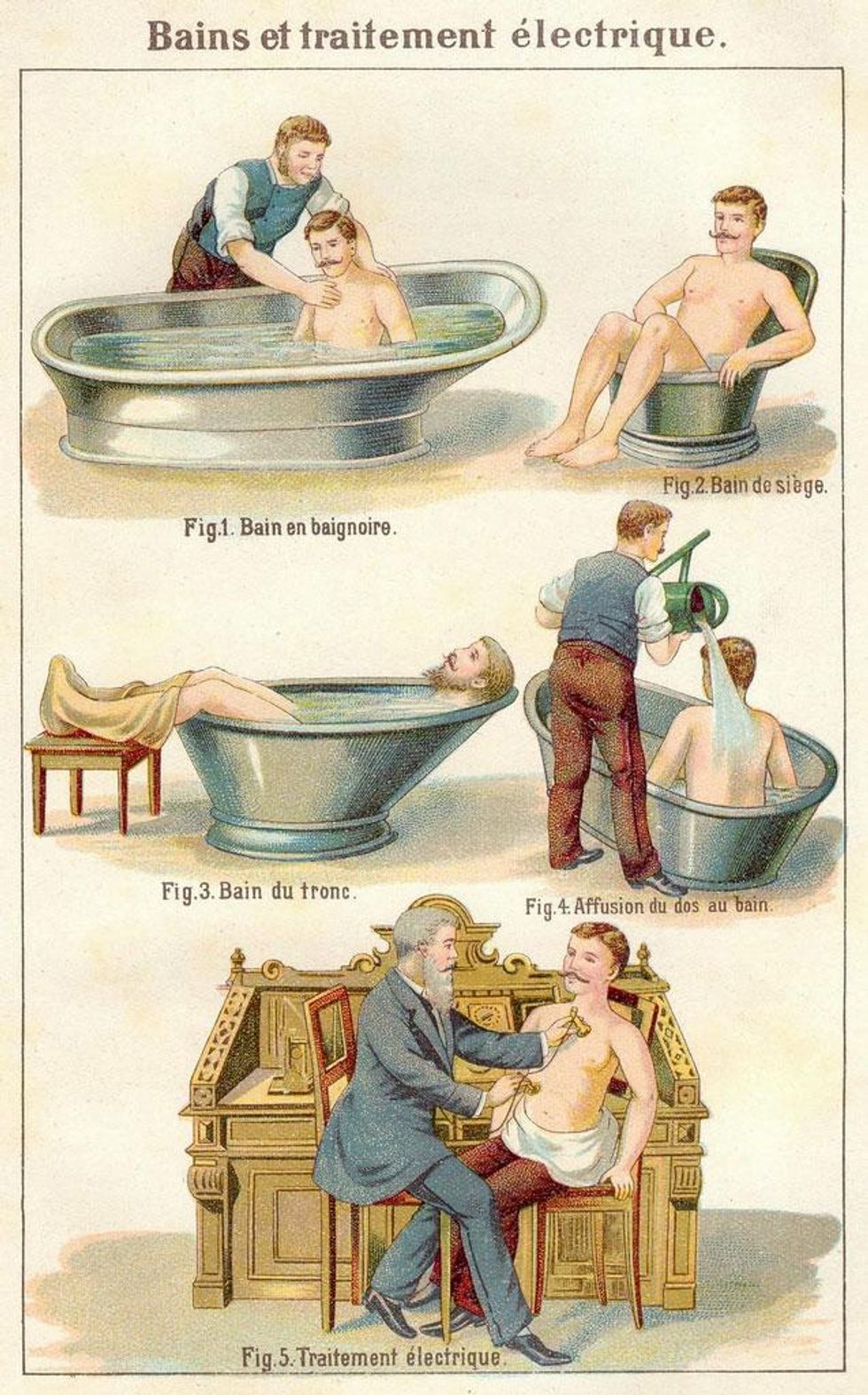 A few techniques for bathing your friend.
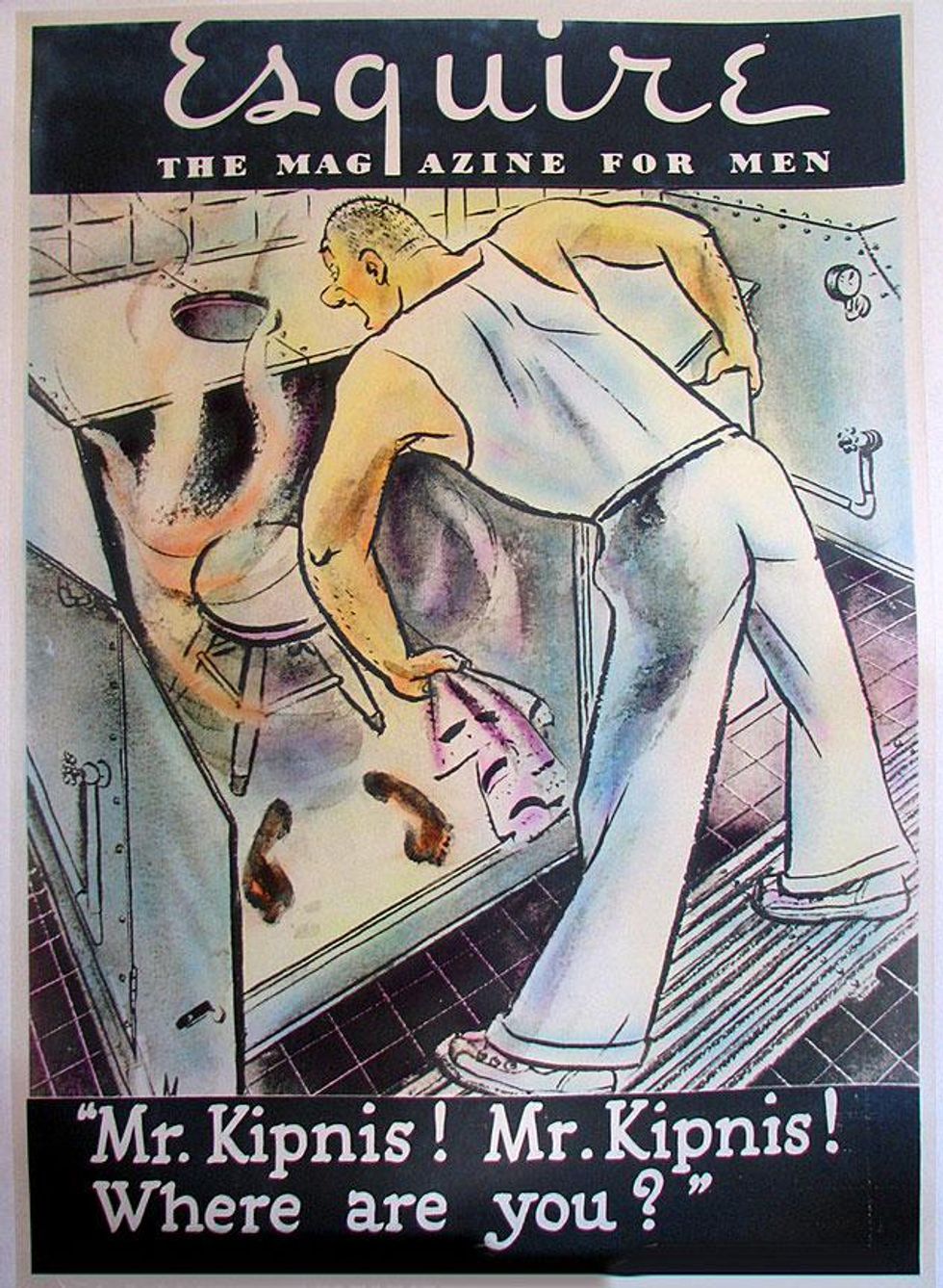 Esquire magazine shows the perils of lingering in the steam box.
Before the sexual revolution and the openness of gay liberation, if a guy needed a friend for the night, he made his way to the YMCA -- hence the song, here performed by the Village People in Can't Stop the Music (1980). But by the time this film was made, bathhouse culture had exploded, and places like Dave's Bath Club Chain, the Everard, and the St. Marks, among others, had replaced the YMCA, and it became the place where only the most closeted guys trawled the hallways.
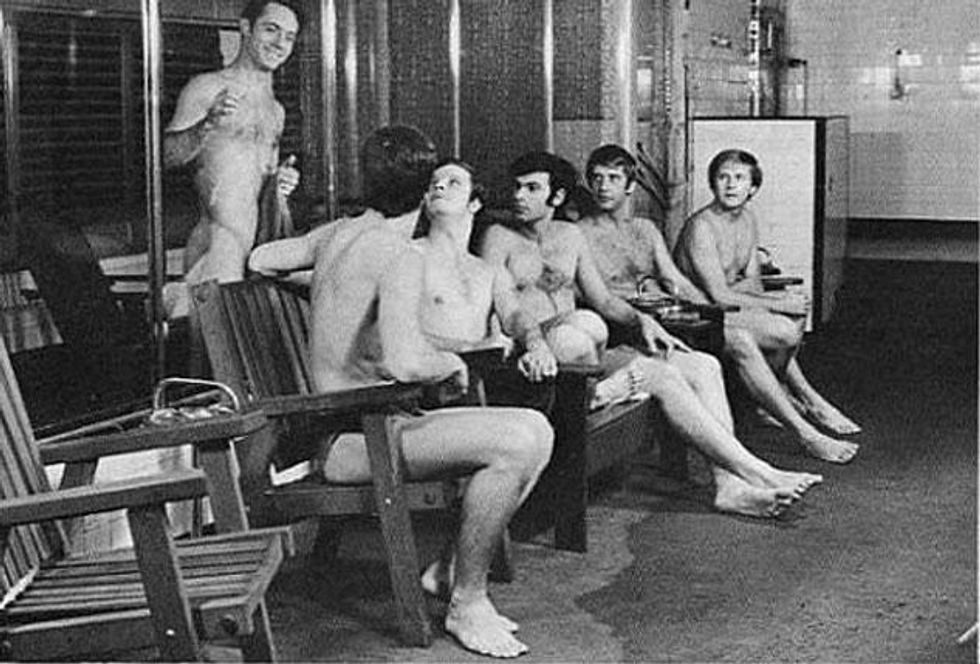 In the 1970s, bathhouse culture formally came out. Before that time, the steamy rabbit warrens of rooms and moldy tile walls were the hiding place of men looking for discreet connections and quick sex. In the 1970s, the bathhouse returned to its function as a gathering place for men to connect, converse, and build friendships and relationships, not unlike the ancient Greek and Roman baths as well as the Turkish hammams.
 The most famous of all was the Continental Baths, which opened in 1968 in the basement of the Ansonia Hotel. (It became the location of the first straight sex club, Plato's Retreat, in 1978.) Bette Midler is known for starting her career at the Continental singing to an audience clad only in towels. Barry Manilow was often accompanying her, clad only in a towel as well.
While the performer most associated with performing there was Midler, a surprising number of other performers made their way to the gay sex palace to entertain the troops: Peter Allen, the Andrews Sisters, Jim Bailey, Teresa Brewer, Cab Calloway, Nell Carter, Chubby Checker, Natalie Cole, Barbara Cook, Jackie Curtis, Alice Faye, Totie Fields, Connie Francis, Lesley Gore, Dick Gregory, Jobriath, Andy Kaufman, Gladys Knight and the Pips, Frankie Knuckles, Labelle, Dorothy Lamour, the Manhattan Transfer, Phyllis Newman, the New York Dolls, Anita O'Day, the Pointer Sisters, Johnnie Ray, Martha Raye, Minnie Riperton, Lillian Roth, Kay Starr, Elaine Stritch, Yma Sumac, Sarah Vaughan, Margaret Whiting, and Holly Woodlawn, among many others.
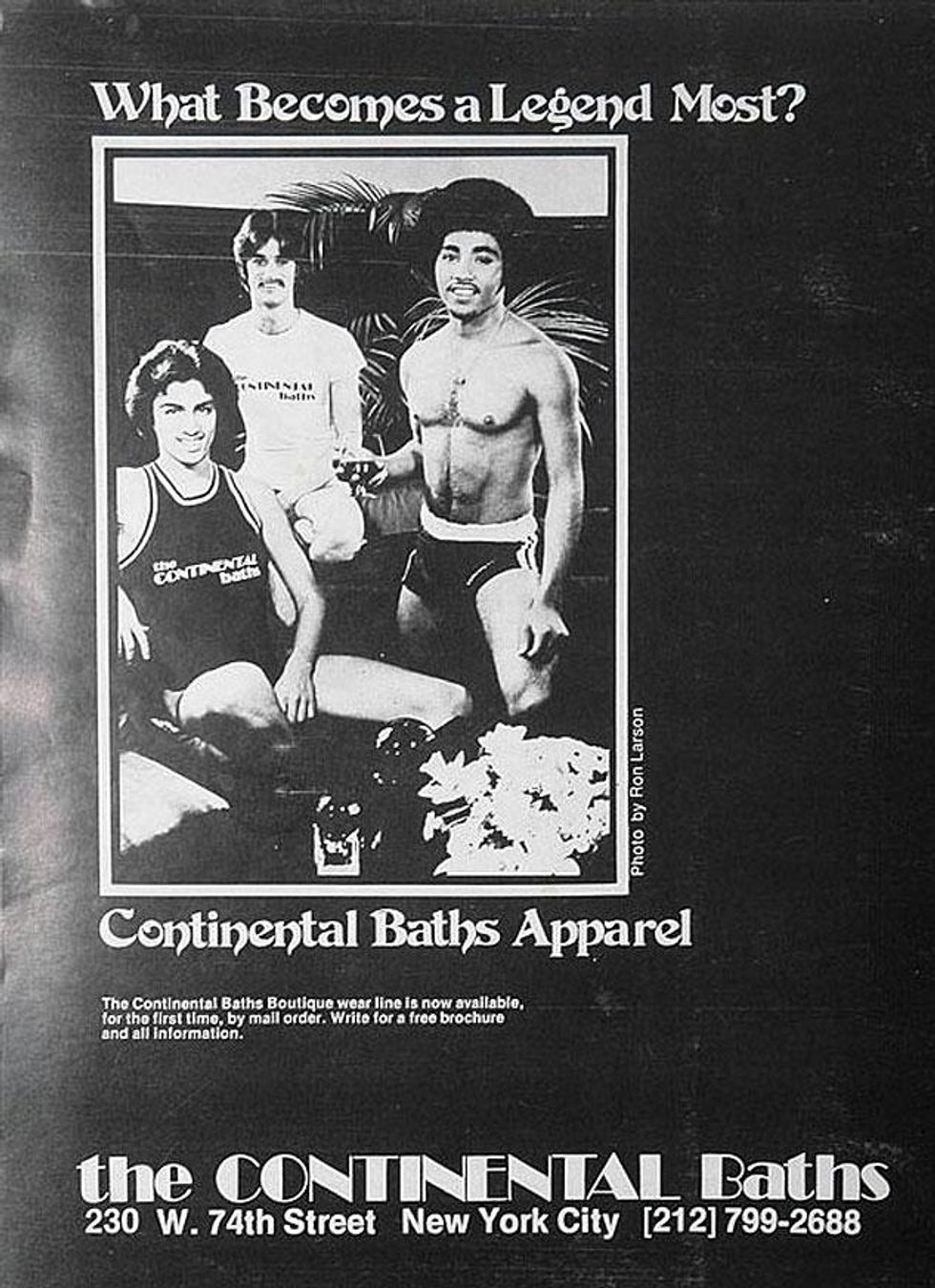 I would sell one of the interns here on the open market to get one of these Continental Baths T-shirts.
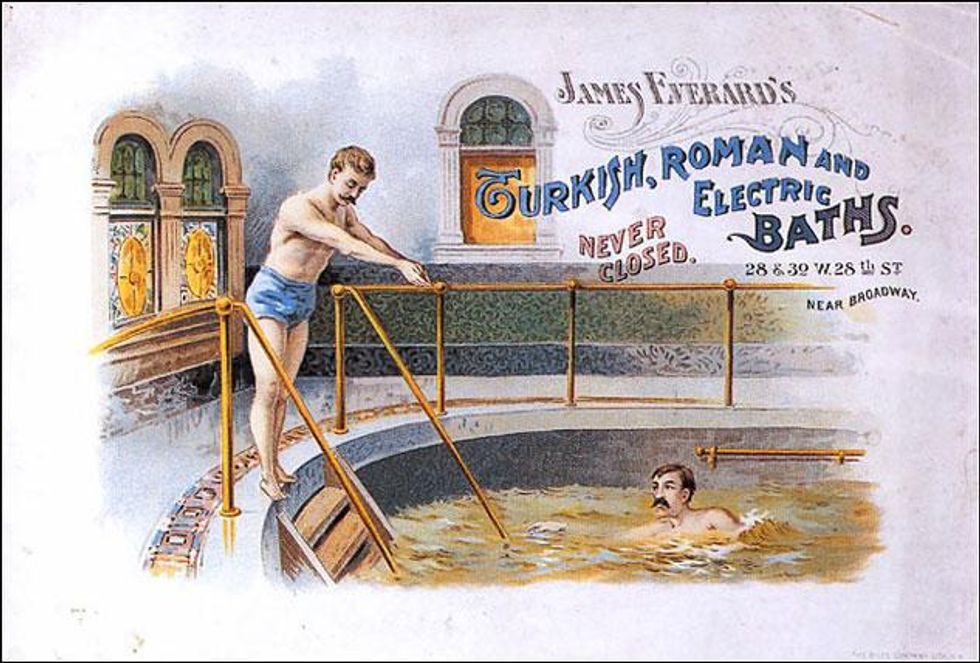 The other most notorious and long-lived bathhouse in New York was the Everard, which was casually called the "Ever-Hard."
The Everard was founded by James Everard, who had already amassed a small fortune with his brewery on 135th Street in NYC. Meant as a health retreat for men, it saw arrests for lewd behavior as early as 1919. By the '20s it was known primarily as a gay meeting place for sex and community. Two large green lanterns outside were said to resemble police precinct lights, but queer historians speculate that green was a code color for homosexual men as far back as Oscar Wilde's green carnations.
Because the bathhouse had an almost 100-year life span, many famous gay men from all walks of life were reportedly habitues: Alfred Lunt, Lorenz Hart, Charles James, Gore Vidal, Rudolf Nureyev, Truman Capote, and Ned Rorem.
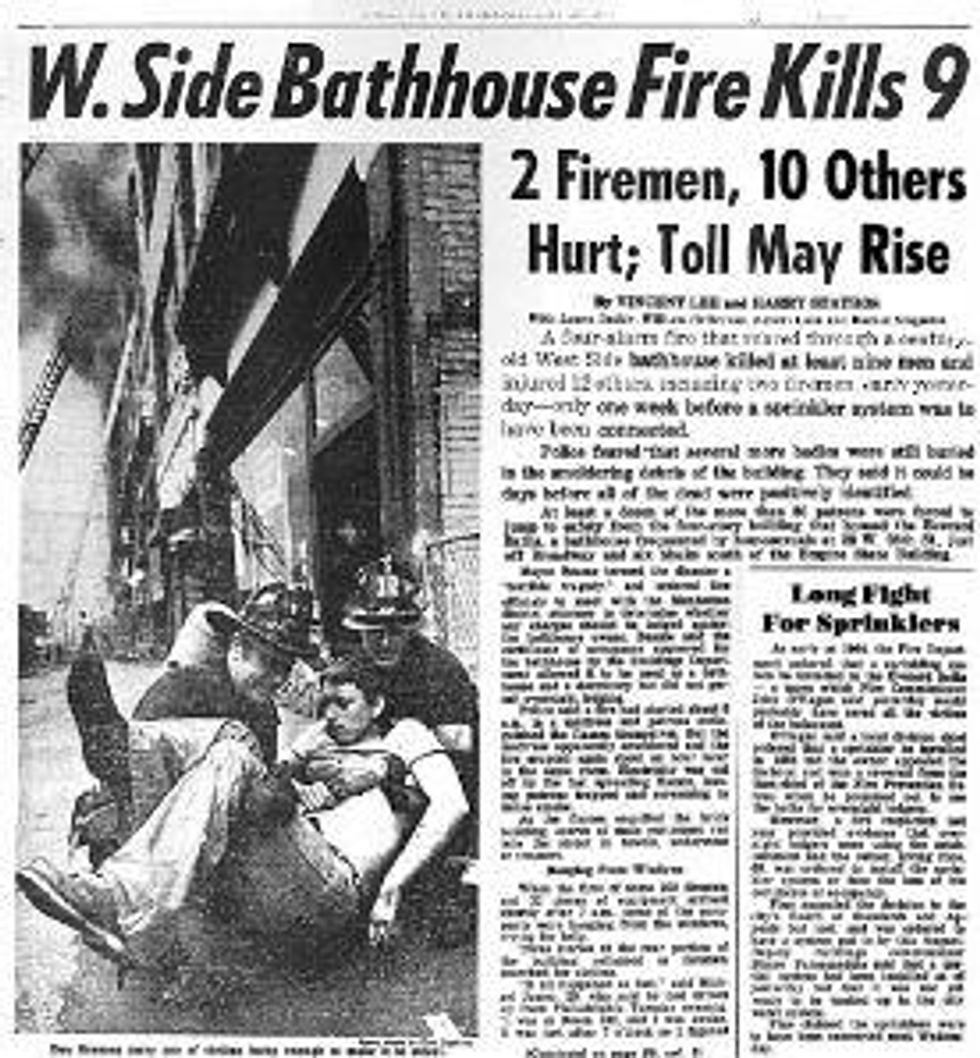
In May of 1977, nine men died in a fire at the Everard thanks to an outdated sprinkler system and ancient building codes. Firemen reported that fighting the blaze was made more difficult by panels covering the windows. Even though the top two floors of the building were destroyed, the Everard reopened only to be closed a few years later by gay New York mayor Ed Koch as a response to the AIDS epidemic.
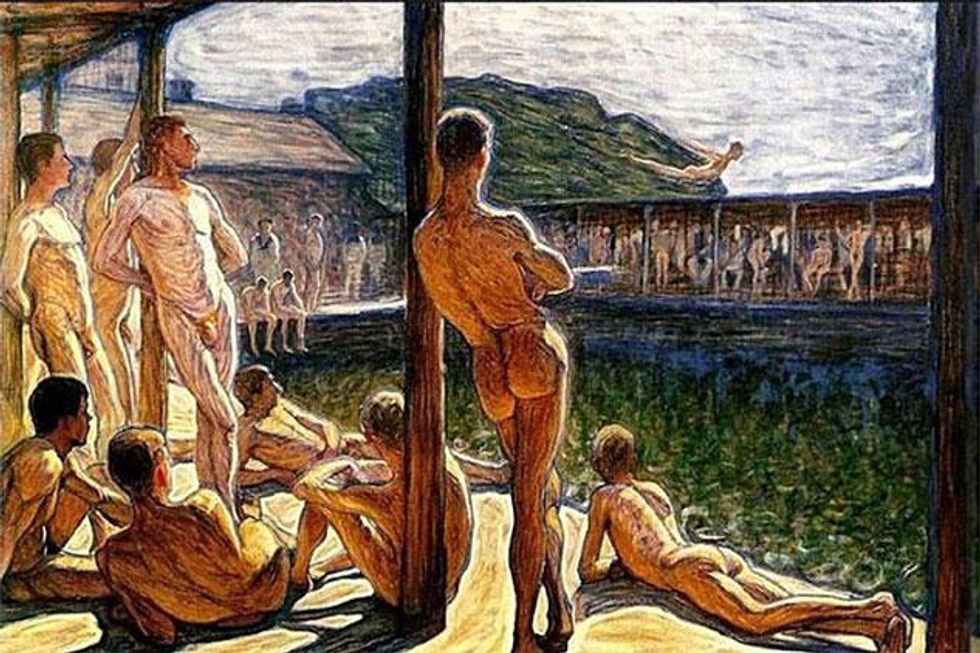 Swedish painter Eugene Jansson painted young men at the public baths as an almost utopian ideal. See more of his work here.
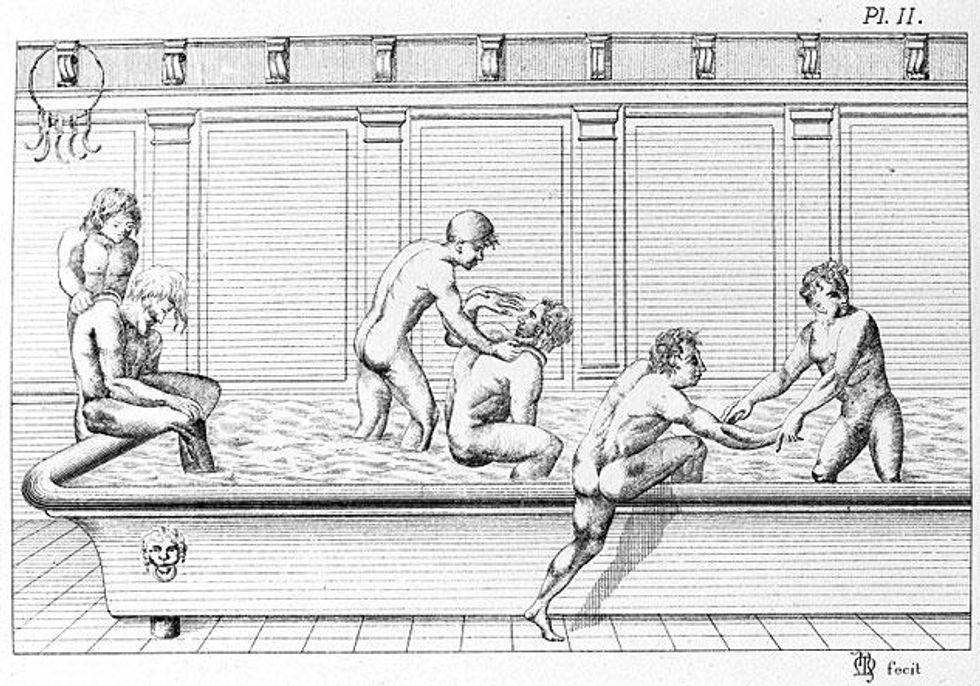 More old stuff. Looks like fun.
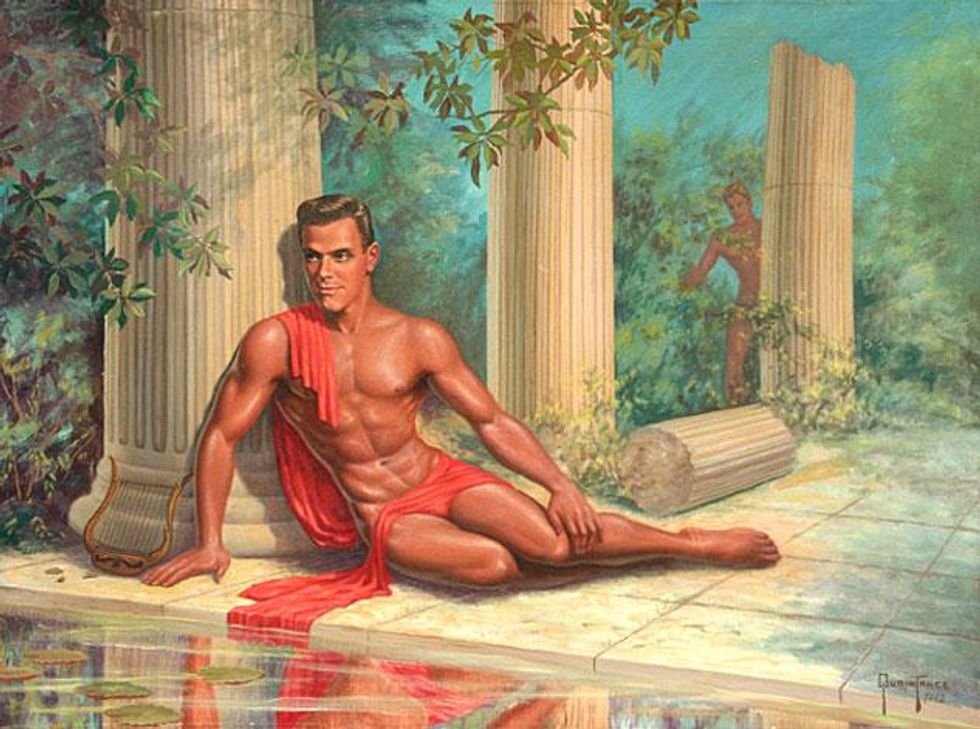 Mid-century madness by Quaintance.
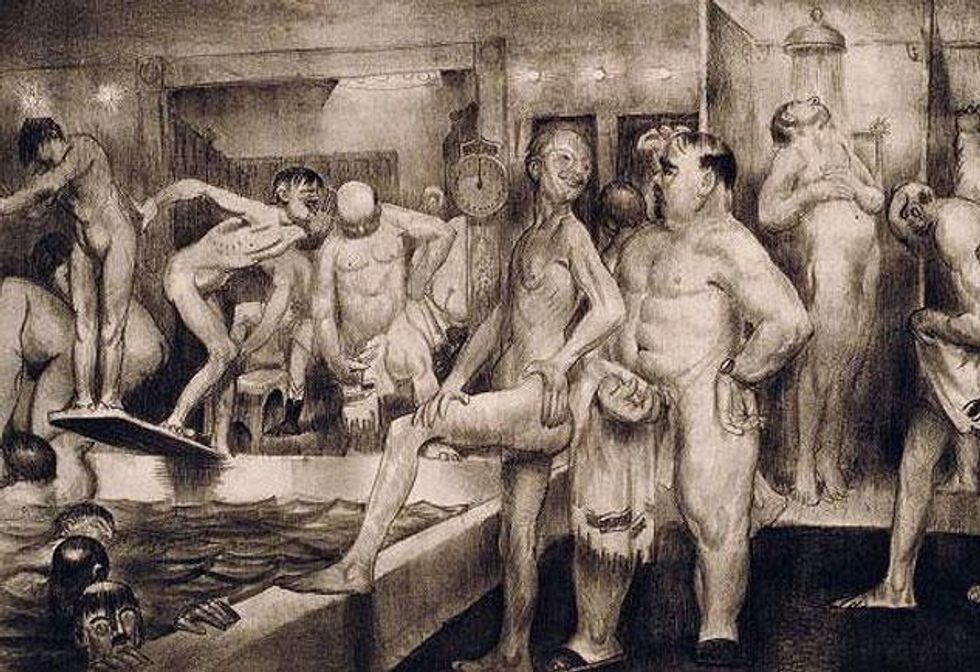 One of the most homocentric of all figurative artists, George Bellows, painted this turgid scene of the bathhouse in 1919.
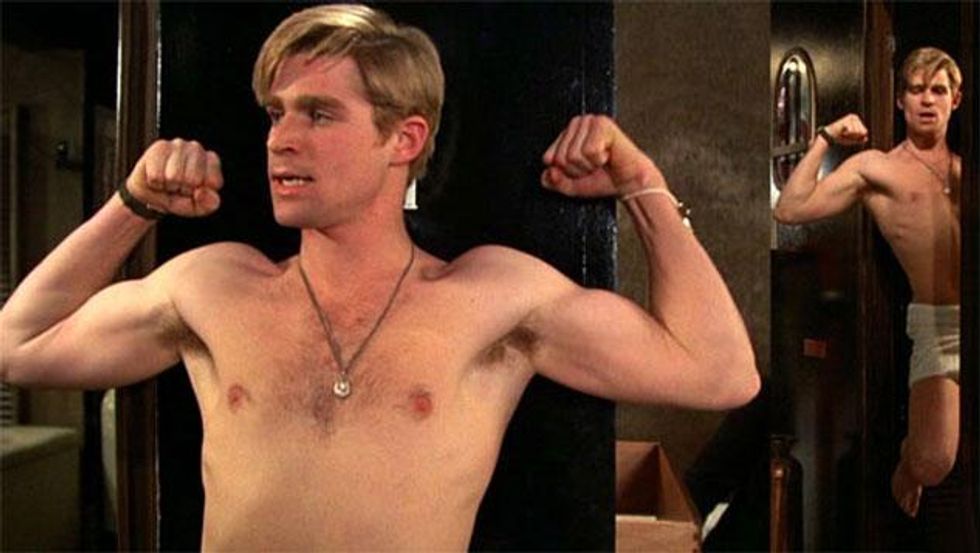
 Terrence McNally's farce set in a bathhouse, The Ritz, won Rita Moreno a Tony Award for her performance as Googie Gomez in the 1975 Broadway production, which she and many others of the original cast reprised in a 1976 film version directed by Richard Lester. The film also starring Treat Williams as a straight-bait cop (below.)
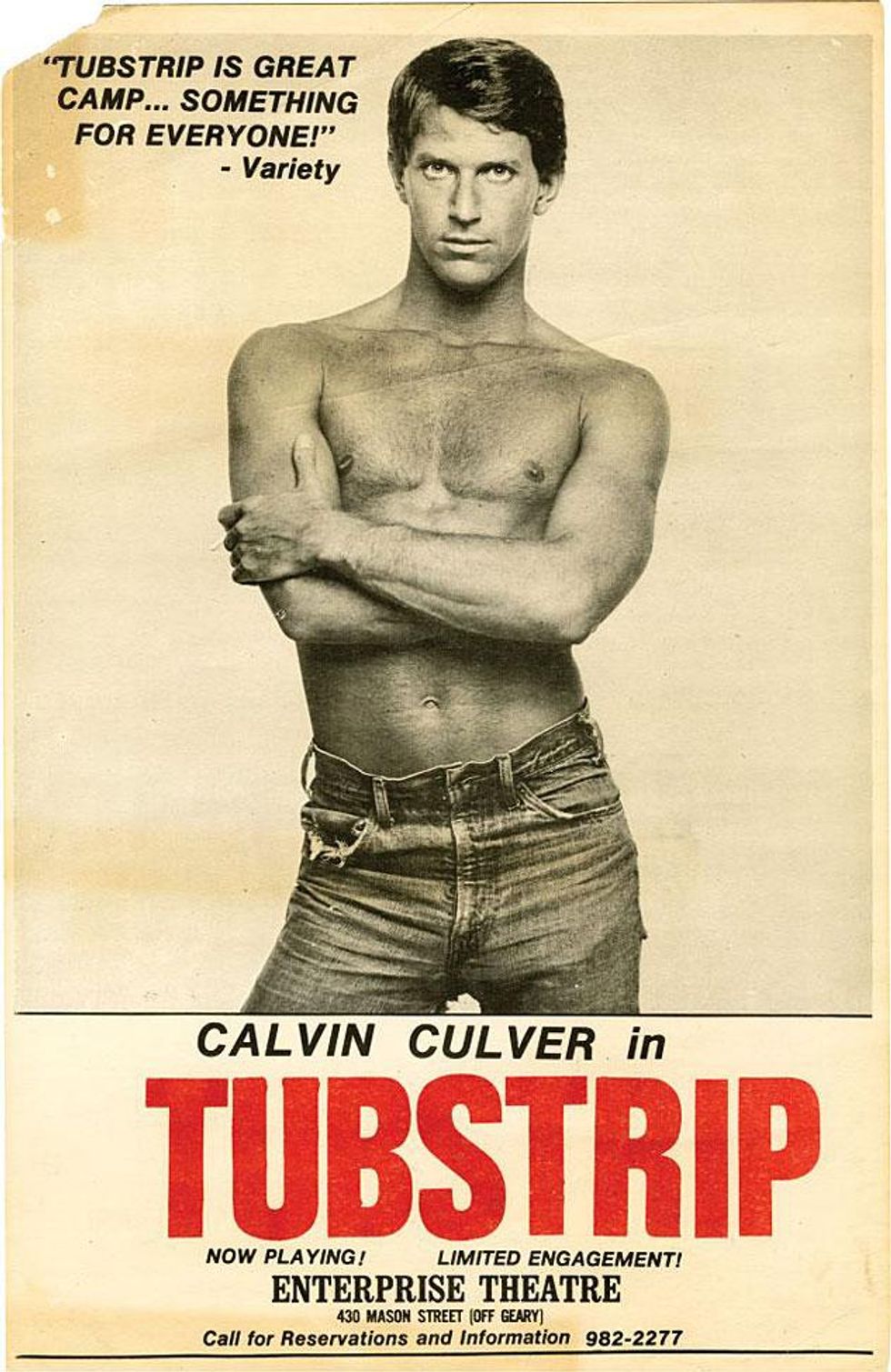 If you wanted something a little sexier, there was Tubstrip with Cal Culver (a.k.a. Casey Donovan), one of gay porn's first superstars. The show, both off-Broadway and on tour, was directed by the great porn director Jerry Douglas.
 OK, one more Quaintance painting, but only because you begged for it. Not exactly a bathhouse, but we will stretch the rules here, as it looks like a lot of rules are about to be stretched.