'%3E%3Cpath d='M16.3574 35.6519H12.9537L15.0491 18.8873L16.3574 35.6519ZM30.4229 54.0093L22.309 0.994385H7.91795L0 54.0093H10.6634L11.5802 46.3855H17.4014L17.9914 54.0093H30.4229Z' fill='%23971B20'/%3E%3Cpath d='M48.2073 41.8813C48.2073 43.4049 47.4892 44.0011 46.1144 44.0011H43.7595V11.0687H46.1144C47.4892 11.0687 48.2073 11.6636 48.2073 13.1885V41.8813ZM59.5273 43.6695V11.3326C59.5273 3.71323 53.5729 0.994385 47.8157 0.994385H31.7213V54.0093H47.8157C53.5729 54.0093 59.5273 51.29 59.5273 43.6695Z' fill='%23971B20'/%3E%3Cpath d='M90.183 0.994385H78.6039L75.0711 30.6157L71.9955 0.994385H59.4346L69.2474 54.0093H80.373L90.183 0.994385Z' fill='%23971B20'/%3E%3Cpath d='M107.063 42.3448C107.063 43.7359 105.951 44.5974 104.643 44.5974C103.269 44.5974 102.157 43.7359 102.157 42.3448V12.658C102.157 11.2676 103.269 10.4058 104.643 10.4058C105.951 10.4058 107.063 11.2676 107.063 12.658V42.3448ZM119.233 43.2723V11.7312C119.233 6.36384 112.952 -3.8147e-06 104.643 -3.8147e-06C96.2667 -3.8147e-06 89.9867 6.36384 89.9867 11.7312V43.2723C89.9867 48.6393 96.2667 55 104.643 55C112.952 55 119.233 48.6393 119.233 43.2723Z' fill='%23971B20'/%3E%3Cpath d='M150.976 43.9349V33.7309H139.069V42.3448C139.069 43.7359 137.957 44.5974 136.582 44.5974C135.076 44.5974 133.964 43.7359 133.964 42.3448V12.658C133.964 11.2676 135.076 10.4058 136.582 10.4058C137.957 10.4058 139.069 11.2676 139.069 12.658V21.2723H150.976V11.0687C150.976 5.70107 145.283 -3.8147e-06 136.582 -3.8147e-06C127.75 -3.8147e-06 121.796 5.70107 121.796 11.0687V43.9349C121.796 49.3022 127.75 55 136.582 55C145.283 55 150.976 49.3022 150.976 43.9349Z' fill='%23971B20'/%3E%3Cpath d='M167.478 35.6519H164.076L166.17 18.8873L167.478 35.6519ZM181.544 54.0093L173.432 0.994385H159.037L151.123 54.0093H161.785L162.704 46.3855H168.523L169.114 54.0093H181.544Z' fill='%23971B20'/%3E%3Cpath d='M205.412 10.4058V0.994385H177.081V10.4058H185.392V54.0093H197.428V10.4058H205.412Z' fill='%23971B20'/%3E%3Cpath d='M230.002 54.0093V43.9349H218.914V31.8746H226.635V21.8028H218.914V10.4058H230.002V0.994385H206.875V54.0093H230.002Z' fill='%23971B20'/%3E%3C/g%3E%3Cdefs%3E%3CclipPath id='clip0_260_7080'%3E%3Crect width='230' height='55' fill='white'/%3E%3C/clipPath%3E%3C/defs%3E%3C/svg%3E)
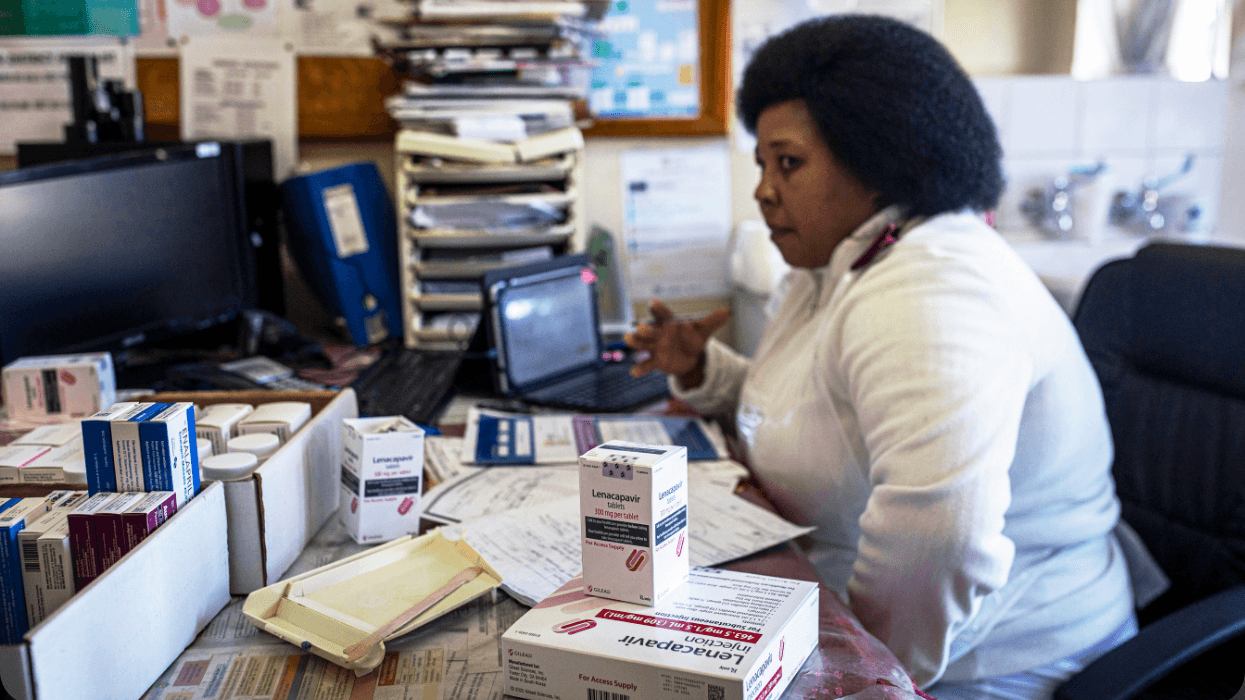
Healthcare providers around the world are running short on crucial HIV medicines since President Donald Trump began cutting foreign aid for HIV care last year.
The International Planned Parenthood Foundation, which supports sexual and reproductive healthcare globally, recently surveyed its member organizations and found that more than half of respondents had run out of certain HIV medicines or resources in the last year. The survey included 40 of the foundation’s 102 member associations globally.
“Without reliable access to these basic commodities, the established service delivery capacity of [member organizations] will not translate into uninterrupted care for clients,” a survey report released this month reads.
HIV test shortages were the most common form of shortage among respondents, and barriers to accessing condoms and pre-exposure prophylaxis, or PrEP, were also widely observed.
Historically, the United States has played a major role in funding HIV prevention and treatment abroad through programs like PEPFAR, the President's Emergency Plan for AIDS Relief. But in his second term, Trump has scaled back funding for international aid programs, including very successful HIV care programs.
These funding cuts have “reduced access to resources for millions of people who depended on the programs globally,” according to UNAIDS, or the Joint United Nations Programme on HIV/AIDS.
The loss of funding reduced access to resources for millions of people who depended on the programs globally, according to UNAIDS.
Last year marked the biggest hit in government funding of HIV care in low- and middle-income countries since governments began scaling up international efforts to combat the virus. This funding fell by $2.1 billion between 2024 and 2025, or roughly 25 percent, according to a 2025 report from UNAIDS and the health policy research nonprofit KFF.
In response to the survey, the International Planned Parenthood Foundation announced it would provide $600,000 in emergency funding to meet supply gaps in affected countries.
The foundation identified Barbados, Lebanon, Madagascar, and São Tomé & Príncipe as its highest priorities, given current shortages. It also named Cameroon, Côte d’Ivoire, Eswatini, Haiti, Liberia, Morocco, North Macedonia, the Philippines, Saint Vincent and the Grenadines, the Solomon Islands, Sri Lanka, Suriname and Zambia as “medium priority.”
“Whilst $600,000 was made available, the gaps reported in the detailed quantification added up to a product value of over $1.5 million USD over the next two years” for treatment and prevention supplies in some critically affected member countries, the survey report read.
“Investments in HIV commodity requirements and maintaining strong supply chains are a critical priority for IPPF moving forward, particularly as global supply chains are expected to come under further pressure and HIV case numbers continue to rise,” the report continues. “Targeted donor support is essential to support this effort.”