'%3E%3Cpath d='M16.3574 35.6519H12.9537L15.0491 18.8873L16.3574 35.6519ZM30.4229 54.0093L22.309 0.994385H7.91795L0 54.0093H10.6634L11.5802 46.3855H17.4014L17.9914 54.0093H30.4229Z' fill='%23971B20'/%3E%3Cpath d='M48.2073 41.8813C48.2073 43.4049 47.4892 44.0011 46.1144 44.0011H43.7595V11.0687H46.1144C47.4892 11.0687 48.2073 11.6636 48.2073 13.1885V41.8813ZM59.5273 43.6695V11.3326C59.5273 3.71323 53.5729 0.994385 47.8157 0.994385H31.7213V54.0093H47.8157C53.5729 54.0093 59.5273 51.29 59.5273 43.6695Z' fill='%23971B20'/%3E%3Cpath d='M90.183 0.994385H78.6039L75.0711 30.6157L71.9955 0.994385H59.4346L69.2474 54.0093H80.373L90.183 0.994385Z' fill='%23971B20'/%3E%3Cpath d='M107.063 42.3448C107.063 43.7359 105.951 44.5974 104.643 44.5974C103.269 44.5974 102.157 43.7359 102.157 42.3448V12.658C102.157 11.2676 103.269 10.4058 104.643 10.4058C105.951 10.4058 107.063 11.2676 107.063 12.658V42.3448ZM119.233 43.2723V11.7312C119.233 6.36384 112.952 -3.8147e-06 104.643 -3.8147e-06C96.2667 -3.8147e-06 89.9867 6.36384 89.9867 11.7312V43.2723C89.9867 48.6393 96.2667 55 104.643 55C112.952 55 119.233 48.6393 119.233 43.2723Z' fill='%23971B20'/%3E%3Cpath d='M150.976 43.9349V33.7309H139.069V42.3448C139.069 43.7359 137.957 44.5974 136.582 44.5974C135.076 44.5974 133.964 43.7359 133.964 42.3448V12.658C133.964 11.2676 135.076 10.4058 136.582 10.4058C137.957 10.4058 139.069 11.2676 139.069 12.658V21.2723H150.976V11.0687C150.976 5.70107 145.283 -3.8147e-06 136.582 -3.8147e-06C127.75 -3.8147e-06 121.796 5.70107 121.796 11.0687V43.9349C121.796 49.3022 127.75 55 136.582 55C145.283 55 150.976 49.3022 150.976 43.9349Z' fill='%23971B20'/%3E%3Cpath d='M167.478 35.6519H164.076L166.17 18.8873L167.478 35.6519ZM181.544 54.0093L173.432 0.994385H159.037L151.123 54.0093H161.785L162.704 46.3855H168.523L169.114 54.0093H181.544Z' fill='%23971B20'/%3E%3Cpath d='M205.412 10.4058V0.994385H177.081V10.4058H185.392V54.0093H197.428V10.4058H205.412Z' fill='%23971B20'/%3E%3Cpath d='M230.002 54.0093V43.9349H218.914V31.8746H226.635V21.8028H218.914V10.4058H230.002V0.994385H206.875V54.0093H230.002Z' fill='%23971B20'/%3E%3C/g%3E%3Cdefs%3E%3CclipPath id='clip0_260_7080'%3E%3Crect width='230' height='55' fill='white'/%3E%3C/clipPath%3E%3C/defs%3E%3C/svg%3E)
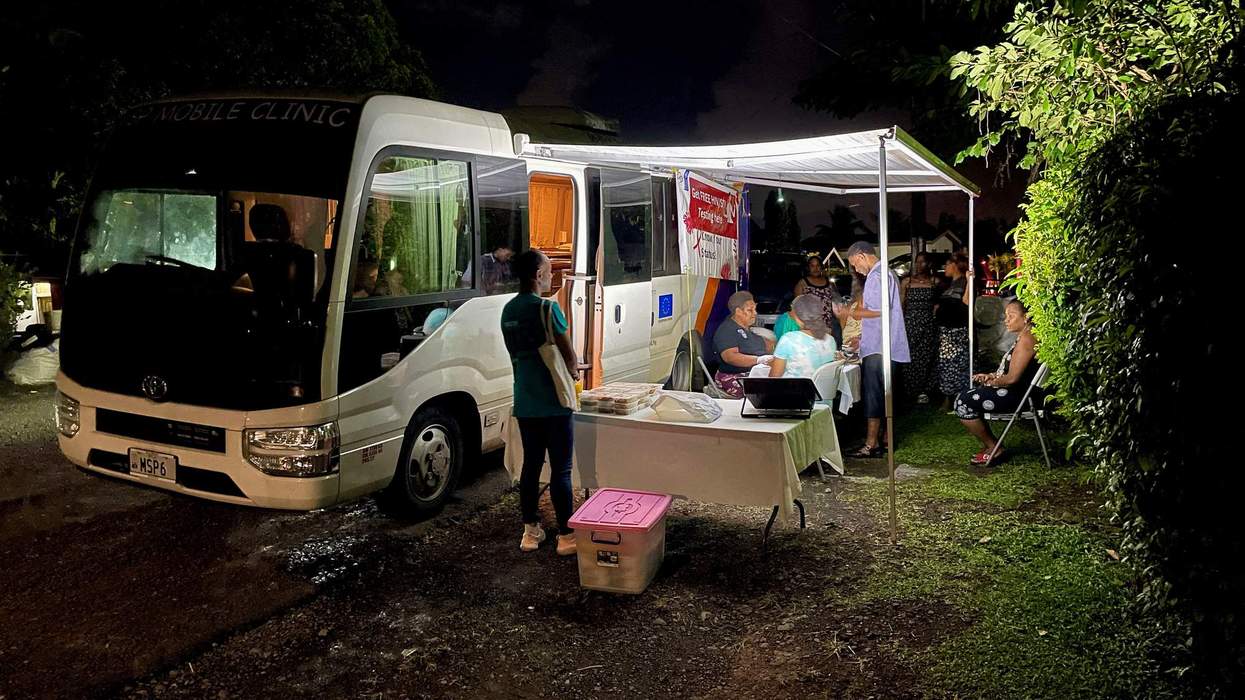

Fiji has declared a national crisis over a recent rise in HIV cases, adopting plans to allocate more health resources toward stopping the disease’s transmission.
Antonio Lalabalavu, Fiji’s minister for health and medical services, declared HIV a national emergency on Tuesday. The nation previously declared an HIV outbreak in January 2025.
In 2025, Fiji recorded 2,016 new HIV diagnoses, including 59 babies born with HIV, its government announced in a Facebook post Tuesday. Last year, the number of new HIV diagnoses in Fiji also rose by 27%, according to Reuters.
Under the new emergency declaration, the Fijian government will devote additional resources toward curbing HIV transmission, according to the Facebook post.
Related: Why affirming faith communities belong in the fight to end HIV
Government officials plan to expand access to rapid HIV tests, medications for HIV prevention and treatment, and harm reduction resources for people who use injectable drugs, which can be a mode of transmission for HIV.
“The response is focused on protecting lives, improving access to health services and reducing stigma,” the post reads. The nation’s HIV interventions will receive financial support from Australia, New Zealand, India, the Global Fund, and the United Nations.
“Fiji has recognized the urgency of the moment and is stepping up its response,” said Winnie Byanyima, executive director of UNAIDS, in a Wednesday press release. “It is also a stark reminder to the world that AIDS is not over. HIV epidemics can change quickly, and countries need health and community systems that are ready to respond urgently.”
Related: Funding cuts could cause 3.3 million additional HIV infections by 2030: report
More than half of new cases with a known mode of transmission were linked to sexual transmission, and nearly half came from injection drug use, according to UNAIDS. To address transmission via injection drug use, UNAIDS aims to introduce a needle and syringe program to the country pending parliamentary approval, according to the press release.
“The national crisis declaration is a call for action, not fear. HIV is not transmitted through everyday contact, and people on effective treatment with an undetectable viral load do not sexually transmit HIV,” said Eamonn Murphy, UNAIDS Regional Director for Asia and the Pacific and Eastern Europe and Central Asia. “Fiji still has an opportunity to change the course of this epidemic. Stronger cooperation across the Pacific and sustained international solidarity can reinforce the national effort and help accelerate action.”
Related: The people who called AIDS God’s punishment for gays are helping measles make a comeback
Fiji is home to more than 937,000 people, according to 2026 numbers from the United Nations. UNAIDS estimated that 9,100 Fiji residents were living with HIV in 2025, but that only 39% knew their HIV status, and only 22% of people living with HIV were receiving antiretroviral treatment.
“The national crisis declaration is a call for action, not fear. HIV is not transmitted through everyday contact, and people on effective treatment with an undetectable viral load do not sexually transmit HIV,” said Eamonn Murphy, Pacific regional director for UNAIDS, in Wednesday’s press release. “Fiji still has an opportunity to change the course of this epidemic. Stronger cooperation across the Pacific and sustained international solidarity can reinforce the national effort and help accelerate action.