'%3E%3Cpath d='M16.3574 35.6519H12.9537L15.0491 18.8873L16.3574 35.6519ZM30.4229 54.0093L22.309 0.994385H7.91795L0 54.0093H10.6634L11.5802 46.3855H17.4014L17.9914 54.0093H30.4229Z' fill='%23971B20'/%3E%3Cpath d='M48.2073 41.8813C48.2073 43.4049 47.4892 44.0011 46.1144 44.0011H43.7595V11.0687H46.1144C47.4892 11.0687 48.2073 11.6636 48.2073 13.1885V41.8813ZM59.5273 43.6695V11.3326C59.5273 3.71323 53.5729 0.994385 47.8157 0.994385H31.7213V54.0093H47.8157C53.5729 54.0093 59.5273 51.29 59.5273 43.6695Z' fill='%23971B20'/%3E%3Cpath d='M90.183 0.994385H78.6039L75.0711 30.6157L71.9955 0.994385H59.4346L69.2474 54.0093H80.373L90.183 0.994385Z' fill='%23971B20'/%3E%3Cpath d='M107.063 42.3448C107.063 43.7359 105.951 44.5974 104.643 44.5974C103.269 44.5974 102.157 43.7359 102.157 42.3448V12.658C102.157 11.2676 103.269 10.4058 104.643 10.4058C105.951 10.4058 107.063 11.2676 107.063 12.658V42.3448ZM119.233 43.2723V11.7312C119.233 6.36384 112.952 -3.8147e-06 104.643 -3.8147e-06C96.2667 -3.8147e-06 89.9867 6.36384 89.9867 11.7312V43.2723C89.9867 48.6393 96.2667 55 104.643 55C112.952 55 119.233 48.6393 119.233 43.2723Z' fill='%23971B20'/%3E%3Cpath d='M150.976 43.9349V33.7309H139.069V42.3448C139.069 43.7359 137.957 44.5974 136.582 44.5974C135.076 44.5974 133.964 43.7359 133.964 42.3448V12.658C133.964 11.2676 135.076 10.4058 136.582 10.4058C137.957 10.4058 139.069 11.2676 139.069 12.658V21.2723H150.976V11.0687C150.976 5.70107 145.283 -3.8147e-06 136.582 -3.8147e-06C127.75 -3.8147e-06 121.796 5.70107 121.796 11.0687V43.9349C121.796 49.3022 127.75 55 136.582 55C145.283 55 150.976 49.3022 150.976 43.9349Z' fill='%23971B20'/%3E%3Cpath d='M167.478 35.6519H164.076L166.17 18.8873L167.478 35.6519ZM181.544 54.0093L173.432 0.994385H159.037L151.123 54.0093H161.785L162.704 46.3855H168.523L169.114 54.0093H181.544Z' fill='%23971B20'/%3E%3Cpath d='M205.412 10.4058V0.994385H177.081V10.4058H185.392V54.0093H197.428V10.4058H205.412Z' fill='%23971B20'/%3E%3Cpath d='M230.002 54.0093V43.9349H218.914V31.8746H226.635V21.8028H218.914V10.4058H230.002V0.994385H206.875V54.0093H230.002Z' fill='%23971B20'/%3E%3C/g%3E%3Cdefs%3E%3CclipPath id='clip0_260_7080'%3E%3Crect width='230' height='55' fill='white'/%3E%3C/clipPath%3E%3C/defs%3E%3C/svg%3E)


This story originally appeared on Them.
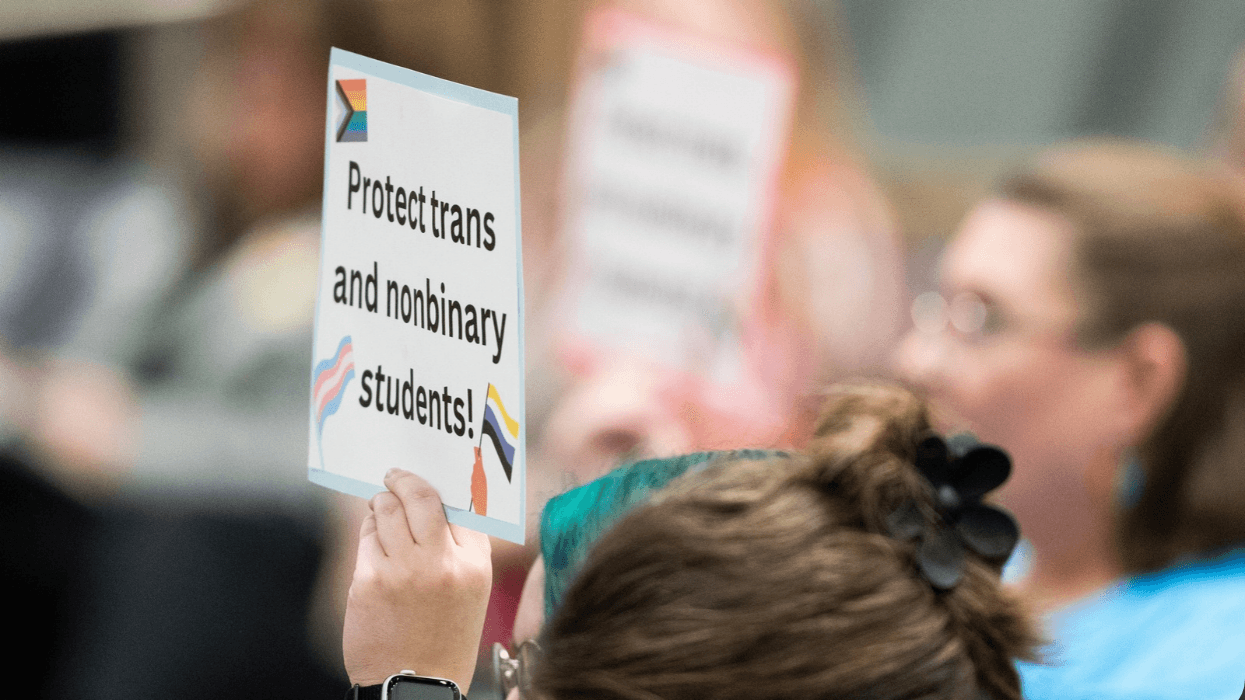
The Saddle Lake Cree Nation is standing up against the Canadian Province of Alberta’s gender-affirming care ban by positioning itself as a safe haven for transgender people seeking medical care.
In December 2024, Alberta Premier Danielle Smith and other members of the United Conservative Party passed a law that bars medical providers in the Canadian province from prescribing gender-affirming care like puberty blockers and hormone therapy to trans youth under age 16. Smith previously stated that the ban’s goal is to “preserve [the] fertility” of young people, despite longstanding scientific research that puberty blockers do not render a person infertile, and studies demonstrating repeatedly that gender-affirming care saves lives.
The law has sparked ongoing backlash from LGBTQ+ groups and human rights organizations including Amnesty International, Skipping Stone Foundation, and Egale Canada.
On September 9 of this year, during a public gathering for the 150-year anniversary of Treaty 6 — an agreement signed between several First Nations and the British Crown in 1876 that legally recognized the sovereignty of Indigenous communities — leaders of the Saddle Lake Cree Nation said that they will not allow the Canadian government to make decisions involving the welfare of their trans and gender-nonconforming youth. Specifically, the Saddle Lake Cree are invoking the “medicine chest clause” in the very same treaty establishing the nation’s right to comprehensive healthcare, which its leaders say includes gender-affirming care.
“No longer will our children and families have their rights taken away,” Saddle Lake chief Dale Steinhauer said during the gathering, per CBC News. “When one group's rights are removed, we are all affected.”
Instead, Steinhauer announced that the Saddle Lake Cree Nation, located 100 miles northeast of the province’s capital Edmonton, will recruit doctors to provide gender-affirming care services on its land reserve, so that youth within its borders and in surrounding provinces can legally and safely access the care they need.
In an email, Smith told CBC News that the College of Physicians and Surgeons of Alberta, the medical regulatory college in the province, “will continue to support regulated members in understanding their professional responsibilities [...] within the bounds of applicable legislation, including laws that apply to the treaty rights of First Nations.” During a separate Thursday press conference following the initial announcement, when Smith was asked about the Saddle Lake Cree Nation invoking Treaty 6 in defense of gender-affirming care, she said, “They are an independent nation, so I'll be interested to see if they’re able to attract a doctor to do that.”
Dr. James Makokis, a Two-Spirit family physician and member of the Saddle Lake Cree Nation, said standing up for trans and Two-Spirit youth is more critical than ever.
“It’s really important for us as individual clinicians, as individual physicians, as citizens of this democratic country known as Canada, for people to stand up,” Makokis said, in comments reported by CBC News. “Sometimes that means as individuals we have to risk losing some of our own individual freedoms, and in my case that could be my medical licence.”
The use of a First Nations sovereignty to combat anti-trans laws isn’t just a historic one-off; it’s part of a long legacy of Indigenous people standing up to colonial powers that have at times criminalized and attempted to eradicate gender variant people who existed on the continent long before colonization. “Two-Spirit” itself is a pan-Indigenous term, referring to myriad gender identities that existed across the Americas within communities throughout Turtle Island and Abya Yala.
Saddle Lake Cree leaders said they will continue to protect trans youth within its borders.
“All children, including trans and Two-Spirit children and their family, will have safety under our treaty,” Steinhauer said during the Wednesday press conference, later adding, “Have the colonial governments not learned enough from their own history?”
“Our people know all too well the consequences of governments removing the rights of parents to be parents…” Steinhauer said in a press release, per Script. “When we were being stolen from our parents and experienced genocide in Indian Residential Schools, we wondered, ‘Who are the people that will help us?’ Today, we are those people. Today we offer our help, support, and jurisdiction to override these dehumanizing laws.”
Get the best of what’s queer. Sign up for Them’s newsletters.