'%3E%3Cpath d='M16.3574 35.6519H12.9537L15.0491 18.8873L16.3574 35.6519ZM30.4229 54.0093L22.309 0.994385H7.91795L0 54.0093H10.6634L11.5802 46.3855H17.4014L17.9914 54.0093H30.4229Z' fill='%23971B20'/%3E%3Cpath d='M48.2073 41.8813C48.2073 43.4049 47.4892 44.0011 46.1144 44.0011H43.7595V11.0687H46.1144C47.4892 11.0687 48.2073 11.6636 48.2073 13.1885V41.8813ZM59.5273 43.6695V11.3326C59.5273 3.71323 53.5729 0.994385 47.8157 0.994385H31.7213V54.0093H47.8157C53.5729 54.0093 59.5273 51.29 59.5273 43.6695Z' fill='%23971B20'/%3E%3Cpath d='M90.183 0.994385H78.6039L75.0711 30.6157L71.9955 0.994385H59.4346L69.2474 54.0093H80.373L90.183 0.994385Z' fill='%23971B20'/%3E%3Cpath d='M107.063 42.3448C107.063 43.7359 105.951 44.5974 104.643 44.5974C103.269 44.5974 102.157 43.7359 102.157 42.3448V12.658C102.157 11.2676 103.269 10.4058 104.643 10.4058C105.951 10.4058 107.063 11.2676 107.063 12.658V42.3448ZM119.233 43.2723V11.7312C119.233 6.36384 112.952 -3.8147e-06 104.643 -3.8147e-06C96.2667 -3.8147e-06 89.9867 6.36384 89.9867 11.7312V43.2723C89.9867 48.6393 96.2667 55 104.643 55C112.952 55 119.233 48.6393 119.233 43.2723Z' fill='%23971B20'/%3E%3Cpath d='M150.976 43.9349V33.7309H139.069V42.3448C139.069 43.7359 137.957 44.5974 136.582 44.5974C135.076 44.5974 133.964 43.7359 133.964 42.3448V12.658C133.964 11.2676 135.076 10.4058 136.582 10.4058C137.957 10.4058 139.069 11.2676 139.069 12.658V21.2723H150.976V11.0687C150.976 5.70107 145.283 -3.8147e-06 136.582 -3.8147e-06C127.75 -3.8147e-06 121.796 5.70107 121.796 11.0687V43.9349C121.796 49.3022 127.75 55 136.582 55C145.283 55 150.976 49.3022 150.976 43.9349Z' fill='%23971B20'/%3E%3Cpath d='M167.478 35.6519H164.076L166.17 18.8873L167.478 35.6519ZM181.544 54.0093L173.432 0.994385H159.037L151.123 54.0093H161.785L162.704 46.3855H168.523L169.114 54.0093H181.544Z' fill='%23971B20'/%3E%3Cpath d='M205.412 10.4058V0.994385H177.081V10.4058H185.392V54.0093H197.428V10.4058H205.412Z' fill='%23971B20'/%3E%3Cpath d='M230.002 54.0093V43.9349H218.914V31.8746H226.635V21.8028H218.914V10.4058H230.002V0.994385H206.875V54.0093H230.002Z' fill='%23971B20'/%3E%3C/g%3E%3Cdefs%3E%3CclipPath id='clip0_260_7080'%3E%3Crect width='230' height='55' fill='white'/%3E%3C/clipPath%3E%3C/defs%3E%3C/svg%3E)
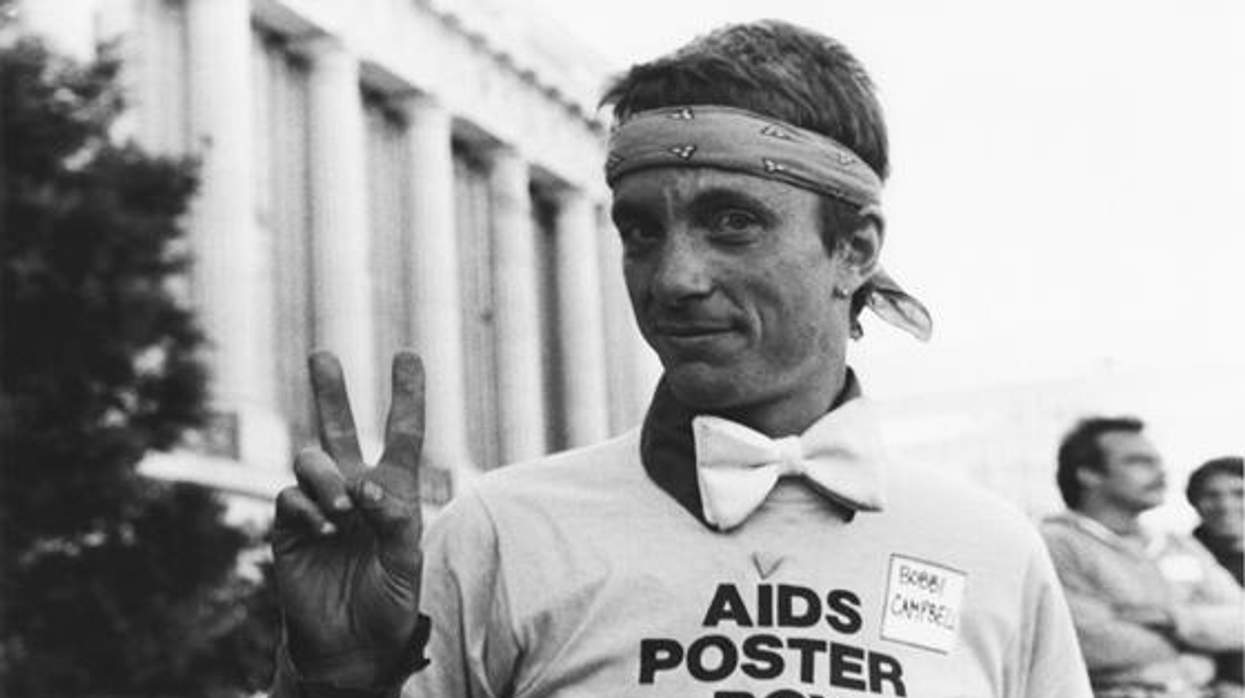

In the summer of 2008, I began the process of creating a documentary about San Francisco at the onset of the AIDS epidemic in the 1980s. As one who'd immigrated to The City in the gay glory years of the 1970s, I'd experienced our community's exuberanc, and the subsequent AIDS-induced suffering and response firsthand.
This was not something I would ever have imagined myself doing. After completing The Cockettes with Bill Weber in 2002, I wasn't sure I was interested in making another documentary at all -- certainly not one dealing with such traumatizing subject matter. But sometimes ideas can be germinating invisibly within, awaiting the right catalyst to bring them into blossom.
In the late 1980s it had occured to me that if any of us survived that terrible plague, there would come a time when we would need to share our stories -- for our own healing and to help subsequent generations understand and honor what we went through, in all its complexity. Having Holocaust history in my family, I was well aware of the long silence of many concentration-camp survivors, who were often unable to find words to do justice to the horrors they'd suffered, hoping futilely for refuge in forgetfulness.
The catalyst for We Were Here came from a boyfriend who was much younger than I, also a filmmaker. Many times, he'd heard me speak about my years in San Francisco, my stories of loss and community resilience, and urged me to make a film. My initial reluctance was quickly supplanted by clarity that this was a film that needed to be made, that it needed to be made by someone who'd lived through it, that now was the time. And I realized that I felt personally ready to revisit that painful and complicated history.
We Were Here has taken me on an incredible journey of rediscovery -- of forgotten details of the terrible suffering, of moments of extraordinary generosity and courage, of residual guilt and shame for when those qualities were not easily accessible, but, mostly, of a kind of bewilderment that this whole nightmare actually happened.
The AIDS epidemic is the dominant piece of LGBT history since Stonewall. It's a mind-boggling, but inescapable, truth. The political mobilization the epidemic necessitated; the healing of rifts between lesbians and gay men; the visibility that AIDS forced upon many who'd been reluctant to come out; and, ultimately, the increased support and compassion from the nongay world have hugely shaped the reality in which gays and lesbians now live.
Even though AIDS has dramatically retreated from our conversations and consciousness since powerful medications began to stem the tide of death, it continues to haunt our community -- and so many others around the world. Whether we are engaging in completely safe sexual practices or willfully barebacking, gay men's sexuality can't escape the shadow of AIDS. Those who are still getting infected find themselves facing a lifetime of toxic medications, which are often only affordable via tenuous government funding. Many forget that AIDS is just as deadly as it ever was for those who can't access treatment.
At almost every Q&A I've done for the film, I've been asked about the prevalence of barebacking, particularly among younger men. The question is generally asked by men of an older generation, many of whom feel an unspoken rage that anyone could be so cavalier about continuing to perpetuate this plague. It is only willful barebacking that has kept this epidemic alive among gay men. Whatever complexities contribute to that reality, it is a truth that must be addressed. Many of those who fought, suffered, and survived those years take it very personally -- understandably -- when others don't feel any responsibility to participate in the elimination of this plague.
The messages supporting prevention that come out of We Were Here are not delivered so much through the tragic images of men covered in purple Kaposi's sarcoma lesions or the ravaged bodies of other AIDS sufferers, but through the inspiring history of a community responding to calamity with extraordinary courage, compassion, and political determination.
In conversation, in their eloquent Facebook posts, in articles that they've written, younger gay men who have seen We Were Here have told me they are overwhelmed by the realization of what prior generations have had to endure, by the sacrifices made to get us to where we are today. They say that for the first time, they are able to viscerally imagine what it must have been like in the early years, when we watched friends and lovers die terrible deaths, in droves.
My hope is that We Were Here will help engender a complex understanding of what AIDS has meant to our community. I hope that the generations that managed to survive the worst of it will find validation and catharsis in having this story told. And I hope that it provides an avenue for intergenerational conversation, for inspiration, and for a renewed sense of pride in who we are, where're we've been, and where we can still go.
David Weissman is director of We Were Here, which will be available on pay-per-view and on-demand services nationwide beginning December 9. Weissman moved to San Francisco, where he continues to live, in 1976. He previously codirected (with Bill Weber) the widely acclaimed documentary The Cockettes.