'%3E%3Cpath d='M16.3574 35.6519H12.9537L15.0491 18.8873L16.3574 35.6519ZM30.4229 54.0093L22.309 0.994385H7.91795L0 54.0093H10.6634L11.5802 46.3855H17.4014L17.9914 54.0093H30.4229Z' fill='%23971B20'/%3E%3Cpath d='M48.2073 41.8813C48.2073 43.4049 47.4892 44.0011 46.1144 44.0011H43.7595V11.0687H46.1144C47.4892 11.0687 48.2073 11.6636 48.2073 13.1885V41.8813ZM59.5273 43.6695V11.3326C59.5273 3.71323 53.5729 0.994385 47.8157 0.994385H31.7213V54.0093H47.8157C53.5729 54.0093 59.5273 51.29 59.5273 43.6695Z' fill='%23971B20'/%3E%3Cpath d='M90.183 0.994385H78.6039L75.0711 30.6157L71.9955 0.994385H59.4346L69.2474 54.0093H80.373L90.183 0.994385Z' fill='%23971B20'/%3E%3Cpath d='M107.063 42.3448C107.063 43.7359 105.951 44.5974 104.643 44.5974C103.269 44.5974 102.157 43.7359 102.157 42.3448V12.658C102.157 11.2676 103.269 10.4058 104.643 10.4058C105.951 10.4058 107.063 11.2676 107.063 12.658V42.3448ZM119.233 43.2723V11.7312C119.233 6.36384 112.952 -3.8147e-06 104.643 -3.8147e-06C96.2667 -3.8147e-06 89.9867 6.36384 89.9867 11.7312V43.2723C89.9867 48.6393 96.2667 55 104.643 55C112.952 55 119.233 48.6393 119.233 43.2723Z' fill='%23971B20'/%3E%3Cpath d='M150.976 43.9349V33.7309H139.069V42.3448C139.069 43.7359 137.957 44.5974 136.582 44.5974C135.076 44.5974 133.964 43.7359 133.964 42.3448V12.658C133.964 11.2676 135.076 10.4058 136.582 10.4058C137.957 10.4058 139.069 11.2676 139.069 12.658V21.2723H150.976V11.0687C150.976 5.70107 145.283 -3.8147e-06 136.582 -3.8147e-06C127.75 -3.8147e-06 121.796 5.70107 121.796 11.0687V43.9349C121.796 49.3022 127.75 55 136.582 55C145.283 55 150.976 49.3022 150.976 43.9349Z' fill='%23971B20'/%3E%3Cpath d='M167.478 35.6519H164.076L166.17 18.8873L167.478 35.6519ZM181.544 54.0093L173.432 0.994385H159.037L151.123 54.0093H161.785L162.704 46.3855H168.523L169.114 54.0093H181.544Z' fill='%23971B20'/%3E%3Cpath d='M205.412 10.4058V0.994385H177.081V10.4058H185.392V54.0093H197.428V10.4058H205.412Z' fill='%23971B20'/%3E%3Cpath d='M230.002 54.0093V43.9349H218.914V31.8746H226.635V21.8028H218.914V10.4058H230.002V0.994385H206.875V54.0093H230.002Z' fill='%23971B20'/%3E%3C/g%3E%3Cdefs%3E%3CclipPath id='clip0_260_7080'%3E%3Crect width='230' height='55' fill='white'/%3E%3C/clipPath%3E%3C/defs%3E%3C/svg%3E)
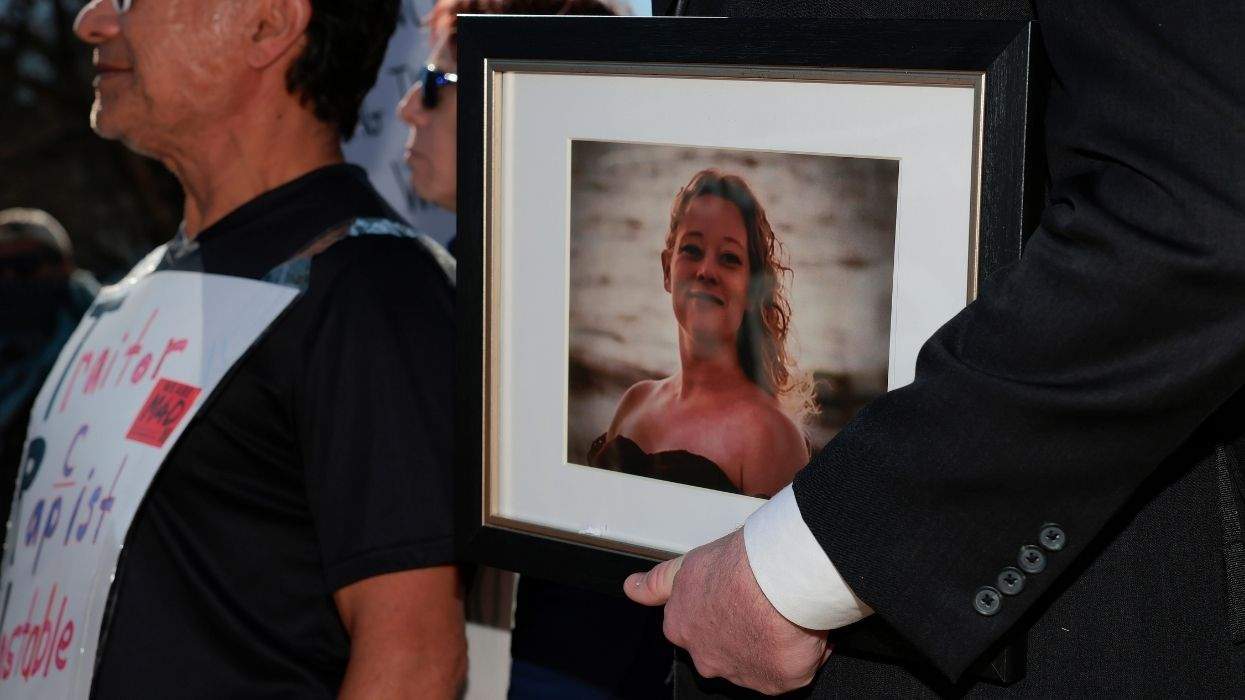
For months after Renee Good was killed during a federal immigration operation in Minneapolis, the Trump administration controlled the evidence, the timeline, and much of the public narrative. Now, under court order, it is being forced to surrender both records and secrecy.
Keep up with the latest in LGBTQ+ news and politics. Sign up for The Advocate's email newsletter.
A federal judge in Minnesota has ordered the Departments of Justice and Homeland Security to turn over unredacted evidence in Good’s January 7 killing within three weeks, according to the Minnesota Star Tribune.
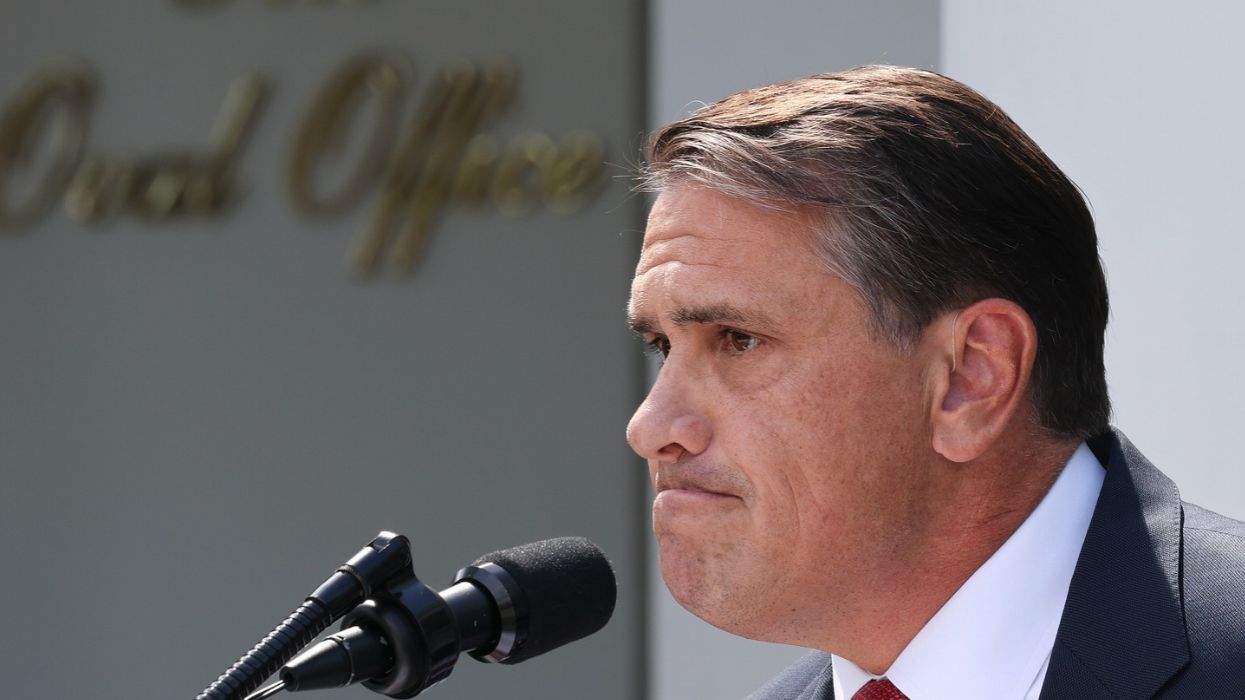
In a comprehensive discovery order, U.S. District Judge Jeffrey Bryan directed the Trump administration to produce not only photos, videos, and audio recordings from 30 minutes before to 60 minutes after the shooting, but also ICE officer Jonathan Ross’s training and personnel files, cellphone extraction reports, witness statements, and internal DHS and ICE use-of-force policies. The order also requires disclosure of Ross’s medical and psychological fitness evaluations after the shooting, widening scrutiny beyond the shooting itself to the federal government’s training, oversight, and post-incident response.
The evidence Bryan ordered released overlaps with what Minnesota is already seeking in its federal lawsuit against the Trump administration, filed last month in the U.S. District Court for the District of Columbia. But this disclosure order arises from a separate criminal case — the prosecution of Roberto Carlos Muñoz-Guatemala, who was convicted of assaulting Ross in a 2025 Bloomington immigration arrest that left the ICE officer injured after being dragged by Muñoz-Guatemala’s car, the Star Tribune reports. Muñoz-Guatemala’s attorney argued that evidence from Good’s killing could bear on Ross’s conduct, credibility, and training, and the court agreed that those materials may be relevant to sentencing and potential post-trial motions.
The ruling is the clearest judicial rebuke yet to federal agencies that had resisted sharing evidence with state investigators examining the fatal shooting.
Related: Who was Renee Nicole Good? Remembering the Minneapolis poet and mother killed by ICE
Related: Justice Department lawyers resign after push to investigate Renee Good's widow
Related: Justice Department will investigate Renee Good's wife but not the man who killed her
Good, 37, was shot and killed by ICE officer Jonathan Ross during an enforcement action tied to Operation Metro Surge, a Trump administration immigration crackdown that has drawn national scrutiny. The Advocate previously reported that Good’s family commissioned an independent autopsy showing she was struck three times, including once in the head, and that her family’s attorneys said they still lacked access to critical physical evidence, including the vehicle she was driving when she was killed.
The federal government blocked local police investigators from the investigation. Instead of investigating the shooter, the Trump administration focused on Good's wife, Becca. Good was a mother of three.
That earlier reporting deepened doubts about the federal government’s account of the shooting, which officials initially framed as self-defense. Questions only intensified this week after WIRED revealed that newly obtained text messages show Minnesota Bureau of Criminal Apprehension Superintendent Drew Evans repeatedly asked the FBI on the day of Good’s death to include state investigators in interviews and evidence collection.
According to WIRED, the FBI did not respond for at least two days, even as federal authorities assumed sole control of the case.
Related: Renee Good's family shares independent autopsy results, says DOJ is withholding evidence
Related: Renee Good was 'beautiful American,' 'unapologetically hopeful,' brothers tell Congress
The communication blackout is now central to Minnesota’s March lawsuit against DHS, DOJ, the FBI, and ICE-related agencies, alleging the federal government unlawfully blocked independent state investigations into three shootings involving immigration agents, including Good’s killing.
The court order does not determine whether Ross’s use of deadly force was lawful. But it forces the Trump administration into a position it resisted for months, answering, under judicial supervision, how Good died and why federal officials fought so hard to keep the evidence out of public view.