'%3E%3Cpath d='M16.3574 35.6519H12.9537L15.0491 18.8873L16.3574 35.6519ZM30.4229 54.0093L22.309 0.994385H7.91795L0 54.0093H10.6634L11.5802 46.3855H17.4014L17.9914 54.0093H30.4229Z' fill='%23971B20'/%3E%3Cpath d='M48.2073 41.8813C48.2073 43.4049 47.4892 44.0011 46.1144 44.0011H43.7595V11.0687H46.1144C47.4892 11.0687 48.2073 11.6636 48.2073 13.1885V41.8813ZM59.5273 43.6695V11.3326C59.5273 3.71323 53.5729 0.994385 47.8157 0.994385H31.7213V54.0093H47.8157C53.5729 54.0093 59.5273 51.29 59.5273 43.6695Z' fill='%23971B20'/%3E%3Cpath d='M90.183 0.994385H78.6039L75.0711 30.6157L71.9955 0.994385H59.4346L69.2474 54.0093H80.373L90.183 0.994385Z' fill='%23971B20'/%3E%3Cpath d='M107.063 42.3448C107.063 43.7359 105.951 44.5974 104.643 44.5974C103.269 44.5974 102.157 43.7359 102.157 42.3448V12.658C102.157 11.2676 103.269 10.4058 104.643 10.4058C105.951 10.4058 107.063 11.2676 107.063 12.658V42.3448ZM119.233 43.2723V11.7312C119.233 6.36384 112.952 -3.8147e-06 104.643 -3.8147e-06C96.2667 -3.8147e-06 89.9867 6.36384 89.9867 11.7312V43.2723C89.9867 48.6393 96.2667 55 104.643 55C112.952 55 119.233 48.6393 119.233 43.2723Z' fill='%23971B20'/%3E%3Cpath d='M150.976 43.9349V33.7309H139.069V42.3448C139.069 43.7359 137.957 44.5974 136.582 44.5974C135.076 44.5974 133.964 43.7359 133.964 42.3448V12.658C133.964 11.2676 135.076 10.4058 136.582 10.4058C137.957 10.4058 139.069 11.2676 139.069 12.658V21.2723H150.976V11.0687C150.976 5.70107 145.283 -3.8147e-06 136.582 -3.8147e-06C127.75 -3.8147e-06 121.796 5.70107 121.796 11.0687V43.9349C121.796 49.3022 127.75 55 136.582 55C145.283 55 150.976 49.3022 150.976 43.9349Z' fill='%23971B20'/%3E%3Cpath d='M167.478 35.6519H164.076L166.17 18.8873L167.478 35.6519ZM181.544 54.0093L173.432 0.994385H159.037L151.123 54.0093H161.785L162.704 46.3855H168.523L169.114 54.0093H181.544Z' fill='%23971B20'/%3E%3Cpath d='M205.412 10.4058V0.994385H177.081V10.4058H185.392V54.0093H197.428V10.4058H205.412Z' fill='%23971B20'/%3E%3Cpath d='M230.002 54.0093V43.9349H218.914V31.8746H226.635V21.8028H218.914V10.4058H230.002V0.994385H206.875V54.0093H230.002Z' fill='%23971B20'/%3E%3C/g%3E%3Cdefs%3E%3CclipPath id='clip0_260_7080'%3E%3Crect width='230' height='55' fill='white'/%3E%3C/clipPath%3E%3C/defs%3E%3C/svg%3E)


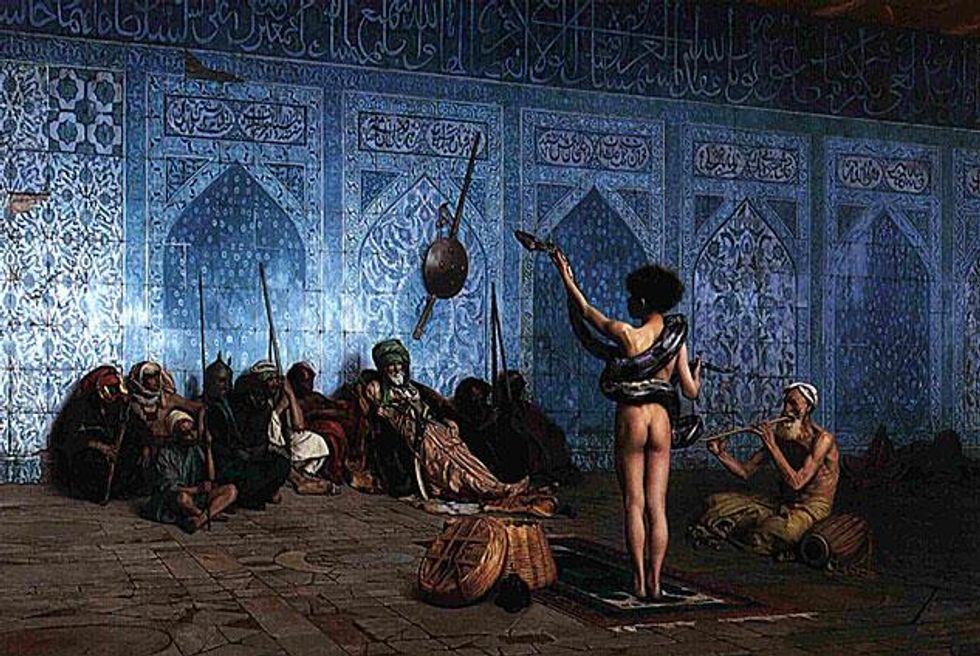
Above: Jean-Leon Gerome, The Snake Charmer, 1870
From tribal tattoos to tiki bars, Western culture has been enthralled with its own interpretation of "exotic" cultures for centuries. For example, in the 17th century Europeans created their own hybrid form of Far Eastern decorative arts, chinoiserie.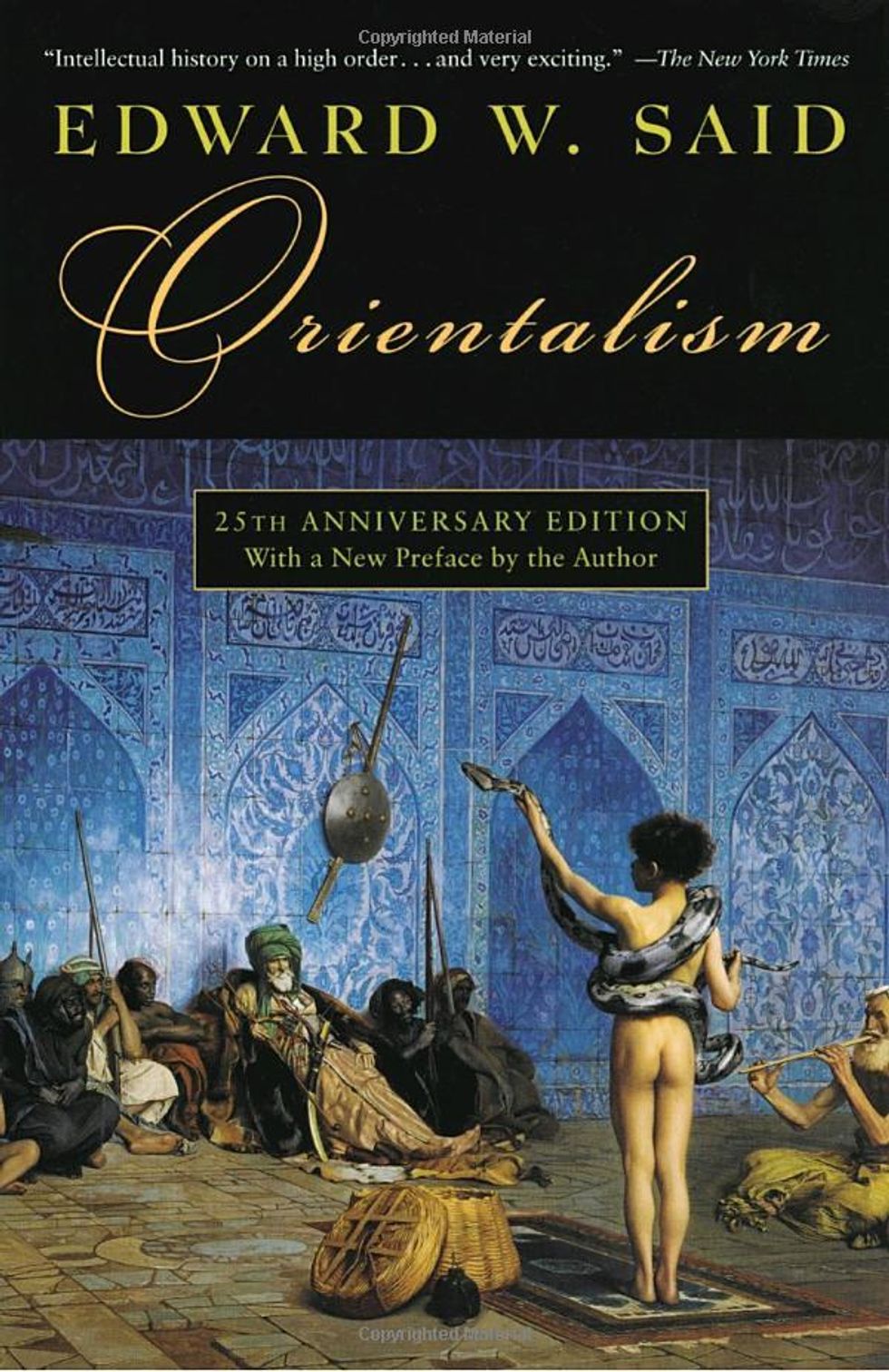 In 1978 the Palestinian-American scholar Edward Said published his influential and controversial book, Orientalism. Said used the term to describe what he argued was a historic Western tradition of prejudiced outsider interpretations of the East as undeveloped and static. In particular, England's imperial steamroller mashed the various cultures of the Middle East into one sensuous and mysterious ideal that depicted the women -- and the men -- as erotic and uninhibited, as well as available.
 The homoerotic portrayals walked above the safety net. as the sexualized paintings of young men were merely depicting their culture. The English gentleman could observe these naked young dark-skinned men from the promontory of an interested ethnographer.
Another book, published earlier this year, hit the nail on the head more directly. The Homoerotics of Orientalism (Columbia University Press) by Joseph Allen Boone explains that the cultural exchanges between the Middle East and the West have always been reciprocal and often mutual, and amatory as well as hostile. Boone examines European accounts of Istanbul and Egypt as hotbeds of forbidden desire, juxtaposing Ottoman homoerotic genres and their European imitators. This remarkable study models an ethics of cross-cultural reading that exposes, with nuance and economy, the crucial role played by the homoerotics of Orientalism in shaping the world as we know it today.
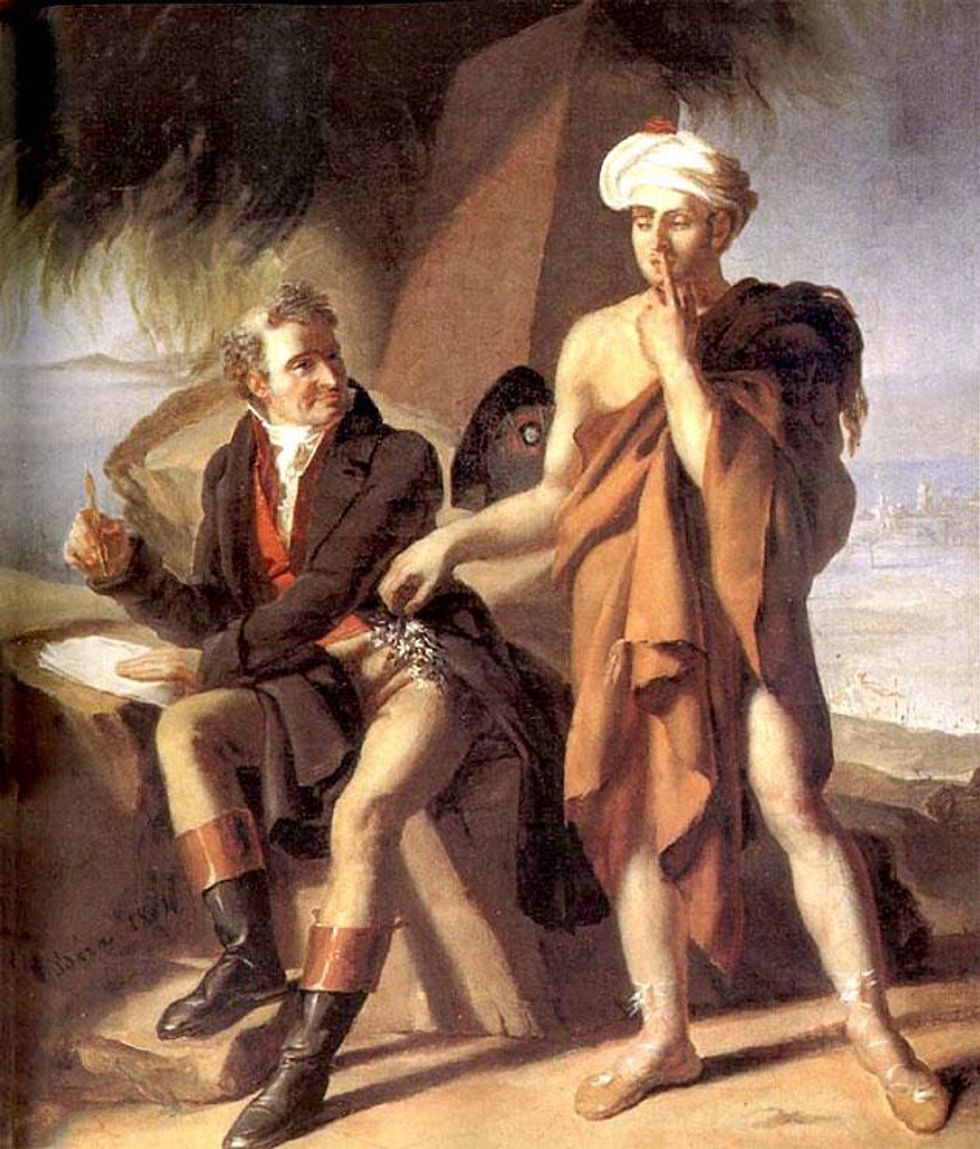 Armand-Philippe-Joseph Bera, Portrait of Dominique Vivant, Baron de Denon in Egypt, 1804
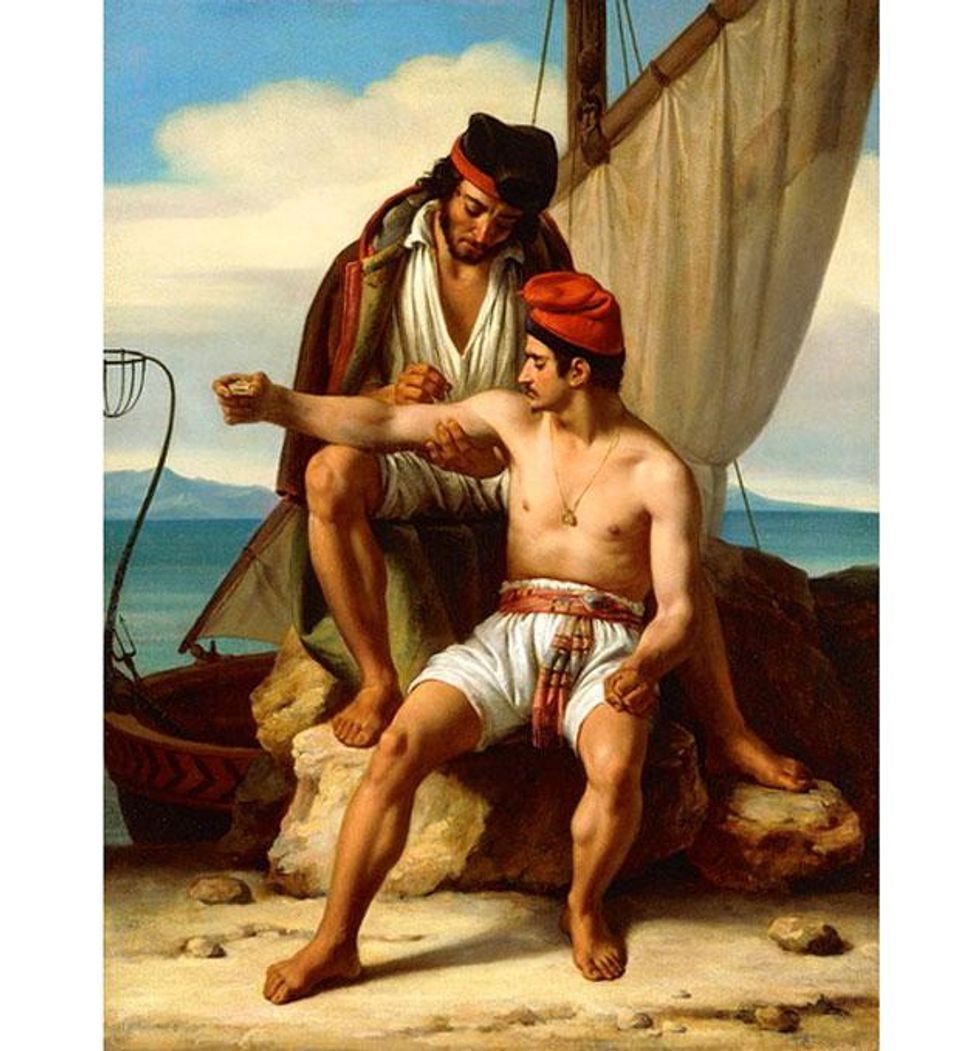 Constantin-Jean-Marie Prevost, The Tattooing of a Sailor
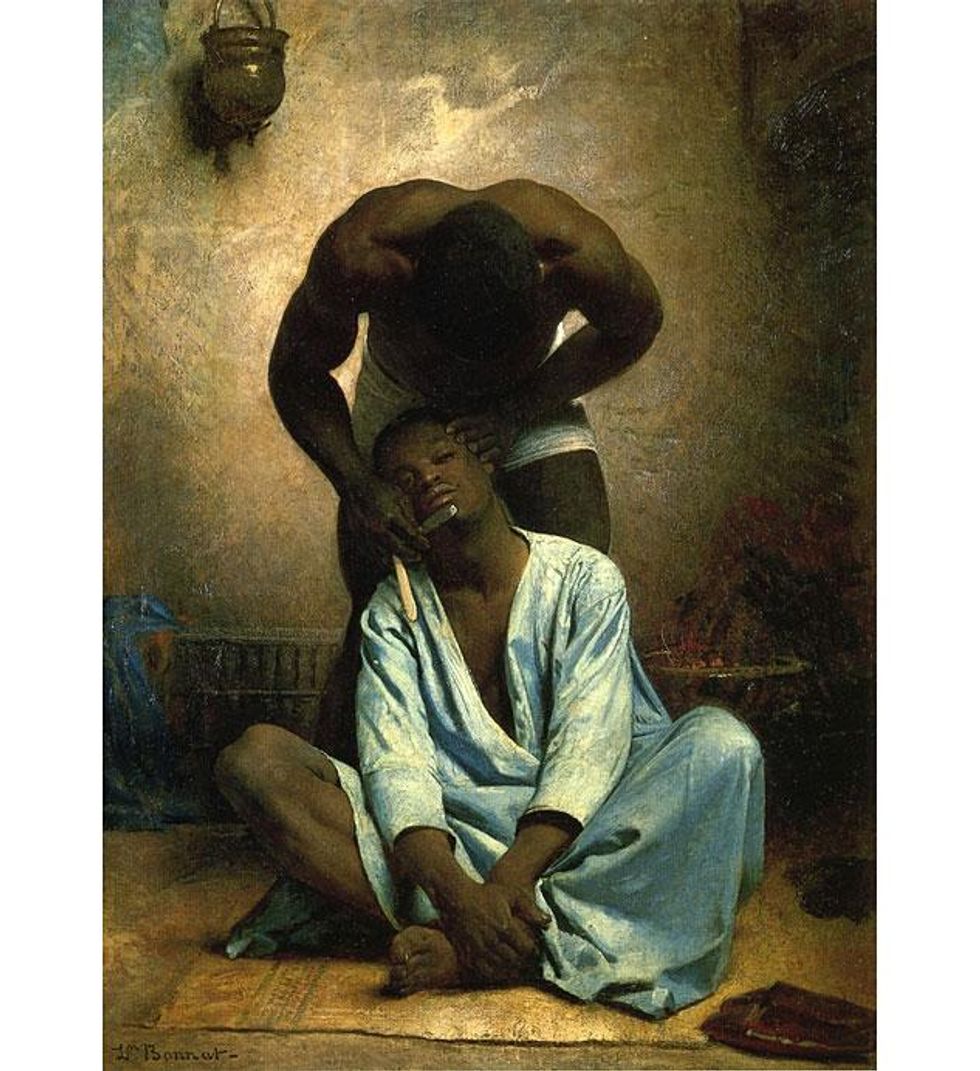 The Barber of Suez, Leon Joseph Florentin Bonnat
"One of the best examples of an Orientalist painting that appears homoerotic, at least to a modern viewer, is The Barber of Suez, painted by Leon Bonnat in 1876, a few years after his trip to Egypt. ... A comely young man sits cross-legged on a rug, his robe open at his neck, while another well-muscled man, wearing only a loin cloth, stands behind him, leaning over to shave his chin. The sitting man, with a look of plenitude, nestles his head into the barber's crotch. Hugh Honour remarks on the photographic nature of the picture in which 'these two motionless figures [are] completely absorbed into one another, sealed off in their own world, observed but unobserving'. The contact between head and genitals, the tenderness and intimacy of their barber's gesture, as he spreads the fingers of his free hand over the side of his client's face and the blissful look of the man being shaved, combined with the general portrayal of handsome partially unclothed black men, might well have struck responsive chords in the homosexual viewers. -- Robert Aldrich, Colonialism and Homosexuality
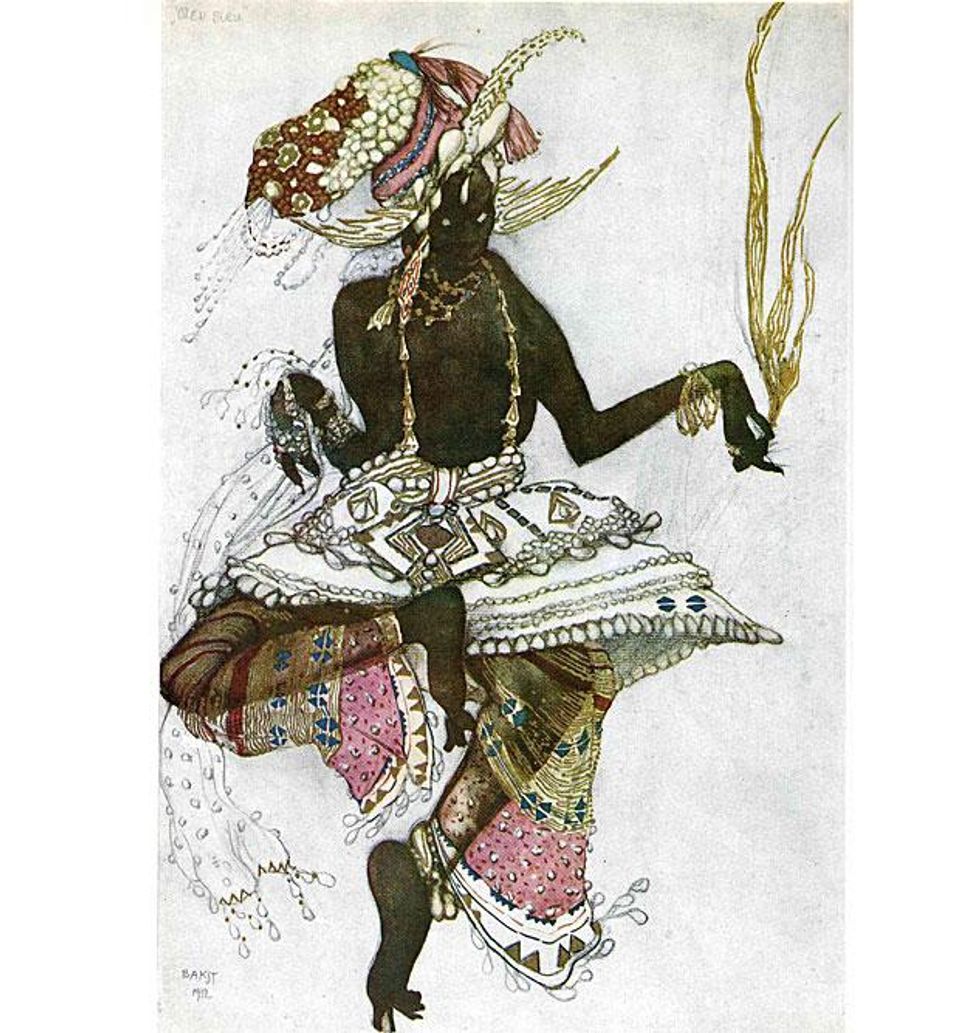 Arabic Dancer, a costume design by Leon Bakst
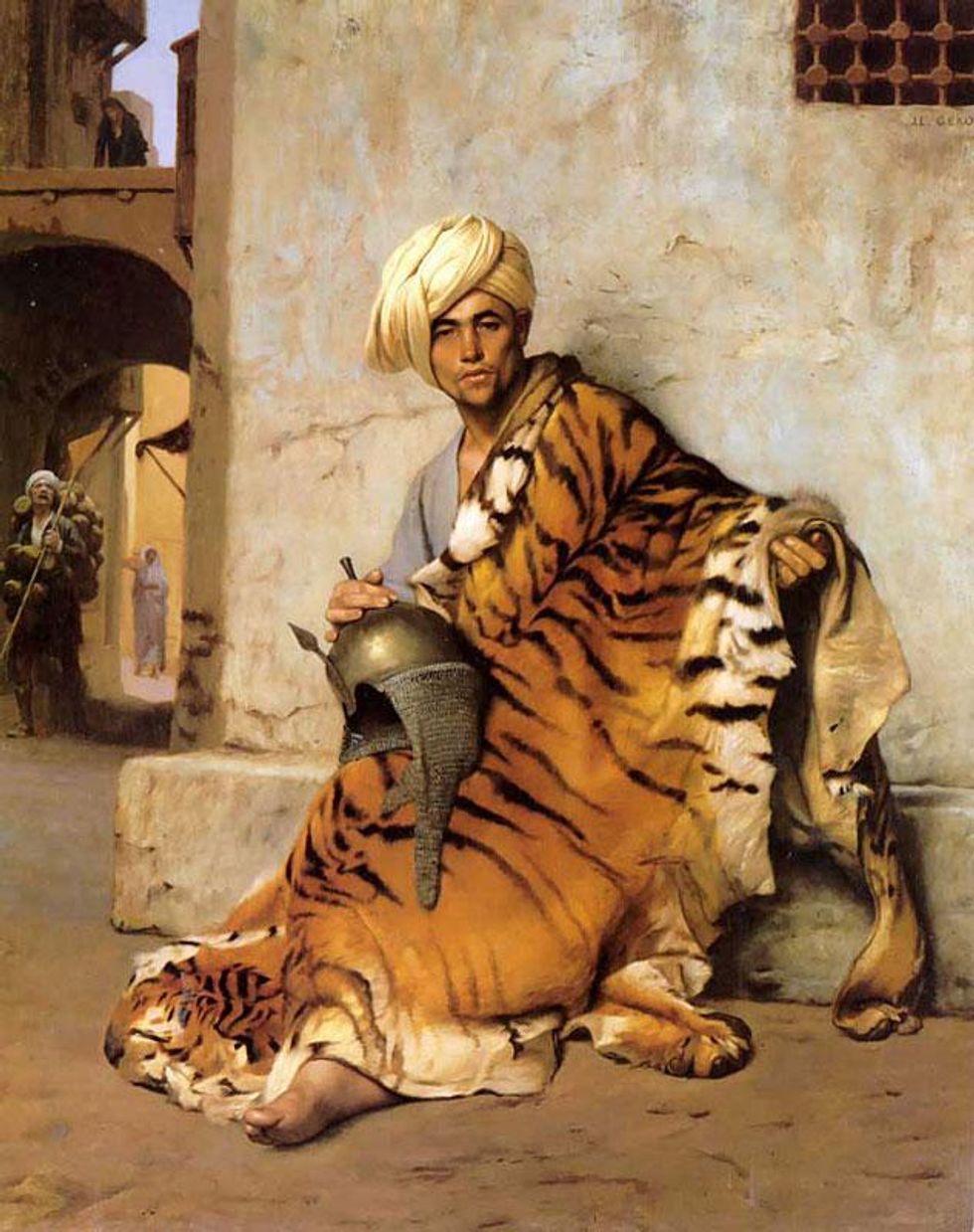 Jean-Leon Gerome, Pelt Merchant of Cairo
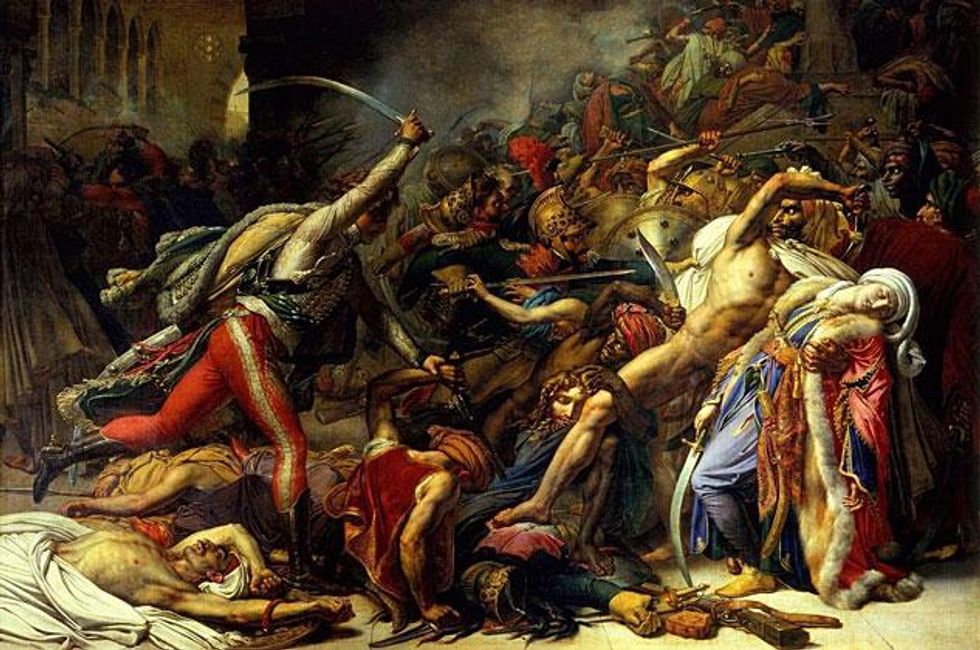
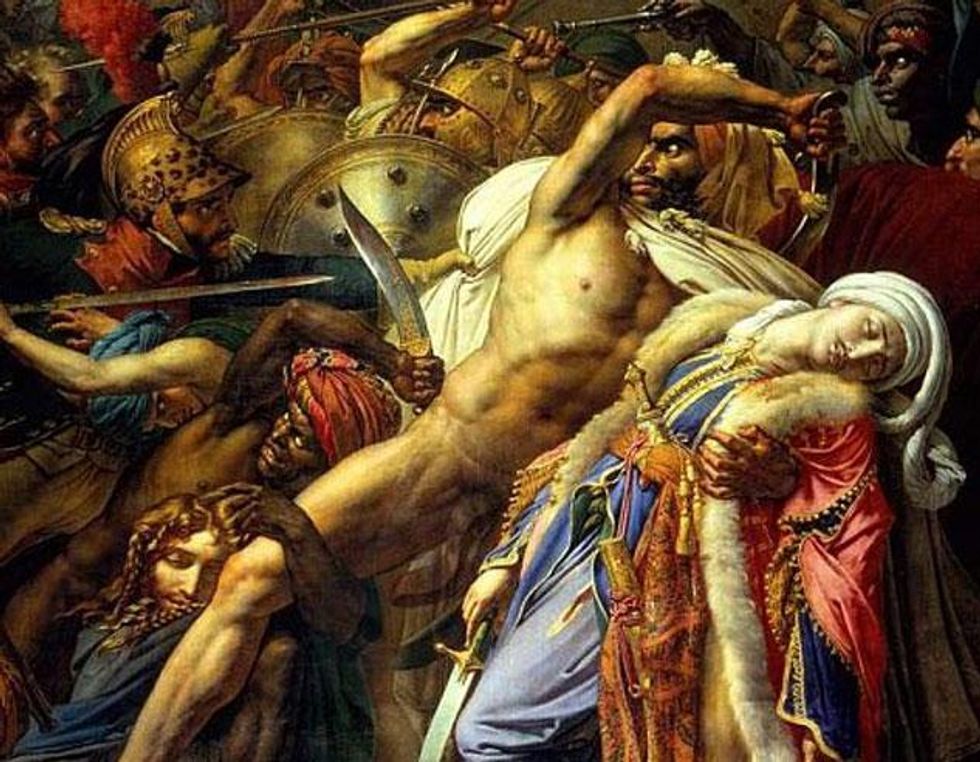 Anne-Louis Girodet de Roussy-Trioson, Revolt in Cairo on 21 October 1798 (detail), 1810
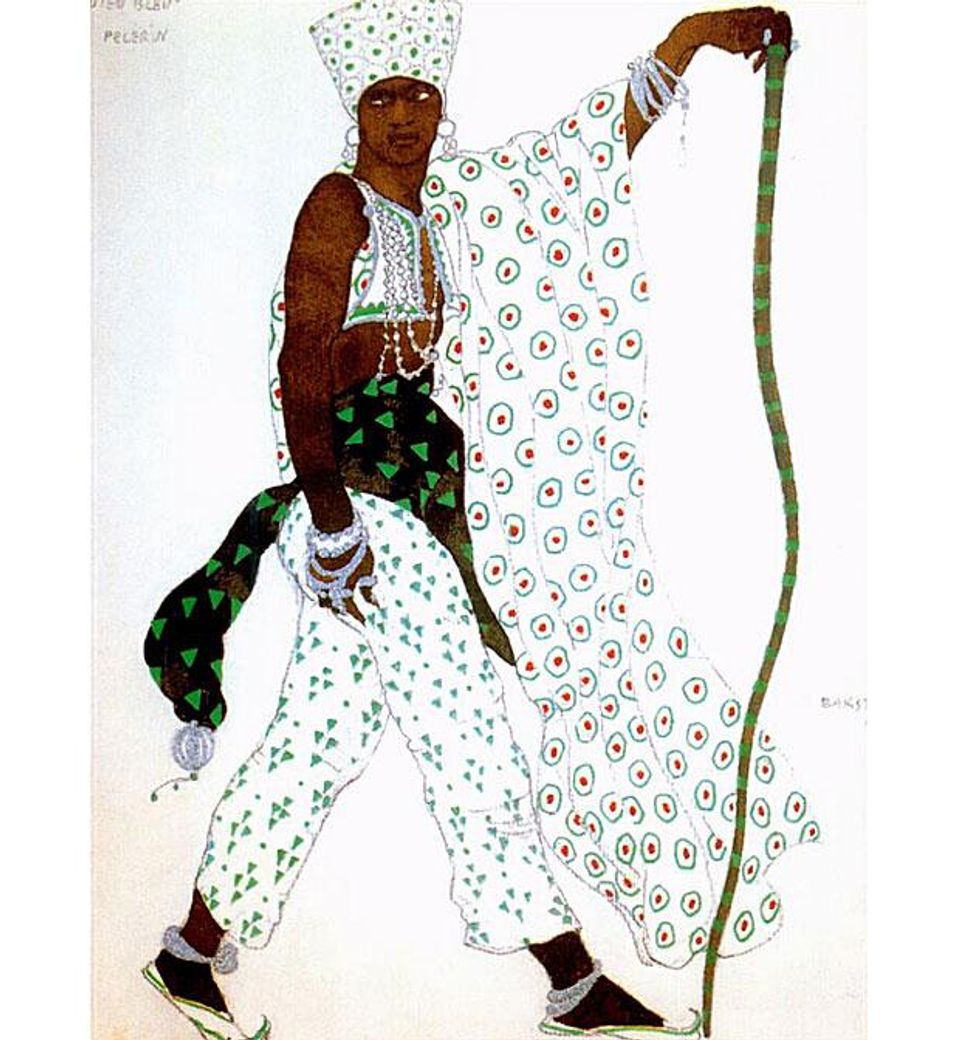 La Dieu Bleu a Pilgrim, Leon Bakst, 1912
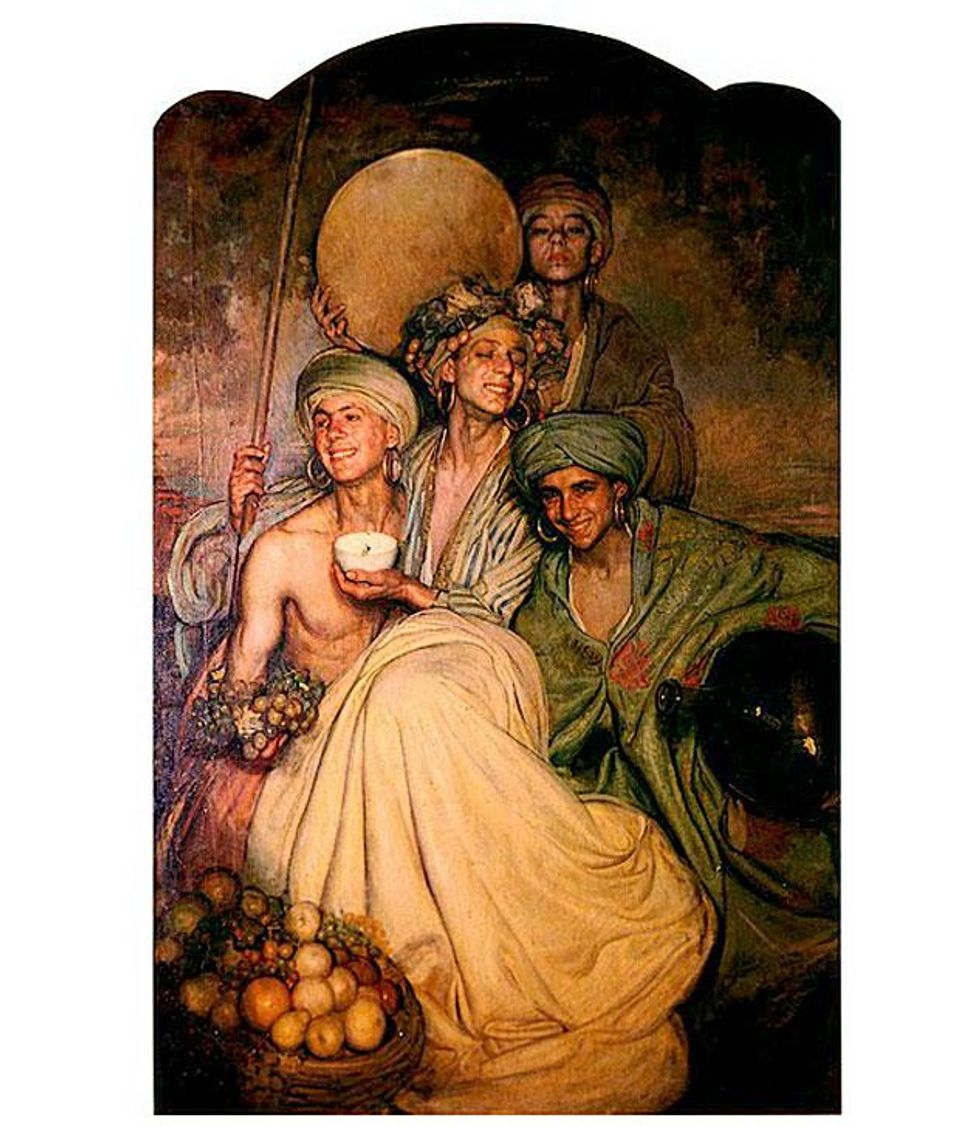 Bacanal, Gabriel Morcillo Raya
Raya (1887-1973) was a Spanish painter. He began his apprenticeship with his Aunt Paquita Raya and School of Industrial Arts in his hometown. In 1907 he traveled back and forth to to Madrid to study with Cecilio Pla, as his finances allowed. until 1914. During those years he was presented to the National Exhibition of Fine Arts, where he earned an honorable mention in 1912. From 1922 she howed a preference for the Orientalist themes. That same year he was appointed director of the Residence of Painters of the Alhambra. In 1925, he was named an academic of the Royal Academy of Fine Arts in Granada, Madrid, and Malaga. Dedicated to teaching, he taught at the School of Arts and Crafts in Granada. From 1955 to 1960 he traveled to Madrid to paint portraits of Francisco Franco and his wife, and Adm. Carrero Blanco and other members of Madrid's high bourgeoisie.
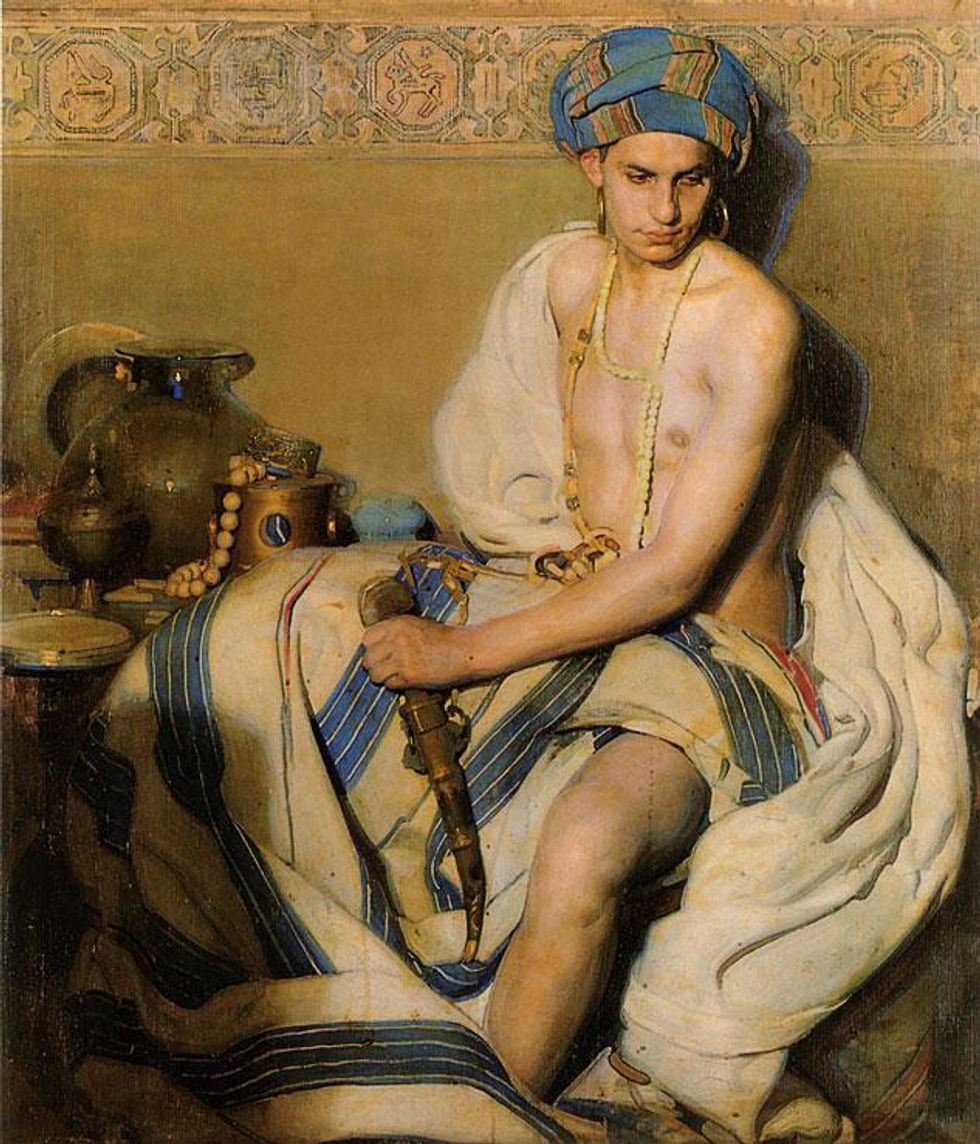 Gabriel Morcillo Raya
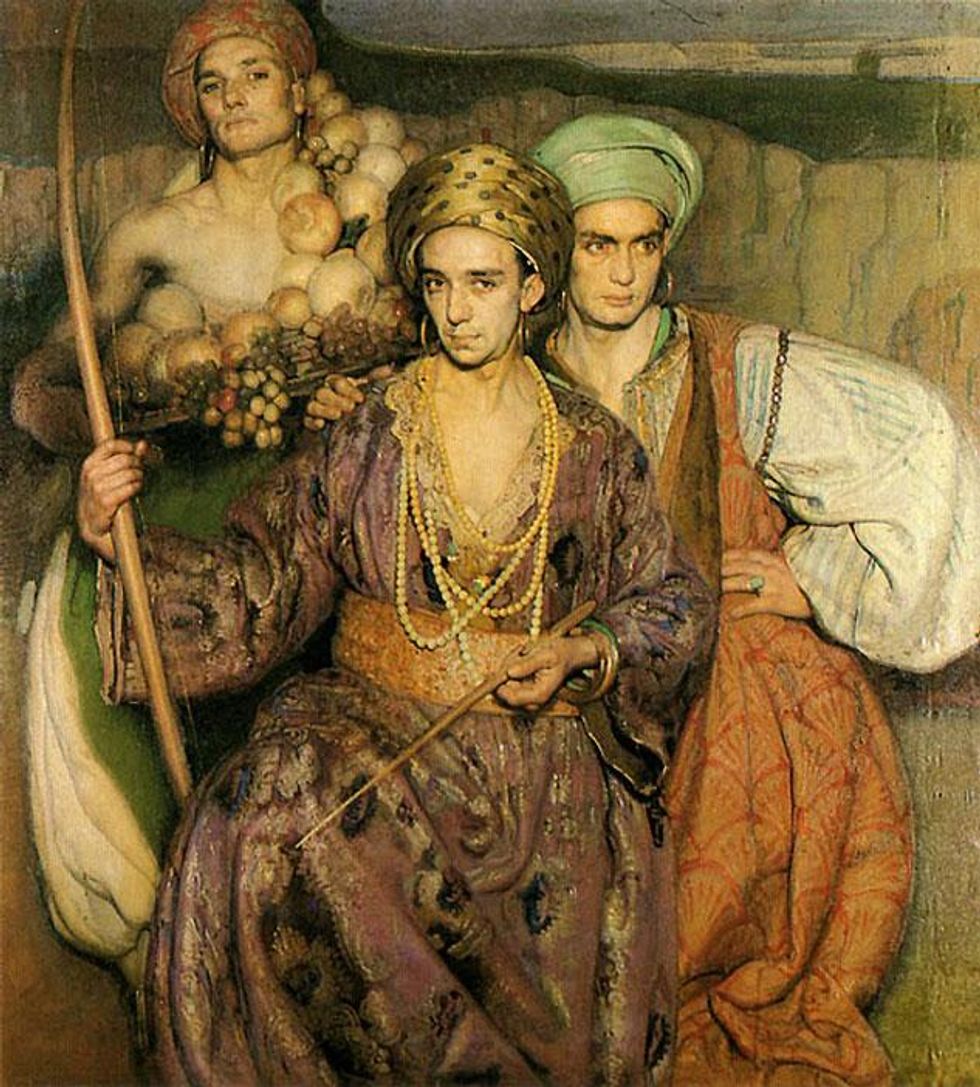 Gabriel Morcillo Raya
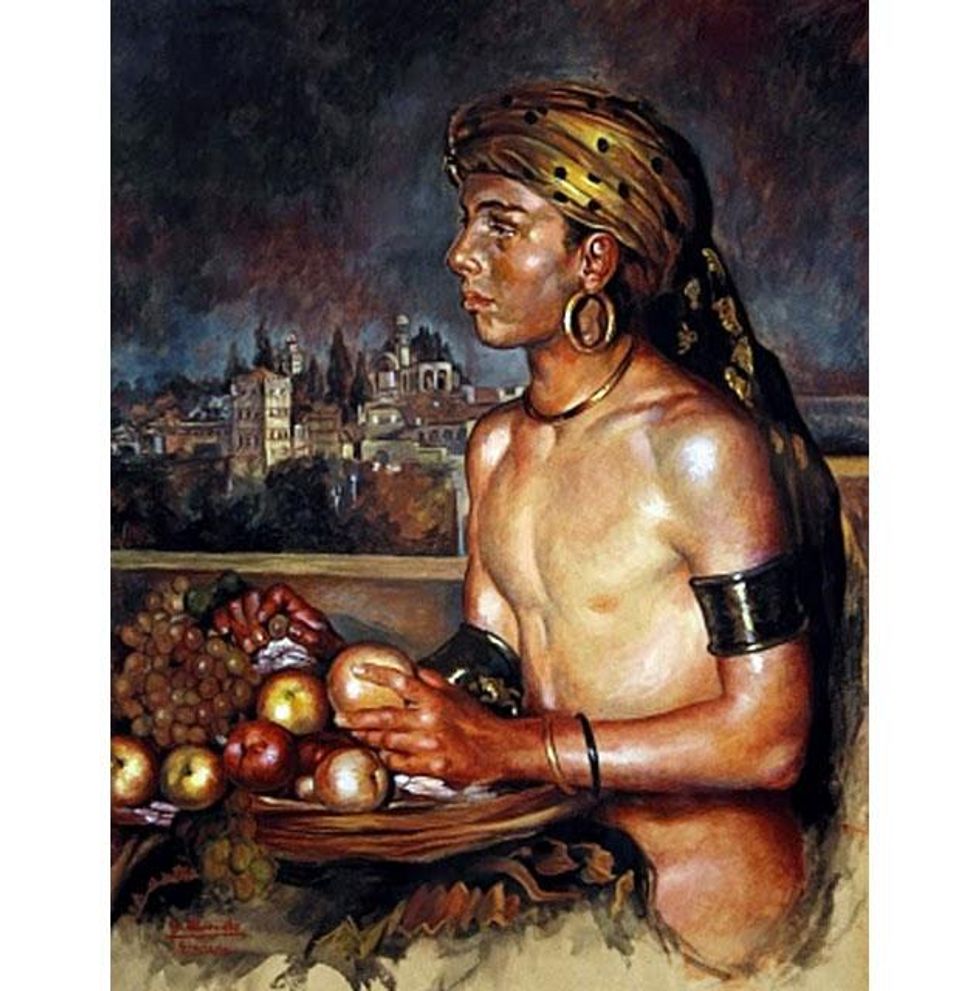 Gabriel Morcillo Raya
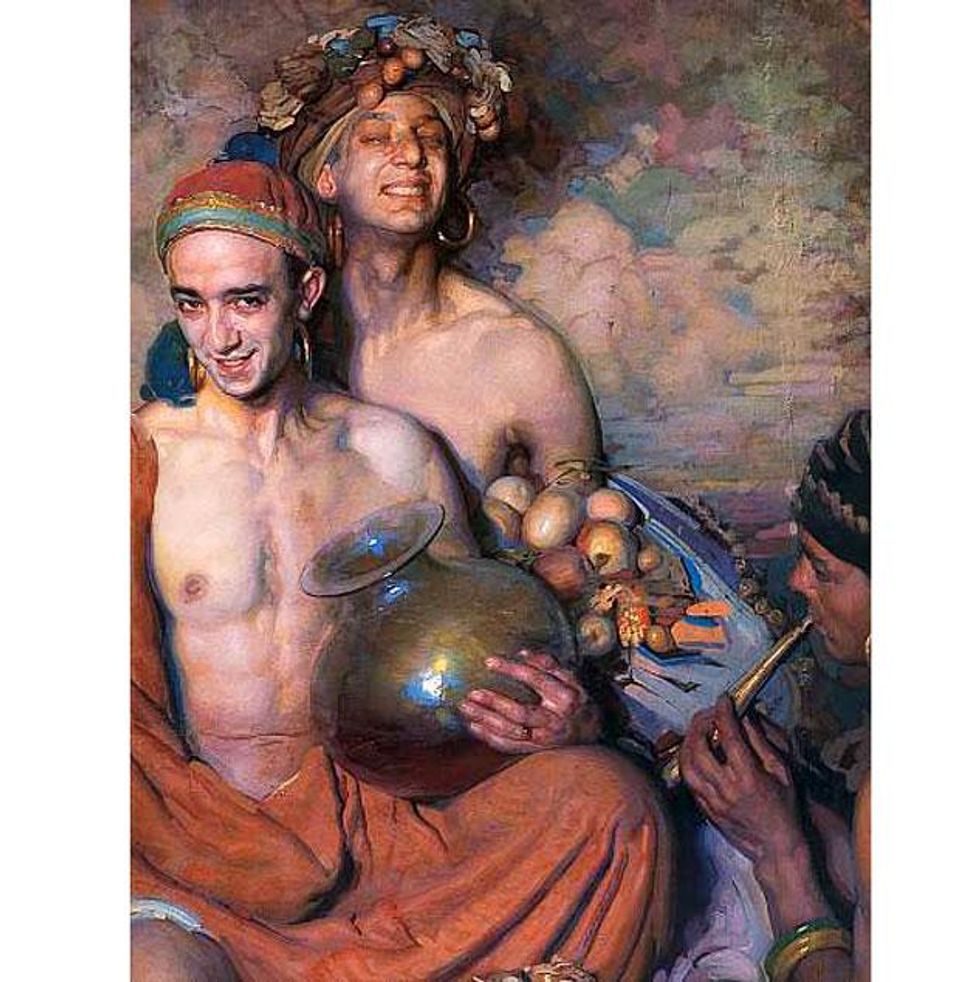 Gabriel Morcillo Raya
 Gabriel Morcillo Raya
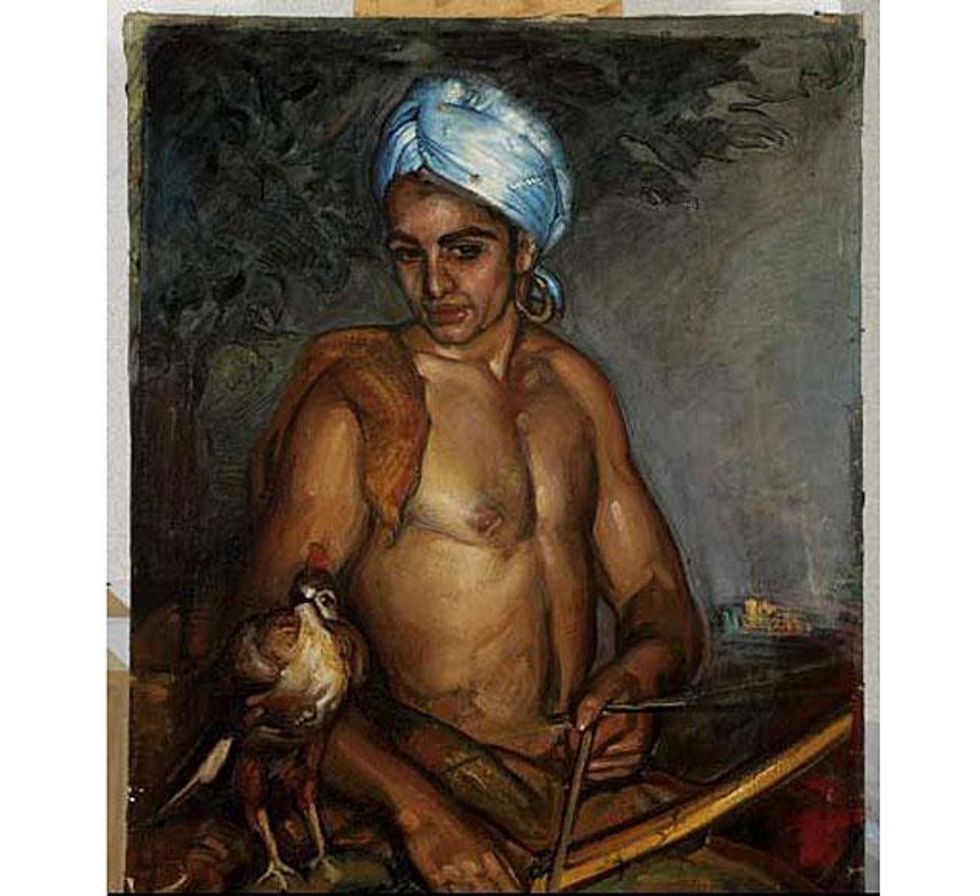 Gabriel Morcillo Raya