'%3E%3Cpath d='M16.3574 35.6519H12.9537L15.0491 18.8873L16.3574 35.6519ZM30.4229 54.0093L22.309 0.994385H7.91795L0 54.0093H10.6634L11.5802 46.3855H17.4014L17.9914 54.0093H30.4229Z' fill='%23971B20'/%3E%3Cpath d='M48.2073 41.8813C48.2073 43.4049 47.4892 44.0011 46.1144 44.0011H43.7595V11.0687H46.1144C47.4892 11.0687 48.2073 11.6636 48.2073 13.1885V41.8813ZM59.5273 43.6695V11.3326C59.5273 3.71323 53.5729 0.994385 47.8157 0.994385H31.7213V54.0093H47.8157C53.5729 54.0093 59.5273 51.29 59.5273 43.6695Z' fill='%23971B20'/%3E%3Cpath d='M90.183 0.994385H78.6039L75.0711 30.6157L71.9955 0.994385H59.4346L69.2474 54.0093H80.373L90.183 0.994385Z' fill='%23971B20'/%3E%3Cpath d='M107.063 42.3448C107.063 43.7359 105.951 44.5974 104.643 44.5974C103.269 44.5974 102.157 43.7359 102.157 42.3448V12.658C102.157 11.2676 103.269 10.4058 104.643 10.4058C105.951 10.4058 107.063 11.2676 107.063 12.658V42.3448ZM119.233 43.2723V11.7312C119.233 6.36384 112.952 -3.8147e-06 104.643 -3.8147e-06C96.2667 -3.8147e-06 89.9867 6.36384 89.9867 11.7312V43.2723C89.9867 48.6393 96.2667 55 104.643 55C112.952 55 119.233 48.6393 119.233 43.2723Z' fill='%23971B20'/%3E%3Cpath d='M150.976 43.9349V33.7309H139.069V42.3448C139.069 43.7359 137.957 44.5974 136.582 44.5974C135.076 44.5974 133.964 43.7359 133.964 42.3448V12.658C133.964 11.2676 135.076 10.4058 136.582 10.4058C137.957 10.4058 139.069 11.2676 139.069 12.658V21.2723H150.976V11.0687C150.976 5.70107 145.283 -3.8147e-06 136.582 -3.8147e-06C127.75 -3.8147e-06 121.796 5.70107 121.796 11.0687V43.9349C121.796 49.3022 127.75 55 136.582 55C145.283 55 150.976 49.3022 150.976 43.9349Z' fill='%23971B20'/%3E%3Cpath d='M167.478 35.6519H164.076L166.17 18.8873L167.478 35.6519ZM181.544 54.0093L173.432 0.994385H159.037L151.123 54.0093H161.785L162.704 46.3855H168.523L169.114 54.0093H181.544Z' fill='%23971B20'/%3E%3Cpath d='M205.412 10.4058V0.994385H177.081V10.4058H185.392V54.0093H197.428V10.4058H205.412Z' fill='%23971B20'/%3E%3Cpath d='M230.002 54.0093V43.9349H218.914V31.8746H226.635V21.8028H218.914V10.4058H230.002V0.994385H206.875V54.0093H230.002Z' fill='%23971B20'/%3E%3C/g%3E%3Cdefs%3E%3CclipPath id='clip0_260_7080'%3E%3Crect width='230' height='55' fill='white'/%3E%3C/clipPath%3E%3C/defs%3E%3C/svg%3E)
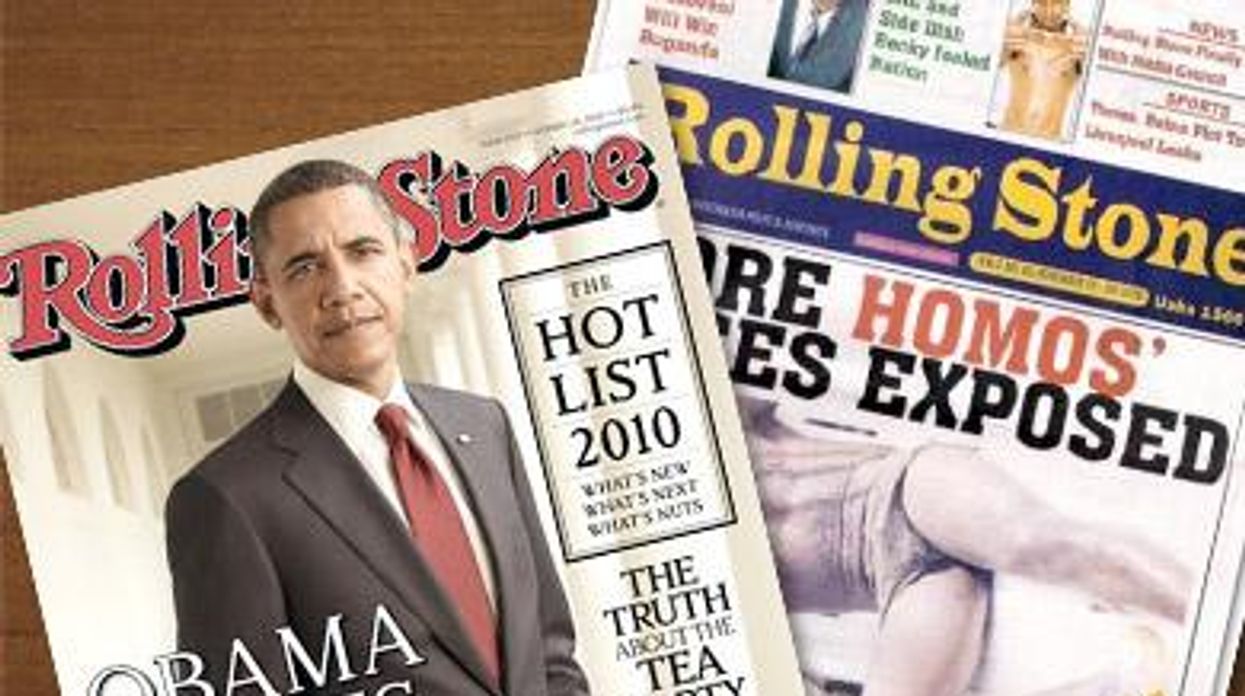

One is a seminal American magazine that has published top-shelf writers from Hunter S. Thompson to P.J. O'Rourke.
The other is a ratty tabloid notorious for harassing gays in print with such headlines as "100 Pictures of Uganda's Top Homos Leak."
Perhaps it was only a matter of time before Rolling Stone would pursue legal action against the Ugandan newspaper that has co-opted its legendary name.
In an upcoming issue of the American magazine that hits newsstands on Friday, Rolling Stone takes aim at its tabloid impostor, published in the Ugandan capital of Kampala. In October, the small newspaper printed on its front page a photograph of prominent gay rights activist David Kato, one of several plaintiffs who successfully sued the paper following the article. He was murdered last week.
On Tuesday Rolling Stone provided to The Advocate its Editor's Note for the issue; it reads in full:
"The tragic murder in January of David Kato, a gay activist in Uganda, once again drew international attention to the vile and hate-filled rhetoric of a newspaper calling itself Rolling Stone. Last fall, the paper - which is not affiliated in any way with the magazine - published the addresses of Kato and others it identified as "Top Homos" under a chilling headline: Hang Them.
"We immediately sent the paper a cease-and-desist letter, ordering it to stop using our name, and we are exploring every available legal option to help end its ugly campaign. Kato himself had bravely taken on the hatemongers: Last month, after he sued the newspaper, Uganda's highest court ordered it to pay damages and stop inciting violence against gays and lesbians. We honor him and his heroic example."
The Ugandan paper has been on Rolling Stone's radar for at least a few months: Shortly after the "Hang Them," article, the real mag addressed its ersatz agitator's antigay propaganda, calling it "vile and hateful." Last month the Ugandan High Court ordered the tabloid to cease publishing photos of private LGBT citizens, but its managing editor, Giles Muhame, wrote in a rambling January press release that "The newspaper will fight homos on different fronts," and that the publication's managers "have resolved to register our grievance with the President's office."
"We did the right thing to show those pictures," Muhame said in an interview with Lez Get Real. "The tabloid will win the appeal. We must expose criminals."
Rolling Stone magazine does not own the rights to the name in Uganda, which could prove problematic in any attempt to force the antigay tabloid to change its title. "We own the copyright for the name in many, many countries. But who would have thought we'd have to own the copyright in Uganda?" Rolling Stone cofounder and publisher Jann Wenner told New York magazine last year.
Attorneys say this is a matter of trademark, not copyright, because the tabloid has grafted a well-known name, as opposed to lifting the actual content from Rolling Stone. As for any successful legal recourse against the newspaper, don't hold your breath: "I don't know what leg they have to stand on," Jimmy Nguyen, a media and entertainment attorney in Los Angeles, said of Rolling Stone's cease-and-desist attempts. "In general, you can't get trademark rights without at least using and, in some countries, having to register the mark, and being the first to do so. If Rolling Stone magazine is not the first to use the "Rolling Stone" trademark for a print publication in Uganda, it would be an uphill battle."
Under international doctrine, most countries recognize basic intellectual property rights, especially for famous brands. "But I'm wondering what the legal system in a country like Uganda would do," said Peter Weinberg, an IP attorney in Gibson Dunn & Crutcher's Denver office. "They do have trademark laws. How they're enforced I don't know."
But the publicity generated by any legal action could have value, namely in quashing any possible brand confusion, Nyugen noted--even if it's a stretch to assume any affiliation between the two publications in the first place.