'%3E%3Cpath d='M16.3574 35.6519H12.9537L15.0491 18.8873L16.3574 35.6519ZM30.4229 54.0093L22.309 0.994385H7.91795L0 54.0093H10.6634L11.5802 46.3855H17.4014L17.9914 54.0093H30.4229Z' fill='%23971B20'/%3E%3Cpath d='M48.2073 41.8813C48.2073 43.4049 47.4892 44.0011 46.1144 44.0011H43.7595V11.0687H46.1144C47.4892 11.0687 48.2073 11.6636 48.2073 13.1885V41.8813ZM59.5273 43.6695V11.3326C59.5273 3.71323 53.5729 0.994385 47.8157 0.994385H31.7213V54.0093H47.8157C53.5729 54.0093 59.5273 51.29 59.5273 43.6695Z' fill='%23971B20'/%3E%3Cpath d='M90.183 0.994385H78.6039L75.0711 30.6157L71.9955 0.994385H59.4346L69.2474 54.0093H80.373L90.183 0.994385Z' fill='%23971B20'/%3E%3Cpath d='M107.063 42.3448C107.063 43.7359 105.951 44.5974 104.643 44.5974C103.269 44.5974 102.157 43.7359 102.157 42.3448V12.658C102.157 11.2676 103.269 10.4058 104.643 10.4058C105.951 10.4058 107.063 11.2676 107.063 12.658V42.3448ZM119.233 43.2723V11.7312C119.233 6.36384 112.952 -3.8147e-06 104.643 -3.8147e-06C96.2667 -3.8147e-06 89.9867 6.36384 89.9867 11.7312V43.2723C89.9867 48.6393 96.2667 55 104.643 55C112.952 55 119.233 48.6393 119.233 43.2723Z' fill='%23971B20'/%3E%3Cpath d='M150.976 43.9349V33.7309H139.069V42.3448C139.069 43.7359 137.957 44.5974 136.582 44.5974C135.076 44.5974 133.964 43.7359 133.964 42.3448V12.658C133.964 11.2676 135.076 10.4058 136.582 10.4058C137.957 10.4058 139.069 11.2676 139.069 12.658V21.2723H150.976V11.0687C150.976 5.70107 145.283 -3.8147e-06 136.582 -3.8147e-06C127.75 -3.8147e-06 121.796 5.70107 121.796 11.0687V43.9349C121.796 49.3022 127.75 55 136.582 55C145.283 55 150.976 49.3022 150.976 43.9349Z' fill='%23971B20'/%3E%3Cpath d='M167.478 35.6519H164.076L166.17 18.8873L167.478 35.6519ZM181.544 54.0093L173.432 0.994385H159.037L151.123 54.0093H161.785L162.704 46.3855H168.523L169.114 54.0093H181.544Z' fill='%23971B20'/%3E%3Cpath d='M205.412 10.4058V0.994385H177.081V10.4058H185.392V54.0093H197.428V10.4058H205.412Z' fill='%23971B20'/%3E%3Cpath d='M230.002 54.0093V43.9349H218.914V31.8746H226.635V21.8028H218.914V10.4058H230.002V0.994385H206.875V54.0093H230.002Z' fill='%23971B20'/%3E%3C/g%3E%3Cdefs%3E%3CclipPath id='clip0_260_7080'%3E%3Crect width='230' height='55' fill='white'/%3E%3C/clipPath%3E%3C/defs%3E%3C/svg%3E)
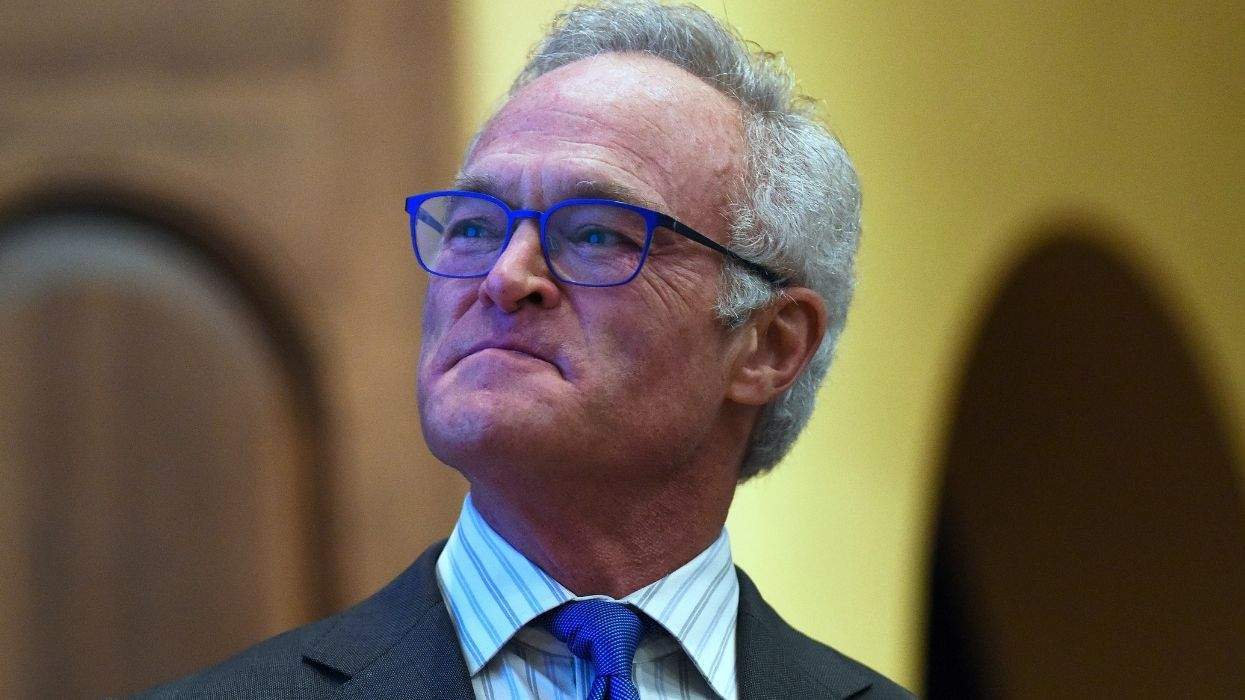

Award-winning broadcaster Scott Pelley spent more than three decades at CBS News, reported from war zones, covered presidents, anchored the network’s evening newscast, and became one of the defining faces of 60 Minutes. What ultimately ended his tenure was a fight over Bari Weiss and her latest hire.
CBS News terminated Pelley on Tuesday after the veteran correspondent publicly accused the network’s editor-in-chief of "murdering" 60 Minutes and questioned the qualifications of newly installed executive producer Nick Bilton, according to accounts first reported by The New York Times and confirmed by multiple news outlets.
The dismissal marks the most dramatic escalation yet in a crisis that has engulfed the nation's once most influential television news program since Weiss, the former New York Times opinion editor and founder of The Free Press, assumed editorial control of CBS News last year.
Related: Rachel Maddow on standing up to government lies and her Walter Cronkite Award
For months, journalists inside and outside CBS have warned that Weiss's restructuring of the network threatened the editorial independence that made 60 Minutes one of the most trusted brands in American journalism. Last week, those concerns erupted into open revolt after the departures of executive producer Tanya Simon and correspondents Sharyn Alfonsi and Cecilia Vega.
Pelley became the rebellion's most visible voice.
During Bilton's first staff meeting, Pelley reportedly accused Weiss of deliberately dismantling the program.
"She is murdering 60 Minutes," Pelley said, according to multiple accounts of the meeting. He also reportedly told colleagues that Weiss "does not love this place" and was brought in "to kill it."
The comments earned a standing ovation from staff, according to reports. Twenty-four hours later, he was gone.
Last December, at the Walter Cronkite Awards in Washington, D.C., Pelley, who received an award for excellence in political journalism, told attendees that the show had maintained its independence.
“Last season, all of our stories got on the air,” he said then. “We got them all on the air with an absolute minimum of interference.”
That has now changed.
Documents obtained by Zeteo correspondent Justin Baragona reveal that Bilton accused Pelley of staging a "performative display of hostility," publicly disparaging his leadership, and refusing repeated efforts to reconcile. In a termination letter, Bilton wrote that Pelley's actions demonstrated "no interest in contributing to the future success of the show."
"Your antipathy to the future of the show has come through loud and clear," Bilton wrote before informing Pelley that his employment was terminated "for cause effective immediately."
Pelley, however, has suggested the stakes are much larger.
In comments to The New York Times, he described the conflict as part of a broader struggle over the show's future and the journalistic culture that has defined the program for nearly six decades. His criticism came after what employees reportedly called "Black Friday," the abrupt removal of senior figures closely associated with the show's traditional leadership structure.
As The Advocate previously reported, Weiss, who is queer, arrived at CBS promising to modernize the news division and expand 60 Minutes beyond its traditional Sunday night format. Supporters have described her as a disruptive reformer willing to challenge institutional complacency. Critics see a political and cultural project that is transforming one of television's most respected news organizations into an ideologically driven operation.
Those concerns intensified after Alfonsi said she believed she was punished for resisting pressure surrounding a report on deportations to a Salvadoran prison. Vega, in announcing her departure, warned of efforts to suppress journalism and described a culture increasingly at odds with the mission that drew her to CBS News.