'%3E%3Cpath d='M16.3574 35.6519H12.9537L15.0491 18.8873L16.3574 35.6519ZM30.4229 54.0093L22.309 0.994385H7.91795L0 54.0093H10.6634L11.5802 46.3855H17.4014L17.9914 54.0093H30.4229Z' fill='%23971B20'/%3E%3Cpath d='M48.2073 41.8813C48.2073 43.4049 47.4892 44.0011 46.1144 44.0011H43.7595V11.0687H46.1144C47.4892 11.0687 48.2073 11.6636 48.2073 13.1885V41.8813ZM59.5273 43.6695V11.3326C59.5273 3.71323 53.5729 0.994385 47.8157 0.994385H31.7213V54.0093H47.8157C53.5729 54.0093 59.5273 51.29 59.5273 43.6695Z' fill='%23971B20'/%3E%3Cpath d='M90.183 0.994385H78.6039L75.0711 30.6157L71.9955 0.994385H59.4346L69.2474 54.0093H80.373L90.183 0.994385Z' fill='%23971B20'/%3E%3Cpath d='M107.063 42.3448C107.063 43.7359 105.951 44.5974 104.643 44.5974C103.269 44.5974 102.157 43.7359 102.157 42.3448V12.658C102.157 11.2676 103.269 10.4058 104.643 10.4058C105.951 10.4058 107.063 11.2676 107.063 12.658V42.3448ZM119.233 43.2723V11.7312C119.233 6.36384 112.952 -3.8147e-06 104.643 -3.8147e-06C96.2667 -3.8147e-06 89.9867 6.36384 89.9867 11.7312V43.2723C89.9867 48.6393 96.2667 55 104.643 55C112.952 55 119.233 48.6393 119.233 43.2723Z' fill='%23971B20'/%3E%3Cpath d='M150.976 43.9349V33.7309H139.069V42.3448C139.069 43.7359 137.957 44.5974 136.582 44.5974C135.076 44.5974 133.964 43.7359 133.964 42.3448V12.658C133.964 11.2676 135.076 10.4058 136.582 10.4058C137.957 10.4058 139.069 11.2676 139.069 12.658V21.2723H150.976V11.0687C150.976 5.70107 145.283 -3.8147e-06 136.582 -3.8147e-06C127.75 -3.8147e-06 121.796 5.70107 121.796 11.0687V43.9349C121.796 49.3022 127.75 55 136.582 55C145.283 55 150.976 49.3022 150.976 43.9349Z' fill='%23971B20'/%3E%3Cpath d='M167.478 35.6519H164.076L166.17 18.8873L167.478 35.6519ZM181.544 54.0093L173.432 0.994385H159.037L151.123 54.0093H161.785L162.704 46.3855H168.523L169.114 54.0093H181.544Z' fill='%23971B20'/%3E%3Cpath d='M205.412 10.4058V0.994385H177.081V10.4058H185.392V54.0093H197.428V10.4058H205.412Z' fill='%23971B20'/%3E%3Cpath d='M230.002 54.0093V43.9349H218.914V31.8746H226.635V21.8028H218.914V10.4058H230.002V0.994385H206.875V54.0093H230.002Z' fill='%23971B20'/%3E%3C/g%3E%3Cdefs%3E%3CclipPath id='clip0_260_7080'%3E%3Crect width='230' height='55' fill='white'/%3E%3C/clipPath%3E%3C/defs%3E%3C/svg%3E)
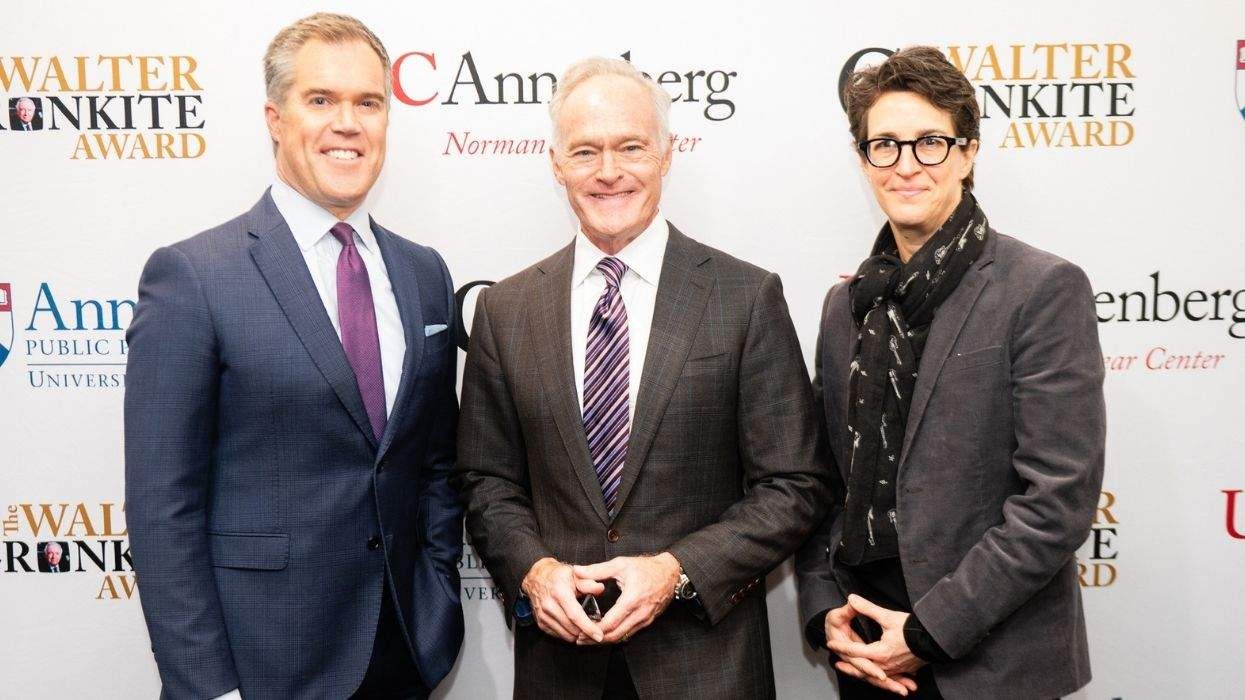
On Friday afternoon at the National Press Club in Washington, D.C., the 2025 Walter Cronkite Awards for Excellence in Political Journalism unfolded less like a media victory lap than a reckoning. The journalists honored — Rachel Maddow, Jon Stewart, Scott Pelley, Peter Alexander, John Dickerson, Julio Vaqueiro, and a range of local and investigative reporters — gathered amid an unspoken understanding: The work being celebrated is also the work now under the greatest strain.
Keep up with the latest in LGBTQ+ news and politics. Sign up for The Advocate's email newsletter.
Presented biennially by USC Annenberg’s Norman Lear Center, the Cronkite Awards recognize political journalism on television and digital platforms that meet the highest standards of rigor and independence. This year, speakers returned repeatedly to the same idea: that journalism is no longer warning about a future democratic crisis. It is documenting one already under way.
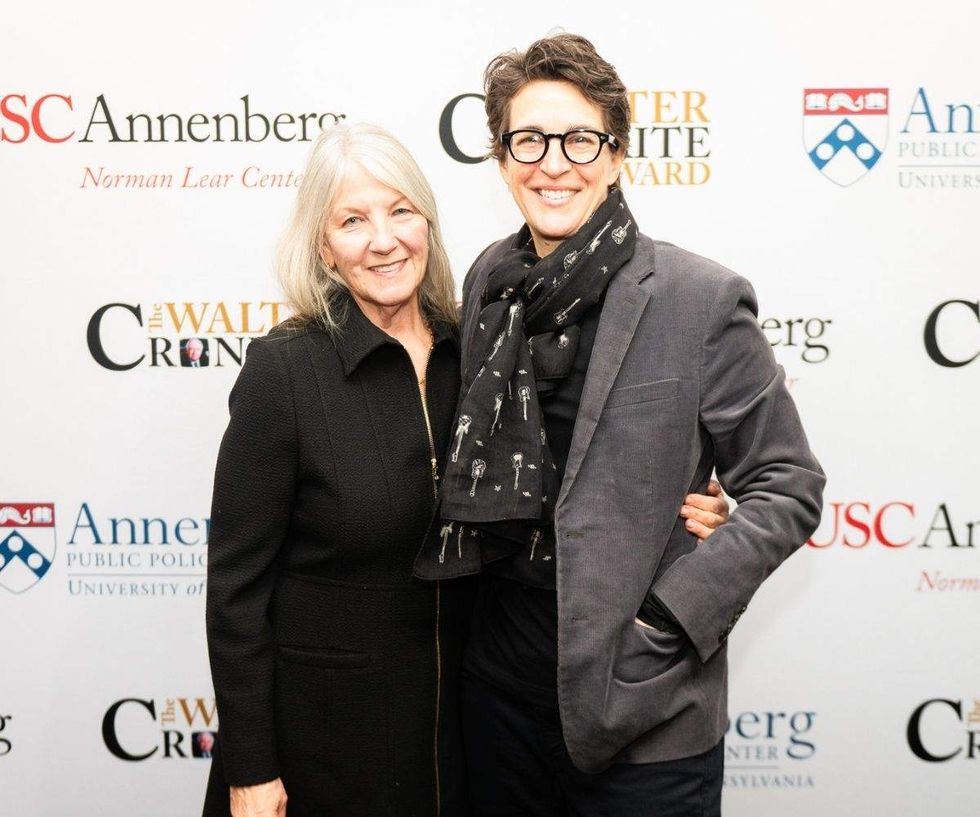
MS NOW anchor Rachel Maddow (right) with her longtime partner, Susan Mikula, at the 2025 Walter Cronkite Awards in Washington, D.C., on December 12, 2025.
Tina Dela Rosa Photography
Maddow received one of the afternoon’s top honors for MS NOW’s (formerly MSNBC) The Rachel Maddow Show episode “Everyone, Everywhere, All at Once,” a broadcast that captured more than 1,400 “Hands Off” protests that erupted nationwide on April 7, during the opening months of President Donald Trump’s second term. The episode stitched together footage from cities, suburbs, and rural towns, presenting the demonstrations not as isolated expressions of dissent but as a national political response taking shape in real time. Maddow attended the ceremony accompanied by her longtime partner, Susan Mikula.
In an exclusive interview with The Advocate at the ceremony, Maddow said she remains convinced that the most important political story in the country is not centered in D.C. “Our fate is not going to be determined by what happens in Washington and by what the administration wants to do,” she said. “What’s going to determine what happens to us is the reaction — how the country deals with it and the sort of institutional response.”
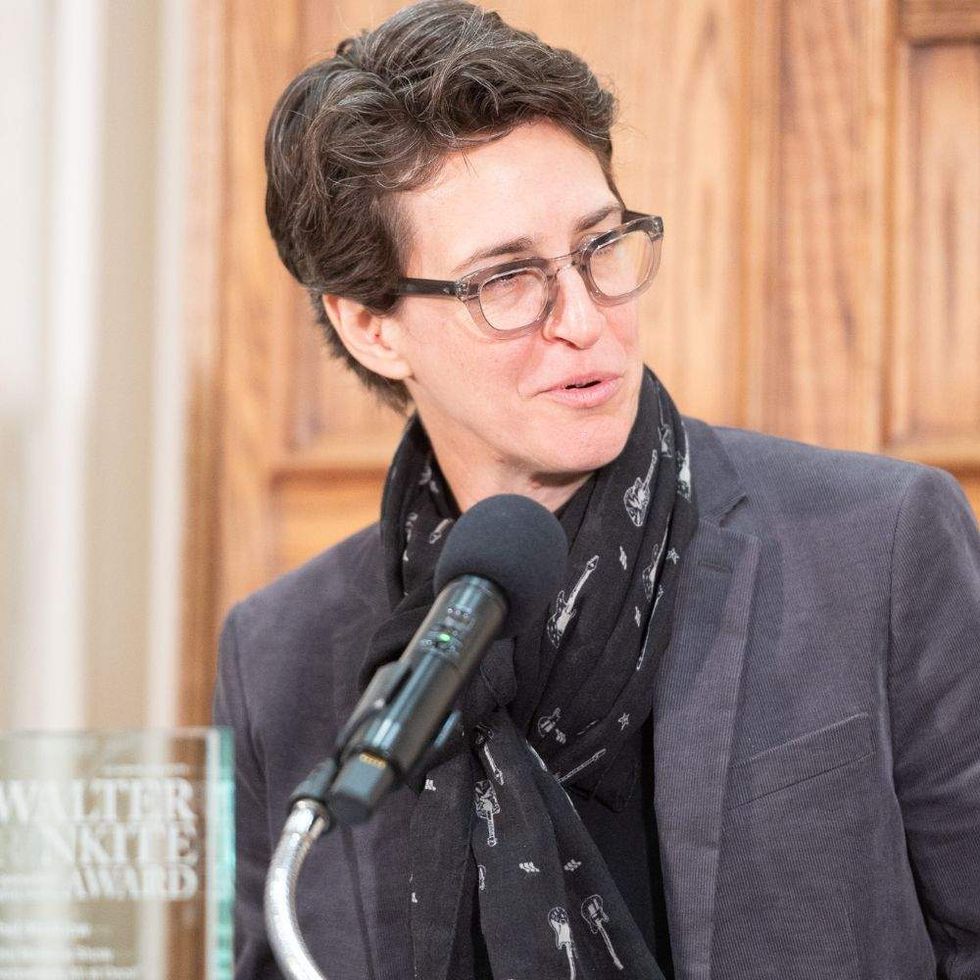
Rachel Maddow speaks at the 2025 Walter Cronkite Awards in Washington, D.C.
Tina Dela Rosa Photography
That framework, democracy measured by public resistance rather than executive intent, now runs through much of Maddow’s work across television and podcasting. Earlier this month, she launched Rachel Maddow Presents: Burn Order, a six-part podcast series examining the U.S. government’s incarceration of Japanese Americans during World War II and the suppressed evidence that revealed it was unnecessary and rooted in racial hatred.
Maddow described the project to The Advocate as an effort to resist comforting myths about history. “I’m trying to not just make us remember what we did there,” she said, “but trying to make us get real about how we think of that as a very black-and-white moral wrong.” The danger, she explained, is assuming that injustice only happens when villains are obvious and resistance is easy. “These decisions are hard in the moment,” she said.
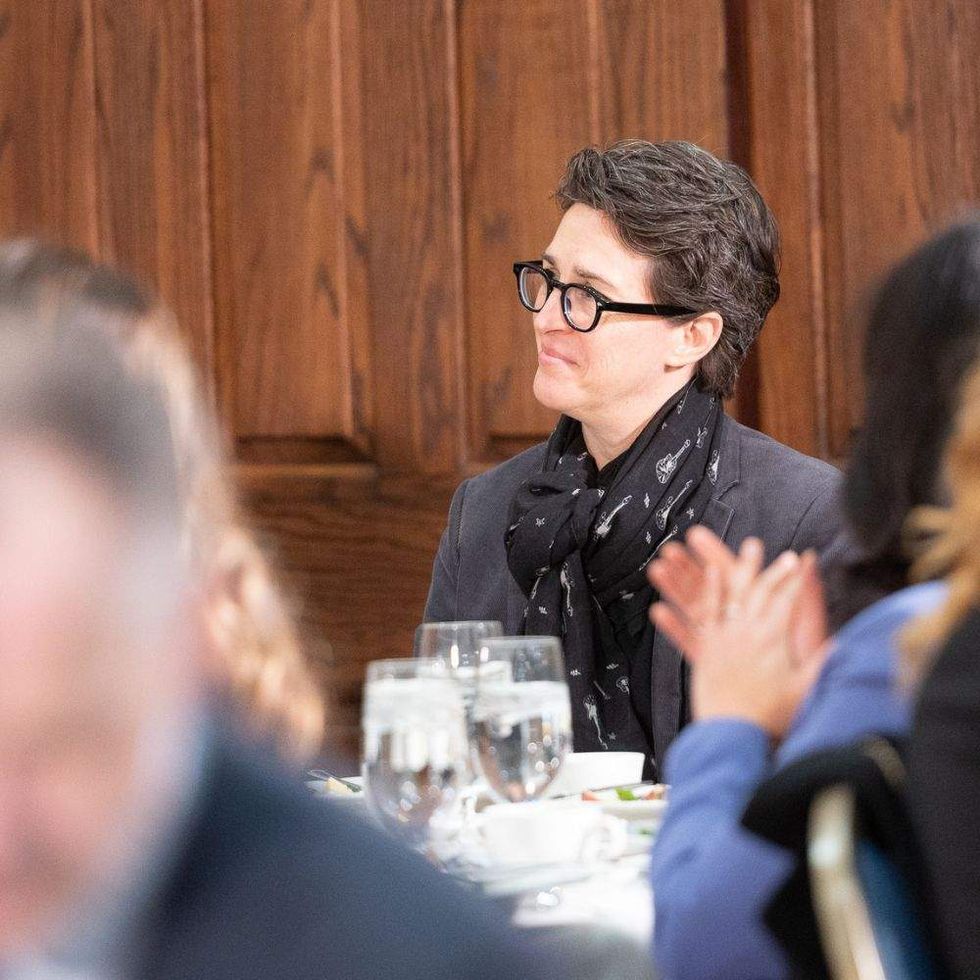
Rachel Maddow listens to speakers at the 2025 Walter Cronkite Awards in Washington, D.C.
Tina Dela Rosa Photography
Burn Order traces how an executive order authorized the roundup of innocent Japanese Americans, how internal dissent was ignored or buried, and how a bombshell document, ordered destroyed, eventually exposed the truth. Maddow said she wanted the podcast to function as what she called a “moral mirror,” forcing listeners to confront how ordinary institutions and individuals can capitulate even when they know something is wrong.
Maddow also spoke at length about the podcast’s distinctive score, which she said plays a structural role in the narrative. “In this one in particular, I just feel like it’s so integrated with the vibe of what’s going on in the storytelling,” she said. The score, she explained, is entirely original and was composed by a young student composer the team recruited for the project. When producers asked for adjustments — more tension, a sense of urgency — the composer turned around new material within hours, including music with a literal ticking clock embedded in it. “It’s amazing,” Maddow said.
The themes Maddow explores in the podcast echo her analysis of the present. Americans, she said, are often encouraged to wait for a singular, unmistakable moment when authoritarianism arrives. “That moment is here. It’s happening,” she said. She pointed to the rise of masked, unidentified law enforcement agents patrolling neighborhoods and pulling people off the streets, and the instinctive backlash she has observed from people encountering it. “You don’t need to read a lot of academic books on fascism to know what that looks like.”
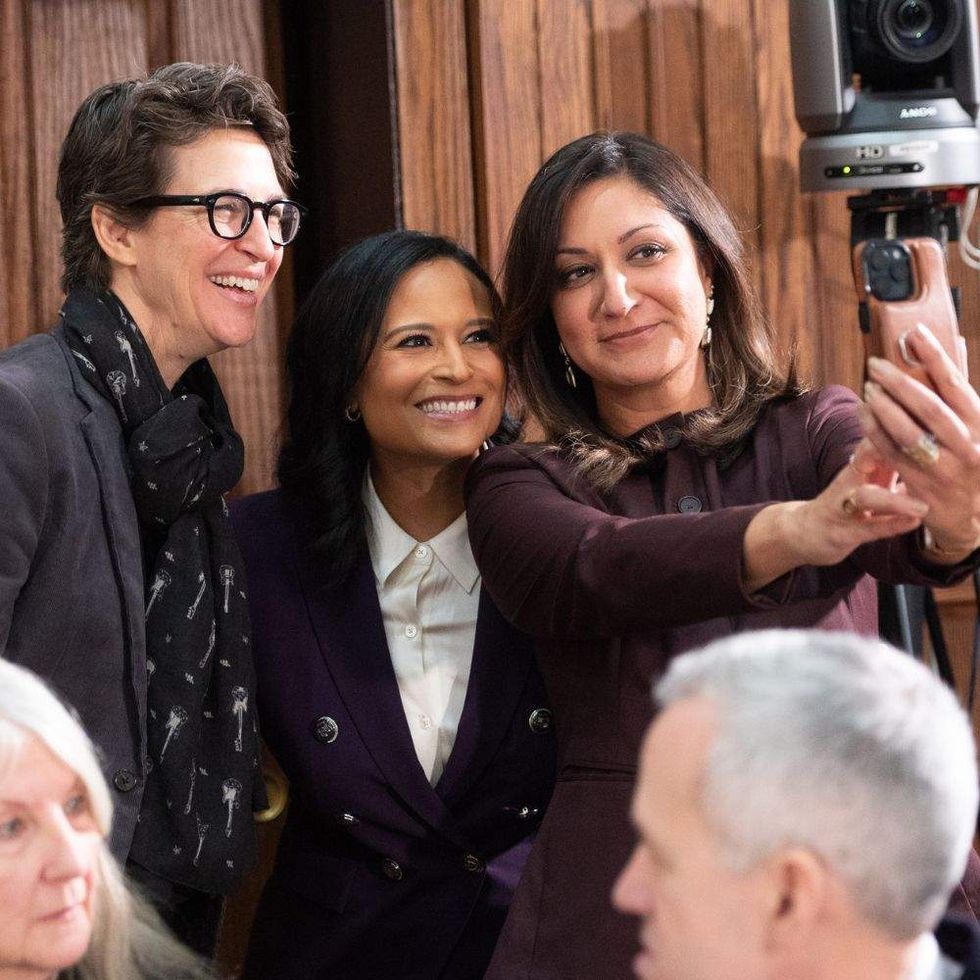
MS NOW's Rachel Maddow (left) with NBC News's Kristen Welker and PBS Newshour's Amna Nawaz at the 2025 Walter Cronkite Awards in Washington, D.C.
Tina Dela Rosa Photography
Maddow meant to make a statement by attending the awards ceremony. She that she rarely attends awards events, not out of ideology, but out of temperament. “I’m kind of allergic to it,” she admitted, describing a long-standing aversion to the ritual of professional self-congratulation. This day, however, felt different.
The Cronkite Award, she said, was not really about her. It recognized coverage of mass protests, work that required building something close to an entirely new reporting apparatus, and she wanted the people who did that work to be seen. “I wanted to be here in part just to acknowledge how hard my staff on my show has worked to make that coverage happen,” Maddow told The Advocate.
Onstage, she used her acceptance remarks to highlight the invisible labor behind that coverage. She described her team’s painstaking process of verifying user-generated protest footage, systematically scanning local newspapers and TV broadcasts, and reaching out directly to newsrooms to ask whether any material had never made it to air. There is no standing national infrastructure to support decentralized civic action at scale, she said, and building one would require extraordinary effort.
The honor, she added, belonged to producers and associate producers who had reshaped their jobs to track political action outside Washington — often without precedent, and with little guarantee the skill set would ever be reusable. That reality, Maddow said, was precisely the problem. In a democracy, she argued, journalism is structurally built to monitor institutions, not movements — even when those movements may ultimately decide the country’s fate.
“There are lots of systems in place to cover the powerful,” Maddow said. “What we don’t have systems for is covering the people — especially when they are acting politically.”
That approach has also translated into audience momentum. According to an MS NOW spokesperson citing Nielsen data, The Rachel Maddow Show has beaten Fox News’s Hannity for five consecutive Mondays among viewers in the key demographic. In the most recent week, the program was up 25 percent in the demo, the spokesperson said.
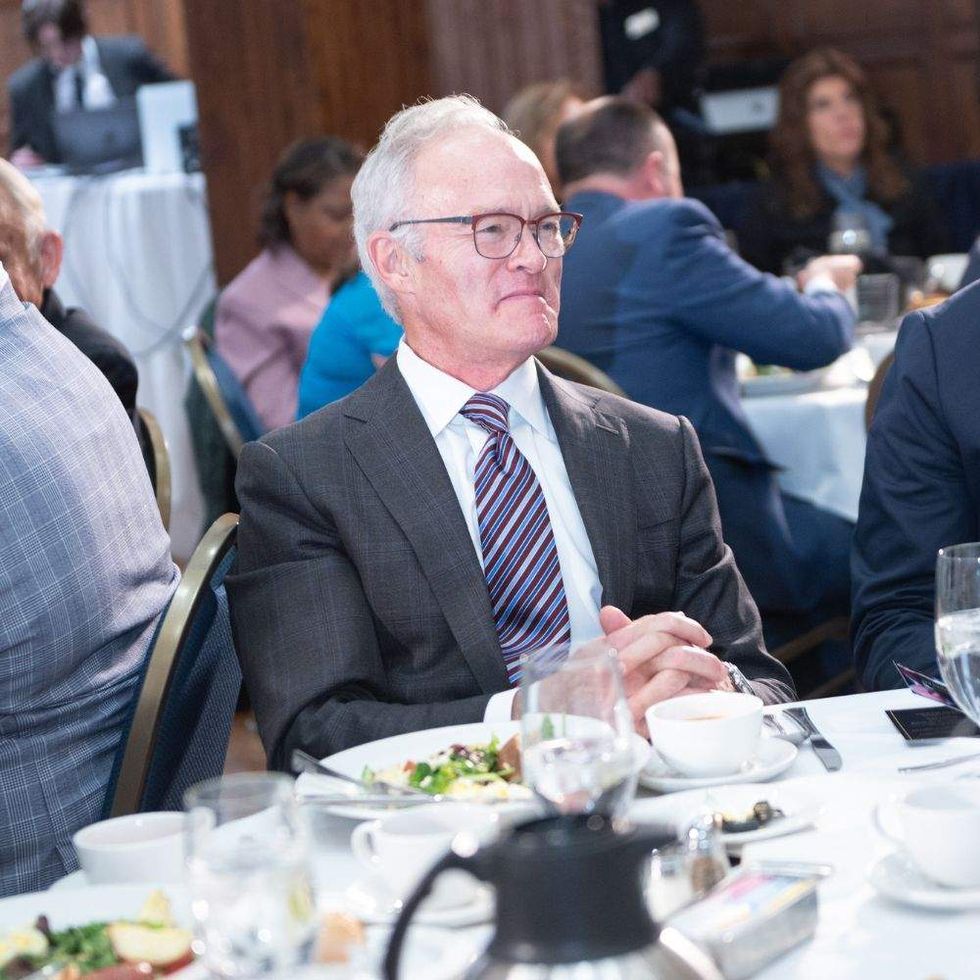
60 Minutes correspondent Scott Pelley attends the 2025 Walter Cronkite Awards in Washington, D.C.
Tina Dela Rosa Photography
If Maddow’s award focused on public response, CBS’s Scott Pelley confronted institutional pressure head-on. Pelley accepted a Cronkite Award on behalf of 60 Minutes for “Rule of Law,” an investigation into executive orders targeting law firms deemed hostile to the president. The reporting aired amid corporate upheaval at Paramount, CBS’s parent company, which, following a merger with Skydance, appointed controversial queer conservative journalist Bari Weiss as editor in chief of the venerated news division, prompting concerns about editorial independence.
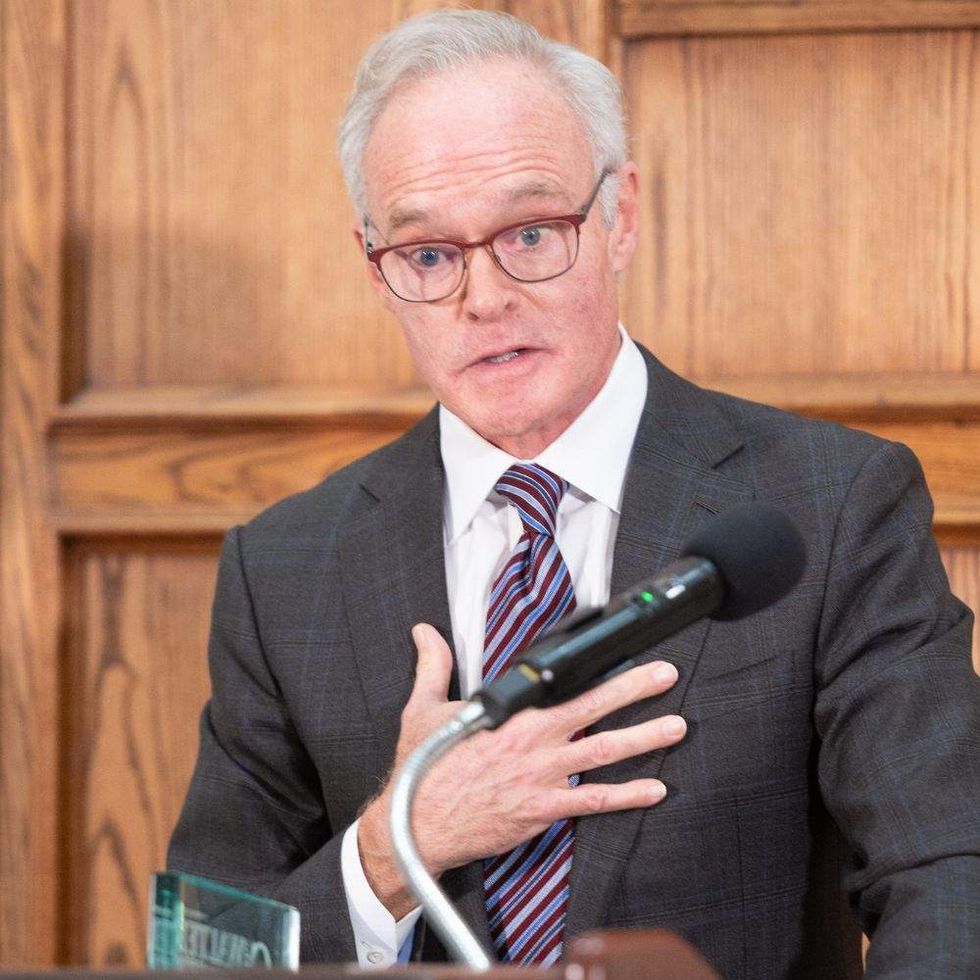
60 Minutes correspondent Scott Pelley discusses the state of journalism after accepting his 2025 Walter Cronkite Award.
Tina Dela Rosa Photography
Pelley brought up those anxieties while offering reassurance. “Last season, all of our stories got on the air,” he said. “We got them all on the air with an absolute minimum of interference.” He also noted the loss of senior newsroom leaders and warned that fear itself has become a growing obstacle to accountability reporting.
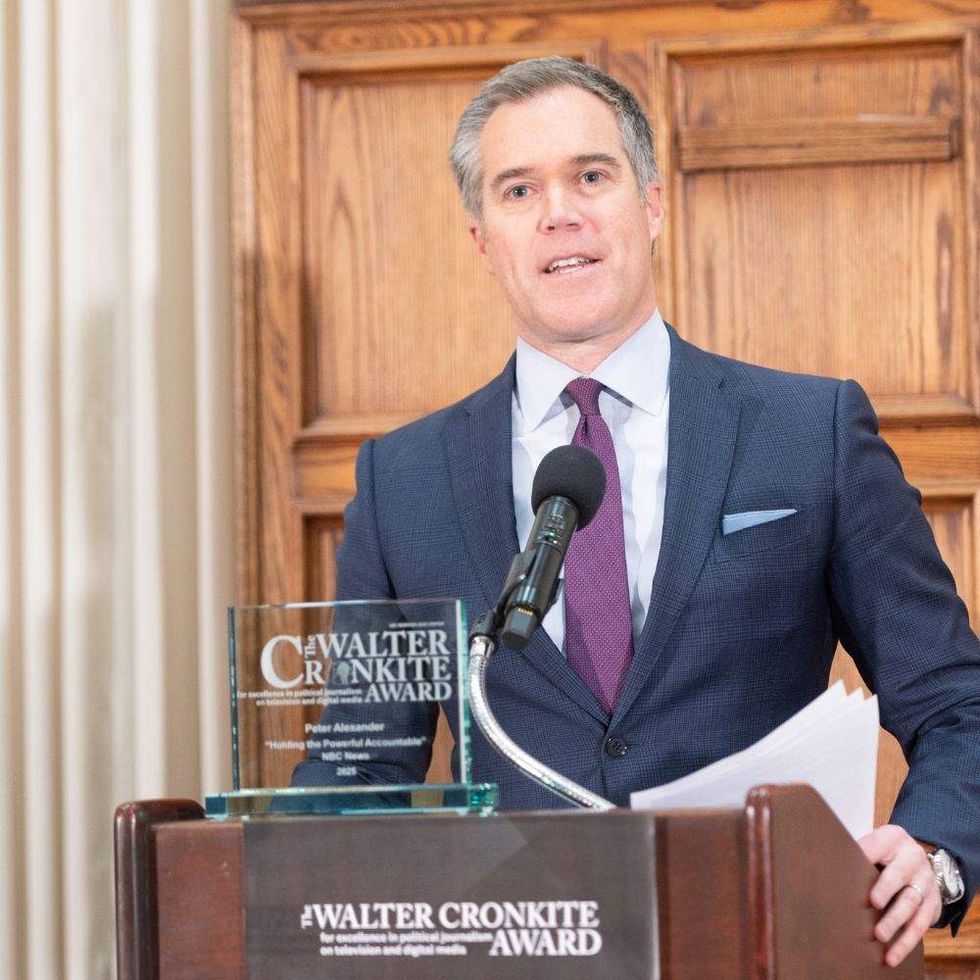
NBC News chief White House correspondent Peter Alexander talks about not taking attacks from Donald Trump personally as a reporter at the 2025 Walter Cronkite Awards in Washington, D.C.
Tina Dela Rosa Photography
NBC News chief White House correspondent Peter Alexander was honored for “Holding the Powerful Accountable,” with judges praising his persistence in live questioning despite personal attacks from the president. In remarks that drew knowing laughter and sustained applause, Alexander reflected on the costs of that role and why he believes it remains essential.
He rejected the idea that journalism’s job is to take sides. “I’m not an advocate for Republicans or for Democrats,” Alexander said. “I’m an advocate for the facts, even and especially when it isn’t easy.” He described being shouted down, insulted, and publicly dismissed during press briefings, moments that viewers often ask him about afterward. His answer, he said, is simple: “My job is the next question.” He added, "Those moments reflect on the other person, not on me."
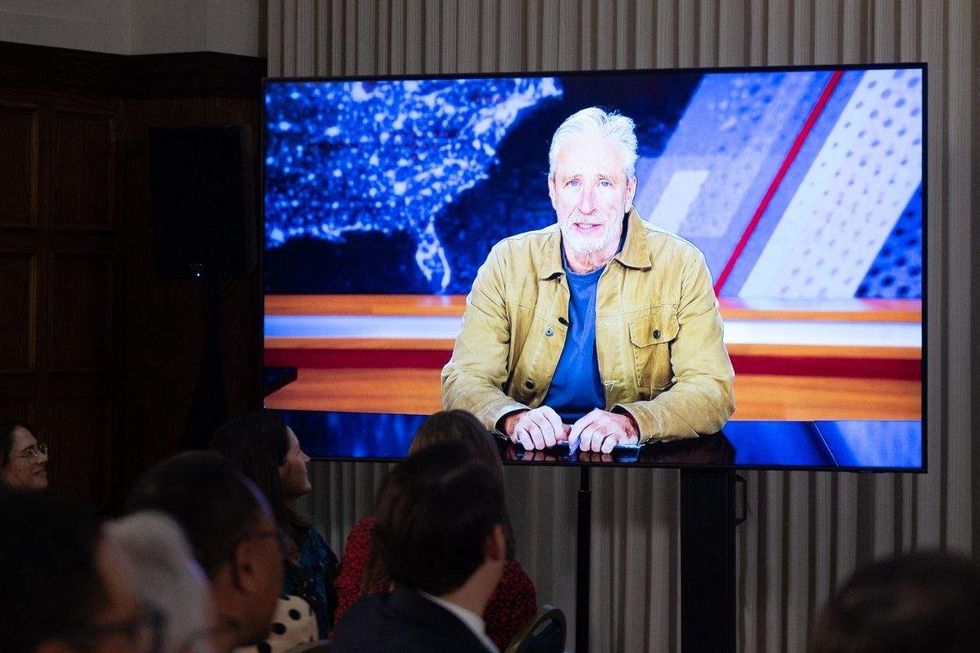
The Daily Show's Jon Stewart sent a video message accepting his program's 2025 Walter Cronkite Award.
Tina Dela Rosa Photography
Alexander also shared a personal story about his grandmother, Faye, who lived to be 105 and closely followed his work. After one particularly heated exchange at the White House, a critic attacked him online. Faye responded with three words that Alexander said he has never forgotten: “Drop that, Helen.” The room laughed, but the point landed.
“Being a journalist does not mean being popular,” he said. “It means never giving up.”
Comedian and activist Jon Stewart received the inaugural Cronkite Award for comedic news and commentary for The Daily Show, recognizing satire’s role in translating investigative reporting into mass-audience accountability. In a video message, Stewart, who couldn’t attend because of his Broadway debut, joked about being placed anywhere near Walter Cronkite’s legacy, but organizers emphasized that his work rests on deep reporting and has helped reach audiences that traditional news outlets increasingly struggle to engage.