'%3E%3Cpath d='M16.3574 35.6519H12.9537L15.0491 18.8873L16.3574 35.6519ZM30.4229 54.0093L22.309 0.994385H7.91795L0 54.0093H10.6634L11.5802 46.3855H17.4014L17.9914 54.0093H30.4229Z' fill='%23971B20'/%3E%3Cpath d='M48.2073 41.8813C48.2073 43.4049 47.4892 44.0011 46.1144 44.0011H43.7595V11.0687H46.1144C47.4892 11.0687 48.2073 11.6636 48.2073 13.1885V41.8813ZM59.5273 43.6695V11.3326C59.5273 3.71323 53.5729 0.994385 47.8157 0.994385H31.7213V54.0093H47.8157C53.5729 54.0093 59.5273 51.29 59.5273 43.6695Z' fill='%23971B20'/%3E%3Cpath d='M90.183 0.994385H78.6039L75.0711 30.6157L71.9955 0.994385H59.4346L69.2474 54.0093H80.373L90.183 0.994385Z' fill='%23971B20'/%3E%3Cpath d='M107.063 42.3448C107.063 43.7359 105.951 44.5974 104.643 44.5974C103.269 44.5974 102.157 43.7359 102.157 42.3448V12.658C102.157 11.2676 103.269 10.4058 104.643 10.4058C105.951 10.4058 107.063 11.2676 107.063 12.658V42.3448ZM119.233 43.2723V11.7312C119.233 6.36384 112.952 -3.8147e-06 104.643 -3.8147e-06C96.2667 -3.8147e-06 89.9867 6.36384 89.9867 11.7312V43.2723C89.9867 48.6393 96.2667 55 104.643 55C112.952 55 119.233 48.6393 119.233 43.2723Z' fill='%23971B20'/%3E%3Cpath d='M150.976 43.9349V33.7309H139.069V42.3448C139.069 43.7359 137.957 44.5974 136.582 44.5974C135.076 44.5974 133.964 43.7359 133.964 42.3448V12.658C133.964 11.2676 135.076 10.4058 136.582 10.4058C137.957 10.4058 139.069 11.2676 139.069 12.658V21.2723H150.976V11.0687C150.976 5.70107 145.283 -3.8147e-06 136.582 -3.8147e-06C127.75 -3.8147e-06 121.796 5.70107 121.796 11.0687V43.9349C121.796 49.3022 127.75 55 136.582 55C145.283 55 150.976 49.3022 150.976 43.9349Z' fill='%23971B20'/%3E%3Cpath d='M167.478 35.6519H164.076L166.17 18.8873L167.478 35.6519ZM181.544 54.0093L173.432 0.994385H159.037L151.123 54.0093H161.785L162.704 46.3855H168.523L169.114 54.0093H181.544Z' fill='%23971B20'/%3E%3Cpath d='M205.412 10.4058V0.994385H177.081V10.4058H185.392V54.0093H197.428V10.4058H205.412Z' fill='%23971B20'/%3E%3Cpath d='M230.002 54.0093V43.9349H218.914V31.8746H226.635V21.8028H218.914V10.4058H230.002V0.994385H206.875V54.0093H230.002Z' fill='%23971B20'/%3E%3C/g%3E%3Cdefs%3E%3CclipPath id='clip0_260_7080'%3E%3Crect width='230' height='55' fill='white'/%3E%3C/clipPath%3E%3C/defs%3E%3C/svg%3E)
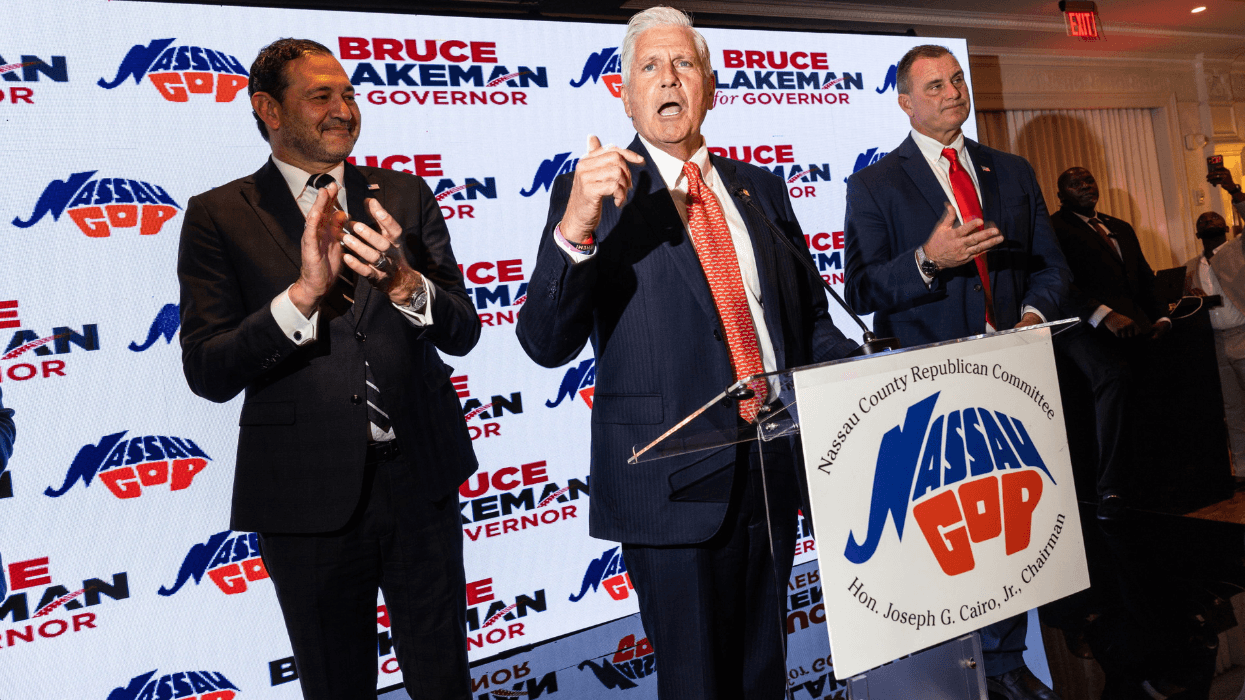

A ban on transgender female athletes in Long Island has been lifted by an appellate court, the latest ruling in a case that has been ongoing with varying outcomes since 2024 — and another political blow to its mastermind.
The New York State Supreme Court’s Second Appellate Division sided on Wednesday with Attorney General Letitia James’ office, ruling that the 2024 ban originally crafted by Nassau County Executive Bruce Blakeman was illegal and discriminatory.
Blakeman, the Republican nominee in the 2026 New York gubernatorial election, just suffered a large loss to incumbent Democratic Gov. Kathy Hochul in Tuesday’s midterm elections.
Related: New York Republican governor candidate faces questions over the antigay company he keeps
“Nobody should have to fight to play the game they love. Transgender athletes have the right to play on the court, field, or roller rink like everyone else, and today the Second Department made clear that Nassau County cannot ban them,” James said in a statement.
“No one asked for this illegal and exclusionary policy,” James added. “Bruce Blakeman was just trying to stop athletes from playing with their teammates. I am pleased the court saw right through it. As long as I am attorney general, no New Yorker will be shut out of public life because of who they are.”
It may not be the final word, though, as Nassau County Attorney Thomas Adams said his office is “reviewing the decision with the intention to continue the appeals process,” according to the local publication Long Island Life & Politics.
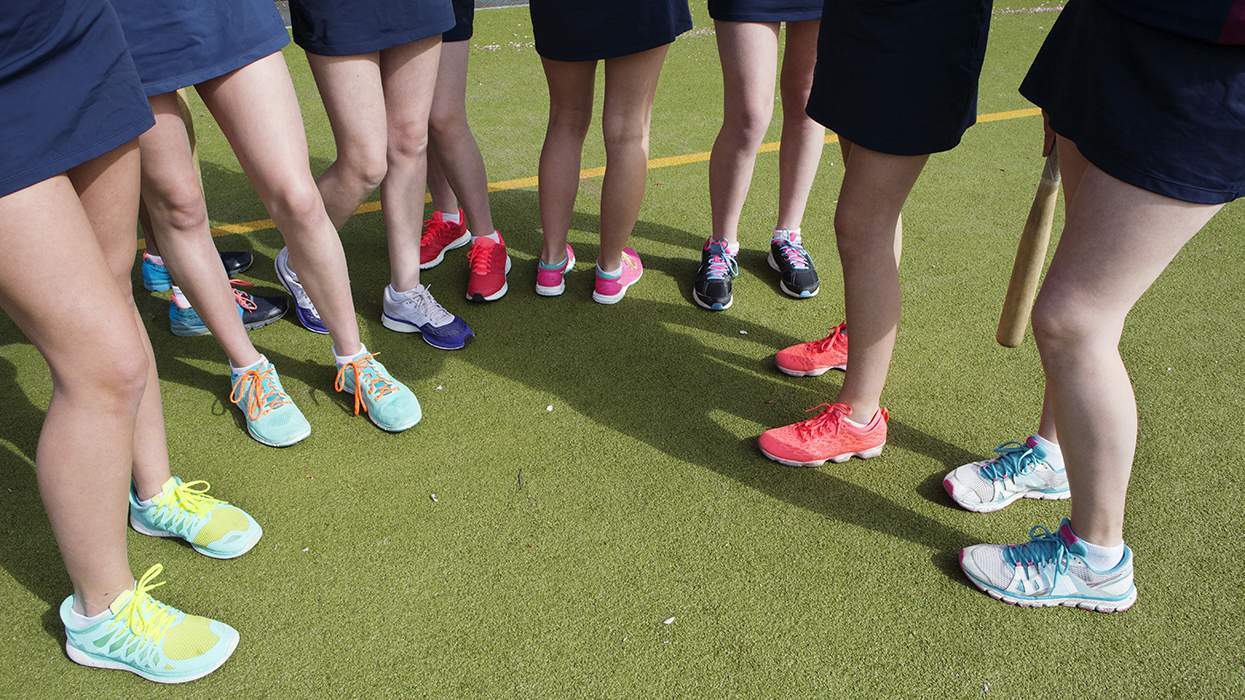
Blakeman first issued the anti-trans executive order in February 2024 requiring sports organizations seeking permits for sporting events on Nassau County park properties to classify their teams as male, female, or coed based on participants’ biological sex at birth. Under the order, park permits would be issued for girls’ or women's sporting events that allowed transgender girls or women to participate, but it made no mention of transgender boys and men participating in boys’ and men’s sports.
Related: Federalist Society judge upholds Long Island trans sports ban
“For the purpose of this Executive Order, an individual’s gender is defined as the individual's biological sex at birth; and a statement of a team member's/participant's biological sex on the team member's/participant's official birth certificate is considered to have correctly stated the team member's/participant's biological sex at birth if the statement was filed at or near the time of the team member's/participant's birth,” it read.
As The Advocate reported, transgender women athletes and their teams were denied access to over 100 athletic facilities in the county under the ban, including fields, basketball courts, ice rinks, swimming pools, and tennis courts.
James warned Blakeman at the time that "pernicious discrimination such as this is precisely what New York’s Human and Civil Rights Laws proscribe,” giving him a week to null the “transphobic and discriminatory" order before taking legal action. Instead, Blakeman turned to asking a New York federal court shortly before the deadline to legalize his order in a separate lawsuit.
Blakeman was then sued in March by the Long Island Roller Rebels (LIRR), a local women’s roller derby league, with support from the New York Civil Liberties Union, stating in their suit that the ban was in violation of New York’s civil rights codes.
Related: N.Y. court won't block Nassau County's anti-trans sports law
LIRR was then “faced with the choice to either exclude transgender women from their league — in direct contradiction to their internal values and state law — or forego access to Nassau County facilities," the lawsuit read.
Calling the order "cruel" in a statement, LIRR member Amanda “Curly Fry” Urena said the policy sent “the dangerous message that trans people don’t belong in Nassau County.”
“We hope the court sees this policy for what it is — transphobic and unjust — and makes sure Nassau County is a safe space for trans, nonbinary, and gender-expansive people,” the roller derby athlete added.
Nassau County Supreme Court Judge Francis Ricigliano struck down the ban in May 2024, ruling Blakeman “acted beyond the scope of his authority.” In response, the Nassau County Legislature, which includes representatives from each of the county’s 19 districts, passed a formal law to replace the executive order.
LIRR and the New York Civil Liberties Union then challenged that piece of legislation and requested a preliminary injunction that would have kept the law from being enforced, but that request was denied in January 2025. The group encountered another setback in October 2025 when Nassau County Supreme Court Judge Bruce Cozzens upheld the ban.
"The power differential between adult individuals who are born male and those born female is substantial and therefore may be more dangerous,” Cozzens, a member of the conservative Federalist Society, said in his ruling then.
The appellate court’s latest action overturns Cozzens’ ruling.