'%3E%3Cpath d='M16.3574 35.6519H12.9537L15.0491 18.8873L16.3574 35.6519ZM30.4229 54.0093L22.309 0.994385H7.91795L0 54.0093H10.6634L11.5802 46.3855H17.4014L17.9914 54.0093H30.4229Z' fill='%23971B20'/%3E%3Cpath d='M48.2073 41.8813C48.2073 43.4049 47.4892 44.0011 46.1144 44.0011H43.7595V11.0687H46.1144C47.4892 11.0687 48.2073 11.6636 48.2073 13.1885V41.8813ZM59.5273 43.6695V11.3326C59.5273 3.71323 53.5729 0.994385 47.8157 0.994385H31.7213V54.0093H47.8157C53.5729 54.0093 59.5273 51.29 59.5273 43.6695Z' fill='%23971B20'/%3E%3Cpath d='M90.183 0.994385H78.6039L75.0711 30.6157L71.9955 0.994385H59.4346L69.2474 54.0093H80.373L90.183 0.994385Z' fill='%23971B20'/%3E%3Cpath d='M107.063 42.3448C107.063 43.7359 105.951 44.5974 104.643 44.5974C103.269 44.5974 102.157 43.7359 102.157 42.3448V12.658C102.157 11.2676 103.269 10.4058 104.643 10.4058C105.951 10.4058 107.063 11.2676 107.063 12.658V42.3448ZM119.233 43.2723V11.7312C119.233 6.36384 112.952 -3.8147e-06 104.643 -3.8147e-06C96.2667 -3.8147e-06 89.9867 6.36384 89.9867 11.7312V43.2723C89.9867 48.6393 96.2667 55 104.643 55C112.952 55 119.233 48.6393 119.233 43.2723Z' fill='%23971B20'/%3E%3Cpath d='M150.976 43.9349V33.7309H139.069V42.3448C139.069 43.7359 137.957 44.5974 136.582 44.5974C135.076 44.5974 133.964 43.7359 133.964 42.3448V12.658C133.964 11.2676 135.076 10.4058 136.582 10.4058C137.957 10.4058 139.069 11.2676 139.069 12.658V21.2723H150.976V11.0687C150.976 5.70107 145.283 -3.8147e-06 136.582 -3.8147e-06C127.75 -3.8147e-06 121.796 5.70107 121.796 11.0687V43.9349C121.796 49.3022 127.75 55 136.582 55C145.283 55 150.976 49.3022 150.976 43.9349Z' fill='%23971B20'/%3E%3Cpath d='M167.478 35.6519H164.076L166.17 18.8873L167.478 35.6519ZM181.544 54.0093L173.432 0.994385H159.037L151.123 54.0093H161.785L162.704 46.3855H168.523L169.114 54.0093H181.544Z' fill='%23971B20'/%3E%3Cpath d='M205.412 10.4058V0.994385H177.081V10.4058H185.392V54.0093H197.428V10.4058H205.412Z' fill='%23971B20'/%3E%3Cpath d='M230.002 54.0093V43.9349H218.914V31.8746H226.635V21.8028H218.914V10.4058H230.002V0.994385H206.875V54.0093H230.002Z' fill='%23971B20'/%3E%3C/g%3E%3Cdefs%3E%3CclipPath id='clip0_260_7080'%3E%3Crect width='230' height='55' fill='white'/%3E%3C/clipPath%3E%3C/defs%3E%3C/svg%3E)


As state legislators and the federal government continue to target the rights of transgender people across the country — including access to health care, obtaining IDs that align with their gender identity, and the ability to serve in the military — trans choruses are providing much-needed refuge for this marginalized community.
Over the last two decades, trans choruses and choirs have grown and spread across the country through various political pendulum swings, as a recent in-depth NBC News report notes.
The first trans choir was founded in San Francisco in 2001 to give trans singers a place to perform gospel music without shame or stigma. Despite being one of the most progressive cities in the U.S., few churches in the area welcomed trans singers at the time. Even more accepting churches or community choruses were often split into rigid “male” and “female” categories, leaving those whose voices or identities don’t fit neatly into either group feeling excluded. That first chorus in S.F., called the Transcendence Gospel Choir, stayed active for nearly a decade and released two studio albums.
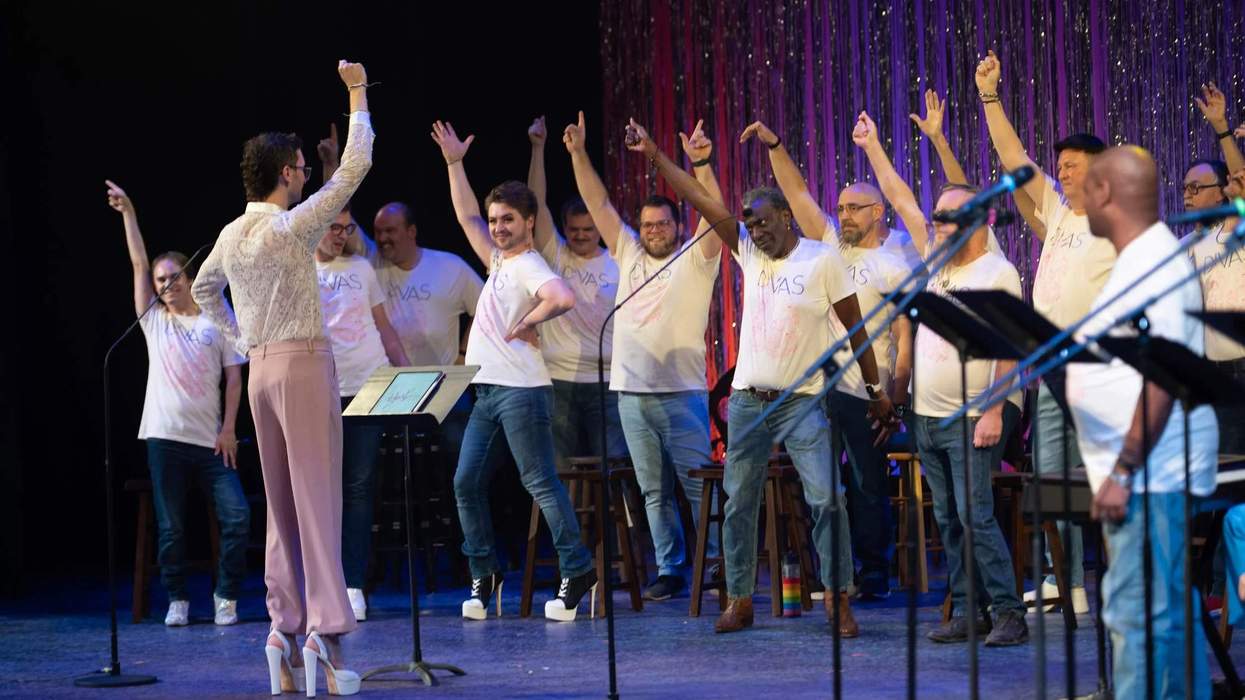
Today, about a dozen such groups operate throughout the U.S., giving trans and nonbinary folks safe spaces to sing—and find friendship, community, and support.
“Oh Lamb of God, that takest away the sins of the world,” the Seattle Trans and Nonbinary Choral Ensemble (or STANCE) sang in Latin at a recent rehearsal. “Grant them eternal rest.”
The selection, Mozart’s Requiem in D minor, was purposely mournful, Cee Adamson, STANCE’s executive and artistic director, told NBC.
“It was not just about doing Requiem, because everyone does that — every other community choir can do that,” Adamson explained. “By saying these words that people have sung for centuries, it means something a little bit more poignant coming from the same bodies that have been killed or murdered senselessly for no apparent other reason but by living their truth.”
While trans choruses can certainly serve as outlets for activism, most exist mainly to give trans singers a place to practice their craft and perform. Rather than separating into vocal groups by gender, STANCE singers are divided by vocal range (soprano, alto, tenor, and bass), with singers of varying gender identities in each section.
The members of STANCE, who are all trans or nonbinary, say the chorus is a place of refuge during an especially difficult time for trans people in America. Wing Mui, a trans woman who’s been a member for three years, said that throughout her 20 years of singing, she always felt uncomfortable in traditional choruses because she sings bass and would often get misgendered or receive "confused looks."
“But that first STANCE rehearsal was really the first time where I’m like, OK, yeah, this feels normal and good, and there’s no friction,” said Mui, and even noted she’s been going to therapy less often since joining. “I don’t have to pay that mental wage. I can just make art with other people. I just feel happier — as happy as one can be while being trans in the year 2026 in America.”
“As a community, we weather these adversities together and provide mutual aid when people are struggling,” said STANCE’s founder, Haven Wilvich. “We have seen a large influx of trans people moving to the region, and as a choir, we have really noticed people seeking out choir as a way to connect with others.”