'%3E%3Cpath d='M16.3574 35.6519H12.9537L15.0491 18.8873L16.3574 35.6519ZM30.4229 54.0093L22.309 0.994385H7.91795L0 54.0093H10.6634L11.5802 46.3855H17.4014L17.9914 54.0093H30.4229Z' fill='%23971B20'/%3E%3Cpath d='M48.2073 41.8813C48.2073 43.4049 47.4892 44.0011 46.1144 44.0011H43.7595V11.0687H46.1144C47.4892 11.0687 48.2073 11.6636 48.2073 13.1885V41.8813ZM59.5273 43.6695V11.3326C59.5273 3.71323 53.5729 0.994385 47.8157 0.994385H31.7213V54.0093H47.8157C53.5729 54.0093 59.5273 51.29 59.5273 43.6695Z' fill='%23971B20'/%3E%3Cpath d='M90.183 0.994385H78.6039L75.0711 30.6157L71.9955 0.994385H59.4346L69.2474 54.0093H80.373L90.183 0.994385Z' fill='%23971B20'/%3E%3Cpath d='M107.063 42.3448C107.063 43.7359 105.951 44.5974 104.643 44.5974C103.269 44.5974 102.157 43.7359 102.157 42.3448V12.658C102.157 11.2676 103.269 10.4058 104.643 10.4058C105.951 10.4058 107.063 11.2676 107.063 12.658V42.3448ZM119.233 43.2723V11.7312C119.233 6.36384 112.952 -3.8147e-06 104.643 -3.8147e-06C96.2667 -3.8147e-06 89.9867 6.36384 89.9867 11.7312V43.2723C89.9867 48.6393 96.2667 55 104.643 55C112.952 55 119.233 48.6393 119.233 43.2723Z' fill='%23971B20'/%3E%3Cpath d='M150.976 43.9349V33.7309H139.069V42.3448C139.069 43.7359 137.957 44.5974 136.582 44.5974C135.076 44.5974 133.964 43.7359 133.964 42.3448V12.658C133.964 11.2676 135.076 10.4058 136.582 10.4058C137.957 10.4058 139.069 11.2676 139.069 12.658V21.2723H150.976V11.0687C150.976 5.70107 145.283 -3.8147e-06 136.582 -3.8147e-06C127.75 -3.8147e-06 121.796 5.70107 121.796 11.0687V43.9349C121.796 49.3022 127.75 55 136.582 55C145.283 55 150.976 49.3022 150.976 43.9349Z' fill='%23971B20'/%3E%3Cpath d='M167.478 35.6519H164.076L166.17 18.8873L167.478 35.6519ZM181.544 54.0093L173.432 0.994385H159.037L151.123 54.0093H161.785L162.704 46.3855H168.523L169.114 54.0093H181.544Z' fill='%23971B20'/%3E%3Cpath d='M205.412 10.4058V0.994385H177.081V10.4058H185.392V54.0093H197.428V10.4058H205.412Z' fill='%23971B20'/%3E%3Cpath d='M230.002 54.0093V43.9349H218.914V31.8746H226.635V21.8028H218.914V10.4058H230.002V0.994385H206.875V54.0093H230.002Z' fill='%23971B20'/%3E%3C/g%3E%3Cdefs%3E%3CclipPath id='clip0_260_7080'%3E%3Crect width='230' height='55' fill='white'/%3E%3C/clipPath%3E%3C/defs%3E%3C/svg%3E)

One of the nation’s largest LGBTQ+ archives is overflowing with queer history. Literally. CEO Robert Kesten says shelves have been added to every office of the Stonewall National Museum, Archives & Library. What’s left over has been shipped to off-site storage units.
As a result, boxes of periodicals and posters may poke out during conference calls, and assembling artwork for an exhibition can require a piecemeal search through South Florida warehouses.
“At this point, we have no choice,” Kesten says. “We really had to do something dramatic. And that meant [to] look for a new space.”
The Fort Lauderdale-based museum recently launched a $40 million capital campaign to move to a new location with a bigger storage capacity. The search for a new spot is ongoing, but museum leaders say it has been undermined by a cancellation of federal and state grants — part of President Donald Trump’s push to defund so-called diversity, equity, and inclusion programming.
The museum has lost up to $125,000 in anticipated grant funding from the federal government and the Florida state government amid anti-DEI efforts, according to The New York Times.
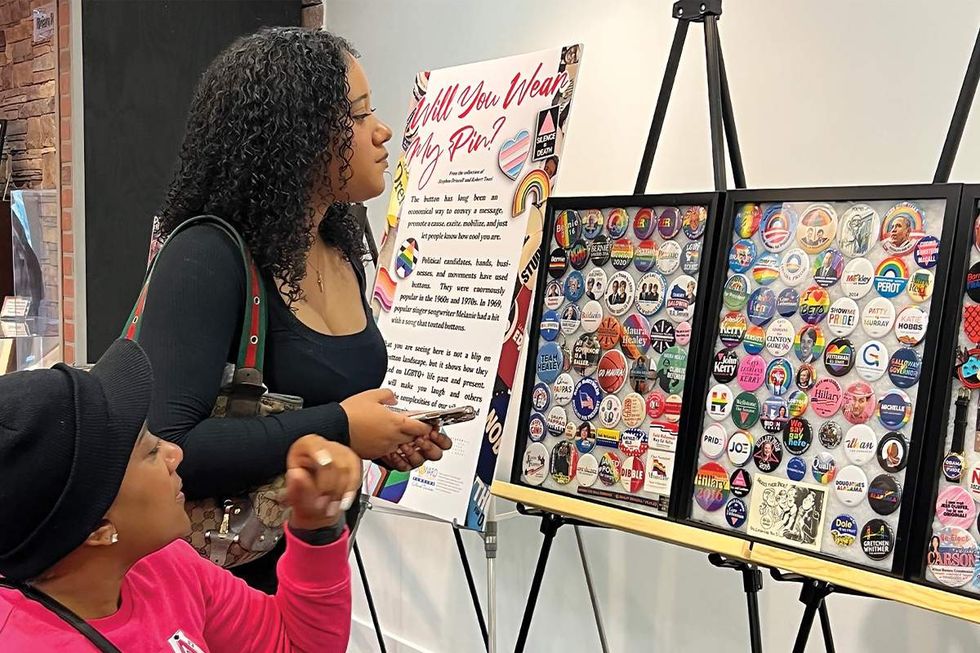 Stonewall National Museum, Archives & Library in Fort Lauderdale, Floridacourtesy
The politicization of this funding, at a time when the museum’s operational costs and projected expenses are rising, made it all the more surprising when the museum received grant approval for a historic exhibition to commemorate the 250th anniversary of the United States from the National Endowment for the Humanities, Kesten says.
“They weren’t going to be giving money to what they considered DEI organizations,” says Kesten. “We figured that there was very little, if anything, that we could do.”
The museum submitted a grant proposal for an exhibition on Baron Friedrich Wilhelm von Steuben, a military strategist who helped organize the Continental Army during the American Revolutionary War.
Von Steuben is believed by many historians to have been gay, according to the museum. He immigrated to the United States from Prussia with few financial resources and limited English proficiency, Kesten says. Later, he was subject to speculation around his sexual orientation.
The museum documented von Steuben’s life and revolutionary work in a recent exhibition at its campus in Fort Lauderdale. Kesten says his story holds meaning today, shedding a light on all that people of different origins and identities can accomplish.
“As we look at a gay man’s contribution to the United States’s revolutionary cause, we are confronted with the history that we face today,” Kesten says. That realization made it feel important for the museum to highlight “how dangerous it is for us now to be sending people away, not knowing what their contributions to this country could be.”
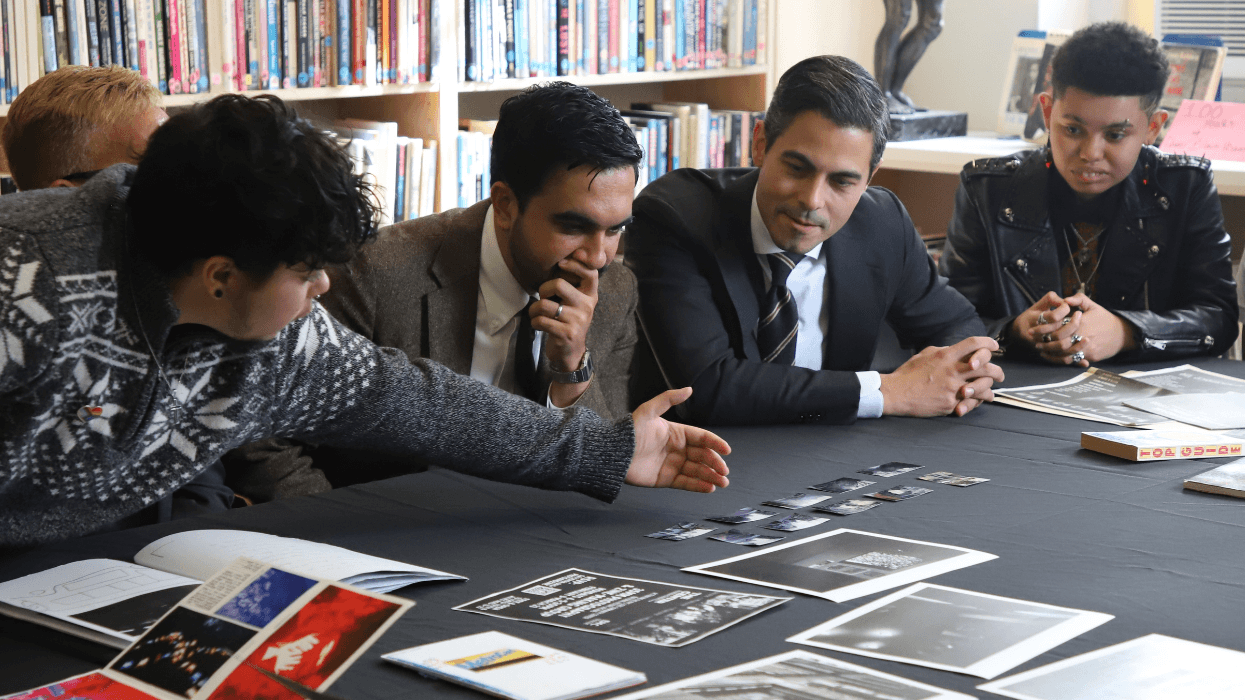
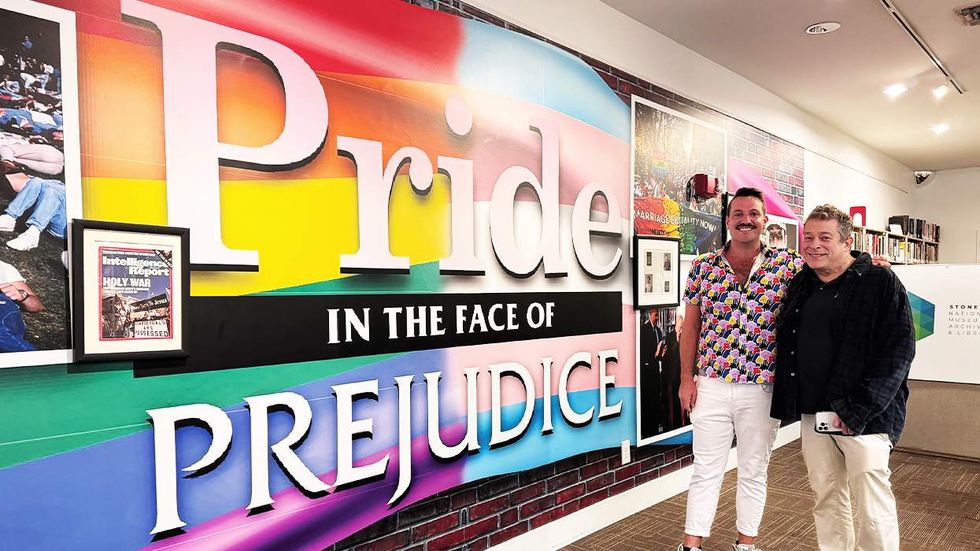 Stonewall Museum CEO Robert Kesten (right) with travel influencer Ravi Roth.courtesy Stonewall National Museum, Archives & Library
While the latest exhibition was made possible through public support, Kesten says the one-time contribution does not necessarily reflect wider support for LGBTQ+ historical and cultural programming on the federal or state levels. Even in the grant proposal for the exhibition, the museum had to be “very specific” in scope.
Given current political antagonism toward LGBTQ+ history and community in Florida and the wider United States, Kesten says highlighting queer stories through devoted archival work and museum exhibitions feels all the more crucial. “We have an obligation to remind people of the great contributions our community has made to the world.”
The museum was founded in 1973, and with time became a linchpin in preserving LGBTQ+ material history. Its collection contains pieces that trace back to the riots at the Stonewall Inn, AIDS activism in the 1980s, and present-day legal fights to protect LGBTQ+ rights.
Together, Kesten says these items are representative of the broader ambitions of the archive: to chart out queer history where it has long gone overlooked. At its best, the museum president believes this work can fight anti-LGBTQ+ sentiment on the political level and make everyday trans and queer people feel represented.
“There is a responsibility that we must take on. Because this time in history, the scapegoating, the continual attacks, the legislation is getting worse,” Kesten concludes. “We are being targeted, and the only way to fight back is to say: Look what we do as a community. Look how we contribute.”
Learn more about the Stonewall National Museum and how to contribute at stonewall-museum.org.
This article is part of The Advocate's July-Aug 2026 print issue, on newsstands July 7. Support queer media and subscribe — or download the issue now through Apple News+, Zinio, Nook, or PressReader.