'%3E%3Cpath d='M16.3574 35.6519H12.9537L15.0491 18.8873L16.3574 35.6519ZM30.4229 54.0093L22.309 0.994385H7.91795L0 54.0093H10.6634L11.5802 46.3855H17.4014L17.9914 54.0093H30.4229Z' fill='%23971B20'/%3E%3Cpath d='M48.2073 41.8813C48.2073 43.4049 47.4892 44.0011 46.1144 44.0011H43.7595V11.0687H46.1144C47.4892 11.0687 48.2073 11.6636 48.2073 13.1885V41.8813ZM59.5273 43.6695V11.3326C59.5273 3.71323 53.5729 0.994385 47.8157 0.994385H31.7213V54.0093H47.8157C53.5729 54.0093 59.5273 51.29 59.5273 43.6695Z' fill='%23971B20'/%3E%3Cpath d='M90.183 0.994385H78.6039L75.0711 30.6157L71.9955 0.994385H59.4346L69.2474 54.0093H80.373L90.183 0.994385Z' fill='%23971B20'/%3E%3Cpath d='M107.063 42.3448C107.063 43.7359 105.951 44.5974 104.643 44.5974C103.269 44.5974 102.157 43.7359 102.157 42.3448V12.658C102.157 11.2676 103.269 10.4058 104.643 10.4058C105.951 10.4058 107.063 11.2676 107.063 12.658V42.3448ZM119.233 43.2723V11.7312C119.233 6.36384 112.952 -3.8147e-06 104.643 -3.8147e-06C96.2667 -3.8147e-06 89.9867 6.36384 89.9867 11.7312V43.2723C89.9867 48.6393 96.2667 55 104.643 55C112.952 55 119.233 48.6393 119.233 43.2723Z' fill='%23971B20'/%3E%3Cpath d='M150.976 43.9349V33.7309H139.069V42.3448C139.069 43.7359 137.957 44.5974 136.582 44.5974C135.076 44.5974 133.964 43.7359 133.964 42.3448V12.658C133.964 11.2676 135.076 10.4058 136.582 10.4058C137.957 10.4058 139.069 11.2676 139.069 12.658V21.2723H150.976V11.0687C150.976 5.70107 145.283 -3.8147e-06 136.582 -3.8147e-06C127.75 -3.8147e-06 121.796 5.70107 121.796 11.0687V43.9349C121.796 49.3022 127.75 55 136.582 55C145.283 55 150.976 49.3022 150.976 43.9349Z' fill='%23971B20'/%3E%3Cpath d='M167.478 35.6519H164.076L166.17 18.8873L167.478 35.6519ZM181.544 54.0093L173.432 0.994385H159.037L151.123 54.0093H161.785L162.704 46.3855H168.523L169.114 54.0093H181.544Z' fill='%23971B20'/%3E%3Cpath d='M205.412 10.4058V0.994385H177.081V10.4058H185.392V54.0093H197.428V10.4058H205.412Z' fill='%23971B20'/%3E%3Cpath d='M230.002 54.0093V43.9349H218.914V31.8746H226.635V21.8028H218.914V10.4058H230.002V0.994385H206.875V54.0093H230.002Z' fill='%23971B20'/%3E%3C/g%3E%3Cdefs%3E%3CclipPath id='clip0_260_7080'%3E%3Crect width='230' height='55' fill='white'/%3E%3C/clipPath%3E%3C/defs%3E%3C/svg%3E)

This story discusses self-harm.
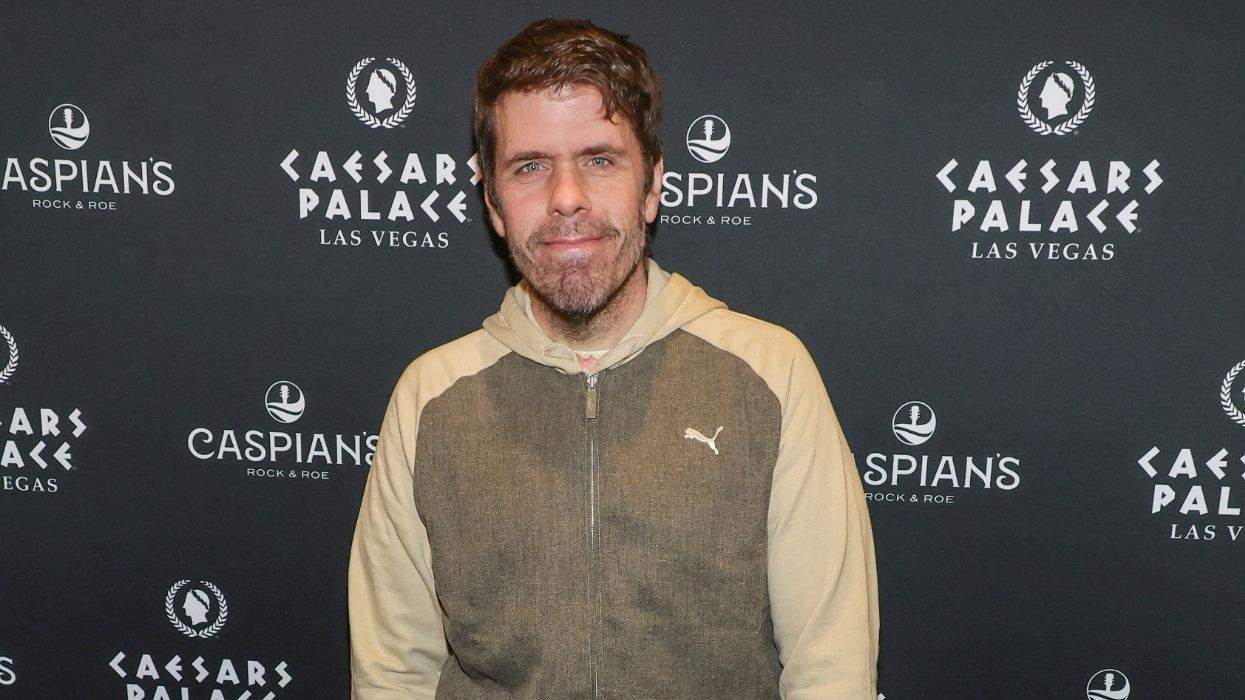
Perez Hilton was hospitalized Tuesday night after viewers reported an apparent self-harm crisis unfolding during a TikTok livestream from his Miami-area home.
TikTok’s automated systems flagged the broadcast within minutes and sent it to the company’s U.S. moderation team, a TikTok U.S. spokesperson told The Advocate. A moderator error then delayed the removal, the spokesperson said. The Advocate is not publishing or linking to the livestream, still images from it, or the emergency dispatch audio.
TikTok disputes reports that the original broadcast remained online for 30 minutes, saying it lasted about half that long. The company alerted law enforcement in an effort to get Hilton, 48, support, according to the spokesperson. TikTok subsequently ended several additional livestreams within 90 seconds of their beginning and banned Hilton’s account.
The spokesperson said the material violated TikTok’s Community Guidelines.
The Miami-Dade Sheriff’s Office said it received multiple calls starting just after 7:00 p.m. about a person livestreaming acts of self-harm on social media, and arrived at the residence shortly after. Deputies “quickly located” Hilton’s residence, spoke with family members at the scene and confirmed that he was alone inside, Detective Samantha A. Choon, a spokesperson for the sheriff’s office, told The Advocate. Hilton has three children.
Deputies initially did not force their way into the home. Instead, they sought to slow the encounter and create opportunities for communication, the department said.
“In many incidents involving a person experiencing a mental health crisis or actively harming themselves, deputies prioritize de-escalation by creating time, distance, and opportunities for communication,” Choon said. “Unless there is an immediate threat to others, slowing the situation and utilizing crisis intervention techniques can reduce the likelihood of a suicide-by-cop encounter and minimize the risk of injury to the individual, deputies, and the public.”
The department said deputies “tactically disengaged” while continuing to monitor the home and support Hilton’s family.
Hilton was later “safely recovered” and transported by Miami-Dade Fire Rescue to a local hospital shortly after 11:00 p.m., where he was receiving medical attention, according to the sheriff’s office. Members of the department’s Crisis Response Unit and licensed mental health professionals also responded to provide support and resources to his family, Choon said.
A public crisis is still a crisis
“We don’t know if this was suicidal or non-suicidal self-harming behavior,” Christine Yu Moutier, a psychiatrist and chief medical officer of the American Foundation for Suicide Prevention, told The Advocate in an interview on Wednesday. “But we also can’t infer intent.”
Moutier said she had not watched the recording and was speaking about established clinical and public health principles rather than assessing Hilton. Self-harm can occur with or without an intention to die, she said, and the distinction cannot be determined by strangers watching a video.
The livestream’s public nature prompted some social media users to dismiss Hilton’s behavior as manipulative, performative, or designed to attract attention. Moutier said that framing can obscure the distress behind the behavior. “There’s this immediate feeling of that seems attention seeking, that seems unnecessary to do it in that way, live-streamed when you know others will be watching,” she said.
“And when someone is in distress — which this is obviously a sign of distress — for some individuals, that’s the way it manifests,” Moutier continued. “And it doesn’t mean that their behavior is any less serious.”
The circumstances of self-harming behavior help a clinician understand a patient’s needs and develop individualized treatment, she said. The public should not use them to decide whether someone deserves care.
“A cry for help means, ‘Help me. I’m in distress,’” Moutier said. “We’d rather see that than what many, many people do, which is to keep it silent.”
Hilton became one of the defining figures of the early celebrity blogging era through a website known for caustic commentary, invasive coverage, and outing people he claimed were closeted. His history has shaped some of the online reaction to his hospitalization.
Accountability for past harm and compassion during a medical crisis are not mutually exclusive. A person’s suffering does not become less urgent because that person has caused pain to others. Nor does operating a phone or beginning a livestream prove that someone in acute distress is exercising their ordinary judgment, Moutier explained.
She described "thought constriction," a temporary neurological change that can occur during an intense crisis. Overwhelming distress can interfere with the higher-level thinking people use to recognize alternatives and access coping strategies, she said.
Those acute states can pass. Moutier said the change can last “moments to minutes that we can live through.” The immediate objective is to remain safe while the intensity recedes, using strategies such as following a safety plan, contacting a trusted person, journaling, practicing distress tolerance, or seeking emergency care.
“People in distress can live through” those moments when they can stay safe, she said. Professional treatment can then help address the conditions and pressures underlying the crisis.
The recording presents another public health risk
Hilton’s transportation to a hospital ended the immediate emergency at his home. But it did not end the potential harm created by recordings of the incident. Copies, screenshots, and graphic descriptions spread across social media, where some users compared the footage to horror entertainment. A human being’s distress was transformed into material to be circulated, inspected, and judged.
Moutier said graphic and highly personalized coverage can place vulnerable viewers at risk.
“The more graphic images and descriptions, locations, the person’s name even in the research, it’s lots of those kind of details that are very personal, that almost become a bit salacious or kind of viral in the moment,” she said.
Media organizations have a particular obligation to resist that dynamic, even when the material is already widely available, Moutier said.
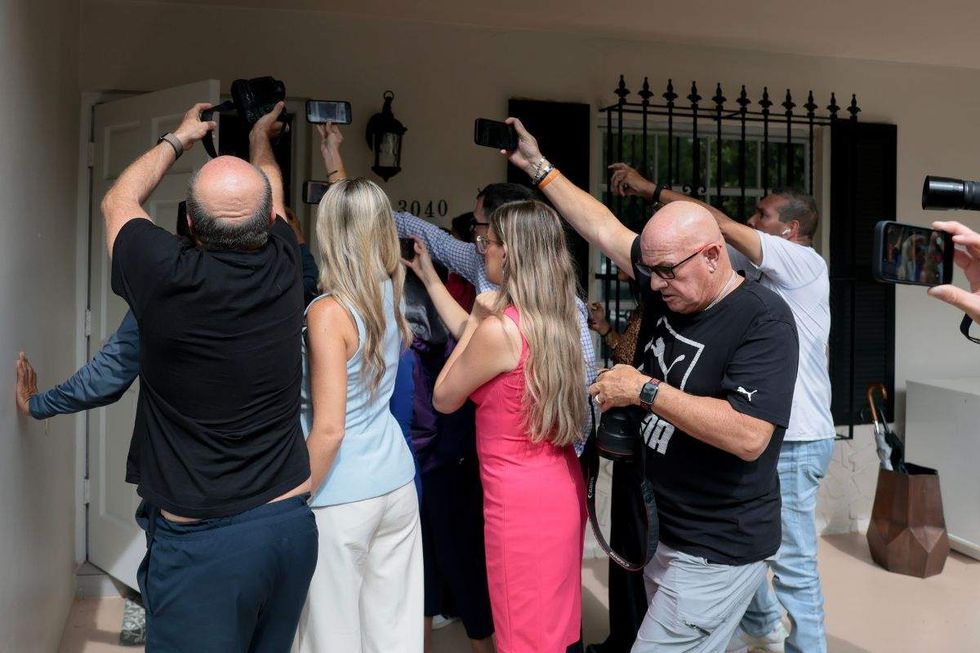 Members of the media crowd around the front door as people enter the home where Perez Hilton was found after he appeared to harm himself during a TikTok livestream on August 05, 2026, in Westchester, Florida. Joe Raedle/Getty Images
“The public health lens on this would say that the way that stories of self-harm or suicide are covered has everything to do with what happens among the general public readership,” she said. “There’s always going to be that subgroup that’s vulnerable during this moment in time.”
A systematic review of 15 studies in the Journal of Child Psychology and Psychiatry found harmful effects in every study examining exposure to self-harm images online. Researchers identified outcomes including increased distress, normalization of self-harm, and stronger urges to engage in similar behavior, although some people also reported finding solidarity or support in online communities.
Moutier pointed to research from Vienna, where extensive news coverage accompanied a rise in deaths on the city’s subway system during the 1980s. After public health experts worked with journalists to establish reporting guidelines, the number of subway deaths fell by 75 percent during the second half of 1987, and the decline continued for years.
Moutier said coverage can also have a protective effect when it avoids unnecessary detail and emphasizes coping, treatment, and recovery.
“Stories that are done without those details and with an arc of help, hope and that hope healing is possible can actually lead people to take the step of help seeking,” she said.
What people should do if they encounter the footage
People who come across the recording should not continue watching or share it, particularly if they have experienced depression, post-traumatic stress disorder, substance use problems, or previous self-harm.
“Try to turn away from it and just move on to the next thing because the exposure itself is risky,” Moutier said. She encouraged people to recognize their own vulnerabilities and ask whether consuming a particular piece of content is safe for them.
“This is injury prevention for mental health,” she said.
Anyone who sees an apparent crisis unfolding online should report the broadcast to the platform. When someone appears to face an immediate threat of serious injury or death and their identity or location is known, viewers should contact emergency services rather than download or redistribute the material.
Those who have already seen the footage and remain distressed should step away from social media, tell someone they trust what they are experiencing, and seek professional support.
No single event explains what happened
Hilton survived several serious physical health problems earlier this year. He said he spent 21 days hospitalized after an illness progressed to an ulcer, a perforation, and severe sepsis. He was later hospitalized with a blood clot in his leg and underwent a procedure to remove it.
No one outside Hilton’s treatment team has enough information to determine whether his physical health, mental health, personal relationships, public career, or other pressures contributed to what happened. But, speaking generally, Moutier said severe distress and suicidal behavior typically emerge from overlapping factors rather than one discrete event.
“What we know is that suicidal behavior is the convergence of multiple things at the same time,” she said. “The brain and the body are connected.”
Physical illness can place additional strain on mental health, Moutier said, but depression, anxiety, past trauma and a person’s social environment may also play a role. Fame, money, and a forceful public identity provide no immunity from psychological pain.
“We may make assumptions based on people’s role or fame or wealth or whatever,” Moutier said. “And those are all inaccurate when it comes to mental health and suicide risk.”
Her advice is straightforward: “Check in on your strong friends,” she said.
Perez Hilton's family responds
Hilton’s family and team confirmed Wednesday that he remained under medical care but provided no additional information about his condition.
“Many of you have reached out with concern for Perez, and we are incredibly grateful for the overwhelming outpouring of love, support, and prayers,” they said in a statement posted to Hilton’s website.
“We can confirm that Perez is receiving medical care, and our family’s focus right now is on his well-being,” the statement continued. “We kindly ask that you respect Perez’s privacy, as well as the privacy of his family, during this difficult time.”
The family and Hilton’s team said they would share further information when they were able to do so.
Editor's note: This story has been updated to include a response from Perez Hilton's family.
If you or someone you know needs mental health resources and support, please call, text, or chat with the 988 Suicide & Crisis Lifeline or visit 988lifeline.org for 24/7 access to free and confidential services. Trans Lifeline, designed for transgender or gender-nonconforming people, can be reached at (877) 565-8860. The lifeline also provides resources to help with other crises, such as domestic violence situations. The Trevor Project Lifeline, for LGBTQ+ youth (ages 24 and younger), can be reached at (866) 488-7386. Users can also access chat services at TheTrevorProject.org/Help or text START to 678678.