'%3E%3Cpath d='M16.3574 35.6519H12.9537L15.0491 18.8873L16.3574 35.6519ZM30.4229 54.0093L22.309 0.994385H7.91795L0 54.0093H10.6634L11.5802 46.3855H17.4014L17.9914 54.0093H30.4229Z' fill='%23971B20'/%3E%3Cpath d='M48.2073 41.8813C48.2073 43.4049 47.4892 44.0011 46.1144 44.0011H43.7595V11.0687H46.1144C47.4892 11.0687 48.2073 11.6636 48.2073 13.1885V41.8813ZM59.5273 43.6695V11.3326C59.5273 3.71323 53.5729 0.994385 47.8157 0.994385H31.7213V54.0093H47.8157C53.5729 54.0093 59.5273 51.29 59.5273 43.6695Z' fill='%23971B20'/%3E%3Cpath d='M90.183 0.994385H78.6039L75.0711 30.6157L71.9955 0.994385H59.4346L69.2474 54.0093H80.373L90.183 0.994385Z' fill='%23971B20'/%3E%3Cpath d='M107.063 42.3448C107.063 43.7359 105.951 44.5974 104.643 44.5974C103.269 44.5974 102.157 43.7359 102.157 42.3448V12.658C102.157 11.2676 103.269 10.4058 104.643 10.4058C105.951 10.4058 107.063 11.2676 107.063 12.658V42.3448ZM119.233 43.2723V11.7312C119.233 6.36384 112.952 -3.8147e-06 104.643 -3.8147e-06C96.2667 -3.8147e-06 89.9867 6.36384 89.9867 11.7312V43.2723C89.9867 48.6393 96.2667 55 104.643 55C112.952 55 119.233 48.6393 119.233 43.2723Z' fill='%23971B20'/%3E%3Cpath d='M150.976 43.9349V33.7309H139.069V42.3448C139.069 43.7359 137.957 44.5974 136.582 44.5974C135.076 44.5974 133.964 43.7359 133.964 42.3448V12.658C133.964 11.2676 135.076 10.4058 136.582 10.4058C137.957 10.4058 139.069 11.2676 139.069 12.658V21.2723H150.976V11.0687C150.976 5.70107 145.283 -3.8147e-06 136.582 -3.8147e-06C127.75 -3.8147e-06 121.796 5.70107 121.796 11.0687V43.9349C121.796 49.3022 127.75 55 136.582 55C145.283 55 150.976 49.3022 150.976 43.9349Z' fill='%23971B20'/%3E%3Cpath d='M167.478 35.6519H164.076L166.17 18.8873L167.478 35.6519ZM181.544 54.0093L173.432 0.994385H159.037L151.123 54.0093H161.785L162.704 46.3855H168.523L169.114 54.0093H181.544Z' fill='%23971B20'/%3E%3Cpath d='M205.412 10.4058V0.994385H177.081V10.4058H185.392V54.0093H197.428V10.4058H205.412Z' fill='%23971B20'/%3E%3Cpath d='M230.002 54.0093V43.9349H218.914V31.8746H226.635V21.8028H218.914V10.4058H230.002V0.994385H206.875V54.0093H230.002Z' fill='%23971B20'/%3E%3C/g%3E%3Cdefs%3E%3CclipPath id='clip0_260_7080'%3E%3Crect width='230' height='55' fill='white'/%3E%3C/clipPath%3E%3C/defs%3E%3C/svg%3E)
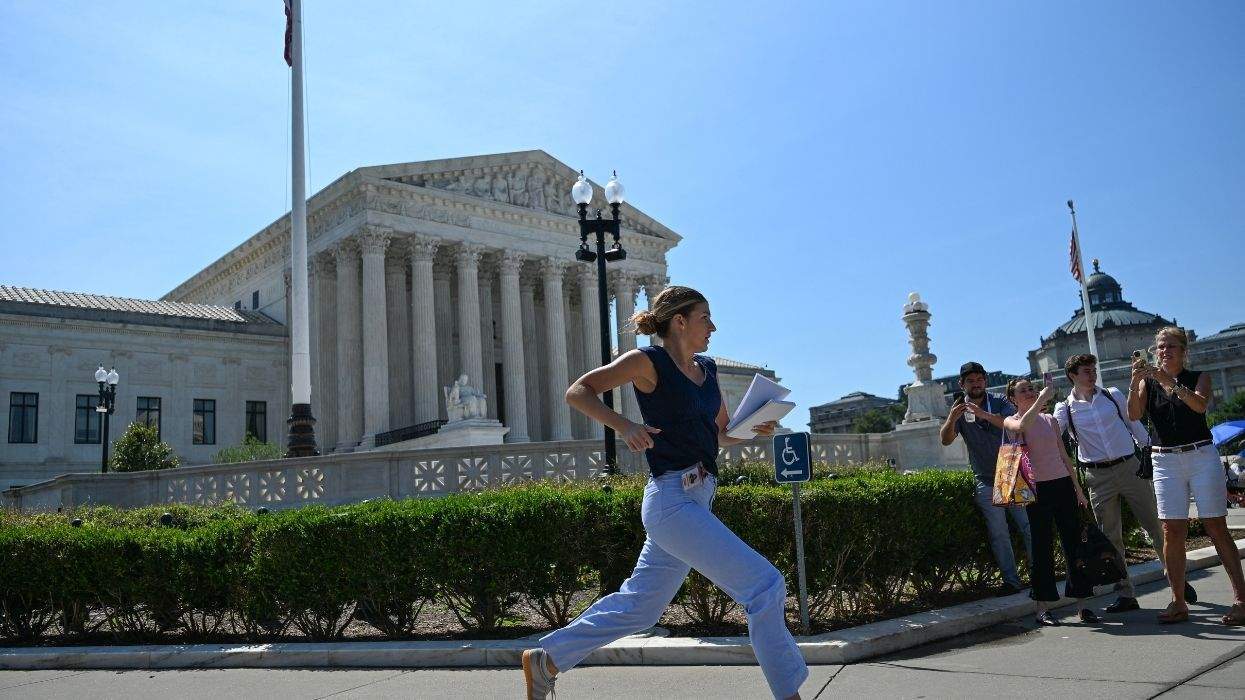

A U.S. Supreme Court ruling allowing states to ban transgender girls and women from sports aligned with their gender identity has sent red states rushing to kick queer athletes off the field. Meanwhile, progressive leaders in LGBTQ-friendly states are promising protections, particularly for young people.
As The Advocate reported on Tuesday, the decision came in two cases, West Virginia v. B.P.J. and Little v. Hecox, involving transgender athletes Becky Pepper-Jackson and Lindsay Hecox. The court ruled that the bans in West Virginia and Idaho do not violate Title IX or the Constitution’s Equal Protection Clause, handing Republican-led states a major victory in their yearslong campaign to restrict transgender students’ participation in school sports.
Arizona State Superintendent Tom Horne immediately urged courts there to lift an injunction blocking enforcement of the Grand Canyon State’s sports ban.
Related: What the Supreme Court did not decide in the trans sports case
“The news has been full of stories about girls who worked hard on their sports, hoping to make the team, or even earn a college scholarship or qualify for the Olympics. But then they had to compete against biological boys and their advantages in birth in size, speed and strength. The girls’ dreams were shattered, and they were devastated,” Horne said in a statement.
“Girls have also been injured, including a brain injury, from having to compete against larger and stronger males. I am committed to making sure that Arizona schools follow state law protecting girl sports.”
But Illinois leaders made clear that the state will continue allowing transgender students to compete in school sports consistent with their gender identity.
“In Illinois, transgender students have the right to fully participate in school activities, including sports,” Attorney General Kwame Raoul said in a statement provided to WBEZ Chicago. “Nothing in today’s opinion prohibits states like Illinois from allowing student athletes to participate on teams consistent with their gender identity and pursuant to [Illinois High School Association] guidelines.”
In all, 30 states have restrictions in place on transgender student athletes participating in sports consistent with their gender identity, according to the Movement Advancement Project. Most have GOP leadership at the state level, and the Republican Attorneys General Association defended West Virginia and Idaho laws that were heard before the Supreme Court.
Related: States can ban transgender women and girls from sports, according to U.S. Supreme Court
“This is a monumental victory for every female athlete who has ever competed, or dreamed of competing, on a fair and safe playing field. Today's Supreme Court decision affirms what common sense and the law have long made clear: states have the right to designate sports teams based on biological sex, not gender identity,” West Virginia Attorney General J.B. McCuskey said in a statement provided by RAGA. “Without that delineation, Title IX is turned on its head and decades of hard-fought progress to advance female athletes is erased.”
In New Hampshire, courts continue to sort out the implications of the Supreme Court's ruling on a state law that is currently on hold in the Granite State. Republican leaders say they intend to defend the sports ban and feel bolstered by the high court’s ruling.
“We are reviewing the decision and evaluating the appropriate next steps in the pending litigation,” New Hampshire Attorney General John Formella said in a statement reported by Seacoast Online. “We remain confident in the State's position and will continue to vigorously defend HB 1205.”
Elsewhere, New York City Mayor Zohran Mamdani’s administration promised in America’s most prominent metropolis that no restrictions will be put in place.
“While the Supreme Court today has chosen to permit states to explicitly discriminate against transgender students, the reality on the ground in New York City remains unchanged,” Taylor Brown, director of the Mayor’s Office of LGBTQIA+ Affairs, and Christine Clarke, chair and commissioner of the New York City Commission on Human Rights, said in a joint statement reported by Gay City News. “The City of New York will continue to be a place where transgender students can play the sports they love and be treated at all times with dignity and respect.”
LGBTQ+ organizations stressed that the ruling does not require any state to expel transgender athletes from girls’ and women’s sports.
“Today's ruling gets it wrong. And it’s kids who will suffer for it. By upholding these blanket bans, the Supreme Court has allowed states to deny students even the chance to try out for a school team, simply because they are transgender. Policies that categorically bar students don't advance fairness; they mandate exclusion,” said Jennifer Levi, senior director of transgender and queer rights at GLAD Law. “But this ruling is not the end of the story. Many states have developed thoughtful, evidence-based policies that treat students as individual athletes — and those remain in place. When a law bars every transgender girl regardless of age, hormones, or physiology, it isn't about competitive fairness. It's about keeping transgender kids out. We can protect women's sports without doing that. Most of the country already does.”
In many states with bans in place, advocates promised to continue the fight for inclusive sports policies.
“Tennessee Equality Project has remained resolute in its vocal and proactive support of trans and gender-diverse persons being afforded equal and full protection under the law, and for their right to have access to, and equal participation, in work, family, education, healthcare and sports,” the Tennessee Equality Project said in a statement.
“Nothing in today’s ruling dissuades us from this stance. The ruling erodes the intent and protections of the 14th amendment, separating out a class of people who are othered and treated as lesser-than. Simultaneously, it mischaracterizes the intent of Title IX, which was created to undo the institutionalized ways stereotypes about sex and gender hemmed in and restricted opportunities for all manners of persons, most particularly for women. All this only underscores why our resolute stance remains necessary.”
Glisten CEO Melanie Willingham-Jaggers stressed the need for the policy battle to continue regardless of the ruling.
“At its core, this issue is about dignity, safety, and the right of every young person to be recognized as who they are. Courts and lawmakers alike must recognize the real-life impact these decisions have on youth navigating their identities in an often-hostile environment,” they said.
“We call on policymakers, educators, and communities to do everything in their power to protect transgender youth through inclusive school policies, local advocacy, and continued legal challenges.”