'%3E%3Cpath d='M16.3574 35.6519H12.9537L15.0491 18.8873L16.3574 35.6519ZM30.4229 54.0093L22.309 0.994385H7.91795L0 54.0093H10.6634L11.5802 46.3855H17.4014L17.9914 54.0093H30.4229Z' fill='%23971B20'/%3E%3Cpath d='M48.2073 41.8813C48.2073 43.4049 47.4892 44.0011 46.1144 44.0011H43.7595V11.0687H46.1144C47.4892 11.0687 48.2073 11.6636 48.2073 13.1885V41.8813ZM59.5273 43.6695V11.3326C59.5273 3.71323 53.5729 0.994385 47.8157 0.994385H31.7213V54.0093H47.8157C53.5729 54.0093 59.5273 51.29 59.5273 43.6695Z' fill='%23971B20'/%3E%3Cpath d='M90.183 0.994385H78.6039L75.0711 30.6157L71.9955 0.994385H59.4346L69.2474 54.0093H80.373L90.183 0.994385Z' fill='%23971B20'/%3E%3Cpath d='M107.063 42.3448C107.063 43.7359 105.951 44.5974 104.643 44.5974C103.269 44.5974 102.157 43.7359 102.157 42.3448V12.658C102.157 11.2676 103.269 10.4058 104.643 10.4058C105.951 10.4058 107.063 11.2676 107.063 12.658V42.3448ZM119.233 43.2723V11.7312C119.233 6.36384 112.952 -3.8147e-06 104.643 -3.8147e-06C96.2667 -3.8147e-06 89.9867 6.36384 89.9867 11.7312V43.2723C89.9867 48.6393 96.2667 55 104.643 55C112.952 55 119.233 48.6393 119.233 43.2723Z' fill='%23971B20'/%3E%3Cpath d='M150.976 43.9349V33.7309H139.069V42.3448C139.069 43.7359 137.957 44.5974 136.582 44.5974C135.076 44.5974 133.964 43.7359 133.964 42.3448V12.658C133.964 11.2676 135.076 10.4058 136.582 10.4058C137.957 10.4058 139.069 11.2676 139.069 12.658V21.2723H150.976V11.0687C150.976 5.70107 145.283 -3.8147e-06 136.582 -3.8147e-06C127.75 -3.8147e-06 121.796 5.70107 121.796 11.0687V43.9349C121.796 49.3022 127.75 55 136.582 55C145.283 55 150.976 49.3022 150.976 43.9349Z' fill='%23971B20'/%3E%3Cpath d='M167.478 35.6519H164.076L166.17 18.8873L167.478 35.6519ZM181.544 54.0093L173.432 0.994385H159.037L151.123 54.0093H161.785L162.704 46.3855H168.523L169.114 54.0093H181.544Z' fill='%23971B20'/%3E%3Cpath d='M205.412 10.4058V0.994385H177.081V10.4058H185.392V54.0093H197.428V10.4058H205.412Z' fill='%23971B20'/%3E%3Cpath d='M230.002 54.0093V43.9349H218.914V31.8746H226.635V21.8028H218.914V10.4058H230.002V0.994385H206.875V54.0093H230.002Z' fill='%23971B20'/%3E%3C/g%3E%3Cdefs%3E%3CclipPath id='clip0_260_7080'%3E%3Crect width='230' height='55' fill='white'/%3E%3C/clipPath%3E%3C/defs%3E%3C/svg%3E)
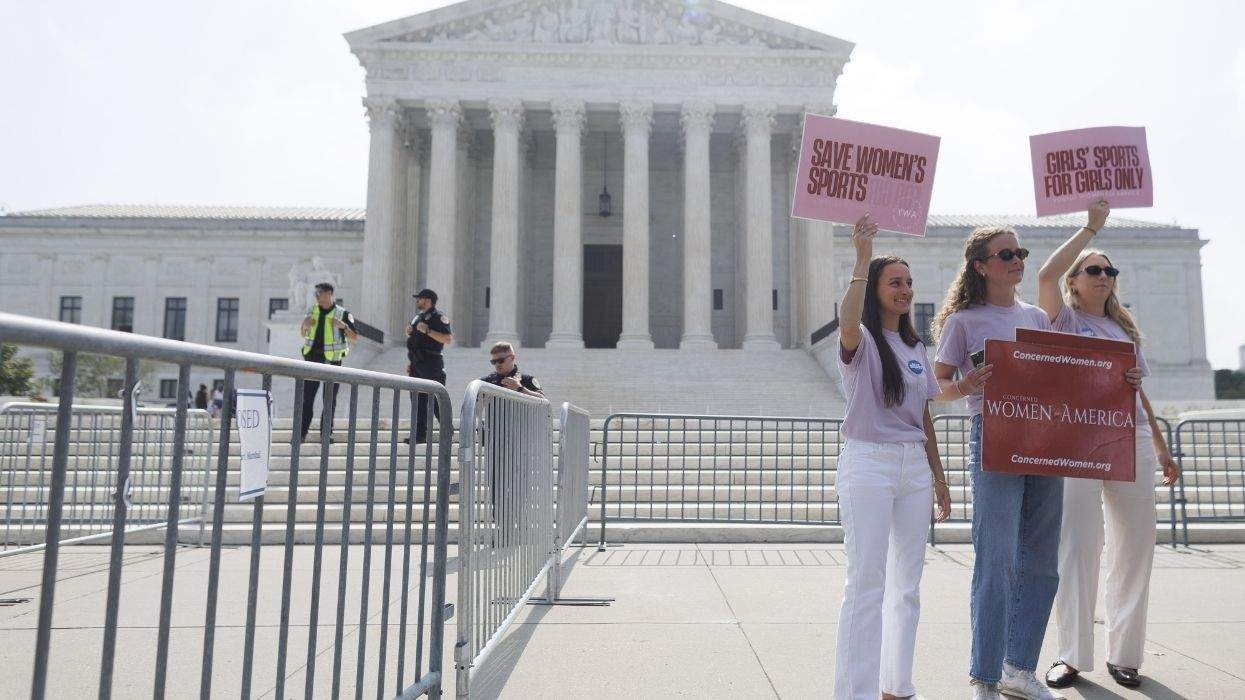

On Tuesday, the U.S. Supreme Court held in West Virginia v. B.P.J. (decided together with Little v. Hecox) that neither Title IX nor the Equal Protection Clause prevents states from barring transgender girls from girls’ sports. But the majority opinion, written by Justice Kavanaugh, is a narrow one, and its limits are significant. Here are the most important.
It permits these bans—it doesn’t require them
The Court held that states and schools may exclude transgender girls from girls’ and women’s teams. It did not hold that they must. The decision removes a constitutional and statutory obstacle to the bans; it does not impose them. This ruling does not require states and schools that have chosen not to discriminate against transgender girls to abandon those inclusive policies.
It leaves the door open for inclusive policies
The Court pointedly declined to foreclose inclusion. It left open the question of whether schools that want to let transgender girls play on girls’ teams may do so. In a key footnote, the Court called this a “distinct question,” not presented in this case, and stressed that “[n]othing in this opinion is intended to decide” it. That question is now moving through the lower courts, and schools that welcome transgender athletes remain free to adopt and defend inclusive policies.
It is limited to the sports context
The Court repeatedly emphasized that sports are distinct, and it tied both halves of its analysis, the Title IX holding and the equal protection holding, to that distinctiveness. The majority drew an explicit contrast with “a typical employment or educational opportunity where equal protection often may require that the government generally treat an individual without regard to the individual’s sex.” The opinion does not present its reasoning as a general rule for other settings such as classrooms, restrooms, or school programs.
It does not resolve the underlying science
The Court did not find that transgender girls who have taken puberty blockers or hormones have any competitive advantage. It described that question as “the subject of ongoing medical and scientific debate” and “not settled” at this time. Rather than resolve it, the Court said that “[t]he legislatures and the schools are better equipped—and under the Constitution, are the more appropriate entities—to assess the competing medical and scientific considerations and draw appropriate lines.” The ruling rests on the majority’s view that intermediate scrutiny does not demand an individualized fit, not on any factual finding about athletic advantage.
It leaves the level of constitutional protections for transgender people open
Addressing the argument that these laws discriminate against transgender people, the Court declined to decide whether classifications targeting transgender status receive rational-basis review or heightened scrutiny, holding that the laws survive “either way.” The majority did not hold that anti-transgender classifications get only rational-basis review. That question remains formally unresolved, and a future case could still establish that laws targeting transgender people warrant heightened constitutional scrutiny.
A setback, not the end of the road
This is a disappointing decision, but a narrow one, a setback, not the end of the road. The Court decided only what states may do in the specific arena of sports. It did not resolve the science, settle the standard of constitutional scrutiny, or take away schools’ freedom to include transgender athletes. Those decisions still sit with school boards, athletic associations, and the people who actually know these kids. Every child deserves the chance to play sports with their friends and to learn what sports teach: determination, resilience, and teamwork. This ruling doesn’t change that.
Shannon Minter is the legal director at the National Center for LGBTQ+ Rights and one of the nation's most influential civil rights attorneys. This piece first appeared on NCLR's blog.
Opinion is dedicated to featuring a wide range of inspiring personal stories and impactful opinions from the LGBTQ+ community and its allies. Visit Advocate.com/submit to learn more about submission guidelines. We welcome your thoughts and feedback on any of our stories. Email us at voices@equalpride.com. Views expressed in Voices stories are those of the guest writers, columnists, and editors, and do not directly represent the views of The Advocate or our parent company, equalpride.