'%3E%3Cpath d='M16.3574 35.6519H12.9537L15.0491 18.8873L16.3574 35.6519ZM30.4229 54.0093L22.309 0.994385H7.91795L0 54.0093H10.6634L11.5802 46.3855H17.4014L17.9914 54.0093H30.4229Z' fill='%23971B20'/%3E%3Cpath d='M48.2073 41.8813C48.2073 43.4049 47.4892 44.0011 46.1144 44.0011H43.7595V11.0687H46.1144C47.4892 11.0687 48.2073 11.6636 48.2073 13.1885V41.8813ZM59.5273 43.6695V11.3326C59.5273 3.71323 53.5729 0.994385 47.8157 0.994385H31.7213V54.0093H47.8157C53.5729 54.0093 59.5273 51.29 59.5273 43.6695Z' fill='%23971B20'/%3E%3Cpath d='M90.183 0.994385H78.6039L75.0711 30.6157L71.9955 0.994385H59.4346L69.2474 54.0093H80.373L90.183 0.994385Z' fill='%23971B20'/%3E%3Cpath d='M107.063 42.3448C107.063 43.7359 105.951 44.5974 104.643 44.5974C103.269 44.5974 102.157 43.7359 102.157 42.3448V12.658C102.157 11.2676 103.269 10.4058 104.643 10.4058C105.951 10.4058 107.063 11.2676 107.063 12.658V42.3448ZM119.233 43.2723V11.7312C119.233 6.36384 112.952 -3.8147e-06 104.643 -3.8147e-06C96.2667 -3.8147e-06 89.9867 6.36384 89.9867 11.7312V43.2723C89.9867 48.6393 96.2667 55 104.643 55C112.952 55 119.233 48.6393 119.233 43.2723Z' fill='%23971B20'/%3E%3Cpath d='M150.976 43.9349V33.7309H139.069V42.3448C139.069 43.7359 137.957 44.5974 136.582 44.5974C135.076 44.5974 133.964 43.7359 133.964 42.3448V12.658C133.964 11.2676 135.076 10.4058 136.582 10.4058C137.957 10.4058 139.069 11.2676 139.069 12.658V21.2723H150.976V11.0687C150.976 5.70107 145.283 -3.8147e-06 136.582 -3.8147e-06C127.75 -3.8147e-06 121.796 5.70107 121.796 11.0687V43.9349C121.796 49.3022 127.75 55 136.582 55C145.283 55 150.976 49.3022 150.976 43.9349Z' fill='%23971B20'/%3E%3Cpath d='M167.478 35.6519H164.076L166.17 18.8873L167.478 35.6519ZM181.544 54.0093L173.432 0.994385H159.037L151.123 54.0093H161.785L162.704 46.3855H168.523L169.114 54.0093H181.544Z' fill='%23971B20'/%3E%3Cpath d='M205.412 10.4058V0.994385H177.081V10.4058H185.392V54.0093H197.428V10.4058H205.412Z' fill='%23971B20'/%3E%3Cpath d='M230.002 54.0093V43.9349H218.914V31.8746H226.635V21.8028H218.914V10.4058H230.002V0.994385H206.875V54.0093H230.002Z' fill='%23971B20'/%3E%3C/g%3E%3Cdefs%3E%3CclipPath id='clip0_260_7080'%3E%3Crect width='230' height='55' fill='white'/%3E%3C/clipPath%3E%3C/defs%3E%3C/svg%3E)
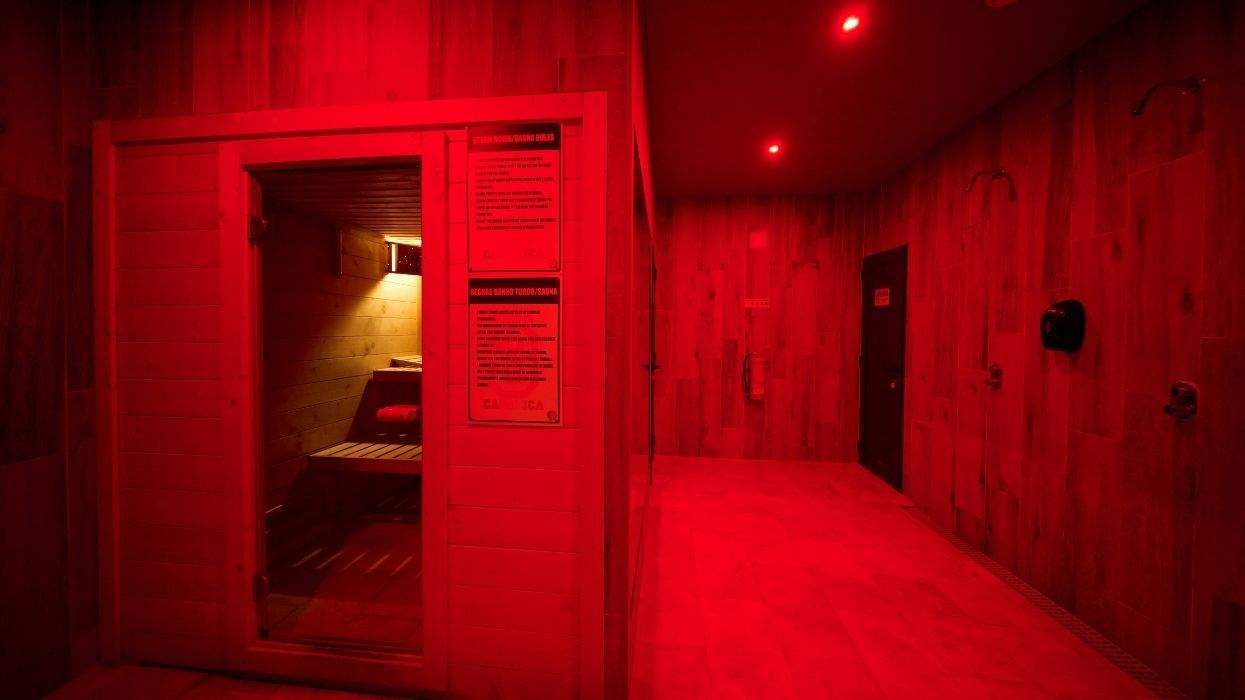

More than four decades after New York shut down adult saunas during the height of the AIDS epidemic, state lawmakers are seeking to replace what they describe as an emergency-era policy with a modern regulatory framework built around today's public health science.
This week, state Sen. Erik Bottcher, a Manhattan Democrat, and Assemblymember Tony Simone introduced the Public Health Modernization Act, legislation that would repeal state regulations dating to 1985 that effectively prohibited adult saunas, often referred to as bathhouses, and require the state Department of Health to create a licensing and oversight system for their operation.
For Bottcher, the legislation is less about reviving a type of business than acknowledging how dramatically HIV prevention and treatment have evolved since the fear and uncertainty of the 1980s.
"The science has changed. Prevention has changed. Our laws need to keep pace when the facts on the ground change," Bottcher said in an interview. "These restrictions were adopted during an extraordinary public health emergency, but emergency measures shouldn't automatically become permanent policy."
The regulations were enacted in 1985, when little was known about HIV transmission and before the development of antiretroviral therapy, routine HIV testing, PrEP and other prevention strategies that have since reshaped the fight against the virus. The following year, New York City relied on those state regulations to close the city's bathhouses, which had long served as social spaces within the LGBTQ+ community.
Bottcher said New York has become an outlier as other cities have revisited similar AIDS-era restrictions.
"New York is unique among major cities in not allowing these establishments," he said. "That simply doesn't make sense anymore."
The proposal comes as jurisdictions around the country reconsider policies adopted during the early years of the epidemic. Minneapolis repealed its 38-year ban earlier this year, while San Francisco has allowed bathhouses to operate under public health regulations rather than outright prohibition.
Supporters argue that regulated businesses provide public health officials with opportunities that simply don't exist when sexual activity is pushed into informal or unregulated settings.
"The premise in the 1980s was that closing bathhouses would reduce HIV transmission," Bottcher said. "We live in a completely different public health landscape today. We have PrEP, on-the-spot testing, routine HIV screening and treatment that have fundamentally changed how we prevent HIV. Other cities have recognized that reality, and New York should as well."
Related: Nearly 40 years later, Minneapolis repeals bathhouse ban
Rather than prescribing detailed operating rules, the legislation directs the New York State Department of Health to develop them. If enacted, the agency would have 180 days to establish regulations governing how adult saunas would be licensed and operated.
Bottcher said the department would work with public health experts to develop standards modeled on successful systems already in place elsewhere.
"The Department of Health has tremendous expertise in this area," he said. "They would establish both a licensing framework and public health standards, looking at best practices from around the country. That creates opportunities to provide HIV and STI prevention resources, connect people with testing and treatment, and ensure these facilities are operating safely."
Advocates also contend that bringing the businesses into a regulated system would allow for regular inspections and stronger health oversight while making prevention resources more accessible.
Bottcher said the proposal has already drawn broad backing from LGBTQ+ organizations and community advocates, many of whom have long argued that the decades-old prohibition reflects an outdated understanding of HIV rather than current medical evidence.
"This is about recognizing that our public health policies should be based on today's science, not yesterday's fears," he said.