'%3E%3Cpath d='M16.3574 35.6519H12.9537L15.0491 18.8873L16.3574 35.6519ZM30.4229 54.0093L22.309 0.994385H7.91795L0 54.0093H10.6634L11.5802 46.3855H17.4014L17.9914 54.0093H30.4229Z' fill='%23971B20'/%3E%3Cpath d='M48.2073 41.8813C48.2073 43.4049 47.4892 44.0011 46.1144 44.0011H43.7595V11.0687H46.1144C47.4892 11.0687 48.2073 11.6636 48.2073 13.1885V41.8813ZM59.5273 43.6695V11.3326C59.5273 3.71323 53.5729 0.994385 47.8157 0.994385H31.7213V54.0093H47.8157C53.5729 54.0093 59.5273 51.29 59.5273 43.6695Z' fill='%23971B20'/%3E%3Cpath d='M90.183 0.994385H78.6039L75.0711 30.6157L71.9955 0.994385H59.4346L69.2474 54.0093H80.373L90.183 0.994385Z' fill='%23971B20'/%3E%3Cpath d='M107.063 42.3448C107.063 43.7359 105.951 44.5974 104.643 44.5974C103.269 44.5974 102.157 43.7359 102.157 42.3448V12.658C102.157 11.2676 103.269 10.4058 104.643 10.4058C105.951 10.4058 107.063 11.2676 107.063 12.658V42.3448ZM119.233 43.2723V11.7312C119.233 6.36384 112.952 -3.8147e-06 104.643 -3.8147e-06C96.2667 -3.8147e-06 89.9867 6.36384 89.9867 11.7312V43.2723C89.9867 48.6393 96.2667 55 104.643 55C112.952 55 119.233 48.6393 119.233 43.2723Z' fill='%23971B20'/%3E%3Cpath d='M150.976 43.9349V33.7309H139.069V42.3448C139.069 43.7359 137.957 44.5974 136.582 44.5974C135.076 44.5974 133.964 43.7359 133.964 42.3448V12.658C133.964 11.2676 135.076 10.4058 136.582 10.4058C137.957 10.4058 139.069 11.2676 139.069 12.658V21.2723H150.976V11.0687C150.976 5.70107 145.283 -3.8147e-06 136.582 -3.8147e-06C127.75 -3.8147e-06 121.796 5.70107 121.796 11.0687V43.9349C121.796 49.3022 127.75 55 136.582 55C145.283 55 150.976 49.3022 150.976 43.9349Z' fill='%23971B20'/%3E%3Cpath d='M167.478 35.6519H164.076L166.17 18.8873L167.478 35.6519ZM181.544 54.0093L173.432 0.994385H159.037L151.123 54.0093H161.785L162.704 46.3855H168.523L169.114 54.0093H181.544Z' fill='%23971B20'/%3E%3Cpath d='M205.412 10.4058V0.994385H177.081V10.4058H185.392V54.0093H197.428V10.4058H205.412Z' fill='%23971B20'/%3E%3Cpath d='M230.002 54.0093V43.9349H218.914V31.8746H226.635V21.8028H218.914V10.4058H230.002V0.994385H206.875V54.0093H230.002Z' fill='%23971B20'/%3E%3C/g%3E%3Cdefs%3E%3CclipPath id='clip0_260_7080'%3E%3Crect width='230' height='55' fill='white'/%3E%3C/clipPath%3E%3C/defs%3E%3C/svg%3E)


 During this year's Pride parade in Los Angeles, a plane soared above the LGBT crowd and its rainbow-clad supporters marching down Santa Monica Boulevard. Trailing the aircraft was a banner advertising a concert for Lady Gaga. Several spectators pointed at the sight and laughed, while a few others rolled their eyes. On Facebook, a friend commenting on the plane comically remarked how Lady Gaga is "thirsty" for the gays, a term that usually refers to one in great need of loving attention.
More concrete evidence of this thirst was reported in a recent Variety article, which published a ranking of the public figures that gay men wanted to represent them as celebrity endorsers. Ellen DeGeneres topped the list, while Gaga was among the "least admired celebrities," just barely beating Justin Timberlake, Hillary Clinton, and Channing Tatum.
It's a far cry from 2008, when the singer rocketed to renown with hits like "Poker Face" and "Just Dance." In those halcyon days, one had only to walk into the nearest gay bar to hear the entirety of her first album, The Fame, over the course of an evening. Her lyrics were on every lip-sync, her outrageous outfits sparked mimicry from drag queens (to whom she clearly paid homage), and her concerts were the hottest tickets in gayborhoods around the globe.
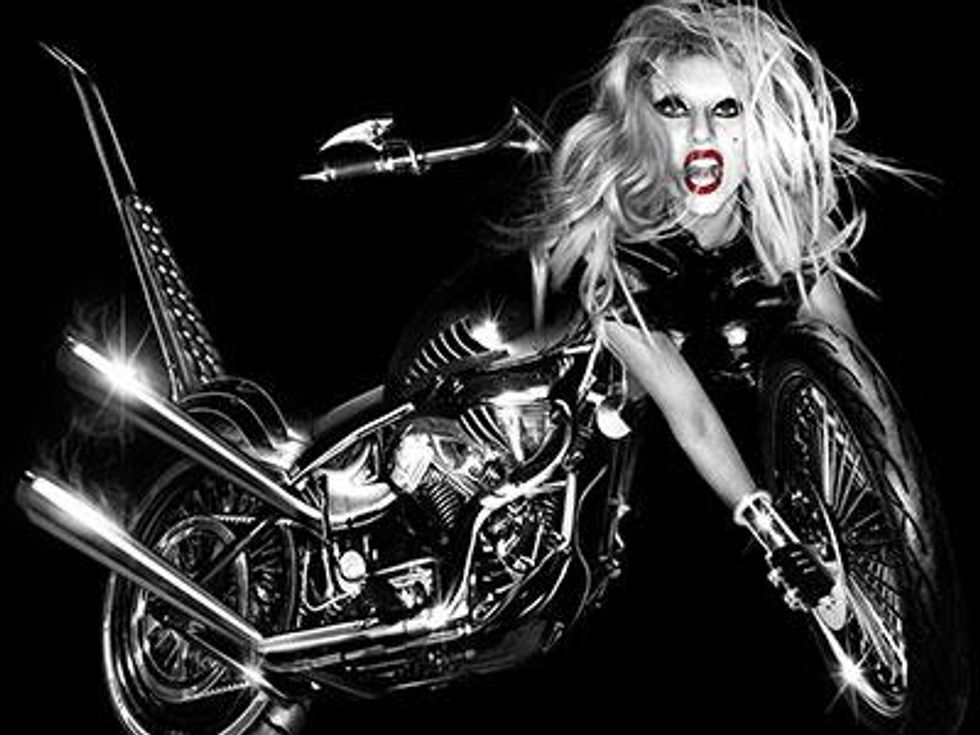 So at what point did gay fans stop going gaga over Gaga?
In 2011 Gaga's second studio album Born This Way was ubiquitous as hit after hit blasted across club dance floors and over radio. However, despite this success cultural bellwethers had already begun to detect a change in wind, including drag celebrity Lady Bunny who would parody Gaga's song "Edge of Glory" as "I've lost my edge, I'm boring" during her club routines at the time.
But many pundits point to Gaga's third album, Artpop, known in catty circles as "Chartflop," as the most marked fall from gay grace. The lack of enthusiasm was reported last year by The Advocate columnist Neal Broverman in his opinion piece, "Is Gaga Over or Is Divadom?" Broverman remarked how a publicity stunt, in which Gaga did a bar crawl of West Hollywood, fell flat among the gay audience it was intended to titillate, noting that the album's lead single "Applause" was more of a "golf clap." He proposed that the track may mark the end of an era where gay men will no longer idolize divas like Gaga due to the increasing acceptance of LGBT idols in the entertainment industry.
"The phenomenon may be a vestige of a time when gay men had few to no role models in popular culture -- we want to identify with people like us who struggle and persevere, but there are very few gay male singers or actors, especially those with outsize personas, embraced by the mainstream," he wrote. "Their ranks will likely grow at a glacial pace, so the gay male-female diva pact is safe for the next few decades or so."
The shift away from divadom may indeed be a reason for Gaga's falling star, but there are other factors at play. The media landscape has altered considerably since 2008. The rise of smart phones, and social media has engendered a world in which the Warhol-allotted 15 minutes of fame has been reduced to 15 seconds, with songs and artists going viral one moment and then disappearing back into the ether the next (see: Carly Rae Jepson).
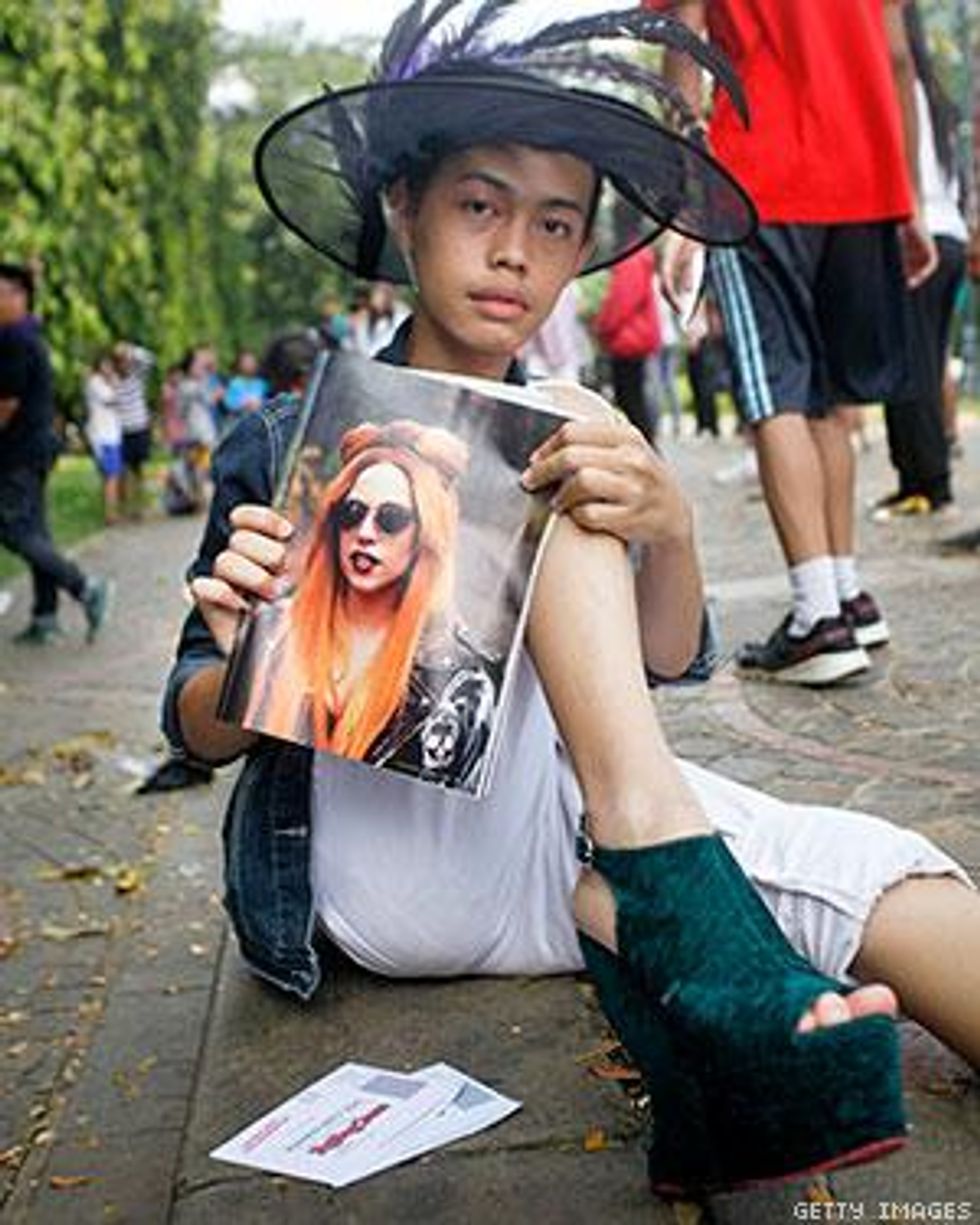 The cultural and political climates are also to blame. Just as the gays are leaving historically LGBT neighborhoods due to the ever-expanding options of gay-friendly real estate, so, too are their eyes wandering to the plethora of new musical possibilities to endorse. In 2008 Gaga was one of the only pop stars of her visibility to sing her support of the LGBT community, whether in the lyrics or at political events like the 2009 March on Washington. To further this support, her music progressed from party anthems to songs like "Born This Way," which were tailor-made rallying cries for a civil rights movement. Today, she is (thankfully) not alone in this pursuit. Droves of straight musicians are actively courting the LGBT market as allies, in addition to out solo artists like Sam Smith and Adam Lambert who continue to break records as out gay musicians.
In a recent interview with The Advocate, Lambert acknowledged the existence of a fatigue among gay music fans, but maintains it's typical of the cycle of fame. It's only natural that Gaga, who enjoyed record-breaking success with Born This Way, would experience a backlash from the exposure.
"I know exactly what you're talking about," remarked Adam Lambert with a laugh, when asked about the gay 'tude toward Mother Monster. "I think most artists though, that's just kind of the trajectory. If you hit really, really big and really, really hard, there's going to be the other side of the peak. There's peaks and valleys. Sometimes you're on a high, sometimes you're not on a high."
"I think she's incredibly talented, a brilliant artist, an amazing performer, and people either like her or they don't," he said, adding "sometimes, when something is 'trendy,' or 'new,' we are even more drawn to it."
Blake McIver, a gay singer who began his entertainment career playing Derek on Full House, also recognized that the "trend" of loving -- or hating -- Gaga is a factor in her current standing. However, he also points out another element that may be at play -- her bisexuality.
"I think there's a bit of ostracism between gay men and bisexual women, because there's been so much historically of, 'Oh, bi is just the last stop on the train to gay," he says.
In other words, an LGBT diva may face unique challenges to prove her authenticity, particularly in a culture where a kiss shared between Madonna, Britney Spears, and Christina Aguilera is a headline-grabbing publicity stunt. Gaga, who has dated actor Taylor Kinney for three years and has never had a public relationship with another woman, has repeatedly been forced to defend her bisexuality since she first publicly spoke about her identity to Barbara Walters in 2009. At the time, she revealed that her attraction to women inspired the song "Poker Face" and in 2013 she lashed out at critics who continued to question her sexual orientation during an Artpop release party in Berlin.
 "You know what? It's not a lie that I am bisexual and I like women, and anyone that wants to twist this into 'she says she's bisexual for marketing,' this is a fucking lie," she told the crowd during a Q&A. "This is who I am and who I have always been."
Faith Cheltenham, the president of BiNet USA, says this struggle of a bisexual woman to assert her identity is a pushback against the rules of divadom and a discomfort that comes with the sentiment, "No, you perform for us, you're not part of us."
"She fought against that," says Cheltenham, noting how remarkable Gaga's achievements are, considering the discrimination and obstacles that many bi people fight to overcome. "She struggled to find ways to communicate who she was as a young artist being embraced by an LGBT community that internally still has a great deal of issues dealing with bisexuality."
"Her pain and her heartache" shine through in her music, Cheltenham maintains, and "that belongs to gay men, that belongs to lesbians, that belongs to bi people, that belongs to the trans community, that belongs to asexuals who feel like they never fit it... this is something that Lady Gaga knows."
Be it rooted in biphobia or suspicion of exploitation, even a whiff of inauthenticity can be the end for an entertainer among gay fans, and for Gaga -- whose headline-grabbing couture so shocked and titillated when she first arrived on the scene -- it appears the meat dress routine may be rotting. Music critics like August Brown of the Los Angeles Times turned up their noses at Gaga's prolonged employment of costume and stage gimmicks, which include an attempt to cross-pollinate a concert with a rave in her most recent Artpop tour.
"Gaga, once at the vanguard of high fashion, feminism, and deliciously lowbrow electro-pop, seems to have thrown her lot in with a contemporary EDM culture that was already kind of a cliche on arrival," Brown writes. "Other pop stars could fight through questionable fashions and staging decisions (Gaga, a powerhouse vocalist, certainly could). But for her, more than any other pop artist today, image is the message. To go from body-bending Alexander McQueen heels to an inflatable squid suit and fairy wings worn by seemingly every high schooler these days was sadder than Gaga's pop-ancestor Madonna titling an album MDNA."
He concluded his review with a sound recommendation for Gaga to ditch the props and take advantage of what actually distinguishes her from many flash-in-the-pan pop stars: her natural vocal talent. "Maybe a reset is in order, he proposed. "Imagine three nights at Disney Hall, with just Gaga, a black dress, and a baby grand."
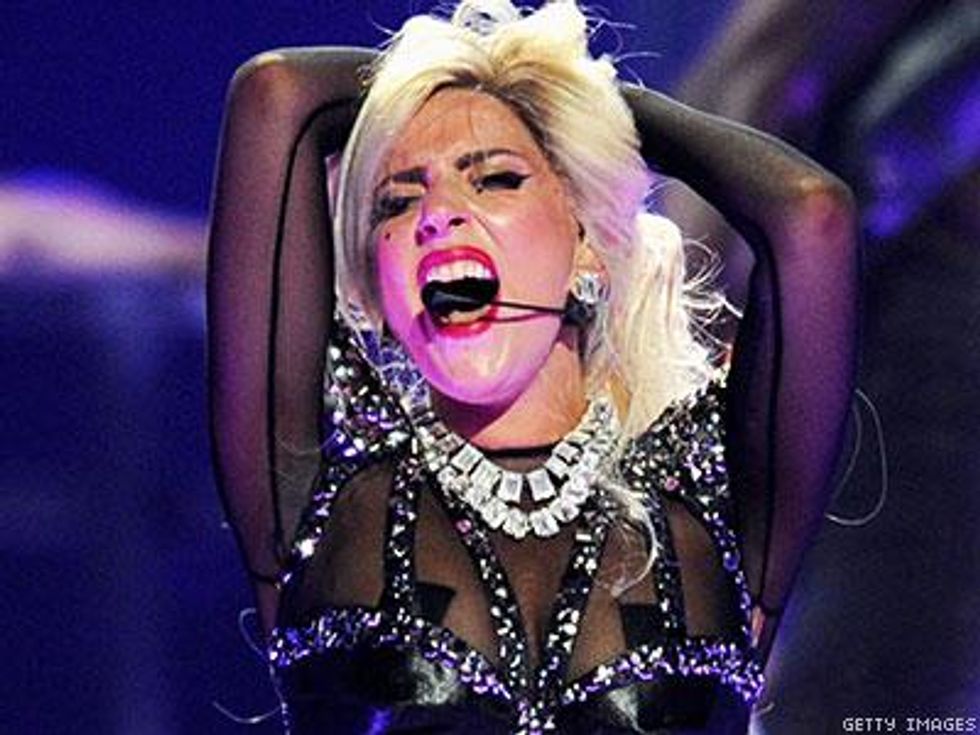 Gaga may be taking this advice. In her latest album, Cheek to Cheek, released this week, the "Bad Romance" singer has paired with Tony Bennett for a series of jazz standards duets. It's a brilliant marketing move to couple the 88-year-old crooner with the millennial Mother Monster, and one that is sure to win Gaga new fans from older demographics. Videos of their studio recordings of old-school numbers like "Anything Goes" and "I Can't Give You Anything But Love" show a singer who -- pruned of pods, plush, and ploys -- can more clearly demonstrate her vocal talents. Though true to character, a few wigs still made it through the sartorial editing room.
But authenticity needs to ring true beyond the stage, and Gaga has also faced a PR battle in the world of philanthropy. The Born This Way Foundation, which Gaga launched with much fanfare at Harvard University alongside Oprah and Deepak Chopra in 2011, came under fire earlier this year after its 2012 tax report was leaked by Showbiz 411's Roger Friedman. The reporter broke down the organization's expenses and wrote, "it's unclear that anyone was really helped by the Born this Way Foundation other than lawyers, consultants, publicists, and travel agents." Friedman's accusation that the organization had taken money intended for youth and "[frittered] away around $1.5 million on legal fees, publicity, and a website" was widely reported on. His article called into question Gaga's intentions, or if in beginning a chartitable foundation, asked if she had bitten off more than she could chew.
Cynthia Germanotta, Gaga's mother and the head of the organization, fired back in an op-ed, stating "A clear understanding of the differences between a grant-making organization and one that carries out its work directly would have made this a non-story." She pointed to the Born Brave Bus, a component of Gaga's Born This Way tour that provided information and interactive resources for youth, as well as online awareness campaigns as major accomplishments of the organization, whose mission is to build a "kinder, braver, world for young people."
 Is it succeeding in that mission? Although the Born Brave Bus did not follow Lady Gaga on her most recent Artpop tour, the bus recently launched a tour of its own across the country in venues like malls as well as the Made In America Festival in Philadelphia. On the Born This Way tour, Gaga fans would flock to the bright vehicle, which is decorated with fan art, for a photo-op. In the process, many would also learn about LGBT youth support groups like GLSEN, Campus Pride, and The Trevor Project. A representative from Trevor confirms that the partnership was fruitful, and he believes many youth called its lifesaving hotline (1-866-488-7386) as a result of the tour.
In addition to the bus, an online resource named the Born Brave Map also connects youth to local resources like counseling and health centers. Thankfully, its search function has improved significantly over the past few months, allowing help-seekers to refine their search based by need and location.
One of these locations is Gaga's own concert, which becomes a pop-up community gathering for her "little monsters," of which many are LGBT youth. And like a Pride parade, it will also attract antigay protestors.
During her summer performance in Los Angeles, a man wheeled a large cross in front of the Staples Center, and began shouting through a megaphone, "There is hope for the homosexual, the lesbian, the fornicator" to the waiting line of Gaga fans. In response, two young men dressed in drag walked in front of the heckler and unfurled a large rainbow flag. Galvanized, the crowd cheered them on, indicating that perhaps, redemption may be at hand for Gaga as well.