'%3E%3Cpath d='M16.3574 35.6519H12.9537L15.0491 18.8873L16.3574 35.6519ZM30.4229 54.0093L22.309 0.994385H7.91795L0 54.0093H10.6634L11.5802 46.3855H17.4014L17.9914 54.0093H30.4229Z' fill='%23971B20'/%3E%3Cpath d='M48.2073 41.8813C48.2073 43.4049 47.4892 44.0011 46.1144 44.0011H43.7595V11.0687H46.1144C47.4892 11.0687 48.2073 11.6636 48.2073 13.1885V41.8813ZM59.5273 43.6695V11.3326C59.5273 3.71323 53.5729 0.994385 47.8157 0.994385H31.7213V54.0093H47.8157C53.5729 54.0093 59.5273 51.29 59.5273 43.6695Z' fill='%23971B20'/%3E%3Cpath d='M90.183 0.994385H78.6039L75.0711 30.6157L71.9955 0.994385H59.4346L69.2474 54.0093H80.373L90.183 0.994385Z' fill='%23971B20'/%3E%3Cpath d='M107.063 42.3448C107.063 43.7359 105.951 44.5974 104.643 44.5974C103.269 44.5974 102.157 43.7359 102.157 42.3448V12.658C102.157 11.2676 103.269 10.4058 104.643 10.4058C105.951 10.4058 107.063 11.2676 107.063 12.658V42.3448ZM119.233 43.2723V11.7312C119.233 6.36384 112.952 -3.8147e-06 104.643 -3.8147e-06C96.2667 -3.8147e-06 89.9867 6.36384 89.9867 11.7312V43.2723C89.9867 48.6393 96.2667 55 104.643 55C112.952 55 119.233 48.6393 119.233 43.2723Z' fill='%23971B20'/%3E%3Cpath d='M150.976 43.9349V33.7309H139.069V42.3448C139.069 43.7359 137.957 44.5974 136.582 44.5974C135.076 44.5974 133.964 43.7359 133.964 42.3448V12.658C133.964 11.2676 135.076 10.4058 136.582 10.4058C137.957 10.4058 139.069 11.2676 139.069 12.658V21.2723H150.976V11.0687C150.976 5.70107 145.283 -3.8147e-06 136.582 -3.8147e-06C127.75 -3.8147e-06 121.796 5.70107 121.796 11.0687V43.9349C121.796 49.3022 127.75 55 136.582 55C145.283 55 150.976 49.3022 150.976 43.9349Z' fill='%23971B20'/%3E%3Cpath d='M167.478 35.6519H164.076L166.17 18.8873L167.478 35.6519ZM181.544 54.0093L173.432 0.994385H159.037L151.123 54.0093H161.785L162.704 46.3855H168.523L169.114 54.0093H181.544Z' fill='%23971B20'/%3E%3Cpath d='M205.412 10.4058V0.994385H177.081V10.4058H185.392V54.0093H197.428V10.4058H205.412Z' fill='%23971B20'/%3E%3Cpath d='M230.002 54.0093V43.9349H218.914V31.8746H226.635V21.8028H218.914V10.4058H230.002V0.994385H206.875V54.0093H230.002Z' fill='%23971B20'/%3E%3C/g%3E%3Cdefs%3E%3CclipPath id='clip0_260_7080'%3E%3Crect width='230' height='55' fill='white'/%3E%3C/clipPath%3E%3C/defs%3E%3C/svg%3E)

This story originally appeared on Out.
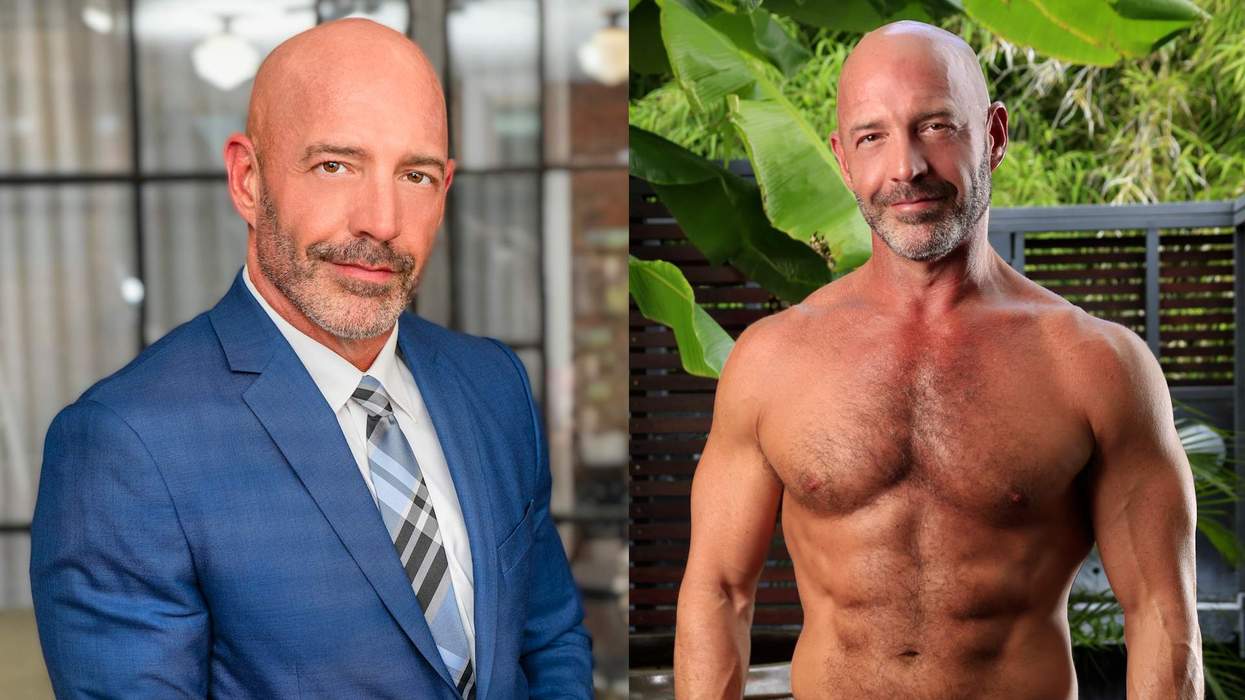
The handsome, rugged face of a hunky gay man from Mississippi is all over the internet, not because he's rich or famous, except maybe in the world of gay porn. That's a side hustle for Hunter Bigham, who works as a furniture sales executive and recently celebrated 11 years of marriage to his husband. Together they are online as Tyler Saint and Ace Banner, providing very intimate digital content.
But that's not where Bigham is most widely seen. This week, he told the story of how scammers have stolen his images from social media to create hundreds of fake profiles, using them as bait to lure unsuspecting men and women with the intention to rob them, many losing their life savings.
Their losses, according to Bigham, total roughly $1.4 million. And that's just from the victims who have contacted him. They thought he was a widowed petroleum geologist in Houston, an oil rig worker in Scotland, even a Spanish secret agent named John.
Bigham has been telling his story on Facebook for years, but this week a collaborative effort by the Associated Press and PBS Frontline pulled back the curtain on the agony Bigham has endured and is still dealing with daily. The report told extensive stories of those duped out of their hard-earned savings.
"My posts about being used as bait for scams began here on Facebook in 2018. I didn’t understand the scope of them then, but over the years it has become a supreme challenge in my life, and in the lives of my immediate family to some extent. They continue," he wrote on Facebook last week, in a post sharing a link to the AP/PBS investigation. "Also, please help by reporting profiles you know are scams and pressure your politicians to enact changes that hold platforms accountable. We are all vulnerable."
The challenge Bigham is experiencing is three-fold: He's reported the fake profiles he's found to Facebook, but the platform repeatedly told him they didn’t violate community standards and has removed only four accounts as of last week. His complaints to the FBI haven't yielded anything. And hardest of all, some victims have threatened to hurt him, his family and themselves, wrongly believing that Bigham is the scammer.
Up to 15 victims a day were contacting him at the peak, according to the AP, and Bigham said he felt compelled to reply to every single one, reassuring those whose hearts were broken that they are worthy of being loved.
Friends and strangers alike have suggested he could stop the scammers by deleting his profiles from the internet. But vanishing from public view, he told the AP, would be like being forced back into the closet.
"I know some of you will say 'just delete your content,' but it’s not so uncomplicated," he wrote on Facebook. "I welcome your input and I am keeping the comments open, but I won’t engage in debate. The article, its content and accompanying documentation tell my truth as I know it."
Bigham is a father of three who lives in Tupelo, a relatively LGBTQ+ friendly city in northern Mississippi best known as the birthplace of Elvis Presley. He and his husband fly a Pride flag outside their home, but it's on the back porch and not visible to passersby on the street.
Mississippi lacks statewide anti-discrimination laws covering housing, employment, or public accommodations, so that's yet another challenge for Bigham, being an out gay man in the South and a survivor of conversion therapy.
Bigham is not alone, of course. The journalists telling his story revealed a former FBI investigator and a retired U.S. Army colonel were also scammed. Retired Col. Bryan Denny is the co-founder of a group that has alerted Facebook to more than 3,000 fraudulent profiles showing his image. Advocating Against Romance Scammers pushed for a recently enacted law that requires dating apps to warn users when they are talking to someone who has been banned for suspected fraud.
And then there's Johnny Martell Bigham, who wakes up every morning to see his husband checking messages in their bed. He told the AP he's only now aware of the toll it's been taking on Bigham.
“I honestly didn’t know the extent of it until today,” Johnny said in a voice that was trembling. “He keeps a lot in.”
“I’m OK,” Hunter assured him, patting his husband's arm. “I’m just kind of numb to it at this point.”
Johnny wiped tears from his eyes and clasped his husband’s hand, sharing the memory of how he would listen to Hunter laugh in his sleep. His husband hasn’t laughed in a long time, he said.
“I’d just like it to be over,” said Bigham, who was raised Southern Baptist, and taught that homosexuality is a sin. After divorcing the mother of his children, he said he wasn't sure he'd ever find true love, like he did 11 years ago.
“I understand after coming out, thinking that I will never have it myself, what it is like to finally find it — or think you found it,” he said, in reference to those who were scammed. ”You will do anything in the world to protect it.”
Watch the full report by PBS Frontline and the AP here.