'%3E%3Cpath d='M16.3574 35.6519H12.9537L15.0491 18.8873L16.3574 35.6519ZM30.4229 54.0093L22.309 0.994385H7.91795L0 54.0093H10.6634L11.5802 46.3855H17.4014L17.9914 54.0093H30.4229Z' fill='%23971B20'/%3E%3Cpath d='M48.2073 41.8813C48.2073 43.4049 47.4892 44.0011 46.1144 44.0011H43.7595V11.0687H46.1144C47.4892 11.0687 48.2073 11.6636 48.2073 13.1885V41.8813ZM59.5273 43.6695V11.3326C59.5273 3.71323 53.5729 0.994385 47.8157 0.994385H31.7213V54.0093H47.8157C53.5729 54.0093 59.5273 51.29 59.5273 43.6695Z' fill='%23971B20'/%3E%3Cpath d='M90.183 0.994385H78.6039L75.0711 30.6157L71.9955 0.994385H59.4346L69.2474 54.0093H80.373L90.183 0.994385Z' fill='%23971B20'/%3E%3Cpath d='M107.063 42.3448C107.063 43.7359 105.951 44.5974 104.643 44.5974C103.269 44.5974 102.157 43.7359 102.157 42.3448V12.658C102.157 11.2676 103.269 10.4058 104.643 10.4058C105.951 10.4058 107.063 11.2676 107.063 12.658V42.3448ZM119.233 43.2723V11.7312C119.233 6.36384 112.952 -3.8147e-06 104.643 -3.8147e-06C96.2667 -3.8147e-06 89.9867 6.36384 89.9867 11.7312V43.2723C89.9867 48.6393 96.2667 55 104.643 55C112.952 55 119.233 48.6393 119.233 43.2723Z' fill='%23971B20'/%3E%3Cpath d='M150.976 43.9349V33.7309H139.069V42.3448C139.069 43.7359 137.957 44.5974 136.582 44.5974C135.076 44.5974 133.964 43.7359 133.964 42.3448V12.658C133.964 11.2676 135.076 10.4058 136.582 10.4058C137.957 10.4058 139.069 11.2676 139.069 12.658V21.2723H150.976V11.0687C150.976 5.70107 145.283 -3.8147e-06 136.582 -3.8147e-06C127.75 -3.8147e-06 121.796 5.70107 121.796 11.0687V43.9349C121.796 49.3022 127.75 55 136.582 55C145.283 55 150.976 49.3022 150.976 43.9349Z' fill='%23971B20'/%3E%3Cpath d='M167.478 35.6519H164.076L166.17 18.8873L167.478 35.6519ZM181.544 54.0093L173.432 0.994385H159.037L151.123 54.0093H161.785L162.704 46.3855H168.523L169.114 54.0093H181.544Z' fill='%23971B20'/%3E%3Cpath d='M205.412 10.4058V0.994385H177.081V10.4058H185.392V54.0093H197.428V10.4058H205.412Z' fill='%23971B20'/%3E%3Cpath d='M230.002 54.0093V43.9349H218.914V31.8746H226.635V21.8028H218.914V10.4058H230.002V0.994385H206.875V54.0093H230.002Z' fill='%23971B20'/%3E%3C/g%3E%3Cdefs%3E%3CclipPath id='clip0_260_7080'%3E%3Crect width='230' height='55' fill='white'/%3E%3C/clipPath%3E%3C/defs%3E%3C/svg%3E)
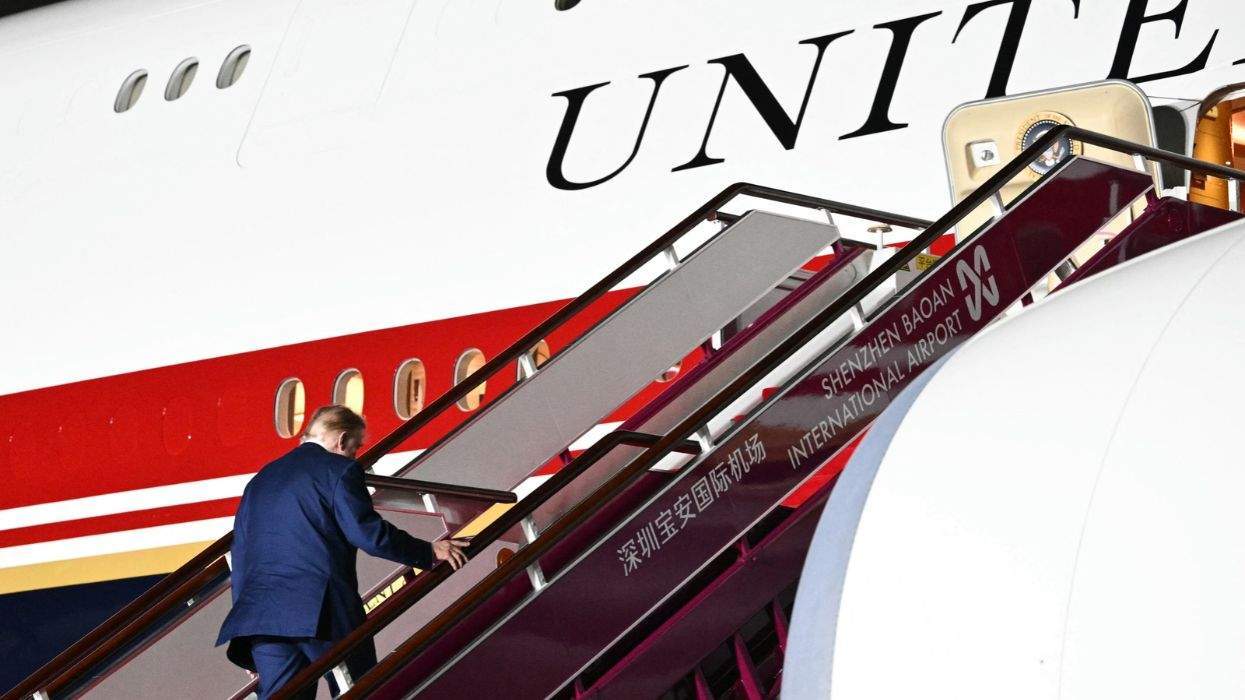
Just before 6 a.m. Thursday in Washington, D.C., the news from Air Force One arrived in two sentences. President Donald Trump was leaving Shenzhen, China, after meeting with Chinese President Xi Jinping and Russian President Vladimir Putin. Aurélia End, the Agence France-Presse correspondent covering the flight for the White House press pool, had one more detail for newsrooms as Trump headed home.
“At 6:45 pm consider this your wheels up. Our phones are being taken away for now for security reasons,” End wrote, giving the local time in Shenzhen.
Which reporters would have a working phone for the trip back to Washington depended on a choice they had made the day before.
The explanation came from aboard the plane. In a midflight account that CNN’s Kaitlan Collins posted on X, CBS News correspondent Jennifer Jacobs said an Air Force One aide had asked journalists to place the phones they had used in China in a Faraday bag, a metal-lined pouch that blocks wireless signals.
The aide said the phones would be returned when the plane landed in the United States. Separately, the aide collected White House staffers’ temporary phones so they could be wiped or discarded, Jacobs reported.
Many reporters and photographers had brought temporary phones for the visit, leaving their everyday devices aboard Air Force One before landing in China on Wednesday. Once back on board, they could retrieve those devices and use them to file. Their colleagues who had carried their regular phones in Shenzhen faced the long flight home without a cellphone.
The traveling pool serves as the eyes and ears of newsrooms that have no one aboard Air Force One. On Thursday, its members sent updates down to the minute, including when Trump’s motorcade reached the airport and what reporters could see from beneath the wing as he boarded. Jacqui Heinrich, a Fox News correspondent and president of the White House Correspondents’ Association, noted that reporters kept their phones when Trump left Beijing in May.
Jacobs described the measure as a cybersecurity precaution. When NBC News correspondent Gabe Gutierrez reached Trump by phone and asked what had prompted it, the president did not identify a specific threat.
“Well, we want to be careful, and we didn’t want to have people have phones when they shouldn’t have phones, so we were very careful,” Trump said.
The traveling press pool had already been aboard a presidential decoy flight once this year. In July, after a NATO summit in Ankara, Turkey, reporters flew out believing Trump was on their plane. The White House had said he was aboard. Weeks later, The Washington Post reported that Trump had secretly left on a different military jet after U.S. officials learned of a possible Iranian assassination plot.
The journalists and some White House staffers on the decoy flight had no idea the president had switched planes.