'%3E%3Cpath d='M16.3574 35.6519H12.9537L15.0491 18.8873L16.3574 35.6519ZM30.4229 54.0093L22.309 0.994385H7.91795L0 54.0093H10.6634L11.5802 46.3855H17.4014L17.9914 54.0093H30.4229Z' fill='%23971B20'/%3E%3Cpath d='M48.2073 41.8813C48.2073 43.4049 47.4892 44.0011 46.1144 44.0011H43.7595V11.0687H46.1144C47.4892 11.0687 48.2073 11.6636 48.2073 13.1885V41.8813ZM59.5273 43.6695V11.3326C59.5273 3.71323 53.5729 0.994385 47.8157 0.994385H31.7213V54.0093H47.8157C53.5729 54.0093 59.5273 51.29 59.5273 43.6695Z' fill='%23971B20'/%3E%3Cpath d='M90.183 0.994385H78.6039L75.0711 30.6157L71.9955 0.994385H59.4346L69.2474 54.0093H80.373L90.183 0.994385Z' fill='%23971B20'/%3E%3Cpath d='M107.063 42.3448C107.063 43.7359 105.951 44.5974 104.643 44.5974C103.269 44.5974 102.157 43.7359 102.157 42.3448V12.658C102.157 11.2676 103.269 10.4058 104.643 10.4058C105.951 10.4058 107.063 11.2676 107.063 12.658V42.3448ZM119.233 43.2723V11.7312C119.233 6.36384 112.952 -3.8147e-06 104.643 -3.8147e-06C96.2667 -3.8147e-06 89.9867 6.36384 89.9867 11.7312V43.2723C89.9867 48.6393 96.2667 55 104.643 55C112.952 55 119.233 48.6393 119.233 43.2723Z' fill='%23971B20'/%3E%3Cpath d='M150.976 43.9349V33.7309H139.069V42.3448C139.069 43.7359 137.957 44.5974 136.582 44.5974C135.076 44.5974 133.964 43.7359 133.964 42.3448V12.658C133.964 11.2676 135.076 10.4058 136.582 10.4058C137.957 10.4058 139.069 11.2676 139.069 12.658V21.2723H150.976V11.0687C150.976 5.70107 145.283 -3.8147e-06 136.582 -3.8147e-06C127.75 -3.8147e-06 121.796 5.70107 121.796 11.0687V43.9349C121.796 49.3022 127.75 55 136.582 55C145.283 55 150.976 49.3022 150.976 43.9349Z' fill='%23971B20'/%3E%3Cpath d='M167.478 35.6519H164.076L166.17 18.8873L167.478 35.6519ZM181.544 54.0093L173.432 0.994385H159.037L151.123 54.0093H161.785L162.704 46.3855H168.523L169.114 54.0093H181.544Z' fill='%23971B20'/%3E%3Cpath d='M205.412 10.4058V0.994385H177.081V10.4058H185.392V54.0093H197.428V10.4058H205.412Z' fill='%23971B20'/%3E%3Cpath d='M230.002 54.0093V43.9349H218.914V31.8746H226.635V21.8028H218.914V10.4058H230.002V0.994385H206.875V54.0093H230.002Z' fill='%23971B20'/%3E%3C/g%3E%3Cdefs%3E%3CclipPath id='clip0_260_7080'%3E%3Crect width='230' height='55' fill='white'/%3E%3C/clipPath%3E%3C/defs%3E%3C/svg%3E)
Sarah Schulman and Jim Hubbard both knew personally the devastation that the AIDS crisis had on New York City. As early members of the activist group ACT UP New York, they also saw firsthand the success of social justice movements launched in its wake; successes they did not want forgotten.
By 2001, the disease had killed more than 82,500 New Yorkers, and millions globally. Schulman, a writer and journalist, and Hubbard, a documentary filmmaker, began interviewing surviving activists from ACT UP New York. Soon, the ACT UP Oral History Project was born.
“What we wanted to do was to give as many people as possible the opportunity to tell their story in their own words,” Hubbard told The Advocate. Now, “what we want is for the history of ACT UP and the history of AIDS to be in mainstream U.S. history, right where it belongs.”
ACT UP New York, one of the world’s most prominent HIV activism groups, was launched in 1987 to demand the development of HIV treatments and better government support for people living with HIV.
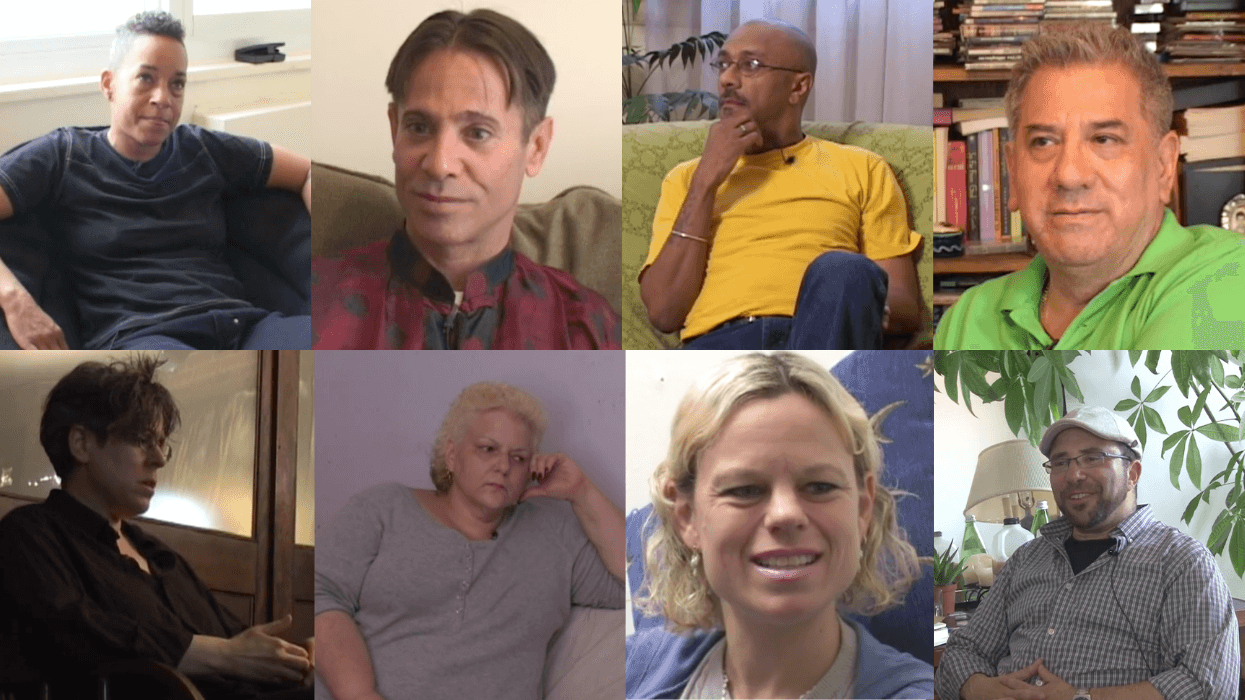
Twenty-five years later, the digital archive of their work is vast. Schulman and Hubbard archived interviews with 188 AIDS activists, including audio, video, and written transcripts. With help from filmmaker James Wentzy, the group also collected more than 2,000 hours of archival footage, Schulman said.
As of 2026, the project’s public website has had more than 14 million visits, and its content has been downloaded more than 600,000 times, according to Schulman. “Two people can do a lot,” she said.
 Buttons adorn an activist's vest at the New York City AIDS Memorial. Jack Walker/The Advocate
The website boasts hours of interviews with activists and indexes them by topic, from discussions around specific campaigns, like Target City Hall, to broader discussions of race and gender within the group. One goal of the archive was to capture the diversity among its activists, Hubbard said.
AIDS activists were “usually portrayed as cute, white men, young men,” Hubbard said. “We wanted to give women and people of color the opportunity to participate.”
The project was equally interested in showcasing the diversity of thought that powered AIDS activism, ensuring that such political nuance is not lost to time.
“Direct action to end the AIDS crisis. If you were in ACT UP, that’s what you had to be doing. But that is widely interpretable,” Schulman said. ACT UP had a “radical democracy structure” where “so many different strategies were going on at the same time.”
ACT UP’s strategic flexibility — organizing around the needs and demands of its members — was a lesson for other activist groups down the line, Schulman said; meeting people where they are can earn a campaign more support.
Schulman and Hubbard stopped regularly collecting interviews in 2015, but the work of maintaining the archive online has continued.
Technology has changed since the archive was launched. Initially, Hubbard said the team could post only a few minutes of video content at a time, which was difficult given the more than 350 hours of interview video they had in total.
Over time, Hubbard said the team transitioned from storing interviews on digital tape to using memory cards and, later, hard drives, allowing them to post full videos online with help from a technology lab at City University of New York. The original tapes are now stored at the Harvard University Library, Hubbard said.
 A protester at the die-in shields their face with an American flag where the stars have been replaced with skulls. Jack Walker/The Advocate
The project has helped inform future work around preserving the history of HIV and AIDS from Schulman and Hubbard. In 2012, Hubbard released the documentary United in Anger: A History of ACT UP, and in 2021 Schulman released a book titled Let the Record Show, which cataloged the history of the activist group.
Schulman and Hubbard both said the culture around HIV and AIDS has changed drastically since the crisis began. Despite the successes of the AIDS movement, conversations around HIV are far less pronounced today, they said.
When antiretroviral HIV treatments were developed in 1995, Hubbard said attention around the virus began to wane.
“It was shocking how quickly it happened. People forgot what it took to get to that point where AIDS was a treatable disease,” he said. That made documenting the work of ACT UP activists, and their broader mission of expanded health care access, feel urgent.
“For those of us who lived through it, it was incredibly important to show what people had done to make that happen,” Hubbard said. “People were doing it at the end of their lives. The activists were people who were sick and in wheelchairs in demonstrations. They dedicated their lives to changing the world, and they did.”
The oral history project was funded through MIX NYC, a non-for-profit organization founded by Schulman and Hubbard that focuses on queer, experimental film. The Ford Foundation Center for Social Justice served as a major donor, and a variety of other contributors supported the project.
Schulman also sees the project, and the activist movement it documented, as part of a wider effort to challenge systems of wealth and power. She said the archive has reminded her of the importance of “strategic alliances” between social justice groups that advance the common good.
“These are regular people who changed the world,” Schulman said. “And nobody was asking them about what they did.”