'%3E%3Cpath d='M16.3574 35.6519H12.9537L15.0491 18.8873L16.3574 35.6519ZM30.4229 54.0093L22.309 0.994385H7.91795L0 54.0093H10.6634L11.5802 46.3855H17.4014L17.9914 54.0093H30.4229Z' fill='%23971B20'/%3E%3Cpath d='M48.2073 41.8813C48.2073 43.4049 47.4892 44.0011 46.1144 44.0011H43.7595V11.0687H46.1144C47.4892 11.0687 48.2073 11.6636 48.2073 13.1885V41.8813ZM59.5273 43.6695V11.3326C59.5273 3.71323 53.5729 0.994385 47.8157 0.994385H31.7213V54.0093H47.8157C53.5729 54.0093 59.5273 51.29 59.5273 43.6695Z' fill='%23971B20'/%3E%3Cpath d='M90.183 0.994385H78.6039L75.0711 30.6157L71.9955 0.994385H59.4346L69.2474 54.0093H80.373L90.183 0.994385Z' fill='%23971B20'/%3E%3Cpath d='M107.063 42.3448C107.063 43.7359 105.951 44.5974 104.643 44.5974C103.269 44.5974 102.157 43.7359 102.157 42.3448V12.658C102.157 11.2676 103.269 10.4058 104.643 10.4058C105.951 10.4058 107.063 11.2676 107.063 12.658V42.3448ZM119.233 43.2723V11.7312C119.233 6.36384 112.952 -3.8147e-06 104.643 -3.8147e-06C96.2667 -3.8147e-06 89.9867 6.36384 89.9867 11.7312V43.2723C89.9867 48.6393 96.2667 55 104.643 55C112.952 55 119.233 48.6393 119.233 43.2723Z' fill='%23971B20'/%3E%3Cpath d='M150.976 43.9349V33.7309H139.069V42.3448C139.069 43.7359 137.957 44.5974 136.582 44.5974C135.076 44.5974 133.964 43.7359 133.964 42.3448V12.658C133.964 11.2676 135.076 10.4058 136.582 10.4058C137.957 10.4058 139.069 11.2676 139.069 12.658V21.2723H150.976V11.0687C150.976 5.70107 145.283 -3.8147e-06 136.582 -3.8147e-06C127.75 -3.8147e-06 121.796 5.70107 121.796 11.0687V43.9349C121.796 49.3022 127.75 55 136.582 55C145.283 55 150.976 49.3022 150.976 43.9349Z' fill='%23971B20'/%3E%3Cpath d='M167.478 35.6519H164.076L166.17 18.8873L167.478 35.6519ZM181.544 54.0093L173.432 0.994385H159.037L151.123 54.0093H161.785L162.704 46.3855H168.523L169.114 54.0093H181.544Z' fill='%23971B20'/%3E%3Cpath d='M205.412 10.4058V0.994385H177.081V10.4058H185.392V54.0093H197.428V10.4058H205.412Z' fill='%23971B20'/%3E%3Cpath d='M230.002 54.0093V43.9349H218.914V31.8746H226.635V21.8028H218.914V10.4058H230.002V0.994385H206.875V54.0093H230.002Z' fill='%23971B20'/%3E%3C/g%3E%3Cdefs%3E%3CclipPath id='clip0_260_7080'%3E%3Crect width='230' height='55' fill='white'/%3E%3C/clipPath%3E%3C/defs%3E%3C/svg%3E)
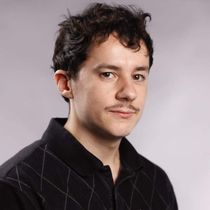
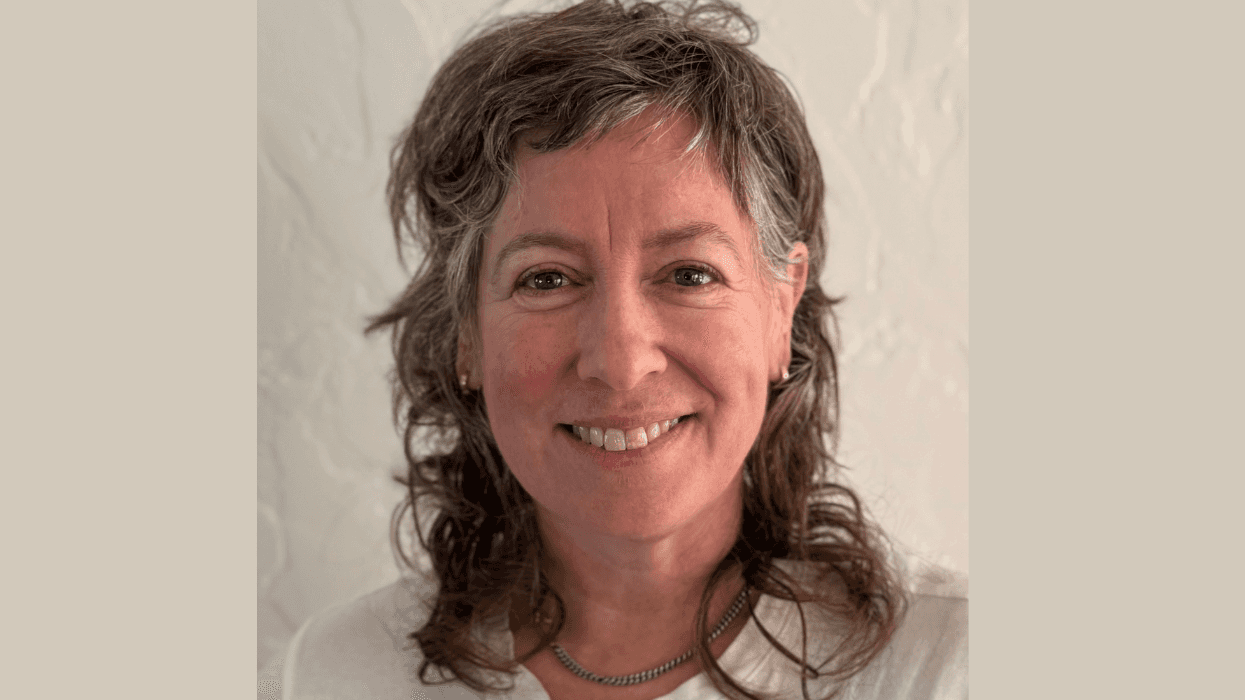
Lane Rasberry likes to wear the color blue. Only blue. Years ago, a fortune teller said another color would play a role in his death, and Rasberry hasn’t taken chances since.
The habit has inspired a cheeky online username, Bluerasberry, that appears in the edit logs of thousands of Wikipedia articles. Faced with LGBTQ+ censorship and erasure around the world, Rasberry is part of a growing community using Wikipedia to preserve and expand access to LGBTQ+ history online.
“The only community that's going to stand up and defend LGBT people is the collective global community of other LGBT people,” Rasberry, a professor at the University of Virginia, told The Advocate. “We're in this together, and we have to document our challenges.”
Related: How a teacher and her students are bringing queer equality to Wikipedia
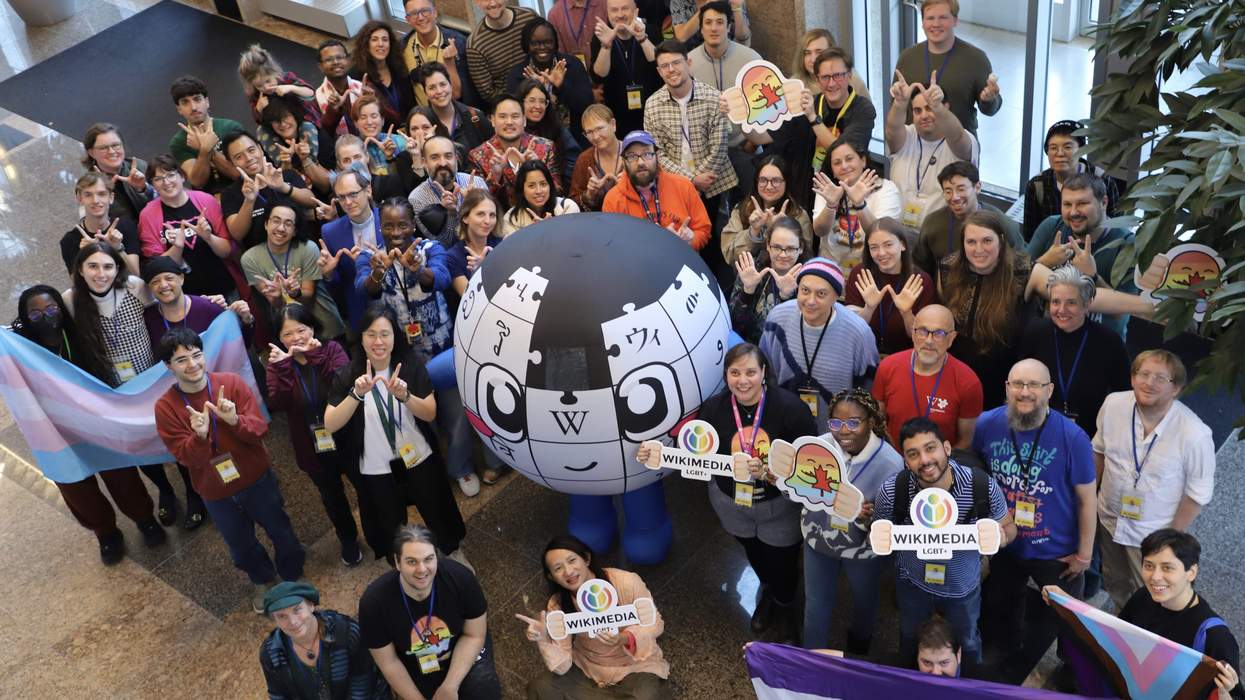
The Advocate joined this network of activists, historians and hobbyists in Montreal on October 23 for the world’s first fully in-person conference of LGBTQ+ Wikipedia users, dubbed Queering Wiki 2026. More than 150 people representing at least 30 countries attended the conference, according to Wikimedia LGBT+, the user group behind the event.
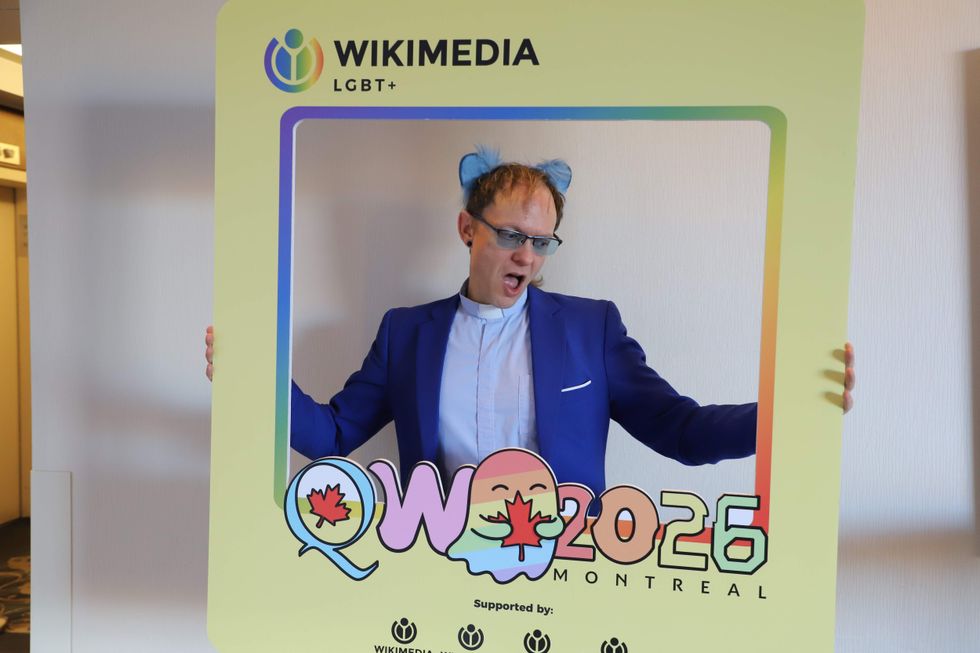 Wikipedia editor Lane Rasberry says he has only worn the color blue for decades. Jack Walker/Wikimedia Commons CC BY-SA 4.0
Wikipedia editors generally identify as part of the Open Knowledge Movement, which seeks to make information free and readily accessible online. The site is crowdsourced, allowing volunteers to build and improve articles. But this also leaves its content vulnerable to hostile edits from opponents of LGBTQ+ rights and far-right groups.
Wikimedia LGBT+ seeks to better document LGBTQ+ life digitally and protect materials already published. Bisi Alimi, the group’s executive director, says the work is inherently political.
“We’ve seen it in the U.S., where we now have a government that is banning books and banning conversations around queerness in schools,” Alimi told The Advocate. He sees Wikipedia as a way to fight back against that erasure. “It matters,” Alimi said. “To us, it matters.”
The conference featured presentations and panel discussions about LGBTQ+ experiences within the Wikipedia community, as well as efforts to improve LGBTQ+ content on the site.
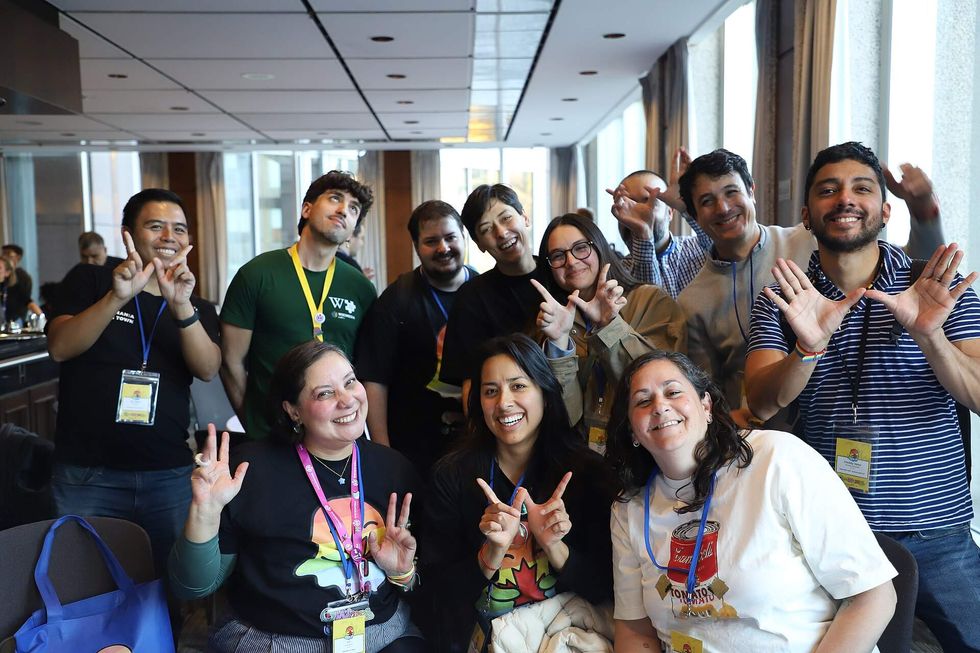 Members of the Spanish-language Wikimedia community pose at a conference luncheon.Jack Walker/Wikimedia Commons CC BY-SA 4.0
Contributors to Wikipedia and related Wikimedia projects, known as Wikimedians, do more than write and edit articles. Some upload images, train new editors, or develop software programs.
Ege Atacan Doğan of Turkey spends his time strengthening metadata — information that helps describe and organize content on the website. Ajay Das of India writes articles in Assamese, creating some of the world’s first public LGBTQ+ resources in his mother tongue.
“The Wiki ecosystem is really, really large,” said Doja Ade, a public health educator from the United States. “Websites like Wikipedia are a great way to fight back and to make sure that we are writing our own history.”
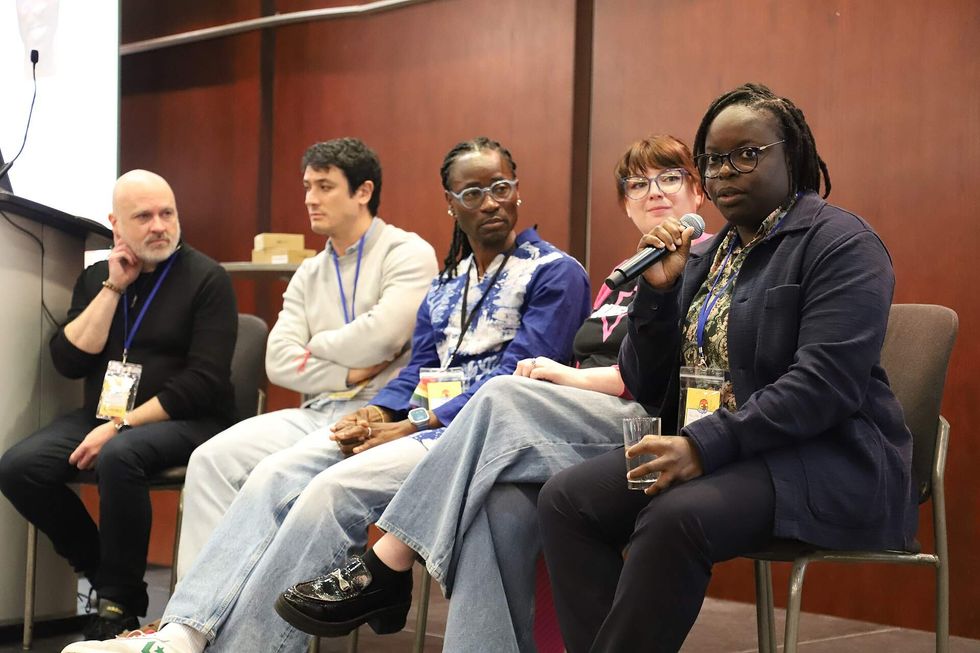 Pacita Rudder, executive director of Wikimedia New York City, delivers remarks during a roundtable discussion.Jack Walker/Wikimedia Commons CC BY-SA 4.0
Wikimedia conferences take place regularly, helping Wikimedians share projects and ideas across communities that are often siloed by language or subject matter.
A conference centered around LGBTQ+ identity was years in the making. The first was scheduled for Austria in 2020, but was canceled due to the COVID-19 pandemic. From 2021 through 2025, Wikimedia LGBT+ held online conferences, and LGBTQ+ users gathered for smaller-scale meetups around the world.
Organizers and attendees told The Advocate that seeing the full-fledged conference finally come to life was energizing. Louis Germain, the executive director of Wikimedia Canada, said the Wikimedia LGBT+ team approached him about Canada serving as a possible host country for the inaugural event, and that Montreal quickly came to mind.
“Montreal is well known for its great LGBT life,” said Germain, who hails from Quebec City. “Canada has always been a very welcoming country for the LGBT people.”
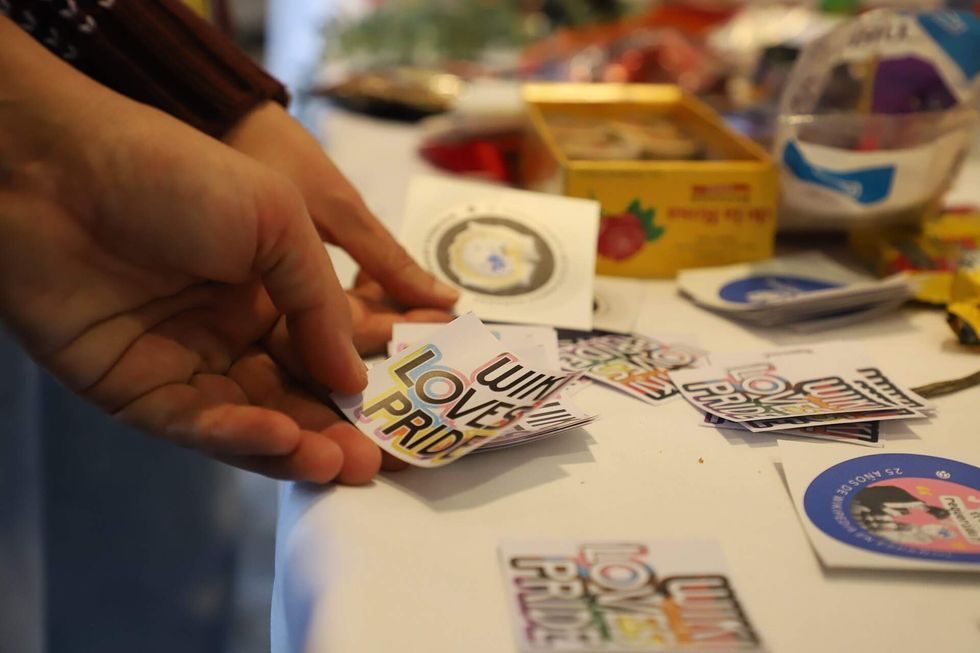 At Wikipedia conferences, attendees frequently trade snacks, merchandise and stickers from their home countries.Jack Walker/Wikimedia Commons CC BY-SA 4.0
This year’s conference was funded by the Wikimedia Foundation, the nonprofit that hosts Wikipedia and other Wikimedia projects. It received additional support from groups including Wikimedia Canada, Wikimedia Deutschland, Wikimedia Switzerland and WikiPortraits, according to Alimi.
Wikimedia LGBT+ is also working to build lasting institutional support for the site’s LGBTQ+ community.
The organization is planning a second in-person conference in 2028, with the location still to be finalized. Plus, the group will soon apply for formal nonprofit status, according to Wales resident Owen Blacker, who chairs the trustee board of Wikimedia LGBT+. The group is in its “final stages” and hopes to seek community feedback soon, Blacker said.
“That will unlock a bunch of things,” he told The Advocate. “In particular, the ability to get external funding, because most philanthropic organizations can only really give money to organizations that have a legal [status].”
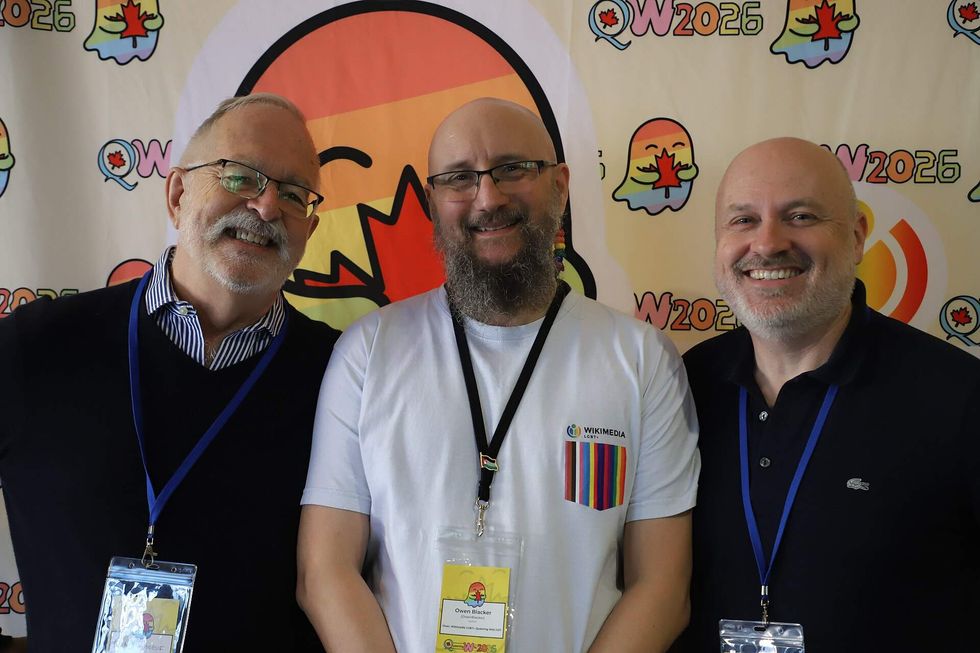 From left: René Leboeuf of ACT UP Montreal, Owen Blacker of Wikimedia LGBT+ and Louis Germain of Wikimedia Canada.Jack Walker/Wikimedia Commons CC BY-SA 4.0
With more funding, Alimi and Blacker hope to expand the group’s programming, outreach and communications. Those ambitions leave plenty of work ahead.
For now, organizers are pausing to appreciate what years of planning made possible.
“Wikimedia activities are predominantly online, so people spend a lot of time online without seeing other people,” Alimi said. “To be in a space with other queer people, and be queer without apologizing for it or seeking permission, is also something that is extraordinary.”
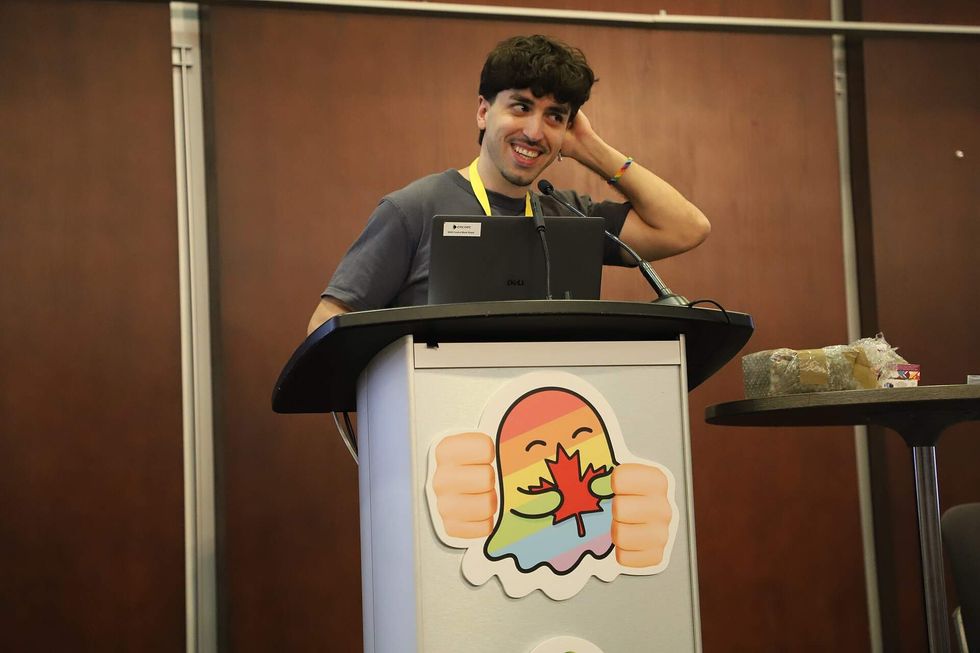 Wikimedian Nacho Casares speaks at a podium displaying Barba, the rainbow ghost that serves as a mascot for Wikimedia LGBT+.Jack Walker/Wikimedia Commons CC BY-SA 4.0