'%3E%3Cpath d='M16.3574 35.6519H12.9537L15.0491 18.8873L16.3574 35.6519ZM30.4229 54.0093L22.309 0.994385H7.91795L0 54.0093H10.6634L11.5802 46.3855H17.4014L17.9914 54.0093H30.4229Z' fill='%23971B20'/%3E%3Cpath d='M48.2073 41.8813C48.2073 43.4049 47.4892 44.0011 46.1144 44.0011H43.7595V11.0687H46.1144C47.4892 11.0687 48.2073 11.6636 48.2073 13.1885V41.8813ZM59.5273 43.6695V11.3326C59.5273 3.71323 53.5729 0.994385 47.8157 0.994385H31.7213V54.0093H47.8157C53.5729 54.0093 59.5273 51.29 59.5273 43.6695Z' fill='%23971B20'/%3E%3Cpath d='M90.183 0.994385H78.6039L75.0711 30.6157L71.9955 0.994385H59.4346L69.2474 54.0093H80.373L90.183 0.994385Z' fill='%23971B20'/%3E%3Cpath d='M107.063 42.3448C107.063 43.7359 105.951 44.5974 104.643 44.5974C103.269 44.5974 102.157 43.7359 102.157 42.3448V12.658C102.157 11.2676 103.269 10.4058 104.643 10.4058C105.951 10.4058 107.063 11.2676 107.063 12.658V42.3448ZM119.233 43.2723V11.7312C119.233 6.36384 112.952 -3.8147e-06 104.643 -3.8147e-06C96.2667 -3.8147e-06 89.9867 6.36384 89.9867 11.7312V43.2723C89.9867 48.6393 96.2667 55 104.643 55C112.952 55 119.233 48.6393 119.233 43.2723Z' fill='%23971B20'/%3E%3Cpath d='M150.976 43.9349V33.7309H139.069V42.3448C139.069 43.7359 137.957 44.5974 136.582 44.5974C135.076 44.5974 133.964 43.7359 133.964 42.3448V12.658C133.964 11.2676 135.076 10.4058 136.582 10.4058C137.957 10.4058 139.069 11.2676 139.069 12.658V21.2723H150.976V11.0687C150.976 5.70107 145.283 -3.8147e-06 136.582 -3.8147e-06C127.75 -3.8147e-06 121.796 5.70107 121.796 11.0687V43.9349C121.796 49.3022 127.75 55 136.582 55C145.283 55 150.976 49.3022 150.976 43.9349Z' fill='%23971B20'/%3E%3Cpath d='M167.478 35.6519H164.076L166.17 18.8873L167.478 35.6519ZM181.544 54.0093L173.432 0.994385H159.037L151.123 54.0093H161.785L162.704 46.3855H168.523L169.114 54.0093H181.544Z' fill='%23971B20'/%3E%3Cpath d='M205.412 10.4058V0.994385H177.081V10.4058H185.392V54.0093H197.428V10.4058H205.412Z' fill='%23971B20'/%3E%3Cpath d='M230.002 54.0093V43.9349H218.914V31.8746H226.635V21.8028H218.914V10.4058H230.002V0.994385H206.875V54.0093H230.002Z' fill='%23971B20'/%3E%3C/g%3E%3Cdefs%3E%3CclipPath id='clip0_260_7080'%3E%3Crect width='230' height='55' fill='white'/%3E%3C/clipPath%3E%3C/defs%3E%3C/svg%3E)
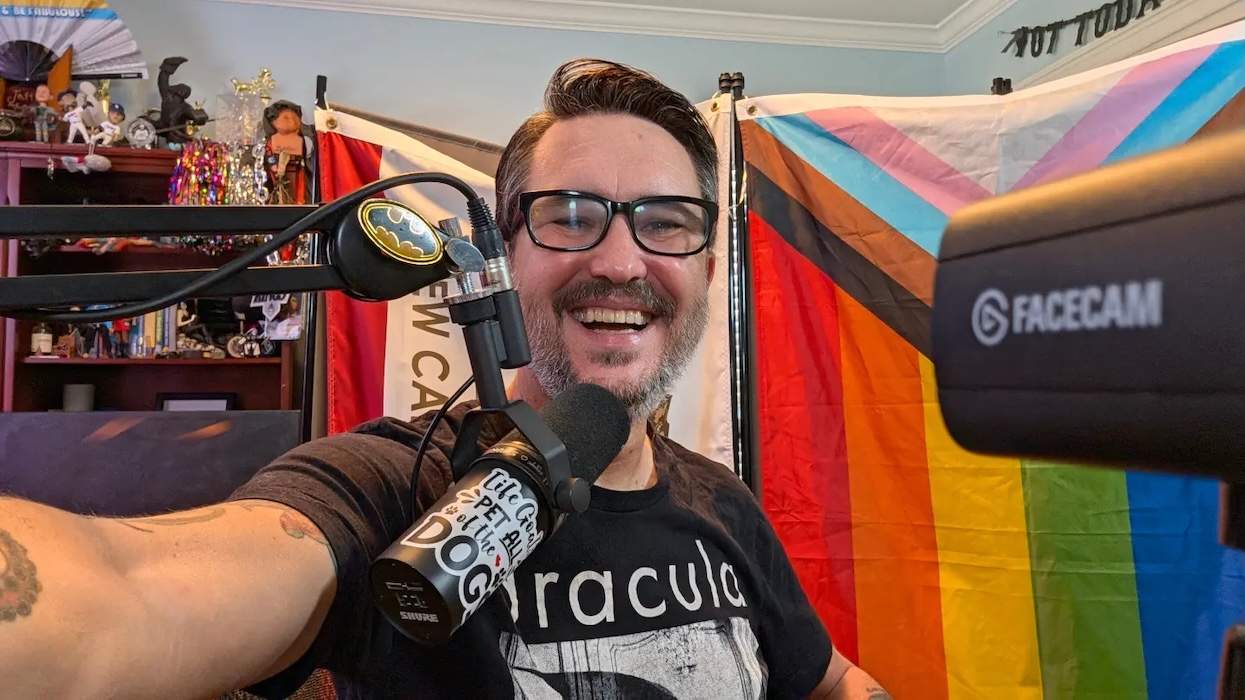

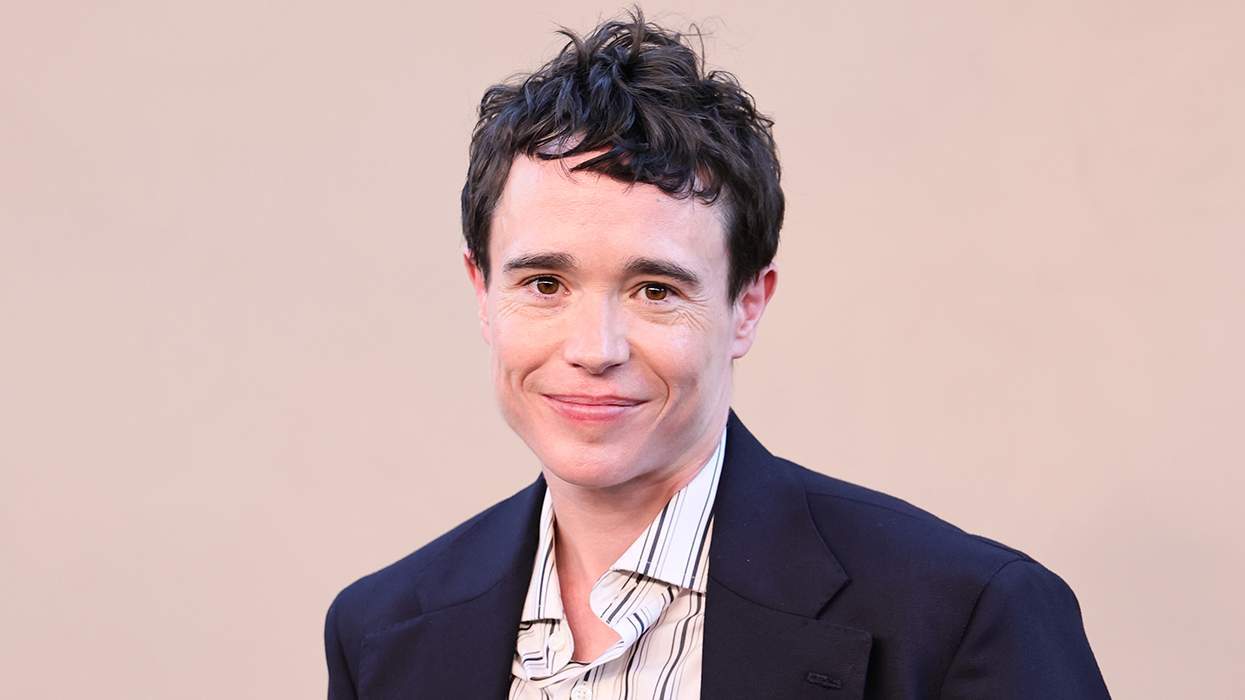
Forty years ago, Wil Wheaton landed his breakout movie role, playing Gordie in Rob Reiner’s Stand by Me at age 13. The following year, he joined the Star Trek franchise as the whiz kid Wesley Crusher on The Next Generation. More recently, he admits, he has met gay fans who told him he was their first crush.
“Love is love!” he exclaims. “We say it all the fucking time. Why is that complicated? It’s not, man, c’mon!”
The straight, 54-year-old actor tells The Advocate that meeting those fans is still a thrill.
“What’s great is that I still meet hot dads today; I’m like, ‘Fucking hot dads, dude!’ I’m just like, ‘Goddamnit, I could climb up those abs!’ And they’re like, ‘You were my first crush!’ And I’m like, ‘First of all, how are you still so hot? You’re my age!’ And second of all, I’m just like, ‘That’s fucking rad. I love that,’” he says.
Why Wil Wheaton speaks up for trans people
This past June, Wheaton attended NYC Pride, and he has decorated his personal website with blue, pink, and white banners proclaiming “trans rights are human rights.” On social media, the self-described “cis het guy” sports an ever-changing collection of rainbow pins and shirts declaring “Protect Trans Kids” and other pro-LGBTQ+ messages.
The question is, why?
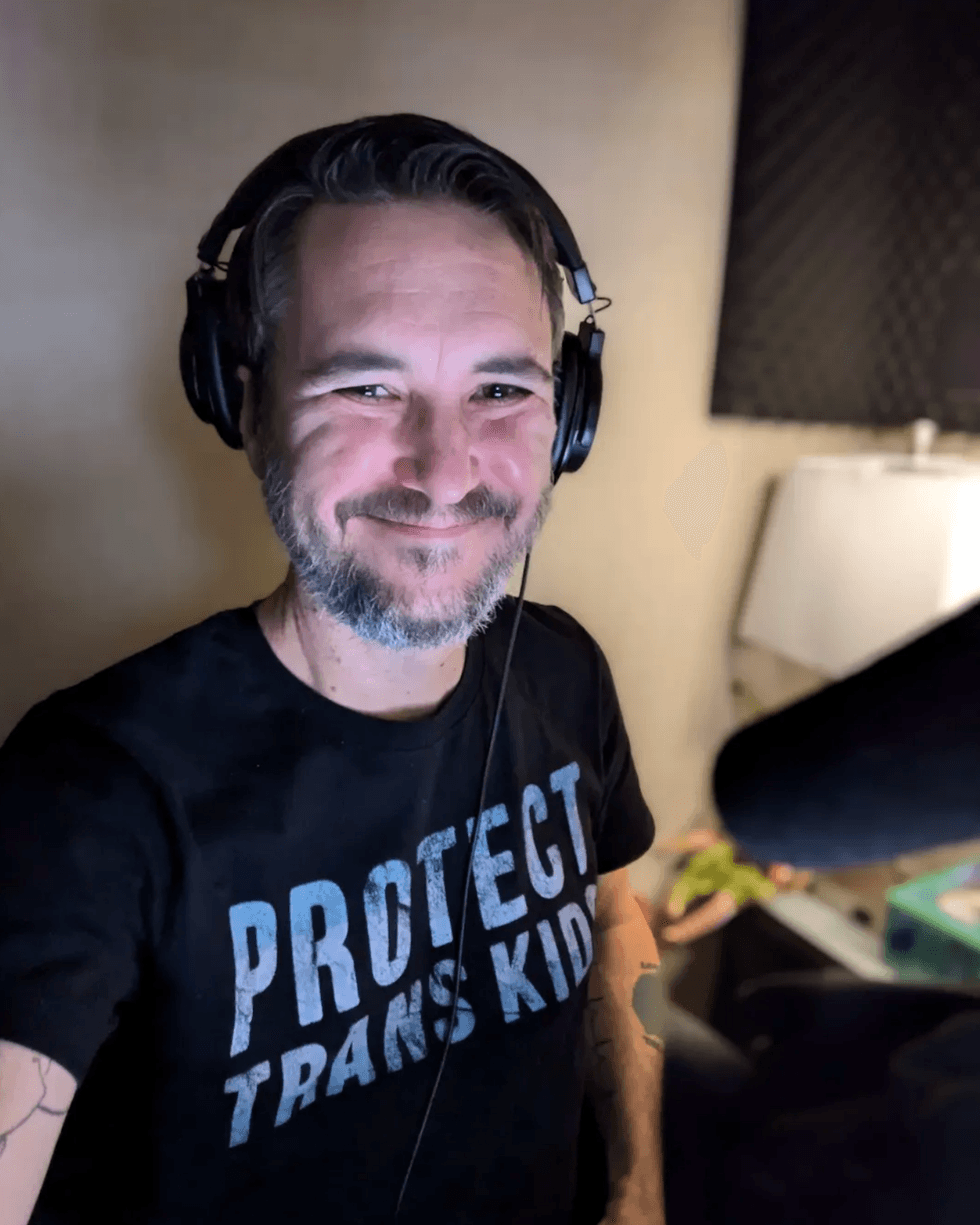 From Wil Wheaton Instagram @itswilwheaton www.advocate.com
“The only way I could be a more protected class of citizen in America is if I were an openly performative Christian nationalist. I’m white. I’m male. I’m upper middle class. I’m semi-famous. I have all kinds of privilege. And yet, I’ve been othered my entire life," Wheaton says.
"I was othered by my parents. I was othered by people in my neighborhood. I was othered on the set,” he adds, explaining that his Star Trek castmates were the exception.
“And when I see other people experiencing that, I cannot help myself. I have to throw myself between those people and the people who are hurting them,” he says. “I’m standing up for my younger self in ways that no one ever, ever did.”
Wheaton offers this promise to the trans community: “Sometimes people who won’t hear you will hear me, even when we’re saying the same thing. And if I can use that privilege to reach that person and make a change, that’s one less person who fucking hassles you for existing.”
Wheaton also had sharp words for the author and creator of the Harry Potter franchise, J.K. Rowling, whose views on trans people have drawn widespread criticism.
“J.K. Rowling’s a piece of shit,” says Wheaton. “She’s a hateful, disgusting, despicable human being. She gets off on the suffering of others. I don’t know what her fucking problem is. I don’t know why she can’t leave people alone. I hate her, and what I want everyone to understand is, when you watch this program, you are putting money in her pocket that she turns around and spends to hurt people.”
Wheaton adds that he thinks everyone involved in producing the new Harry Potter series “should be deeply ashamed of themselves.”
A return to acting on his own terms
Despite retiring from on-camera acting, Wheaton returned to television this summer as a version of himself from another universe in HBO’s Stuart Fails to Save the Universe, a science fiction comedy spinoff of The Big Bang Theory. The show aired its first season finale Thursday and has its own offshoot that Wheaton co-hosts with Felicia Day: a weekly video podcast about each episode. Last week, he also appeared as a guest on HBO’s DC Comics podcast and on another hosted by his Star Trek: The Next Generation “dads,” Jonathan Frakes and Brent Spiner.
Frakes noted “the pain” Wheaton suffered during the filming of their series. Wheaton says that experience has made returning to a set difficult.
“The part of me that’s so deeply traumatized by the whole childhood acting thing is like, ‘Do not put me there. I don’t want to go anywhere near that,’” he says.
Wheaton insists he’s done with acting.
“I am retired from on-camera acting,” he said. “I haven’t booked an audition in 20 years, maybe even longer. The entertainment industry is not buying what I’m selling, and that’s okay.”
Wheaton first opened up about being “forced” into showbiz in 2021. “My mother made me do it,” he told Yahoo at the time. He started appearing in commercials at age 7 and recalled auditioning and acting while experiencing “incredible emotional abuse from my father, and a lot of manipulation, using me, from my mother.” He said those experiences were especially painful while he filmed his breakout 1986 hit, Stand by Me.
“Gordie’s experience very much reflected my experience,” Wheaton said. “We’re both invisible in our homes. We both have a brother who is the golden child. We’re both the scapegoat in the family.”
Now, he says, he has found his calling as a storyteller.
“The artist that I am, the artist Rob Reiner woke up, the artist that Rob Reiner showed me I really was," Wheaton says, "narrating audiobooks and writing little things, little essays and stuff like that. But every now and then, someone says, ‘Would you come be an actor on this thing?’”
That invitation led to his cameo in Stuart Fails to Save the Universe.
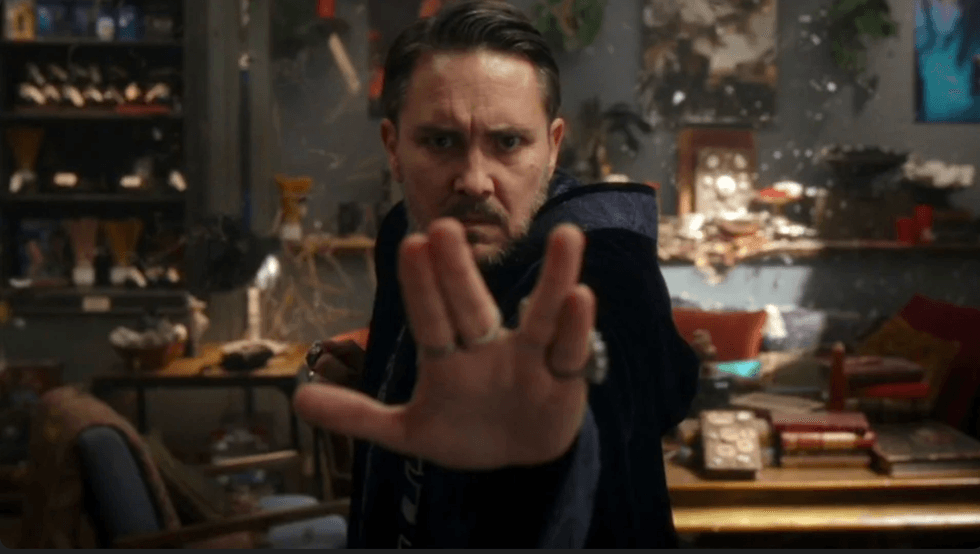 Courtesy HBO Max Wil Wheaton guest starred in an episode of "Stuart Fails to Save the Universe." www.advocate.com
Fans and his 1.3 million Instagram followers also see Wheaton’s daily photos showing off his “bed head,” a rotating collection of message-emblazoned coffee cups, tees adorned with punk band names, selfies with his wife, and pictures of their beloved pets.
He’s traded studio cameras for a microphone in a recording studio, where he records audiobooks. His work includes Andy Weir’s The Martian, Stephen King’s novella The Body — the basis for Stand by Me — and Ernest Cline’s Ready Player One.
For the past year, he’s also recorded a weekly podcast, It’s Storytime With Wil Wheaton, featuring work by new and emerging authors. Wheaton tells The Advocate that he doesn’t earn money from the project, but that doesn’t trouble him.
“I love to tell stories,” he says with a broad smile. “I can use everything I learned as an actor when I didn’t want to be an actor, and I can use it to give my literal voice to other creative people. It feels so good. It’s so fun.”
The games that helped him find his people
As a self-described nerd, Wheaton also has a huge following from his popular TableTop gaming web series.
TableTop was part of Day’s Geek & Sundry network. Day also created and starred in The Guild, a web series about a dysfunctional group of gamers who play an online fantasy role-playing game. The series ran for six seasons.
Unfortunately, as Wheaton has written, another company owns the rights to TableTop and has declined to sell them back.
Wheaton and Day plan to celebrate The Guild’s 20th anniversary with a new project, The Guild: Ren Faire’d. Its Kickstarter campaign raised $6.9 million.
Their other project is a new gaming series called Conludo, a Latin word Wheaton loosely translates as “let’s play together.”
“It’s going to be about the conversation,” Wheaton says. “The game will be a part of it, for sure, but it’s not going to be as intense. It’s not going to be focused on how the different rules work and how the different moves play out.”
“Thank goodness for gaming,” says Wheaton, who has played board games as long as he can remember.
“When I was a little boy, my great-aunt Val was the only loving, positive, nurturing adult in my life,” he recalls. “And she played games with me. She taught me how to play cards. She taught me how to play bingo. She taught me how to use your imagination.”
At 12, Aunt Val introduced Wheaton to Dungeons & Dragons, and he found friends who also played.
“I was definitely an at-risk kid,” he says. “When I was a teenager, I was very lonely, and my parents were as bad as they ever were. My father was as abusive and neglectful as he would ever be. ... The thing that saved my life was tabletop games.”
He also found his people among fellow gamers and his Star Trek castmates.
What Star Trek means to Wheaton now
On September 8, the Star Trek franchise marked its 60th anniversary, but Wheaton says he was not invited to participate in the official celebration.
“It was a complicated day for me,” he says. “No one from Star Trek official reached out to me for any participation, and that hurt my feelings, especially considering the role I had in the franchise. ... I just think it reflects the lack of care that Paramount is giving Star Trek right now.”
Paramount is led by CEO David Ellison, a friend of President Donald Trump. Wheaton worries that the company could change the franchise for ideological reasons.
“Star Trek is so progressive, and it has always been progressive,” he says.
Wheaton adds that the franchise was slow to recognize same-sex couples, pointing to Star Trek: Discovery as a turning point. Seeing yourself represented in its imagined future, he says, can bring comfort — just as he found comfort in characters who reminded him of himself.
“They feel comfort the same way I feel seen, and I feel comfort when I see a super smart kid that nobody listens to," Wheaton says. "Like, ‘Oh man, that’s me! I can be in the future, too!’ That’s what Star Trek does.”