'%3E%3Cpath d='M16.3574 35.6519H12.9537L15.0491 18.8873L16.3574 35.6519ZM30.4229 54.0093L22.309 0.994385H7.91795L0 54.0093H10.6634L11.5802 46.3855H17.4014L17.9914 54.0093H30.4229Z' fill='%23971B20'/%3E%3Cpath d='M48.2073 41.8813C48.2073 43.4049 47.4892 44.0011 46.1144 44.0011H43.7595V11.0687H46.1144C47.4892 11.0687 48.2073 11.6636 48.2073 13.1885V41.8813ZM59.5273 43.6695V11.3326C59.5273 3.71323 53.5729 0.994385 47.8157 0.994385H31.7213V54.0093H47.8157C53.5729 54.0093 59.5273 51.29 59.5273 43.6695Z' fill='%23971B20'/%3E%3Cpath d='M90.183 0.994385H78.6039L75.0711 30.6157L71.9955 0.994385H59.4346L69.2474 54.0093H80.373L90.183 0.994385Z' fill='%23971B20'/%3E%3Cpath d='M107.063 42.3448C107.063 43.7359 105.951 44.5974 104.643 44.5974C103.269 44.5974 102.157 43.7359 102.157 42.3448V12.658C102.157 11.2676 103.269 10.4058 104.643 10.4058C105.951 10.4058 107.063 11.2676 107.063 12.658V42.3448ZM119.233 43.2723V11.7312C119.233 6.36384 112.952 -3.8147e-06 104.643 -3.8147e-06C96.2667 -3.8147e-06 89.9867 6.36384 89.9867 11.7312V43.2723C89.9867 48.6393 96.2667 55 104.643 55C112.952 55 119.233 48.6393 119.233 43.2723Z' fill='%23971B20'/%3E%3Cpath d='M150.976 43.9349V33.7309H139.069V42.3448C139.069 43.7359 137.957 44.5974 136.582 44.5974C135.076 44.5974 133.964 43.7359 133.964 42.3448V12.658C133.964 11.2676 135.076 10.4058 136.582 10.4058C137.957 10.4058 139.069 11.2676 139.069 12.658V21.2723H150.976V11.0687C150.976 5.70107 145.283 -3.8147e-06 136.582 -3.8147e-06C127.75 -3.8147e-06 121.796 5.70107 121.796 11.0687V43.9349C121.796 49.3022 127.75 55 136.582 55C145.283 55 150.976 49.3022 150.976 43.9349Z' fill='%23971B20'/%3E%3Cpath d='M167.478 35.6519H164.076L166.17 18.8873L167.478 35.6519ZM181.544 54.0093L173.432 0.994385H159.037L151.123 54.0093H161.785L162.704 46.3855H168.523L169.114 54.0093H181.544Z' fill='%23971B20'/%3E%3Cpath d='M205.412 10.4058V0.994385H177.081V10.4058H185.392V54.0093H197.428V10.4058H205.412Z' fill='%23971B20'/%3E%3Cpath d='M230.002 54.0093V43.9349H218.914V31.8746H226.635V21.8028H218.914V10.4058H230.002V0.994385H206.875V54.0093H230.002Z' fill='%23971B20'/%3E%3C/g%3E%3Cdefs%3E%3CclipPath id='clip0_260_7080'%3E%3Crect width='230' height='55' fill='white'/%3E%3C/clipPath%3E%3C/defs%3E%3C/svg%3E)


Years after the end of “don’t ask, don’t tell,” LGBTQ+ service members and veterans still face threats to their benefits, healthcare, and right to serve. For transgender Americans in particular, serving their country has offered no guarantee that their country will stand by them.
The fight for equality extends beyond the right to wear the uniform. It includes finding safe housing after leaving the military, accessing healthcare, securing earned benefits, and building community with people who understand both military life and LGBTQ+ identity.
These eight organizations meet those needs through legal advocacy, emergency assistance, peer support, and other services, working to ensure that LGBTQ+ service members and veterans receive the support and recognition they deserve.
SPARTA Pride

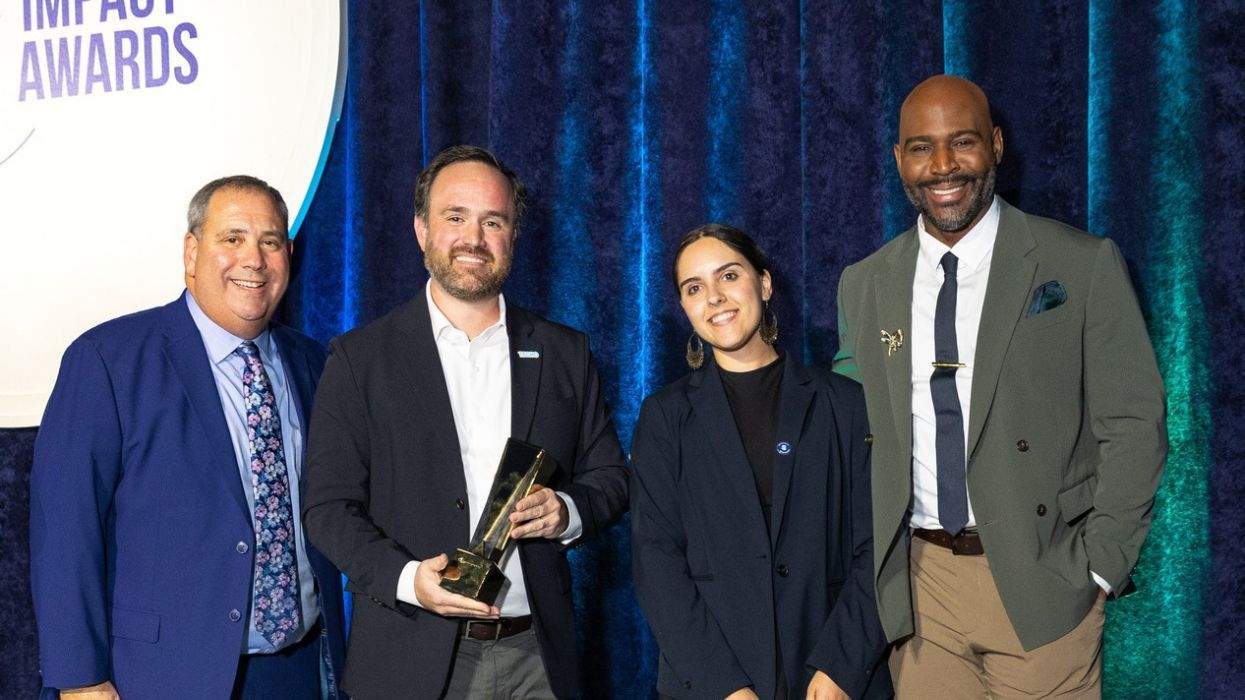
SPARTA Pride members at the Albert Cashier Awards in Washington, D.C., on March 28, 2026.
Christopher Wiggins for The Advocate
This nonprofit supports transgender service members and veterans through peer support, advocacy, and grants, including emergency financial assistance. The group also works with lawmakers and educates the public about transgender Americans’ military service. Under President Donald Trump’s administration, that work has included tracking involuntary separations under the latest trans military ban.
American Veterans for Equal Rights (AVER)

AVER/Facebook
Founded in 1990, when openly gay service members were barred from serving, American Veterans for Equal Rights provides a community where LGBTQ+ veterans can take pride in both their service and their identities. The national organization’s chapters connect veterans across the country. After fighting for two decades to end discriminatory service restrictions, including “don’t ask, don’t tell,” the group continues advocating for transgender service members, whose exclusion did not end with that policy’s repeal.
Modern Military Association of America

MMAA
Formed in 2019, the Modern Military Association of America builds on decades of advocacy by its predecessor organizations, including the Servicemembers Legal Defense Network, OutServe, and the American Military Partner Association. Its work supports LGBTQ+ service members, veterans, and their families through policy advocacy, community programs, and resources. Its priorities include transgender military service, the rights of people living with HIV, and support for LGBTQ+ military families.
Disabled American Veterans (DAV)

An amputee veteran waves the American flag while running down Constitution Avenue NW during the National Memorial Day Parade on May 25, 2026, in Washington, DC.
Tom Brenner/Getty Images
This national organization helps veterans with disabilities obtain the benefits and health care they have earned, including LGBTQ+ veterans navigating barriers to care. DAV notes that more than 1 million veterans identify as LGBTQ+ and may face discrimination or uncertainty about available services. Its benefits advocates help veterans understand their eligibility and pursue claims.
That assistance comes amid restrictions on gender-affirming care through the Department of Veterans Affairs. Since March 2025, the VA has limited hormone therapy for gender dysphoria to veterans who were already receiving it through the department or who received it through the military as part of service and upon separation and otherwise qualify for VA care. The policy excludes other medical and surgical treatments for gender dysphoria.
Minority Veterans of America

Minority Veterans of America
Minority Veterans of America, also known as Minority Vets, operates Q’mmunity House, a transitional housing program for LGBTQ+ veterans in King County, Washington. Its programs also include case management, leadership development, and assistance connecting with community resources. The organization serves underrepresented veterans locally and nationally, advocating for equity and addressing barriers that can prevent them from receiving care and support. Its Equity, Inclusion, and Justice Summit highlights the overlapping challenges these communities face.
Blue Alliance

Blue Aliance
Founded in 2007, Blue Alliance provides a forum for LGBTQ+ alumni and cadets at the U.S. Air Force Academy, along with their allies. The organization describes itself as nonpolitical and works with academy staff and Spectrum, the cadet LGBTQ+ club. Its events include dinners, speaker panels, and networking opportunities. Past speakers have included Jared Polis, the openly gay Colorado governor; former Air Force Secretary Deborah Lee James; and retired Gen. Mark Welsh, a former Air Force chief of staff.
Transgender American Veterans Association (TAVA)

From left: Retired Army lieutenant colonel Ann Murdoch; Transgender American Veterans Association Vice President Gene Silvestri; Yvonne Cook-Riley; retired Army major and Transgender American Veterans Association President Evan Young; petty officer first class Alice Ashton; and retired Air Force major Nella Ludlow pose for a photo in Arlington National Cemetery after attending a wreath-laying ceremony at the Tomb of the Unknown Soldier on June 8, 2018.
MANDEL NGAN/AFP via Getty Images
The Transgender American Veterans Association advocates for transgender veterans’ access to benefits, health care and dignified treatment. In 2024, the organization sued the Department of Veterans Affairs, seeking action on its long-pending petition to make gender-affirming surgery available through the VA. Its public outreach also highlights transgender veterans’ service and experiences, including through Transgender Day of Visibility observances.
National Institute of Military Justice (NIMJ)

NIMJ
Founded in 1991, the National Institute of Military Justice promotes fairness in the armed forces’ legal system and improves public understanding of military justice. Its work includes filing friend-of-the-court briefs in Supreme Court cases.
The affiliated Trans Representation Project connects transgender, nonbinary, intersex, and other gender-diverse service members with attorneys experienced in military law and LGBTQ+ rights. The referral service assists people facing discharge proceedings, administrative actions, denial of medical care, and other adverse treatment related to their gender identity.