'%3E%3Cpath d='M16.3574 35.6519H12.9537L15.0491 18.8873L16.3574 35.6519ZM30.4229 54.0093L22.309 0.994385H7.91795L0 54.0093H10.6634L11.5802 46.3855H17.4014L17.9914 54.0093H30.4229Z' fill='%23971B20'/%3E%3Cpath d='M48.2073 41.8813C48.2073 43.4049 47.4892 44.0011 46.1144 44.0011H43.7595V11.0687H46.1144C47.4892 11.0687 48.2073 11.6636 48.2073 13.1885V41.8813ZM59.5273 43.6695V11.3326C59.5273 3.71323 53.5729 0.994385 47.8157 0.994385H31.7213V54.0093H47.8157C53.5729 54.0093 59.5273 51.29 59.5273 43.6695Z' fill='%23971B20'/%3E%3Cpath d='M90.183 0.994385H78.6039L75.0711 30.6157L71.9955 0.994385H59.4346L69.2474 54.0093H80.373L90.183 0.994385Z' fill='%23971B20'/%3E%3Cpath d='M107.063 42.3448C107.063 43.7359 105.951 44.5974 104.643 44.5974C103.269 44.5974 102.157 43.7359 102.157 42.3448V12.658C102.157 11.2676 103.269 10.4058 104.643 10.4058C105.951 10.4058 107.063 11.2676 107.063 12.658V42.3448ZM119.233 43.2723V11.7312C119.233 6.36384 112.952 -3.8147e-06 104.643 -3.8147e-06C96.2667 -3.8147e-06 89.9867 6.36384 89.9867 11.7312V43.2723C89.9867 48.6393 96.2667 55 104.643 55C112.952 55 119.233 48.6393 119.233 43.2723Z' fill='%23971B20'/%3E%3Cpath d='M150.976 43.9349V33.7309H139.069V42.3448C139.069 43.7359 137.957 44.5974 136.582 44.5974C135.076 44.5974 133.964 43.7359 133.964 42.3448V12.658C133.964 11.2676 135.076 10.4058 136.582 10.4058C137.957 10.4058 139.069 11.2676 139.069 12.658V21.2723H150.976V11.0687C150.976 5.70107 145.283 -3.8147e-06 136.582 -3.8147e-06C127.75 -3.8147e-06 121.796 5.70107 121.796 11.0687V43.9349C121.796 49.3022 127.75 55 136.582 55C145.283 55 150.976 49.3022 150.976 43.9349Z' fill='%23971B20'/%3E%3Cpath d='M167.478 35.6519H164.076L166.17 18.8873L167.478 35.6519ZM181.544 54.0093L173.432 0.994385H159.037L151.123 54.0093H161.785L162.704 46.3855H168.523L169.114 54.0093H181.544Z' fill='%23971B20'/%3E%3Cpath d='M205.412 10.4058V0.994385H177.081V10.4058H185.392V54.0093H197.428V10.4058H205.412Z' fill='%23971B20'/%3E%3Cpath d='M230.002 54.0093V43.9349H218.914V31.8746H226.635V21.8028H218.914V10.4058H230.002V0.994385H206.875V54.0093H230.002Z' fill='%23971B20'/%3E%3C/g%3E%3Cdefs%3E%3CclipPath id='clip0_260_7080'%3E%3Crect width='230' height='55' fill='white'/%3E%3C/clipPath%3E%3C/defs%3E%3C/svg%3E)
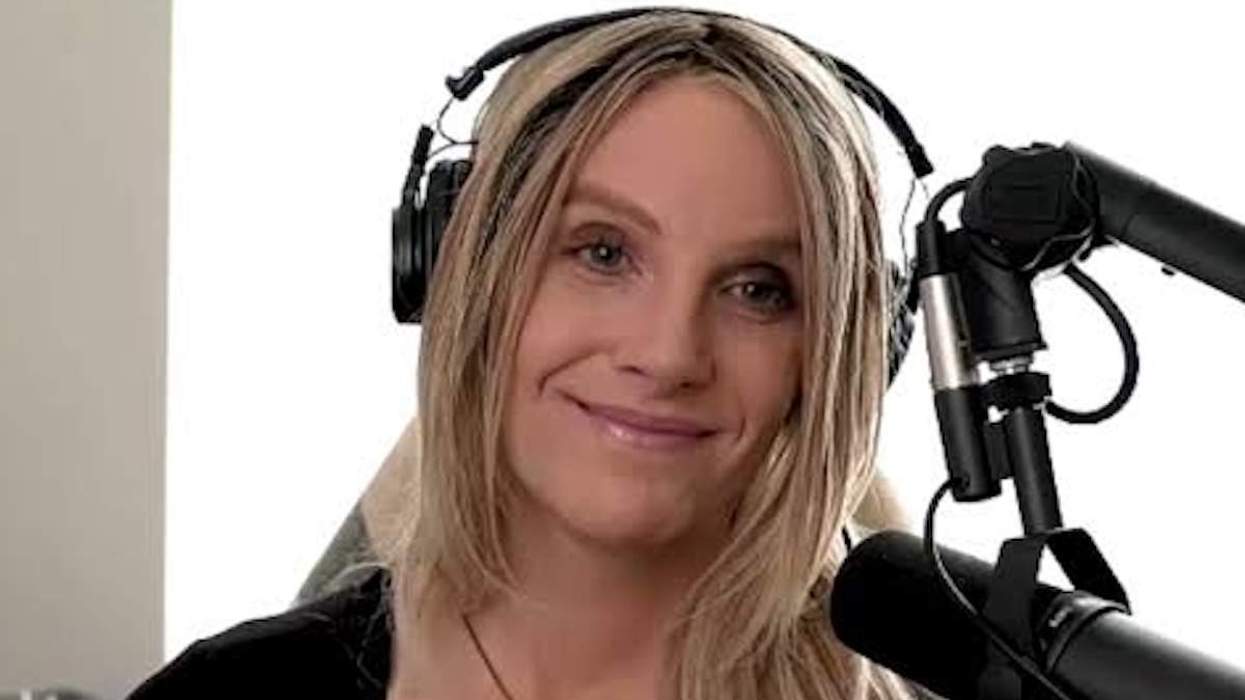

Virginia Army National Guard pilot Jo Ellis isn't hiding who she is, even if speaking openly makes the transgender woman a target once again. Her beliefs include that gender dysphoria is a mental illness, that transgender women should face some restrictions in women’s sports, and that gender-affirming health care for minors warrants greater caution.
Those positions have drawn sharp criticism from Instagram followers and an outspoken transgender veteran, who said, “She’s fueling the fire that will ultimately consume her along with the rest of the trans community.”
Ellis, who started her gender transition in 2023, first made headlines in January 2025 when a right-wing influencer falsely claimed on social media that she deliberately crashed a military helicopter into a passenger jet because of “depression” and “Gender Dysphoria.” The deadly collision between American Eagle Flight 5342 and a U.S. Army Black Hawk helicopter over the Potomac River near Washington, D.C.’s Reagan National Airport killed all 67 people aboard both aircraft.
As The Advocate reported, Ellis was not involved. She posted a statement to that effect online and subsequently filed a defamation lawsuit in federal court in Colorado in April 2025. That case is proceeding after a magistrate judge recommended denying Matt Wallace’s motion to dismiss.
Being pulled into the right-wing media machine that turns trans people into scapegoats for violence and tragedy brought Ellis nearly 20,000 new followers across her platforms. Many have since been surprised to discover that some of Ellis’s views diverge sharply from those held by many other transgender Americans.
Related: Meet the trans Black Hawk pilot suing after being falsely accused of role in deadly D.C. crash
Taking a stand against “pro-trans” positions
“I struggle with being idolized as some sort of figure that I never asked to be,” Ellis told The Advocate in an exclusive interview Monday, her first since taking her public stand against what she called “pro-trans” issues.
“And then when I try to be who I am, they don’t like that, and they’re upset with me, and they’re telling me I need to say this or I need to say that or I need to read this thing, because I need to be this person,” she said. “I don’t want to be anyone but myself. And so if that’s something that they don’t like, I’m sorry, and I wish them well. I don’t wish harm on anybody.”
Ellis told The Advocate the backlash has been “shocking” and “disturbing.”
“I got called a child abuser by a trans person,” she said. “I’ve been told I’m hurting trans people or I want trans people to be rounded up. I want them to die. I will kill trans people for saying what I’m saying. It’s quite disturbing because you hear the same kind of rhetoric about trans people on the right, you know, horrible things. And then to see people on the left... trans people treating one of their own the same way. And that’s kind of shocking.”
Her views should not come entirely as a surprise. Ellis wrote last year about growing up “in a religious and conservative house” in Virginia and being part of a military family. She now lives in Austin, Texas, performs stand-up comedy, and is converting from Christianity to Conservative Judaism. She said her politics have also changed and that she now considers herself a moderate.
“I like to say that I’m a Texas Democrat,” said Ellis, “because I think that is closer to the moderate Republicans that I used to know in Virginia.”
She is in her 17th year of service with the Army National Guard, but told The Advocate her current status is “administrative absence pending separation.”
“They moved me into an inactive slot,” she said, “because my unit is deploying to the border right now, ironically at Fort Hood, which is about an hour from me.”
Ellis said that, as she gets “closer and closer to 18 years of service,” she might be able to retire. But she hopes it will not come to that as a class-action lawsuit challenging the ban proceeds.
“If I could stay in, I would stay in at least another 15 years,” she said, even as the Pentagon continues removing transgender service members under the Trump administration’s ban on trans military service.
Related: How the right-wing media machine turns violence & tragedy into using trans people as scapegoats
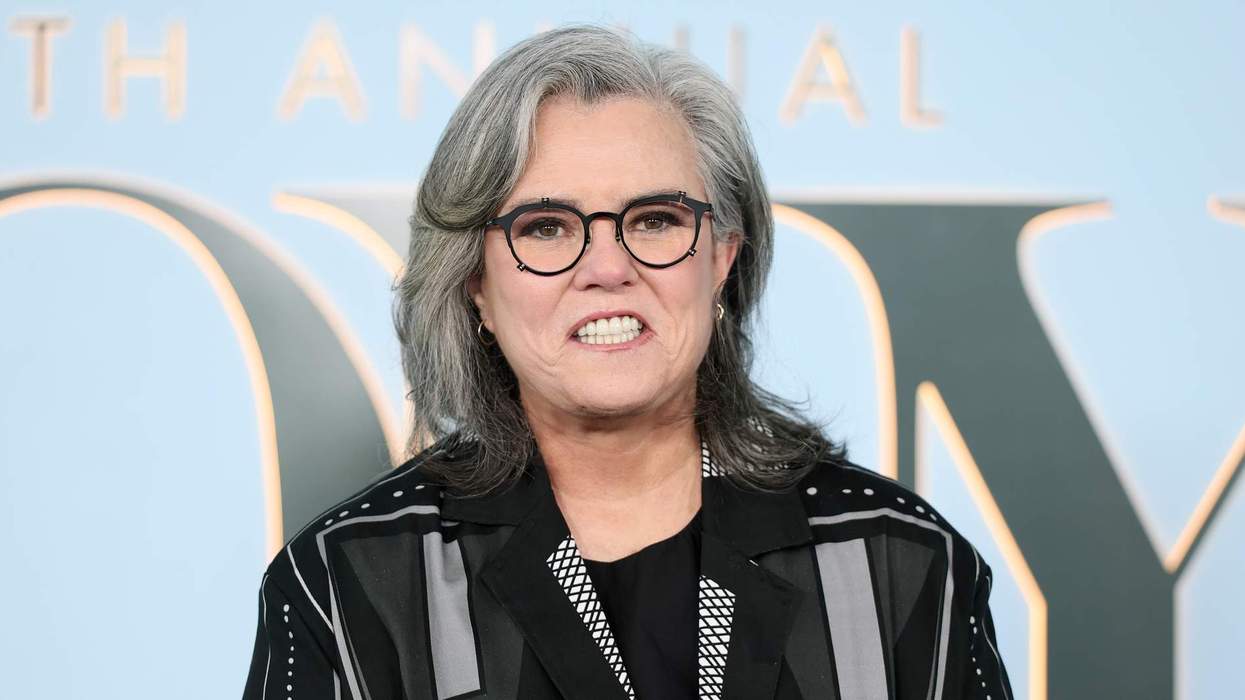
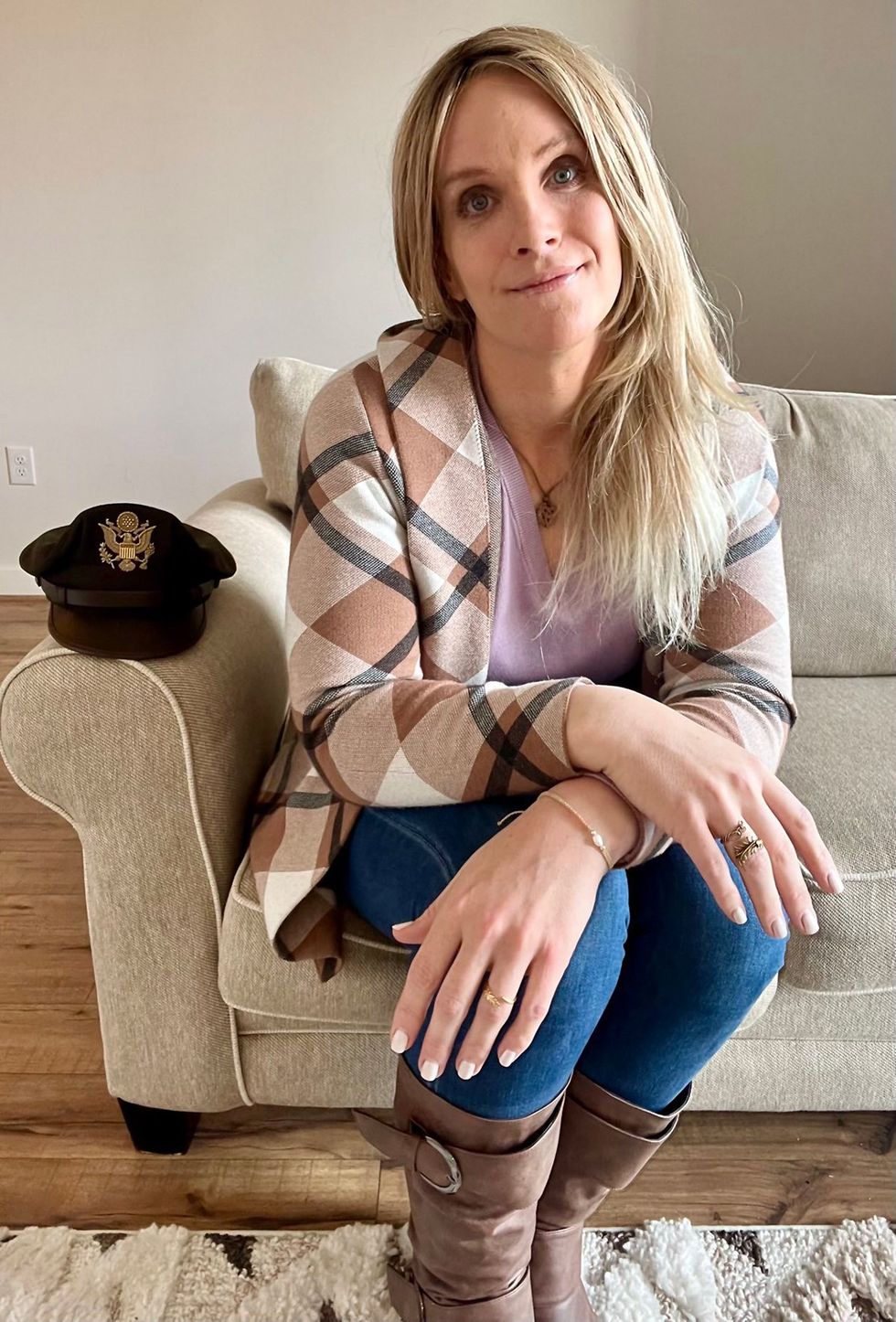 Jo Ellis, the out transgender pilot who was falsely accused of being involved in a fatal collision of a military helicopter with a passenger jet, is taking a controversial stand against what she calls "pro-trans" issues. Courtesy Jo Ellis
Why now?
This week, in a new podcast episode and videos on Instagram titled “My Controversial Trans Statements” and “Did You Assume My Beliefs Because I’m Trans?” Ellis outlined her positions and explained why her beliefs are not aligned with those of many other LGBTQ+ people. In her phone interview with The Advocate, she also explained why she is publicly separating herself from prevailing LGBTQ+ positions on four issues: transgender inclusion in sports, mental illness, womanhood, and gender-affirming care for minors.
Ten days ago, Ellis appeared on the “Fishing with David Lucas” podcast and discussed calling out comedian Chelsea Handler for not supporting trans comedians, her admiration for Joe Rogan, and her efforts to “change hearts and minds” through comedy. She started the appearance by handing host David Lucas a “T-Slur pass,” a card that she said would allow him to use the anti-trans slur “tr**y.” In return, she asked for an “N-word pass,” which Lucas — who is Black — declined to provide.
Clips of Ellis’s comments declaring that trans women have an advantage in women’s sports over cisgender women and that being trans is a mental illness went viral on Instagram and prompted a backlash. Ellis then elaborated on her views through her own podcast and social media platforms.
“A lot of people who had started following me, between the time I was talking about trans issues and now, didn’t realize that that’s how I felt about things,” she told The Advocate. “I put it out there so everyone knows where I’m at,” she said. “And there’s no more surprising people or confusing people that might be fans of mine or my comedy that are trans.”
“I’m trans. That doesn’t mean I automatically agree with every position associated with the trans community,” said Ellis. “Being trans shouldn’t come with a political ideology.” That is the caption on one of the two new Instagram posts by Ellis, which also appeared as a reel on Facebook.
Women’s sports
“Trans women generally have an advantage in women’s sports,” Ellis said. “If someone went through male puberty before transitioning, I think there are legitimate fairness concerns in competitive sports involving strength, speed, lifting, throwing or fighting. That doesn’t mean every trans woman beats every non-trans woman, or that every sport should have the same rules.”
But as The Advocate reported in 2024, the idea that trans women athletes have an inherent advantage over cisgender women was challenged by a study funded by the International Olympic Committee and conducted at the University of Brighton in England. It was published in the British Journal of Sports Medicine. “These results should caution against precautionary bans and sport eligibility exclusions that are not based on sport-specific (or sport-relevant) research,” the study concluded.
Asked whether she considered trans women athletes “biological men,” Ellis said sex cannot be changed entirely through transition.
“I think if you’re born male, you’re male. I don’t think you can change that. I think there’s only two sexes, male and female. You’re born as either one. You can transition and take on secondary sex characteristics,” she said. “But I don’t think you’re changing the underlying biology entirely.”
Womanhood
“Trans women are not the same thing as women. That doesn’t mean trans women should simply be treated as men,” said Ellis.
“In most of everyday society, I think it makes perfect sense for me to live and be treated as a woman. But there are specific circumstances: sports, some prison situations, certain medical contexts, where biological sex can matter,” she said. “I don’t think acknowledging those differences invalidates my identity.”
Former Advocate contributor Jessie Earl wrote an op-ed with similar themes in 2018. Unlike Ellis, however, Earl’s point was that being trans was “every bit as valid an experience of womanhood as any other.”
Ellis said she disagrees with that premise.
“A trans woman is a trans woman. Now, for legal, basic, public usage, the word ‘woman’ applies. But to say that a trans woman is a woman or trans women are women, I think, is inherently problematic. I think it negates the biological reality,” she said. “They’re not. They’re born as men.”
Ellis went on to call the hashtag #TransWomenAreWomen “disingenuous.”
“Other people can say that if they want,” she said. “But in my mind, I don’t say ‘Trans women are women,’ just like the same way that I would never claim Mother’s Day.”
Ellis is a stepparent to her ex-wife’s 19-year-old daughter, and said that, despite the divorce, she remains close with both women.
“Mental illness”
The World Health Organization announced in 2018 that it would move gender incongruence out of the chapter on mental and behavioral disorders in its international diagnostic manual. As The Advocate reported, the organization said the change reflected evidence that transgender identities are not mental illnesses. Ellis nevertheless takes a different view of gender dysphoria.
“Gender dysphoria is a mental illness,” she said.
“I am NOT saying ‘trans people are mentally ill.’ For me, gender dysphoria caused distress and required treatment. Therapy, hormones, transition and surgery helped me become healthy and functional,” said Ellis, who said during an interview in 2025 that she had not undergone genital surgery at that time. She told The Advocate on Monday that she has undergone facial feminization, breast augmentation, and hair transplant operations.
“Calling something an illness doesn’t mean stigmatizing the person experiencing it,” Ellis said, although the Centers for Disease Control and Prevention recommends using nonstigmatizing language when discussing mental health.
Explaining her choice of words, she pointed to the way people discuss the World Professional Association for Transgender Health's Standards of Care, Version 8. The Trump administration’s Federal Trade Commission sued WPATH in June for allegedly making deceptive or unsubstantiated claims about the safety, effectiveness, medical necessity, and evidence base for puberty blockers, hormone therapy, and surgeries for young people, as The Advocate reported.
Ellis said she stands by her interpretation of “mental illness” because of a change made in 2022 by WPATH, a leading transgender health organization.
“I just think the problem here is that a lot of people like to say, ‘Well, they changed it from disorder.’ It’s no longer a disorder,” explained Ellis. “An illness is a state of being sick or unhealthy in your body or mind, and if you have untreated dysphoria, maybe the dysphoria itself is not an illness, but it can cause illness. And so, in my mind, gender dysphoria is a mental illness.”
Gender-affirming care for minors
“I’m cautious about medical gender-affirming care for minors,” said Ellis, adding that she does not fault parents who are “genuinely trying to make the best decision for their child.”
“Puberty blockers, hormones and surgery can have significant consequences, and I don’t think we have enough high-quality long-term evidence to pretend these decisions are simple. There may be cases where intervention is the better option, but I think it should be heavily gatekept and approached cautiously,” she said.
Her position contrasts with the positions of major medical organizations. As The Advocate reported in January, the American Medical Association, the American Psychiatric Association, the American Academy of Pediatrics, the American Academy of Child & Adolescent Psychiatry, the World Medical Association, and the World Health Organization have supported access to gender-affirming care as evidence-based and medically necessary for some minors as well as adults.
“I think that it’s problematic to interrupt a natural process that is supposed to take place,” explained Ellis. “I understand why people do it. I understand that it might lead to a better outcome in some cases. My biggest beef with gender affirming care for minors is what the WPATH put forward in Standards of Care version 8, and the fact that they took off all age minimums, and the fact that they suppressed internally people in their own organization that were pushing back because there wasn’t a good enough consensus that they could find to justify a broad access to hormones, puberty blockers, and surgeries. That’s my biggest hesitation with it.”
As The Advocate reported in February, two major medical organizations — the American Medical Association and the American Society of Plastic Surgeons — recently endorsed some limits on surgery for minors. The AMA now recommends that gender-affirming surgeries be delayed until adulthood, and the plastic surgeons’ organization has recommended delaying breast or chest, genital, and facial surgery until a patient is at least 19.
Fewer than 1,000 transgender adolescents in the United States receive such surgeries annually. Ellis said her concern is about what she called “the broad access and the double mastectomies that were happening to teenage girls.” She also pointed to reports about detransition cases across the country. Research indicates that detransition remains uncommon, despite the attention such cases receive in right-wing media, but Ellis said she believes the available evidence warrants greater caution.
“There is evidence enough that we should be very cautious with that until we have enough data,” she said, while acknowledging that political attacks on transgender people in the United States and United Kingdom have disrupted research.
“You can disagree with me,” said Ellis. “Other trans people can disagree with me.”
And they have.
Responses to Ellis
“I wish ppl would keep misinformed thoughts to themselves vs. use their platforms to spread beliefs that directly harm the lives of others while pretending to be a free or critical thinker,” wrote one user in a comment on Instagram. When Ellis responded that no one was harmed, a flurry of rebuttals followed.
“You’re wrong. The right uses these views to justify harm to us. Denying gender affirming care raises child suicide by 72%.”
That figure, as The Advocate reported in 2024, referred to an increase in suicide attempts among transgender and nonbinary young people after states enacted anti-transgender laws. It did not mean that suicide deaths increased by 72%.
“Literally all trans people were harmed by you affirming the misinformation that is central to the violence trans people face in the U.S. right now,” wrote Allison Grey.
“Instead of embracing or supporting the women going through their unique experience, you’re gatekeeping and pulling the ladder up behind you so others can’t live their truth,” wrote Phil Donley, a photographer in Seattle. “Bootlicking your oppressors has never worked out in the end. Anyone that believes that (trans or not) eventually gets the reminder when choices have been made.”
Asked to respond to Donley, Ellis said she did not understand his critique.
“First of all, I’m not in a policymaking position. I’m a comedian,” she said. “I have very little reach. I don’t know any politicians personally. So, I don’t know how I’m ‘pulling up a ladder’ behind me.”
“I attempted suicide at 15 because they wouldn’t give me blockers or affirming care,” said Nataliana Goodfellow, who added: “Being transgender doesn’t make me mentally ill. The PTSD I have from being mistreated is the mental illness.”
She told Ellis, “Your words hurt me deeply and emotionally.”
The Advocate asked Ellis whether she wanted to respond to Goodfellow’s comments.
Ellis said she had lost close friends in her unit to suicide.
“I respect her, and that is not my intention to cause hurt or harm,” Ellis told The Advocate. “I would not be preventing her from accessing puberty blockers as I’m not in a position to do anything when it comes to medical treatment.”
“[I]’m just someone from the internet,” she said.
Ellis as Goldilocks
Ellis no longer sees herself as a conservative, she said.
“I would love for some fiscal responsibility and some things that used to be considered conservative. But now I don’t even know what you would call conservative. Now it doesn’t even seem to represent anything I recognize. So, I just say I’m moderate. I’m in the middle,” explained Ellis. “I picked the Conservative movement of Judaism because I consider it in the middle. It’s not Reform, but it’s not Orthodox. I’m the middle child. I was a warrant officer, which is considered in between a normal officer and enlisted. I like being a moderate. Moderation is where I like to live.”
When asked if she thinks of herself as Goldilocks, Ellis laughed.
“It just feels comfortable. I don’t like extremes, and I don’t like all-or-nothing approaches**.** And that’s the other thing with some of the backlash I get. Even if some of what you’re saying is true, they’ll tell me, they say, ‘You can’t say it because then they’ll weaponize it.’ And it’s like, well, if I can’t speak freely now, when can I have free speech?”
Ellis’s approach echoes that of Caitlyn Jenner, who a decade ago described herself to The Advocate as “poor little me, the lone Republican conservative against all the liberal Democrats.” At the time, Jenner starred in a reality show in which she infamously claimed most Republicans supported the rights of transgender Americans. But one of Jenner’s I Am Cait costars, Jennifer Finney Boylan, responded, “That is a lie!” and swatted Jenner’s head with a rolled-up newspaper.
A transgender veteran responds
The 2026 equivalent of that rolled-up newspaper comes from an experienced transgender advocate and U.S. military veteran. They asked not to be identified by name, location, or occupation. The Advocate is identifying them only as Z.
“Ellis fails to understand that you cannot be one of the ‘good ones.’ Republicans will never accept a transgender person living authentically as human or deserving of basic rights. The goal is eradication,” Z told The Advocate.
“I don’t find that to be an accurate statement. I think it is accurate for some people in the Republican Party,” said Ellis. “Yes, there are groups of people that want us eradicated. I don’t think that what I’m saying contributes to that at all.”
She added, “I think there’s a lot of well-meaning conservatives that are good parents and family people and they see that children or women are being harmed” by those supporting sports inclusion and gender-affirming care for transgender children.
Ellis’s stance on those two topics also drew criticism from Z.
“She also suffers from believing she’s a subject matter expert on things without having actually studied them: particularly on trans youth or trans athletes. The evidence for health care for trans youth far exceeds the evidence for denying it to them, and the rising suicide statistics and declining mental health of trans youth in red states shows how disastrous denial is in a macro sense,” Z said.
“As for trans athletes: if they have such a massive advantage, why were they drastically underrepresented when they were allowed to compete under the old IOC and NCAA rules? Or that none has ever played in the WNBA?” Z added.
In response, Ellis addressed the stunt by Enes Kanter Freedom and Royce White to enter the 2027 WNBA draft, as The Advocate reported. The men claimed they identified as women to play professional basketball.
“I think it’s a weird conversation to force on an organization that probably wants nothing to do with the debate right now. It’s just goofy,” she said. “In my podcast, I called them douchebags.”
Ellis gets the last word
“I moved to Austin specifically to push back and be a visible trans person where I think the front lines of the trans debate [are] happening. Austin being home to not only the [Joe] Rogan sphere but also Elon Musk’s companies and then on top of that you’ve got Texas politics being some of the worst for trans people,” she said. “I moved here to fight the fight. And I’m going to fight it the way I think it needs to be fought. And if people don’t like it, well, they can go and fight for what they want to fight for.”
“While I did share some thoughts that were controversial, that’s not my main focus. My main focus is military inclusion of trans people back into the military,” added Ellis. “I literally sold my house, quit my job, moved to Texas in order to tell the biggest audiences I can that are not already hearing and already agree with me that what has happened to trans military is a shame. We’ve been fucked out of our pensions. We were told we could transition and now we’ve been permanently disqualified because we did what they said we could do. And I think that is the story that people aren’t hearing on the right.”
Ellis said her ultimate goal is to discuss transgender military service on Joe Rogan's podcast.
Ellis’s podcast episode is available here.