'%3E%3Cpath d='M16.3574 35.6519H12.9537L15.0491 18.8873L16.3574 35.6519ZM30.4229 54.0093L22.309 0.994385H7.91795L0 54.0093H10.6634L11.5802 46.3855H17.4014L17.9914 54.0093H30.4229Z' fill='%23971B20'/%3E%3Cpath d='M48.2073 41.8813C48.2073 43.4049 47.4892 44.0011 46.1144 44.0011H43.7595V11.0687H46.1144C47.4892 11.0687 48.2073 11.6636 48.2073 13.1885V41.8813ZM59.5273 43.6695V11.3326C59.5273 3.71323 53.5729 0.994385 47.8157 0.994385H31.7213V54.0093H47.8157C53.5729 54.0093 59.5273 51.29 59.5273 43.6695Z' fill='%23971B20'/%3E%3Cpath d='M90.183 0.994385H78.6039L75.0711 30.6157L71.9955 0.994385H59.4346L69.2474 54.0093H80.373L90.183 0.994385Z' fill='%23971B20'/%3E%3Cpath d='M107.063 42.3448C107.063 43.7359 105.951 44.5974 104.643 44.5974C103.269 44.5974 102.157 43.7359 102.157 42.3448V12.658C102.157 11.2676 103.269 10.4058 104.643 10.4058C105.951 10.4058 107.063 11.2676 107.063 12.658V42.3448ZM119.233 43.2723V11.7312C119.233 6.36384 112.952 -3.8147e-06 104.643 -3.8147e-06C96.2667 -3.8147e-06 89.9867 6.36384 89.9867 11.7312V43.2723C89.9867 48.6393 96.2667 55 104.643 55C112.952 55 119.233 48.6393 119.233 43.2723Z' fill='%23971B20'/%3E%3Cpath d='M150.976 43.9349V33.7309H139.069V42.3448C139.069 43.7359 137.957 44.5974 136.582 44.5974C135.076 44.5974 133.964 43.7359 133.964 42.3448V12.658C133.964 11.2676 135.076 10.4058 136.582 10.4058C137.957 10.4058 139.069 11.2676 139.069 12.658V21.2723H150.976V11.0687C150.976 5.70107 145.283 -3.8147e-06 136.582 -3.8147e-06C127.75 -3.8147e-06 121.796 5.70107 121.796 11.0687V43.9349C121.796 49.3022 127.75 55 136.582 55C145.283 55 150.976 49.3022 150.976 43.9349Z' fill='%23971B20'/%3E%3Cpath d='M167.478 35.6519H164.076L166.17 18.8873L167.478 35.6519ZM181.544 54.0093L173.432 0.994385H159.037L151.123 54.0093H161.785L162.704 46.3855H168.523L169.114 54.0093H181.544Z' fill='%23971B20'/%3E%3Cpath d='M205.412 10.4058V0.994385H177.081V10.4058H185.392V54.0093H197.428V10.4058H205.412Z' fill='%23971B20'/%3E%3Cpath d='M230.002 54.0093V43.9349H218.914V31.8746H226.635V21.8028H218.914V10.4058H230.002V0.994385H206.875V54.0093H230.002Z' fill='%23971B20'/%3E%3C/g%3E%3Cdefs%3E%3CclipPath id='clip0_260_7080'%3E%3Crect width='230' height='55' fill='white'/%3E%3C/clipPath%3E%3C/defs%3E%3C/svg%3E)


This Uncloseted Media story was reported in partnership with The 19th, a nonprofit newsroom reporting on gender, politics and policy.
Texas’ Senate race has become one of the most-watched elections of the year. MAGA Republican nominee Ken Paxton pulled off a rare primary defeat against a well-established 24-year incumbent, while challenger James Talarico has been polling well enough to ignite hopes of electing a Democrat to represent Texas in the Senate for the first time since 1993.
This election could have a major impact on issues like education and healthcare prices, which rank as Texas voters’ top priorities. But an outsized amount of coverage of the race has centered instead on transgender people. Paxton’s campaign and its supporters have run several AI-generated ads attacking Talarico’s pro-trans positions. That focus has shaped reporting on the race, both by right-wing media like Fox News and in mainstream outlets like The Washington Post, with many describing Talarico’s stances on trans issues as a liability. Talarico himself has walked back some of his positions in response to controversy, expressing support for some restrictions on trans athletes and rescinding a promise to co-sponsor the pro-LGBTQ+ Equality Act.
This outsized focus didn’t come out of nowhere — on March 3, when Talarico was declared the winner of the Democratic primary, there was a stunning increase in traffic on X related to his takes on trans issues. In the three days leading up to his primary win, Uncloseted Media and The 19th could only find four posts about Talarico’s take on trans issues. But in just over 24 hours after Talarico won the primary, the newsrooms identified nearly 200 posts. Most of this was driven by three viral videos that were initially posted and amplified by GOP-affiliated politicians and strategists before being circulated by right-wing influencers, media personalities, and activists.
“It is a match made in heaven, the business model of social media and people pushing hate,” Sarah Oates, a professor of communications at the University of Maryland, told Uncloseted Media and The 19th. “Because the social media companies know that these are the things that engage people.”
So how did the proliferation of this narrative happen? The following is a play-by-play of how the videos and their accompanying narrative spread in the 26 hours after Talarico’s primary win. The timeline is accompanied by analysis from experts in political communications and strategy.
What are people saying, and where did it come from?
10:08 p.m. ET on March 3, 2026. 756.2k views, 3k reposts, 296.8k followers
Five minutes after election analyst Dave Wasserman calls the primary for Talarico, Republican Rep. Brandon Gill of Texas posts a clip from a 2021 debate in the Texas legislature where Talarico says that “God is nonbinary.” This is one of two clips which suddenly go viral despite having existed for years — the other, which comes from a 2021 hearing where Talarico says that there are “six really common biological sexes,” is posted by Gill the next morning to a similarly large reach. Talarico has since walked back both statements.
As Gill’s post spreads, the replies are increasingly filled with animus. In one reply, Lynn Conrad writes that “this false prophet speaks with a forked tongue and will lead many from the truth.”
Prior to Talarico’s win, these clips had gotten a small amount of media coverage and appeared in an attack ad by Terry Virts, one of Talarico’s primary opponents. However, Republicans seemingly waited to boost them further until after the primary. Matthew Sheffield, political analyst and a former right-wing political consultant, said this strategy is common.
“Sometimes candidates will decline to reveal [opposition research] that they have for other-party candidates until the general election,” Sheffield told Uncloseted Media and The 19th. “When that’s done, it’s usually because they perceive that the other-party candidate would be severely damaged by the disclosure and they actually want that person to win their party’s nomination.”
10:16 p.m. ET on March 3, 2026. 1.1m views, 481 reposts, 527.3k followers
Eight minutes after Gill’s first post, the same clip is posted by Greg Price, a political consultant who held a leading role in President Donald Trump’s 2024 campaign and worked at the White House in 2025. Within the next hour, accounts with direct connections to the Republican Party and the Trump administration post the clip and spread anti-trans talking points. This includes the National Republican Senate Committee; their regional press secretary and senior adviser; and Steve Guest, Texas Sen. Ted Cruz’s former communications adviser, who posted the clip and wrote: “James Talarico is a radical trans activist who weaponizes Christianity to push a far-left agenda to mutilate children.” Overall, 12.1 percent of the posts we analyzed came from such accounts.
At least 23 other accounts go on to post Gill and Price’s versions of the clips, helping their message go viral. The posts above are also reposted by accounts with millions of followers, including conservative writers Dinesh D’Souza and Ann Coulter, fundamentalist Christian radio host Jenna Ellis and an account called End Wokeness.
11:23 p.m. ET on March 3, 2026. 88.5k views, 1k reposts, 311.6k followers
About an hour later, Andrew Kolvet, a spokesperson for Turning Point USA and the co-host of The Charlie Kirk Show, posts the “God is nonbinary” clip while calling Talarico a “beta male white boy” and a “compliant little lap dog.” Right-wing media figures are quick to jump on these talking points, with 18.7 percent of all the posts we analyzed coming from them.
Sheffield said that right-wing outlets scour the internet for stories that could “forward their narratives.”
“They do this not just with trans issues, they do this all the time with anyone who puts an argument forward that is helpful to them, and I personally experienced this myself,” said Sheffield, who entered into politics after his small anonymous right-wing website was covered by far-right heavyweights Rush Limbaugh and Bill O’Reilly mere days after its launch.
8:02 a.m. ET on March 4, 2026. 541.2k views, 1.6k reposts, 5,835 followers
As the nonbinary video spreads like wildfire overnight, a new clip drops around 8 a.m. the morning after. This clip, which shows a sermon in which Talarico says that “our trans community needs abortion care too,” is the only one we analyzed which hadn’t surfaced prior to the Democratic primary. It’s first posted by ATX data, an anonymous account that bills itself as providing “conservative news and public policy covering local Austin and Texas issues.” While the account has less than 6,000 followers, the clip is picked up quickly: Fox News anchor Will Cain posts it within an hour and Kolvet and Price do so within two, allowing it to rack up over one million views.
Sheffield said that while Democratic leaders tend to prefer to establish rhetoric and positions in-house, Republican leaders more frequently look to grassroots supporters for talking points.
“That’s what this was an example of — they found something that seemed effective to conservatives, so they started picking it up and using it,” Sheffield said.
10:52 a.m. ET on March 4, 2026. 316.4k views, 3k reposts, 4.7M followers
As lunchtime approaches, influencers and political commentators, who make up 18.1 percent of the posts analyzed, begin boosting the clips. Accounts with millions of followers, including Libs of Tiktok, End Wokeness and podcast host Matt Walsh, help them go viral. The three aforementioned accounts rack up a combined 1.26 million views on their posts about Talarico.
Ashley St. Clair, the mother of a child with Elon Musk and a former MAGA influencer who has since left the right-wing online ecosystem and has spoken out about its “very coordinated” nature, said influencers are incentivized to repost right-wing talking points with momentum on social media because they can make bank from ad revenue, brand deals and practices like paid retweets.
“I worked with [Libs of TikTok], and that’s a business where she makes money hand over fist from this type of content,” St. Clair told Uncloseted Media and The 19th. “It’s become an obsession where she spends all day scouring the dark corners of the internet to make a minority seem like the rule.”
Libs of TikTok did not respond to a request for comment.
11 a.m. ET on March 4, 2026.
Between 10 p.m. on March 3 and 11 a.m. on March 4, Uncloseted Media and The 19th identified 48 posts about Talarico that use similar anti-trans talking points, including 26 separate posts of the three clips that would amass millions of combined views. In contrast, we identified zero pro-trans posts about Talarico in the same time period. Oates finds this sharp turn in the discussion suspicious.
“When you see a shift in a discourse on a particular platform that’s quite abrupt and moves from one side to another and then stifles all dissent, that’s generally gonna be inauthentic,” she said. “That’s generally gonna be led by people who are pushing propaganda or political messaging. … It’s not reflective of general public opinion on the issue.”
This perspective reflects statements by St. Clair. She told The Washington Post that she joined large group chats where influencers would receive “marching orders” from the Trump administration and congressional Republicans. She also shared direct messages with The Post that showed White House staffers asking her to boost talking points and Republican strategists offering her money to amplify posts. Based on Uncloseted Media and The 19th’s findings, she said it’s likely that the anti-trans attacks against Talarico were coordinated in this way.
“I’d be willing to bet there was money put behind it in a paid campaign, because this is how MAGA operates,” St. Clair said. “Most people don’t understand that a lot of these MAGA influencers have access to a dashboard through certain companies where they can just log on and see any campaign that they can sign on to … and all they have to do is push out messaging, which means they don’t have to disclose that they’re paid.”
Sheffield said that many right-wing actors have such closely aligned interests that they don’t need to work together to act in concert.
“Probably most of it is not intentional when you see something go big,” Sheffield said. “They all have a movement mentality on the right, so when they see something that looks effective, then they’re gonna repeat it.”
12:13 p.m. ET on March 4, 2026
Shortly after noon, these posts begin moving outside of X and social media. The Charlie Kirk Show, broadcast on the streaming and cable channel Real America’s Voice, airs the nonbinary and six sexes clips. Later in the day, anti-trans talking points about Talarico make it onto Newsmax’s “The Big Take,” “Ed Henry: The Briefing,” and “The Pulse” as well as Fox News’ “The Will Cain Show.” By 8:30 p.m., “Jesse Watters Primetime,” which is the second most-watched cable news show in America, discusses Talarico’s stances on trans issues to an audience of roughly 4 million.
12:35 p.m. ET on March 4, 2026
Shortly after the clips air on The Charlie Kirk Show, the conservative print media starts picking them up. At 12:35 p.m., the Washington Examiner publishes an article titled “FLASHBACK: James Talarico said there are six sexes while opposing ban on men in women’s sports.” Later in the afternoon, the Daily Caller, the Daily Signal, The Gateway Pundit and Voz all post articles about the clips, with three of them citing X posts from earlier in the day.
Howard Polskin, president and founder of TheRighting, a website that tracks and analyzes right-wing media, said that right-wing social media and traditional media narratives tend to support each other.
“It’s a virtuous cycle,” Polskin told Uncloseted Media and The 19th. “If something gets written about in an extremist right-wing website, it might be posted on social media, then more social media outlets will pick that up and it might go viral.”
- YouTube www.youtube.com
2:43 p.m. ET on March 4, 2026
Matt Whitlock, a former senior adviser to the National Republican Senate Committee and the current senior vice president at CRC advisers, a PR firm known for serving conservative organizations, plays a key role in getting these anti-trans talking points on TV. He is the first one to introduce them on Fox News and Newsmax.
“The problem for [Talarico] is he’s created so much incredible ad content already that if you look at [X] today, it is flooded with clips of [him] saying absolutely insane things,” Whitlock told the host of The Big Take on Newsmax.
Whitlock uses the fact that social media is “flooded” with clips of Talarico advocating for trans rights to legitimize his claims that Talarico is an unviable candidate, despite the fact that right-wing operatives like himself are the main ones responsible for the spread of those clips. Oates said this reflects a common strategy in propaganda campaigns.
“Social media has the opportunity to spread more outrage more widely and more freely, but it’s not as influential as mainstream media,” Oates said. “What’s worrying is when what’s going on on social media starts to shape discourse in the more influential mainstream media. … ‘The people are saying’ is a classic propaganda gambit.”
Whitlock did not respond to a request for comment.
What to make of this
All told, we tracked 182 anti-trans posts attacking Talarico on X in the 26 hours after he won the primary. Sixty-three included or referenced the nonbinary clip, 50 referenced the sermon clip and 35 referenced the sexes clip. Between these posts and the citations in the right-wing media, the talking points targeting Talarico’s pro-trans positions likely reached over 10 million people.
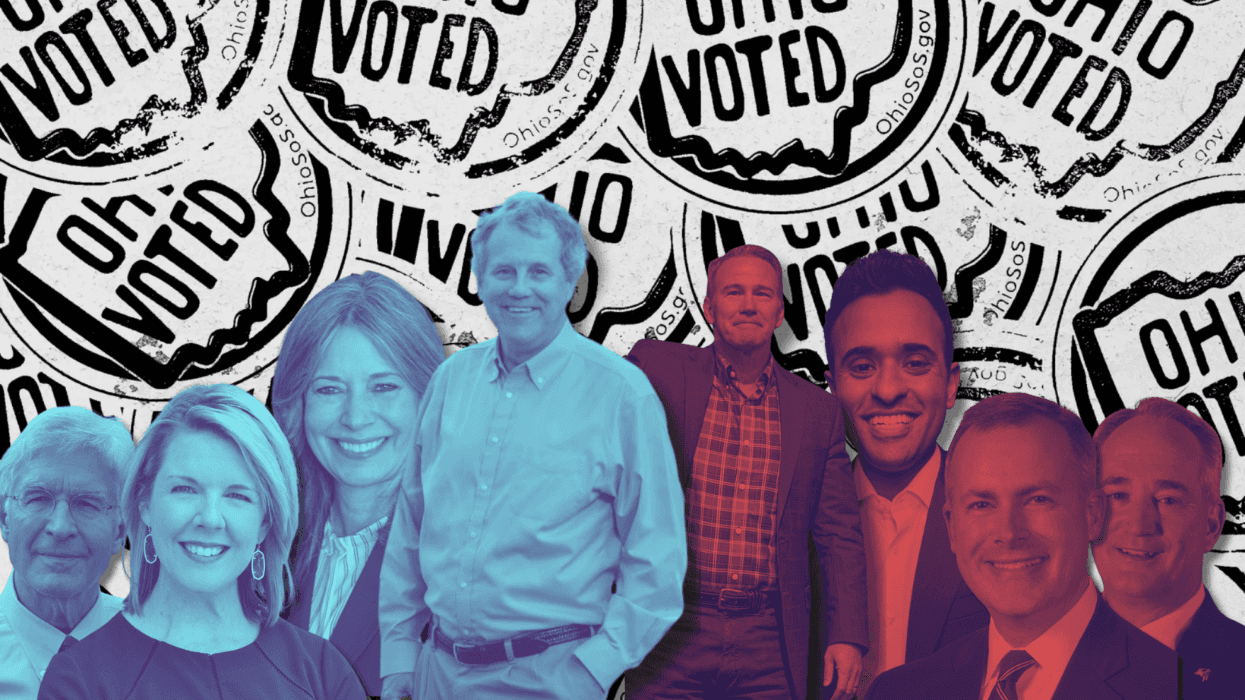
In the leadup to the midterms, some Democrats have walked back their positions on trans rights—candidates have come out against gender-affirming care for minors and transgender inclusion in bathrooms or sports, with one Ohio representative running an ad opposing “gender ideology” in schools.
Oates said that the manufactured nature of this spread indicates that these anti-trans positions do not accurately reflect the feelings of the voter base. A recent poll of American adults by The 19th and YouGov found that 37 percent of respondents think that both Democrats and Republicans talk about trans issues too much, and trans issues ranked the lowest in terms of importance among respondents to a September CNN poll.
“It’s understandable that some politicians would limit what they say about trans rights, but I think it’s misguided,” Oates said.
Endangering trans people
The spread of these posts endangers trans people. The spike in anti-trans rhetoric in the 2020s has increased rates of poor mental health and suicidality among trans people and incited violence against the community. Oates said X’s algorithm rewards hateful content, especially since Elon Musk removed several guardrails for content moderation, including replacing the site’s independent fact-checkers with a volunteer-based community note system.
Social media platforms have increasingly come under fire for the harmful consequences of their engagement-focused algorithms. In the U.S., legal accountability for tech platforms can be difficult to achieve due to laws protecting them from being liable for content on their websites. But in their current state, Oates said that social media platforms like X are not healthy for democracy.
“By participating [on X], you’re not participating in real civic discourse, you’re being used as a commodity by a social media company that not only doesn’t have your best interests at heart but is deliberately trying to inculcate hatred.”
Oates believes that moving beyond the midterms, we will see one of two paths in American politics: “One in which political power is defined by … campaign[ing] on fear,” and another where “people decide … to embrace news and information that’s actually based in reality.”
Additional data reporting by Andrew Norris.
Subscribe to Uncloseted Media and The 19th.