'%3E%3Cpath d='M16.3574 35.6519H12.9537L15.0491 18.8873L16.3574 35.6519ZM30.4229 54.0093L22.309 0.994385H7.91795L0 54.0093H10.6634L11.5802 46.3855H17.4014L17.9914 54.0093H30.4229Z' fill='%23971B20'/%3E%3Cpath d='M48.2073 41.8813C48.2073 43.4049 47.4892 44.0011 46.1144 44.0011H43.7595V11.0687H46.1144C47.4892 11.0687 48.2073 11.6636 48.2073 13.1885V41.8813ZM59.5273 43.6695V11.3326C59.5273 3.71323 53.5729 0.994385 47.8157 0.994385H31.7213V54.0093H47.8157C53.5729 54.0093 59.5273 51.29 59.5273 43.6695Z' fill='%23971B20'/%3E%3Cpath d='M90.183 0.994385H78.6039L75.0711 30.6157L71.9955 0.994385H59.4346L69.2474 54.0093H80.373L90.183 0.994385Z' fill='%23971B20'/%3E%3Cpath d='M107.063 42.3448C107.063 43.7359 105.951 44.5974 104.643 44.5974C103.269 44.5974 102.157 43.7359 102.157 42.3448V12.658C102.157 11.2676 103.269 10.4058 104.643 10.4058C105.951 10.4058 107.063 11.2676 107.063 12.658V42.3448ZM119.233 43.2723V11.7312C119.233 6.36384 112.952 -3.8147e-06 104.643 -3.8147e-06C96.2667 -3.8147e-06 89.9867 6.36384 89.9867 11.7312V43.2723C89.9867 48.6393 96.2667 55 104.643 55C112.952 55 119.233 48.6393 119.233 43.2723Z' fill='%23971B20'/%3E%3Cpath d='M150.976 43.9349V33.7309H139.069V42.3448C139.069 43.7359 137.957 44.5974 136.582 44.5974C135.076 44.5974 133.964 43.7359 133.964 42.3448V12.658C133.964 11.2676 135.076 10.4058 136.582 10.4058C137.957 10.4058 139.069 11.2676 139.069 12.658V21.2723H150.976V11.0687C150.976 5.70107 145.283 -3.8147e-06 136.582 -3.8147e-06C127.75 -3.8147e-06 121.796 5.70107 121.796 11.0687V43.9349C121.796 49.3022 127.75 55 136.582 55C145.283 55 150.976 49.3022 150.976 43.9349Z' fill='%23971B20'/%3E%3Cpath d='M167.478 35.6519H164.076L166.17 18.8873L167.478 35.6519ZM181.544 54.0093L173.432 0.994385H159.037L151.123 54.0093H161.785L162.704 46.3855H168.523L169.114 54.0093H181.544Z' fill='%23971B20'/%3E%3Cpath d='M205.412 10.4058V0.994385H177.081V10.4058H185.392V54.0093H197.428V10.4058H205.412Z' fill='%23971B20'/%3E%3Cpath d='M230.002 54.0093V43.9349H218.914V31.8746H226.635V21.8028H218.914V10.4058H230.002V0.994385H206.875V54.0093H230.002Z' fill='%23971B20'/%3E%3C/g%3E%3Cdefs%3E%3CclipPath id='clip0_260_7080'%3E%3Crect width='230' height='55' fill='white'/%3E%3C/clipPath%3E%3C/defs%3E%3C/svg%3E)
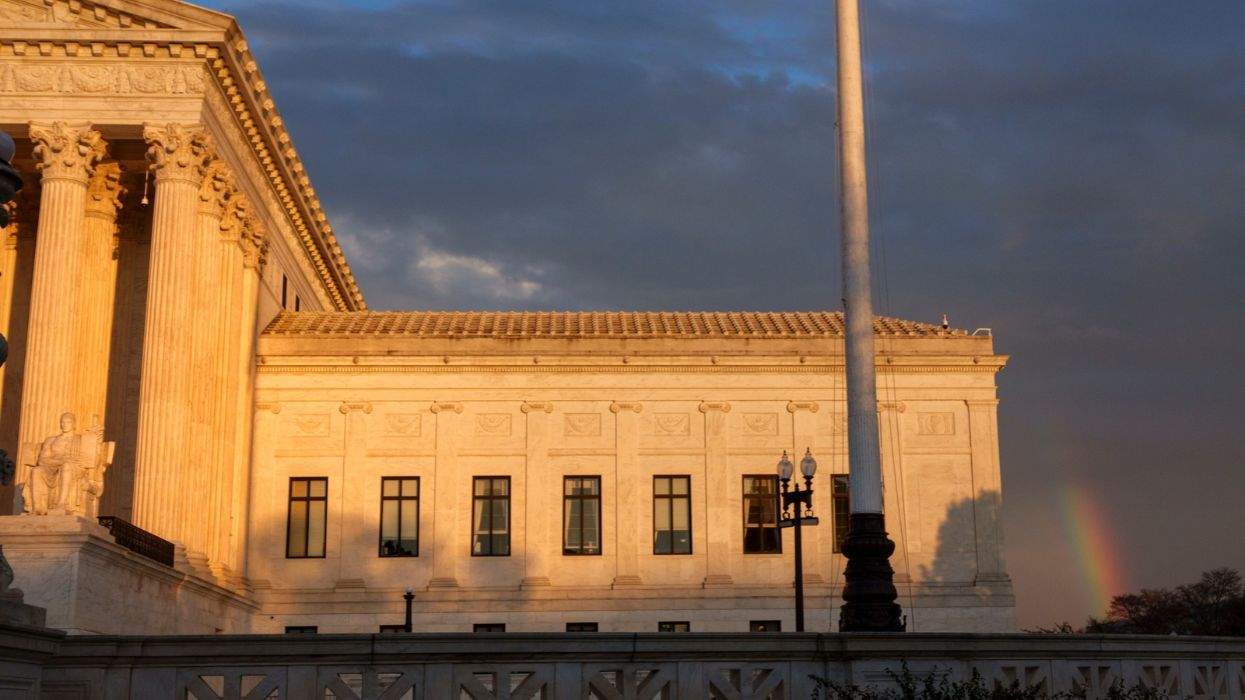
The U.S. Supreme Court on Monday refused to hear a lawsuit brought by Gays Against Groomers, an organization the Southern Poverty Law Center identifies as an anti-LGBTQ+ hate group, over Colorado lawmakers’ refusal to allow witnesses to misgender and deadname transgender people during legislative hearings.
The justices rejected the appeal without comment, leaving intact a federal appeals court ruling that shielded five Democratic state lawmakers from the lawsuit. The decision ends the case without settling whether restrictions on misgendering violate the First Amendment.
The controversy began in 2024, when Colorado lawmakers considered Tiara’s Law, legislation intended to make legal name changes easier for people with felony convictions, including transgender people seeking identification documents reflecting their identities.
Rich Guggenheim of Gays Against Groomers and Christina Goeke of the Rocky Mountain Women’s Network opposed the measure. They alleged that lawmakers interrupted their testimony after they refused to use a transgender person’s correct name and pronouns. Goeke also alleged that portions of her testimony were removed from the legislative record.
The activists sued, arguing that lawmakers had discriminated against their political viewpoints.
Related: 12 far-right groups with extreme anti-LGBTQ+ positions that threaten civil rights
A group with a documented history
Gays Against Groomers, founded in 2022 by Jaimee Michell, presents itself as an LGBTQ+ organization protecting children. Its activities tell a different story.
The Southern Poverty Law Center has documented the group’s harassment campaigns targeting transgender people, drag performers, hospitals, and libraries, along with its promotion of conspiracy theories equating gender-affirming healthcare with child sexual abuse.
The Advocate previously reported that Michell appeared on Fox News after the 2022 Club Q massacre in Colorado Springs and suggested that such violence would continue unless gender-affirming care ended.
In 2024, the group falsely suggested that Colorado’s gay Democratic governor, Jared Polis, had endorsed its work. State officials apologized after acknowledging that the organization’s ceremonial flag request had not been properly vetted.
What the Supreme Court left standing
A federal district court dismissed the lawsuit in November 2024. The 10th U.S. Circuit Court of Appeals upheld that decision in March, finding that legislative immunity protected lawmakers’ authority to establish and enforce hearing rules.
The Institute for Free Speech, representing the plaintiffs, criticized Monday’s decision.
“We’re disappointed that the Court declined to take up this case,” attorney Del Kolde said.