'%3E%3Cpath d='M16.3574 35.6519H12.9537L15.0491 18.8873L16.3574 35.6519ZM30.4229 54.0093L22.309 0.994385H7.91795L0 54.0093H10.6634L11.5802 46.3855H17.4014L17.9914 54.0093H30.4229Z' fill='%23971B20'/%3E%3Cpath d='M48.2073 41.8813C48.2073 43.4049 47.4892 44.0011 46.1144 44.0011H43.7595V11.0687H46.1144C47.4892 11.0687 48.2073 11.6636 48.2073 13.1885V41.8813ZM59.5273 43.6695V11.3326C59.5273 3.71323 53.5729 0.994385 47.8157 0.994385H31.7213V54.0093H47.8157C53.5729 54.0093 59.5273 51.29 59.5273 43.6695Z' fill='%23971B20'/%3E%3Cpath d='M90.183 0.994385H78.6039L75.0711 30.6157L71.9955 0.994385H59.4346L69.2474 54.0093H80.373L90.183 0.994385Z' fill='%23971B20'/%3E%3Cpath d='M107.063 42.3448C107.063 43.7359 105.951 44.5974 104.643 44.5974C103.269 44.5974 102.157 43.7359 102.157 42.3448V12.658C102.157 11.2676 103.269 10.4058 104.643 10.4058C105.951 10.4058 107.063 11.2676 107.063 12.658V42.3448ZM119.233 43.2723V11.7312C119.233 6.36384 112.952 -3.8147e-06 104.643 -3.8147e-06C96.2667 -3.8147e-06 89.9867 6.36384 89.9867 11.7312V43.2723C89.9867 48.6393 96.2667 55 104.643 55C112.952 55 119.233 48.6393 119.233 43.2723Z' fill='%23971B20'/%3E%3Cpath d='M150.976 43.9349V33.7309H139.069V42.3448C139.069 43.7359 137.957 44.5974 136.582 44.5974C135.076 44.5974 133.964 43.7359 133.964 42.3448V12.658C133.964 11.2676 135.076 10.4058 136.582 10.4058C137.957 10.4058 139.069 11.2676 139.069 12.658V21.2723H150.976V11.0687C150.976 5.70107 145.283 -3.8147e-06 136.582 -3.8147e-06C127.75 -3.8147e-06 121.796 5.70107 121.796 11.0687V43.9349C121.796 49.3022 127.75 55 136.582 55C145.283 55 150.976 49.3022 150.976 43.9349Z' fill='%23971B20'/%3E%3Cpath d='M167.478 35.6519H164.076L166.17 18.8873L167.478 35.6519ZM181.544 54.0093L173.432 0.994385H159.037L151.123 54.0093H161.785L162.704 46.3855H168.523L169.114 54.0093H181.544Z' fill='%23971B20'/%3E%3Cpath d='M205.412 10.4058V0.994385H177.081V10.4058H185.392V54.0093H197.428V10.4058H205.412Z' fill='%23971B20'/%3E%3Cpath d='M230.002 54.0093V43.9349H218.914V31.8746H226.635V21.8028H218.914V10.4058H230.002V0.994385H206.875V54.0093H230.002Z' fill='%23971B20'/%3E%3C/g%3E%3Cdefs%3E%3CclipPath id='clip0_260_7080'%3E%3Crect width='230' height='55' fill='white'/%3E%3C/clipPath%3E%3C/defs%3E%3C/svg%3E)
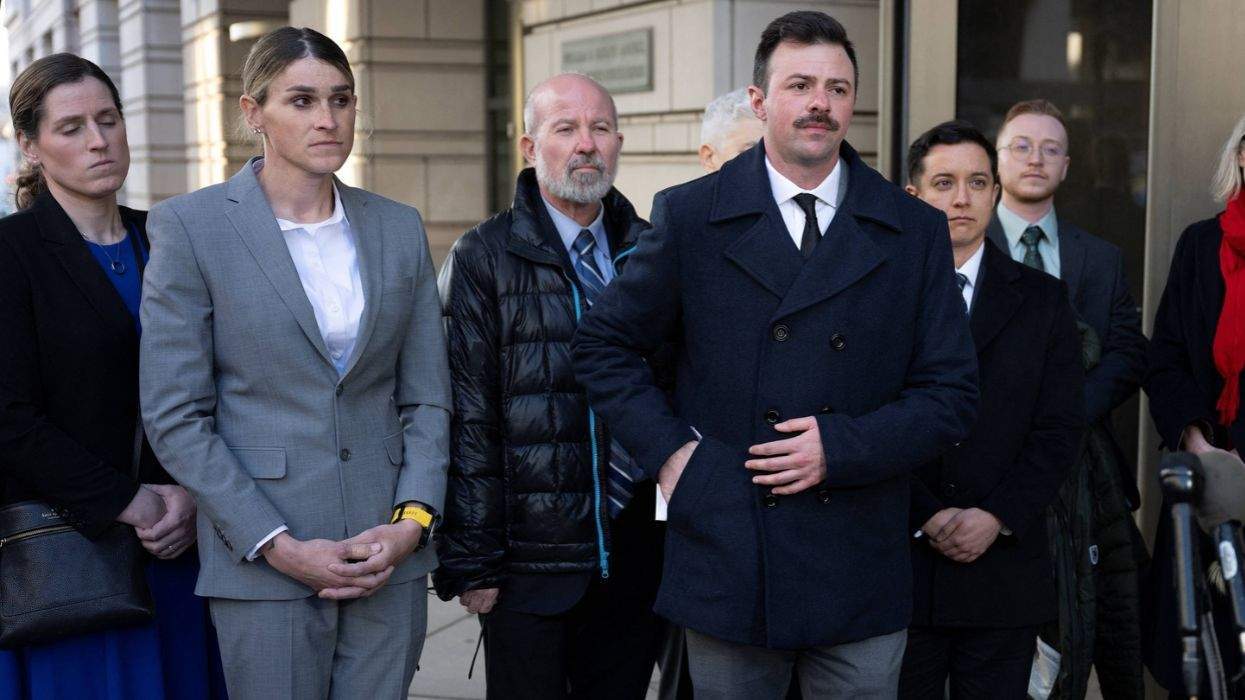
A federal appeals court in Washington, D.C., on Tuesday barred the Pentagon from discharging the transgender service members who sued over President Donald Trump’s transgender military ban. The court issued its mandate, giving the troops immediate protection while the administration asks the U.S. Supreme Court to hear the case.
By the time the order arrived, the Pentagon had already placed the plaintiffs on administrative leave. Several were scheduled to appear before military boards that would decide whether to end their careers. Lawyers for the troops said Tuesday that the order covers 27 people who together have served more than 130 years and earned more than 80 commendations. The government has admitted that each had served honorably and met military standards.
Related: Trans troops ask judge to protect everyone targeted by Pete Hegseth's military ban
That concession mattered to Judge Robert Wilkins. In an accompanying order, he noted that the Pentagon had three opportunities to explain what danger these service members posed—before the trial judge, on appeal, and again when it asked the appeals court to delay its ruling. Each time, he wrote, the government invoked national security without identifying a risk that would follow from letting them stay.
“The Trump administration asked the court to let it keep pushing these service members toward the door while it tries to get a different answer from the Supreme Court. Today, the D.C. Circuit said no,” Shannon Minter, legal director of the National Center for LGBTQ Rights, said in a statement. Minter argued the appeal for the troops in January.
Related: Federal appeals court rules that Trump’s trans military ban appears discriminatory
What a change of pronouns could cost
The lawsuit, Talbott v. United States, challenged Trump’s January 2025 executive order and the policy Defense Secretary Pete Hegseth issued to carry it out. In June, the U.S. Court of Appeals for the District of Columbia Circuit ruled that the policy likely violated the Constitution’s equal protection guarantee. It upheld a preliminary injunction for the plaintiffs already serving and lifted it for those seeking to enlist. Tuesday’s mandate put that narrower protection into effect. Judge Judith Rogers joined Wilkins in denying the delay. Judge Justin Walker, a Trump appointee, would have granted it.
The administration has defended the ban as a medical standard tied to readiness. Wilkins examined what the policy would mean for a commander with a compelling military reason to keep someone—anyone who had ever “attempted to” transition was ineligible for a waiver. The government said that social transition counted. The pronouns a service member once used could therefore outweigh the military’s own judgment that it needed them.
“The court saw this policy for what it is: a ban demeaning an entire group of people, dressed up in medical language,” Jennifer Levi, senior director of transgender and queer rights at GLAD Law, said in a statement. GLAD Law and the National Center for LGBTQ Rights represent the plaintiffs alongside Wardenski P.C., Zalkind Duncan & Bernstein LLP, Kropf Moseley Schmitt PLLC and O’Melveny & Myers LLP.
Related: Transgender troops just won a major ruling in their fight against Trump’s military ban
A Supreme Court petition and a January trial
The Supreme Court distributed the administration’s petition for its December 4 conference, where justices will decide whether to take the case. In a reply brief filed Monday, the Justice Department argued that courts owe military leaders deference on readiness questions and that taking the case now “would signal to the district court that it should stay a trial that should not be happening in the first place.”
U.S. District Judge Ana Reyes is moving ahead. On Monday, she gave the administration 28 days to turn over internal records about the policy and authorized the plaintiffs’ lawyers to question former Army Secretary Dan Driscoll under oath. The two-week trial is scheduled to begin on January 4. Because Reyes certified a class, its outcome could reach transgender troops across the country whose careers remain at risk after Tuesday’s ruling.