'%3E%3Cpath d='M16.3574 35.6519H12.9537L15.0491 18.8873L16.3574 35.6519ZM30.4229 54.0093L22.309 0.994385H7.91795L0 54.0093H10.6634L11.5802 46.3855H17.4014L17.9914 54.0093H30.4229Z' fill='%23971B20'/%3E%3Cpath d='M48.2073 41.8813C48.2073 43.4049 47.4892 44.0011 46.1144 44.0011H43.7595V11.0687H46.1144C47.4892 11.0687 48.2073 11.6636 48.2073 13.1885V41.8813ZM59.5273 43.6695V11.3326C59.5273 3.71323 53.5729 0.994385 47.8157 0.994385H31.7213V54.0093H47.8157C53.5729 54.0093 59.5273 51.29 59.5273 43.6695Z' fill='%23971B20'/%3E%3Cpath d='M90.183 0.994385H78.6039L75.0711 30.6157L71.9955 0.994385H59.4346L69.2474 54.0093H80.373L90.183 0.994385Z' fill='%23971B20'/%3E%3Cpath d='M107.063 42.3448C107.063 43.7359 105.951 44.5974 104.643 44.5974C103.269 44.5974 102.157 43.7359 102.157 42.3448V12.658C102.157 11.2676 103.269 10.4058 104.643 10.4058C105.951 10.4058 107.063 11.2676 107.063 12.658V42.3448ZM119.233 43.2723V11.7312C119.233 6.36384 112.952 -3.8147e-06 104.643 -3.8147e-06C96.2667 -3.8147e-06 89.9867 6.36384 89.9867 11.7312V43.2723C89.9867 48.6393 96.2667 55 104.643 55C112.952 55 119.233 48.6393 119.233 43.2723Z' fill='%23971B20'/%3E%3Cpath d='M150.976 43.9349V33.7309H139.069V42.3448C139.069 43.7359 137.957 44.5974 136.582 44.5974C135.076 44.5974 133.964 43.7359 133.964 42.3448V12.658C133.964 11.2676 135.076 10.4058 136.582 10.4058C137.957 10.4058 139.069 11.2676 139.069 12.658V21.2723H150.976V11.0687C150.976 5.70107 145.283 -3.8147e-06 136.582 -3.8147e-06C127.75 -3.8147e-06 121.796 5.70107 121.796 11.0687V43.9349C121.796 49.3022 127.75 55 136.582 55C145.283 55 150.976 49.3022 150.976 43.9349Z' fill='%23971B20'/%3E%3Cpath d='M167.478 35.6519H164.076L166.17 18.8873L167.478 35.6519ZM181.544 54.0093L173.432 0.994385H159.037L151.123 54.0093H161.785L162.704 46.3855H168.523L169.114 54.0093H181.544Z' fill='%23971B20'/%3E%3Cpath d='M205.412 10.4058V0.994385H177.081V10.4058H185.392V54.0093H197.428V10.4058H205.412Z' fill='%23971B20'/%3E%3Cpath d='M230.002 54.0093V43.9349H218.914V31.8746H226.635V21.8028H218.914V10.4058H230.002V0.994385H206.875V54.0093H230.002Z' fill='%23971B20'/%3E%3C/g%3E%3Cdefs%3E%3CclipPath id='clip0_260_7080'%3E%3Crect width='230' height='55' fill='white'/%3E%3C/clipPath%3E%3C/defs%3E%3C/svg%3E)
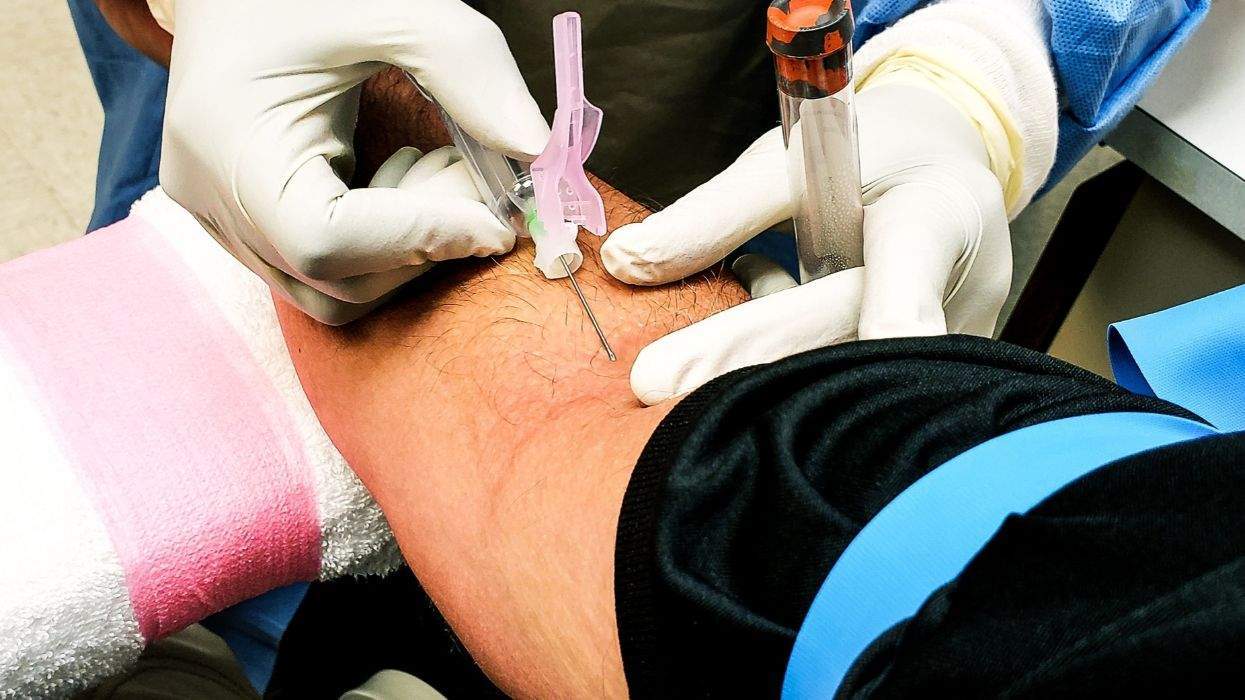

A human rights tribunal in Canada has ordered a medical laboratory company and its subsidiary to pay damages for discriminating against three transgender and nonbinary patients.
The British Columbia Human Rights Tribunal found that LifeLabs and its subsidiary, Excelleris Technologies, violated the rights of three patients in 2019, according to CTV News. The case involved incidents at locations in Vancouver and Burnaby, British Columbia. The tribunal awarded a combined $32,000 in Canadian dollars for injury to the patients’ dignity, feelings and self-respect, along with additional compensation for lost wages and expert evidence.
One nonbinary patient, Noa Moses, was told they had to select a male or female gender marker to receive bloodwork. Staff questioned them about their gender identity near a waiting area where other patients could overhear.
Related: When doctors ignore pronouns, patients pay the price. Here's why
Moses testified that staff did not offer them a private space for the conversation, according to the CBC. At one point, a staff member said they would call Moses’ doctor to determine which gender marker to use but could not reach the physician. Then, staff said they would not draw Moses’ blood unless they selected a male or female marker.
Another transgender patient, Devan Snow, recounted a similar experience to Moses and said staff required a lengthy discussion about Snow’s gender identity within earshot of other patients at a Burnaby location. LifeLabs refused to update Snow’s gender information and instead used the sex assigned at birth.
Snow told the tribunal that people in the waiting room could hear the conversation and that the experience was embarrassing, according to the CBC.
Another trans patient, Vincent Viezzer, arrived with a requisition form identifying him with an “M” marker for male. But a staff member added the letters “FTM,” meaning “female to male.” That prompted Viezzer to scribble the letters out with a marker. LifeLabs disputed Viezzer’s account, but the tribunal accepted his evidence and found the notation discriminatory.
Viezzer testified that he delayed further medically necessary testing and cancer screening because he feared being misgendered again. However, the tribunal rejected his allegations that the companies misgendered him on lab reports in 2019, distinguishing those claims from the discriminatory notation on his requisition form.
Related: JD Vance demands that the DOJ investigate hospitals caring for transgender patients
Tribunal member Theressa Etmanski wrote that the initials “FTM” could be an “oversimplified and inaccurate way to describe some people’s lived transgender experience.”
In her October 29 decision, Etmanski ordered the companies to take reasonable steps within six months to ensure transgender and nonbinary patients have — and know about — the option of a private space to discuss their sex or gender. She also ordered updated privacy training for all British Columbia staff and management within a year.
The companies argued that laboratory records had to match the sex marker on a patient’s government-issued identification. Addressing that requirement, Etmanski wrote:
“Information about a patient’s sex may be medically relevant in the provision of laboratory services. However, I wish to be clear that there is no evidence before me to support that the standard is medically necessary or justified.”