'%3E%3Cpath d='M16.3574 35.6519H12.9537L15.0491 18.8873L16.3574 35.6519ZM30.4229 54.0093L22.309 0.994385H7.91795L0 54.0093H10.6634L11.5802 46.3855H17.4014L17.9914 54.0093H30.4229Z' fill='%23971B20'/%3E%3Cpath d='M48.2073 41.8813C48.2073 43.4049 47.4892 44.0011 46.1144 44.0011H43.7595V11.0687H46.1144C47.4892 11.0687 48.2073 11.6636 48.2073 13.1885V41.8813ZM59.5273 43.6695V11.3326C59.5273 3.71323 53.5729 0.994385 47.8157 0.994385H31.7213V54.0093H47.8157C53.5729 54.0093 59.5273 51.29 59.5273 43.6695Z' fill='%23971B20'/%3E%3Cpath d='M90.183 0.994385H78.6039L75.0711 30.6157L71.9955 0.994385H59.4346L69.2474 54.0093H80.373L90.183 0.994385Z' fill='%23971B20'/%3E%3Cpath d='M107.063 42.3448C107.063 43.7359 105.951 44.5974 104.643 44.5974C103.269 44.5974 102.157 43.7359 102.157 42.3448V12.658C102.157 11.2676 103.269 10.4058 104.643 10.4058C105.951 10.4058 107.063 11.2676 107.063 12.658V42.3448ZM119.233 43.2723V11.7312C119.233 6.36384 112.952 -3.8147e-06 104.643 -3.8147e-06C96.2667 -3.8147e-06 89.9867 6.36384 89.9867 11.7312V43.2723C89.9867 48.6393 96.2667 55 104.643 55C112.952 55 119.233 48.6393 119.233 43.2723Z' fill='%23971B20'/%3E%3Cpath d='M150.976 43.9349V33.7309H139.069V42.3448C139.069 43.7359 137.957 44.5974 136.582 44.5974C135.076 44.5974 133.964 43.7359 133.964 42.3448V12.658C133.964 11.2676 135.076 10.4058 136.582 10.4058C137.957 10.4058 139.069 11.2676 139.069 12.658V21.2723H150.976V11.0687C150.976 5.70107 145.283 -3.8147e-06 136.582 -3.8147e-06C127.75 -3.8147e-06 121.796 5.70107 121.796 11.0687V43.9349C121.796 49.3022 127.75 55 136.582 55C145.283 55 150.976 49.3022 150.976 43.9349Z' fill='%23971B20'/%3E%3Cpath d='M167.478 35.6519H164.076L166.17 18.8873L167.478 35.6519ZM181.544 54.0093L173.432 0.994385H159.037L151.123 54.0093H161.785L162.704 46.3855H168.523L169.114 54.0093H181.544Z' fill='%23971B20'/%3E%3Cpath d='M205.412 10.4058V0.994385H177.081V10.4058H185.392V54.0093H197.428V10.4058H205.412Z' fill='%23971B20'/%3E%3Cpath d='M230.002 54.0093V43.9349H218.914V31.8746H226.635V21.8028H218.914V10.4058H230.002V0.994385H206.875V54.0093H230.002Z' fill='%23971B20'/%3E%3C/g%3E%3Cdefs%3E%3CclipPath id='clip0_260_7080'%3E%3Crect width='230' height='55' fill='white'/%3E%3C/clipPath%3E%3C/defs%3E%3C/svg%3E)


Toby’s grandmother helps pay for his testosterone. His mother, Melinda, is trying to preserve the appointments, blood tests, and medical supervision that make his treatment possible.
Toby, a 16-year-old honor student who plays volleyball and loves to cook, is also transgender. He has lived as a boy since he was 7. He went through male puberty. His friends, other boys from school, don’t even consider that he’s trans. On Tuesday, as the Trump administration’s restrictions on federal funding for trans young people’s care took effect, his mother was trying to protect the life he has built.
“That means they’re forcing my son to detransition because I am poor,” she told The Advocate. “I don’t have the income level to get private health insurance for my son.”
The family’s names have been changed to protect their privacy. The Advocate is also withholding the name of the treating hospital.
The rule restricts federal Medicaid and Children’s Health Insurance Program funding for gender-affirming treatments. States can still pay for those services themselves, putting pressure on governors to turn promises of protection into coverage.
Related: 21 states sue over Trump’s attacks on gender-affirming care insurance coverage
What the federal cutoff means
Effective October 13, the Trump administration prohibits federal reimbursement for specified gender-affirming treatments, including puberty blockers, hormone therapy, and surgery, for Medicaid beneficiaries younger than 18 and beneficiaries of separate CHIP programs younger than 19.
States may continue claiming reimbursement for hormone therapy medications for up to six months for patients already receiving them as of Tuesday. The administration describes this as a tapering period. It excludes puberty blockers, surgeries, and new hormone therapy patients. Federal funding for mental health counseling and psychotherapy remains available.
The rule does not immediately terminate every service or prohibit doctors from providing otherwise legal treatment. But losing coverage can make care unaffordable. States may fund affected services outside the federally matched programs.
The administration cites what it calls insufficient evidence of benefit and risks of lasting harm. The American Medical Association opposes restrictions on evidence-based gender-affirming care. The American Academy of Pediatrics has reaffirmed its supportive policy while commissioning a systematic evidence review to guide updated recommendations.
Adrian Shanker, a former deputy assistant secretary for health policy in the Biden administration, said the implementation period had left families exposed.
“The Trump administration’s final rule causes direct harm to trans youth and their families, and sixty days for implementation has proven to be insufficient for many states to take action to ensure continuity of care for their residents,” he said in a statement provided to The Advocate. “I certainly hope that as this rule goes into effect, more governors take action to protect access to care for trans youth in their states who are Medicaid and CHIP participants.”
Related: Trump’s new Medicaid rule strips care from low-income families of transgender youth
A mother cannot replace a medical team
Melinda said Toby’s grandmother has helped the family build a supply of testosterone. But his clinicians also monitor his health through appointments and lab testing, adjusting medication when necessary.
“Where do we get the blood work? How do we figure that out?” she asked. “So that’s what we need the doctor for, to monitor him.”
She said a letter indicated an insurance network problem ahead of an appointment later this month, but the hospital had not clearly explained what would happen next. It remains unclear which services his insurer will cover.
Melinda has promised Toby she will try to find a solution. Discussing it upsets him.
“I think he’s hoping I’m going to figure it out,” she said.
Related: Missouri Supreme Court upholds ban on Medicaid coverage for gender-affirming care
States have options
Illinois has directed providers to continue existing billing practices and committed state funds to preserve coverage through its 2027 fiscal year. The state will stop claiming federal matching dollars for affected services.
California has allocated $10 million for youth care affected by the restrictions. New Mexico has also said it plans to maintain coverage with state funds, according to The Guardian.
In New Jersey, Garden State Equality has pursued continued coverage, but the state has not established the replacement funding arrangement advocates seek, according to information the organization provided to The Advocate.
Responding Tuesday evening, a spokesperson for Gov. Mikie Sherrill pointed The Advocate to legislation the governor signed in August extending the state’s shield law protections to gender-affirming care.
“Governor Sherrill has taken decisive action to defend New Jersey patients and providers, signing legislation that expands the State’s Shield Law to expressly include gender-affirming care and protect against malicious out-of-state investigations and legal actions,” the spokesperson said in an email statement. “The Governor and the Sherrill Administration will continue to fight the Trump Administration’s endless efforts to weaponize what should be decisions between doctors and their patients.”
Those legal protections do not replace the federal funding. In a separate response, New Jersey Department of Human Services spokesperson Tom Hester said the administration was still assessing its options.
“While the Sherrill Administration continues to challenge rulemaking by the Trump Administration, we continue to assess State-level next step options,” Hester told The Advocate in an email.
Neither response identified a replacement funding plan, provided a timeline for one, or answered whether the governor would use an executive order to preserve coverage.
Garden State Equality’s Lauren Albrecht said she believes the governor could provide an interim solution.
“An executive order would take care of it for now,” she said. The governor’s office has not confirmed her assessment.
Sherrill’s chief spokesperson, Sean Higgins, acknowledged The Advocate’s inquiry Tuesday afternoon and referred the questions to a colleague. The office had not yet provided substantive answers about replacement funding or the governor’s plans.
New Jersey is participating in the multistate lawsuit challenging the rule.
Albrecht urged affected families to contact Garden State Equality and said some providers offer options independent of insurance.
“Hope is certainly not lost, and we still have every confidence that we will have a way forward to help the families that we need to help,” she said.
Related: As Massachusetts hospitals bow to Trump, these organizers are fighting to protect trans futures
Virginia advocates demand action
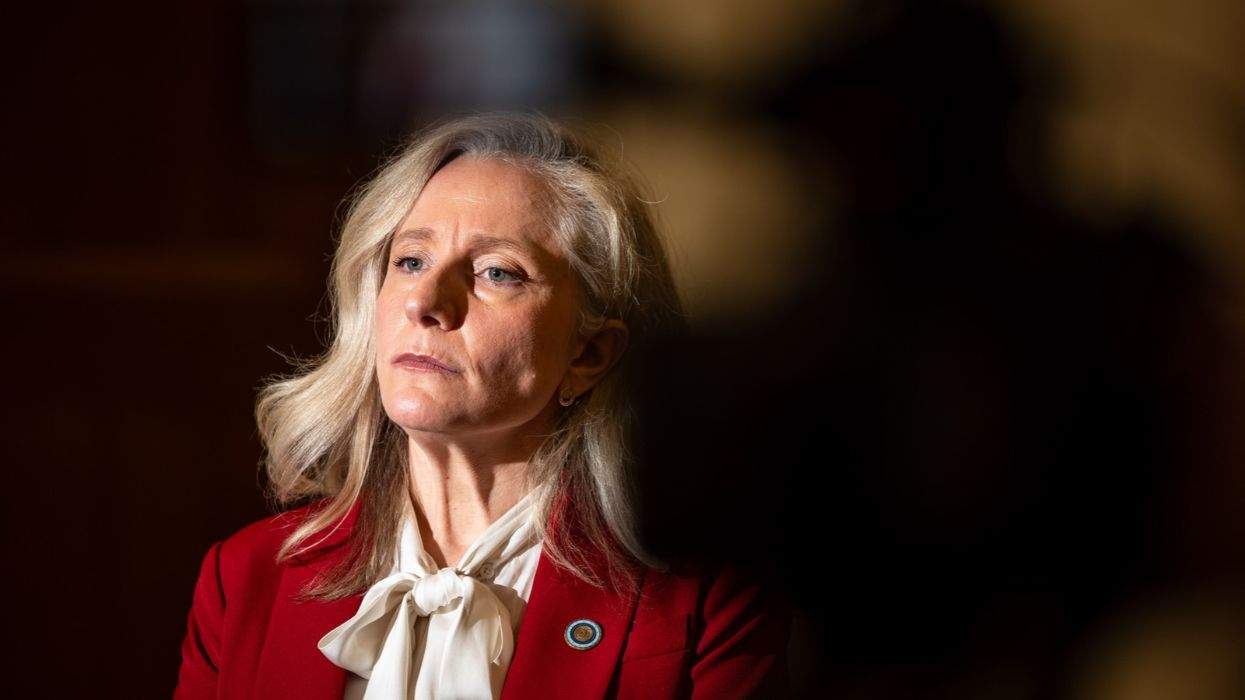
In Virginia, advocates publicly challenged Gov. Abigail Spanberger on Tuesday.
The ACLU of Virginia and Equality Virginia said Equality Virginia met with state Medicaid Director Steven Ford in August about using state money. On October 9, both groups sent Ford a letter urging the department to rescind its coverage cutoff notice and develop a funding plan with providers and community organizations.
Their criticism followed The Advocate’s reporting last week on Virginia’s coverage changes and Spanberger’s promise to examine alternatives.
“We are looking at every option available,” Spanberger said Friday. At the time, she had not announced replacement funding.
The groups said Tuesday that at least nine states had acted to fund continued care. They also pointed to Virginia’s participation in the lawsuit defending the care as safe and medically necessary.
“It’s baffling that the Spanberger administration has not announced a plan to make sure young people on Medicaid and CHIP get the care their doctors prescribed,” they said.
They urged the state to establish funding and instruct providers on documenting services for retroactive payment.
“If the governor is serious that her office is ‘looking at every option available,’ she should not have a hard time finding a way to get young people and their families the essential healthcare they need,” they said.
The life Toby has built
Melinda remembers her son before he socially transitioned. He was withdrawn, resisted school, and asked for short hair and a boy’s name. She sought a therapist and a family support group.
He socially transitioned in second grade. By winter, she said, he was starring in the school play.
“We’ve never looked back,” she said.
Medical treatment came later, after extensive consultations with doctors, psychologists, and social workers. “It was years of preparation,” she said.
Now she struggles to reconcile politicians’ assertions of parental rights with restrictions on decisions she and Toby made with his clinicians.
“Where’s my autonomy to make medical decisions privately with my doctor and my son’s doctor?” she asked.
She is still trying to determine how his next appointment will be covered. But she’s settled on her understanding of her child.
“My son knows who he is,” she said.
Editor's note: This story has been updated with remarks from New Jersey’s state government and the governor.