'%3E%3Cpath d='M16.3574 35.6519H12.9537L15.0491 18.8873L16.3574 35.6519ZM30.4229 54.0093L22.309 0.994385H7.91795L0 54.0093H10.6634L11.5802 46.3855H17.4014L17.9914 54.0093H30.4229Z' fill='%23971B20'/%3E%3Cpath d='M48.2073 41.8813C48.2073 43.4049 47.4892 44.0011 46.1144 44.0011H43.7595V11.0687H46.1144C47.4892 11.0687 48.2073 11.6636 48.2073 13.1885V41.8813ZM59.5273 43.6695V11.3326C59.5273 3.71323 53.5729 0.994385 47.8157 0.994385H31.7213V54.0093H47.8157C53.5729 54.0093 59.5273 51.29 59.5273 43.6695Z' fill='%23971B20'/%3E%3Cpath d='M90.183 0.994385H78.6039L75.0711 30.6157L71.9955 0.994385H59.4346L69.2474 54.0093H80.373L90.183 0.994385Z' fill='%23971B20'/%3E%3Cpath d='M107.063 42.3448C107.063 43.7359 105.951 44.5974 104.643 44.5974C103.269 44.5974 102.157 43.7359 102.157 42.3448V12.658C102.157 11.2676 103.269 10.4058 104.643 10.4058C105.951 10.4058 107.063 11.2676 107.063 12.658V42.3448ZM119.233 43.2723V11.7312C119.233 6.36384 112.952 -3.8147e-06 104.643 -3.8147e-06C96.2667 -3.8147e-06 89.9867 6.36384 89.9867 11.7312V43.2723C89.9867 48.6393 96.2667 55 104.643 55C112.952 55 119.233 48.6393 119.233 43.2723Z' fill='%23971B20'/%3E%3Cpath d='M150.976 43.9349V33.7309H139.069V42.3448C139.069 43.7359 137.957 44.5974 136.582 44.5974C135.076 44.5974 133.964 43.7359 133.964 42.3448V12.658C133.964 11.2676 135.076 10.4058 136.582 10.4058C137.957 10.4058 139.069 11.2676 139.069 12.658V21.2723H150.976V11.0687C150.976 5.70107 145.283 -3.8147e-06 136.582 -3.8147e-06C127.75 -3.8147e-06 121.796 5.70107 121.796 11.0687V43.9349C121.796 49.3022 127.75 55 136.582 55C145.283 55 150.976 49.3022 150.976 43.9349Z' fill='%23971B20'/%3E%3Cpath d='M167.478 35.6519H164.076L166.17 18.8873L167.478 35.6519ZM181.544 54.0093L173.432 0.994385H159.037L151.123 54.0093H161.785L162.704 46.3855H168.523L169.114 54.0093H181.544Z' fill='%23971B20'/%3E%3Cpath d='M205.412 10.4058V0.994385H177.081V10.4058H185.392V54.0093H197.428V10.4058H205.412Z' fill='%23971B20'/%3E%3Cpath d='M230.002 54.0093V43.9349H218.914V31.8746H226.635V21.8028H218.914V10.4058H230.002V0.994385H206.875V54.0093H230.002Z' fill='%23971B20'/%3E%3C/g%3E%3Cdefs%3E%3CclipPath id='clip0_260_7080'%3E%3Crect width='230' height='55' fill='white'/%3E%3C/clipPath%3E%3C/defs%3E%3C/svg%3E)


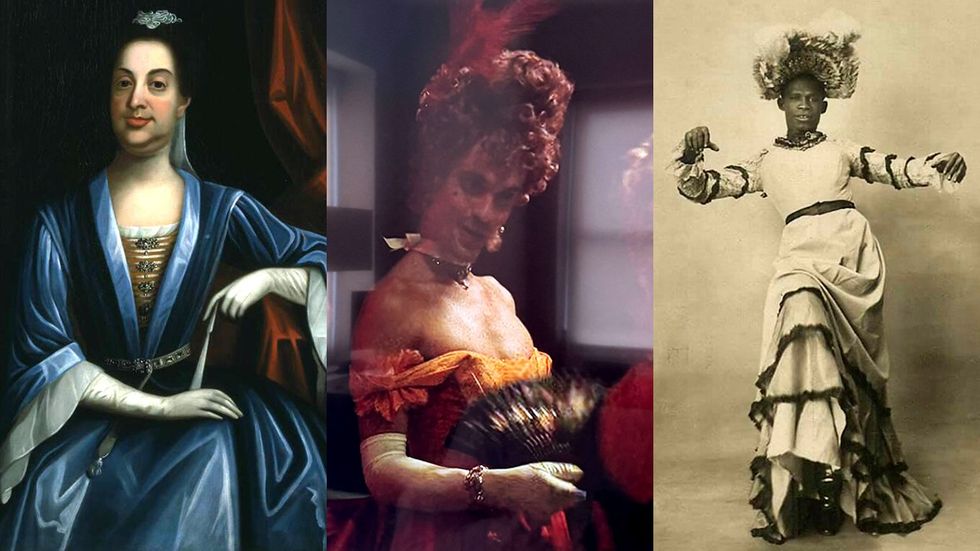
Drag is woven in the fabric of American society.
Unidentified Artist via New-York Historical Society; Marie-Adélina de la Ferrière for The Advocate; Public Domain via fashion conservatory
Suppose you blinked while watching the latest episode of The Gilded Age. In that case, you may have missed the first drag appearance in Julian Fellowes's opulent world of ball gowns, tiaras, and drawing room intrigue.
In this season's fifth episode, Larry Russell (Harry Richardson) and Jack Trotter (Ben Ahlers) celebrate the sale of the alarm clock and Larry's engagement to Marian Brook (Louisa Jacobsen). For fans of Fellowes's universe, including Downton Abbey and Belgravia, most settings are prim and proper. But rather than taking Jack to a stiff-upper-lipped gentleman's club, Larry takes him to Haymarket: an actual venue in the late 1800s that was deemed the New York equivalent to Paris's Moulin Rouge. In addition to ladies' boxing, you may have seen a lithe, male figure dressed in an elegant ladies' evening dress. It was a rare nod to the subculture of the time, though much of the visibility was left on the cutting room floor.
The Gilded Age's costume coordinator, Matthew Carlsen, was one of several female impersonators "and a few other general queer folk" in the episode and shared thoughts on this groundbreaking moment.
"As a huge admirer of female impersonator Julian Eltinge, I was excited to learn the production team wanted to showcase this incredibly under-represented group in queer history," Carlsen tells The Advocate, referring to the real 1800s' actor famed for blurring gender lines. "I was even more excited when I was asked to portray one of them within the scene, as it's quite rare for this kind of character to be featured in historical storytelling in any serious, non-comedic manner."
Unfortunately, the moment featuring Carlsen and fellow impersonators was drastically cut, with only one of the impersonators (played by fellow designer Keith Kelly) featured briefly in the scene. Carlsen couldn't comment on the rationale for cutting the vignette, inferring it could have been "due to the constraints of runtime and the season’s limited number of episodes." Still, he reaffirmed the importance of queer visibility in historical dramas like Gilded Age.
"I think it is incredibly important that queer history be represented in modern media, especially historical retellings," Carlsen says. "If we take the specific example of female impersonators around the turn of the 20th century, we are seeing performers who were quite renowned and respected in their contemporary culture."
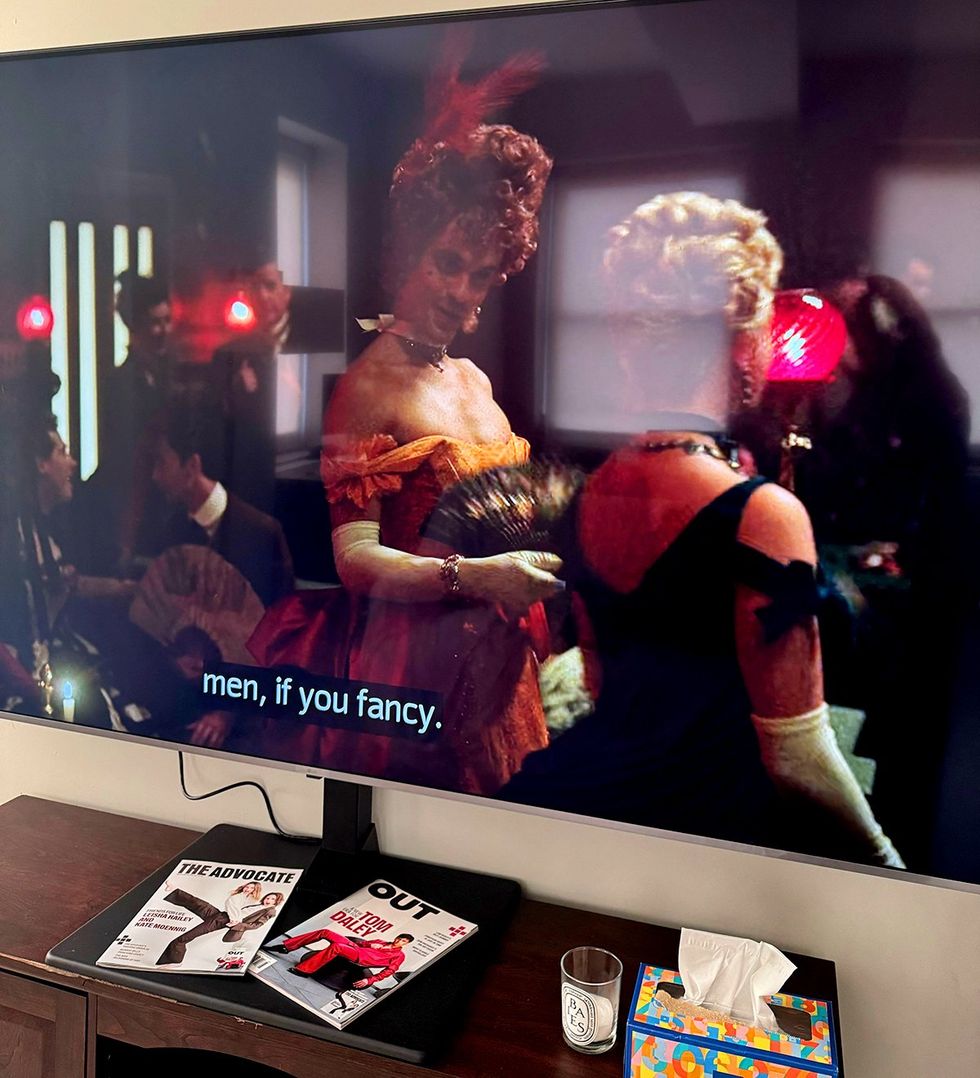
Scene from The Guilded Age on HBO
Marie-Adélina de la Ferrière for The Advocate
While this period in American history is known for expansive mansions and arranged marriages between American "Dollar Princesses" and European nobility, the Gilded Age was an era in which drag not only developed in this country but thrived. Drag in the Gilded Age became increasingly popular, from the first self-proclaimed "Queen of Drag" (more on this below) to operatic divas, and highly sought-after tickets to drag balls.
Although drag's origins can be traced back to the ancient world, according to National Geographic, its roots in the United States date back to the mid-19th century, as female impersonators were often part of racist minstrel shows. However, its origins in this country may date back to a previous century, not as entertainment, but as a political performance, giving us America's first-recorded politician in drag.
Step aside, J. Edgar Hoover, and give your best obsequies to Edward Hyde, Viscount Cornbury, and, later, the 3rd Earl of Clarendon.
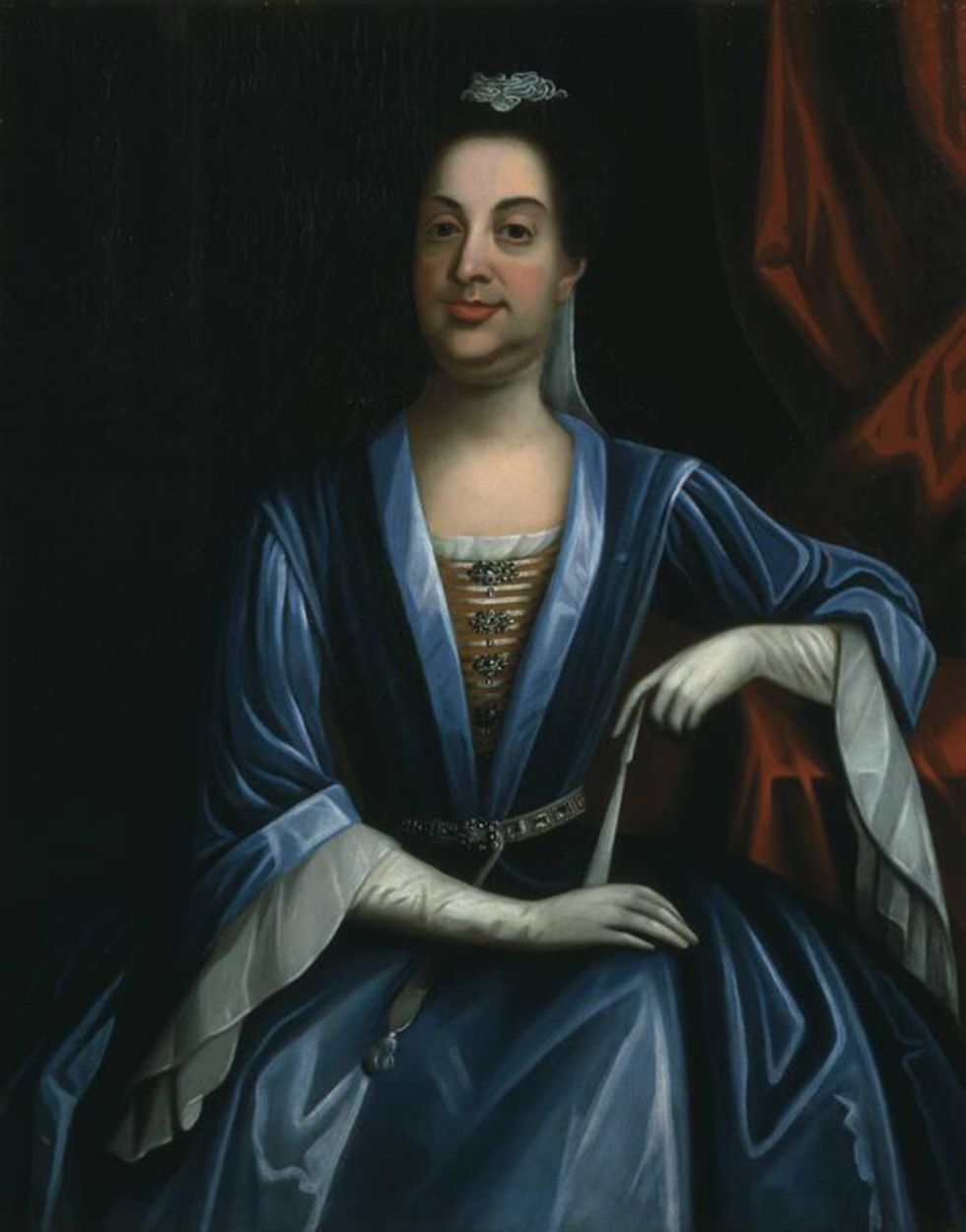
Portrait of an Unidentified Person, circa 1710
Unidentified Artist via New-York Historical Society
The governor of New Jersey and New York at the turn of the 18th century, and a cousin of the reigning Queen Anne (immortalized in the 2018 film The Favourite), it was alleged that Hyde publicly dressed in drag. It's even alleged that the governor opened a session of the colonial legislature dressed as a literal representative of the queen, bedecked in fashionable female attire of the time.
A painting from that period, now held in the collection of the New York Historical Society, was once attributed as the only visual image existing of the governor in a diva-like pose, complete with elaborate attire and a grand dame's demeanor.
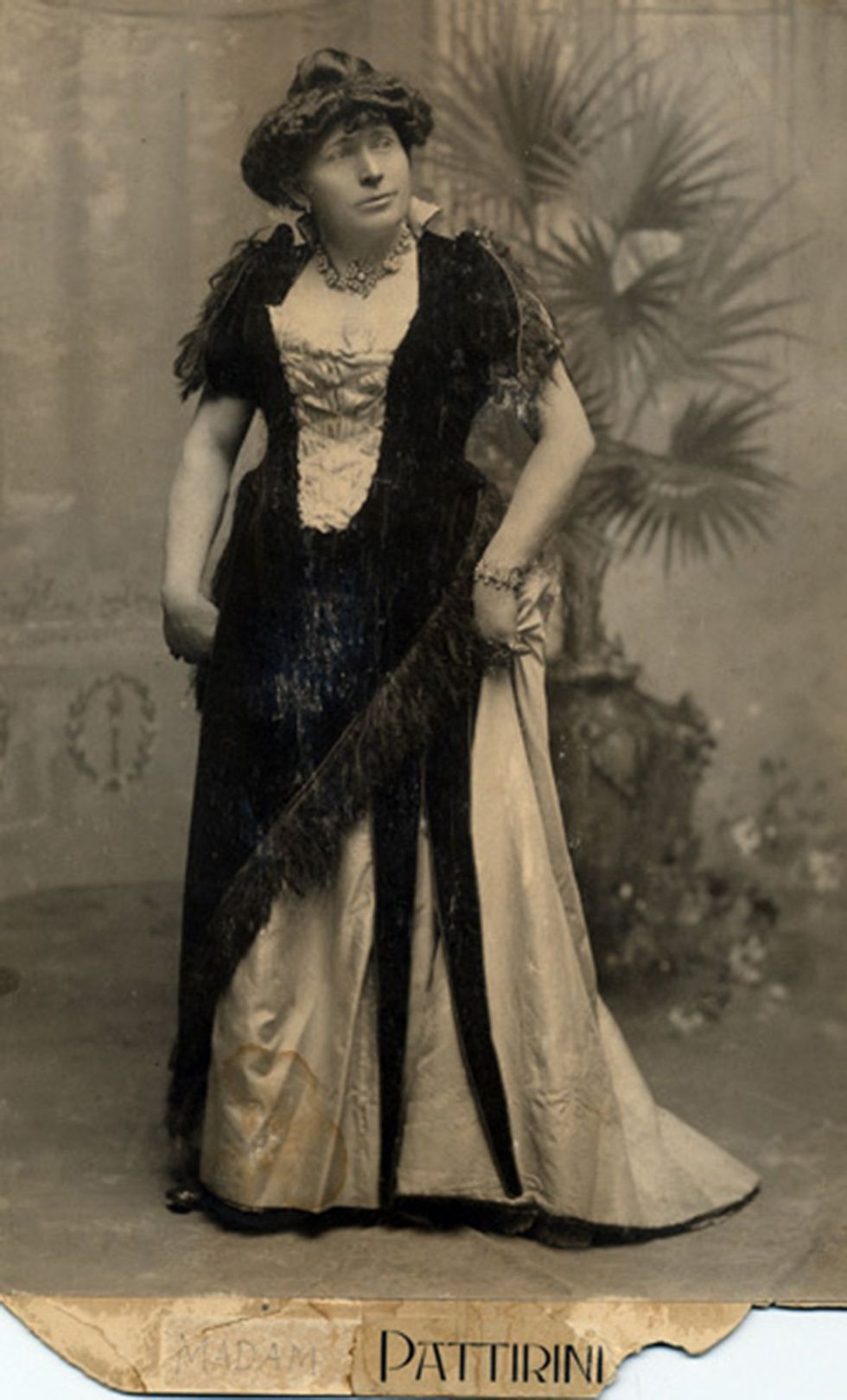
Brigham Morris Young dressed as Madam Pattirini on a placard advertising her appearance in the Sugar House Ward, Salt Lake City, Utah, 1901
Charles Roscoe Savage (public domain via wikipedia)
By the time of the Gilded Age, set in the 1880s, drag was already being performed, albeit mostly in private spaces, such as Haymarket. A notable drag icon from the time was Brigham Morris Young, a Utah-based son of a prominent Latter-day Saints leader, Brigham Young. Founding what would become the Young Men program of the church, Young began performing drag not long after his missionary stint in the Hawaiian Islands, under the name Madam Pattirini. Starting in the mid-1880s, Madam Pattirini would perform through parts of Utah, with a falsetto so beautiful that many didn't realize it was the son of a Church leader.
Still, this did not prevent Young from succeeding as a church leader and drag artist. Young was still performing at the turn of the 20th century, according to an article from the Deseret Evening News. Madam Pattirini performed for LDS President and father-in-law Lorenzo Snow, billed as "Pattirini the Italian prima donna," with a "good falsetto voice and the ability to sustain a female character."
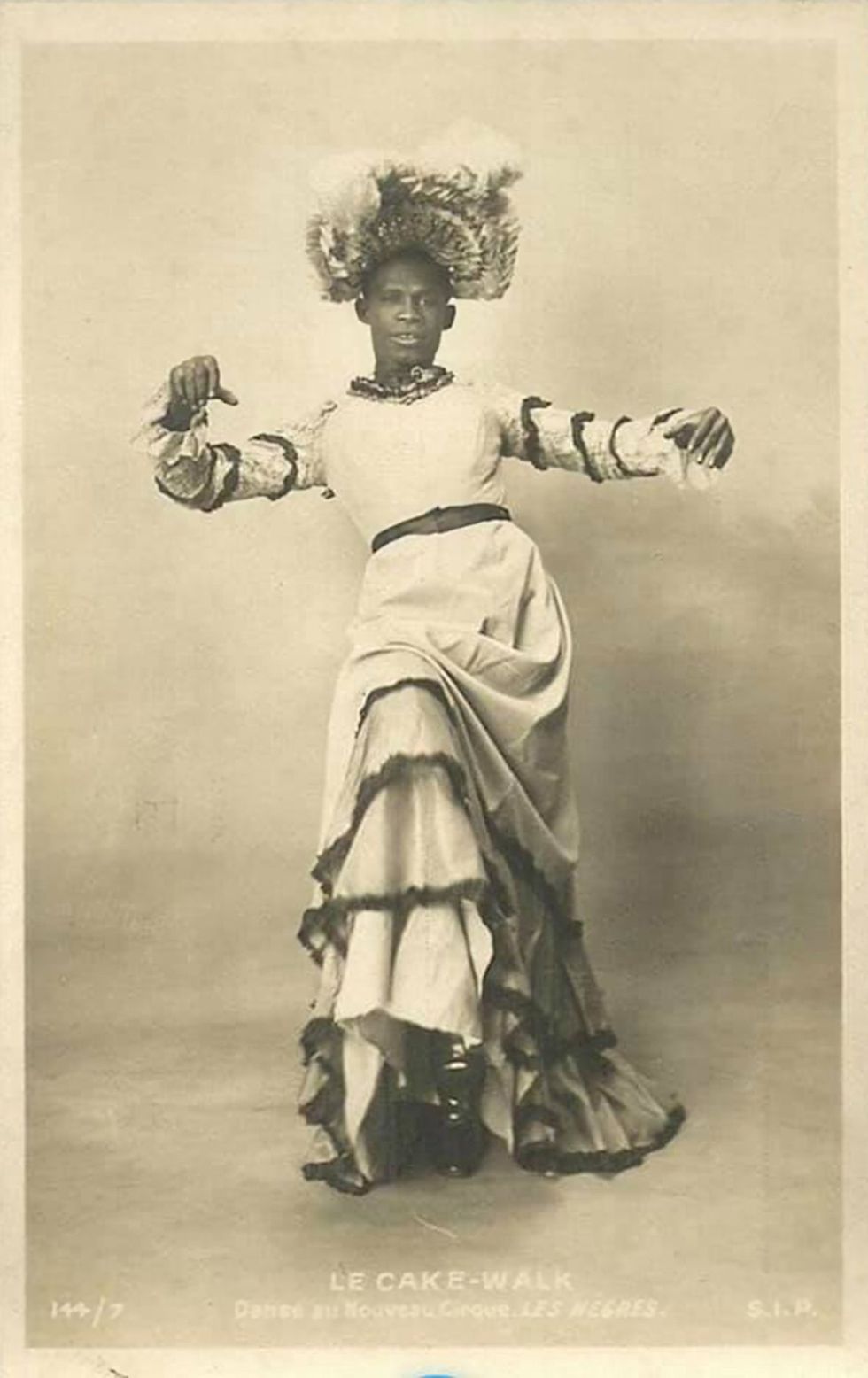
No known photos of Swann exist, but this might be what he looked like.
Public Domain via fashion conservatory
Born a slave, William Dorsey Swann hosted the first 'drags', secret events held in Washington, D.C. As the first self-proclaimed "Queen of Drag," William was instrumental in creating the House of Swann, a gathering of formerly enslaved individuals and drag queens of the time, where they performed a dance called the cakewalk — a series of reclaimed, improvisational movements that resemble modern-day voguing.
These events, according to the Smithsonian, would later catch the attention of local authorities; Swann faced police raids and arrests. Later arrested on charges of running a brothel, Swann attempted and failed to get a presidential pardon. But that moment left another historic moment for the books, as Swann became the first queer American to defend our community's right and dignity to gather freely and without violence. While local authorities in D.C. were using oppressive means to stop Swann's gatherings, in New York, these events were not just happening but thriving.
Enter the Hamilton Lodge Balls.
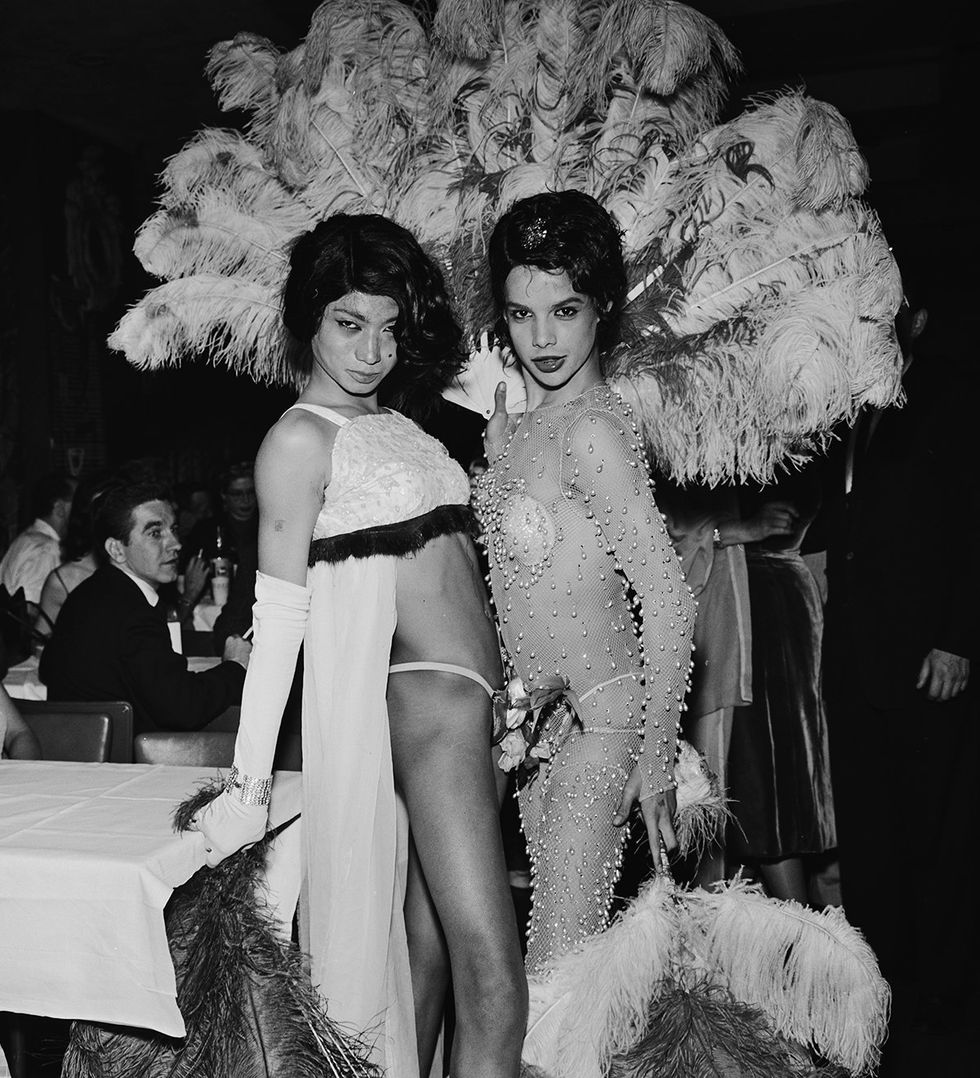
Attendees at the Beggar's Ball, USA, May 1960. Nearly a century earlier, the first Hamilton Lodge drag ball took place in Harlem, New York.
Graphic House/Archive Photos/Getty Images
It's easy to imagine that, as Larry was dragging Jack to Haymarket, Black queer, trans, and gender-expansive folks were gathering in Harlem for what The New York Freeman's referred to as "the event of the season." Organized by one of the few African American fraternal organizations at the time, the Hamilton Lodge celebrated its 25th anniversary in 1869 by hosting the first recorded drag balls in the United States, two decades before Swann's infamous parties. A place where queens reigned and categories were lived, not judged, the balls weren't underground whispers. By the 1920s, they were drawing thousands of spectators from across the city. Working-class mixed with Upper East Side elites, and people of all colors were eager to witness the spectacle of Harlem's finest strut, twirl, and serve in full regalia.
The Hamilton Lodge Balls laid the foundation for modern-day ballroom culture, a lineage that stretches from the 19th century to Paris Is Burning, Pose, and ultimately to TikTok. These were nights when our queer forebears not only found each other but also celebrated one another.
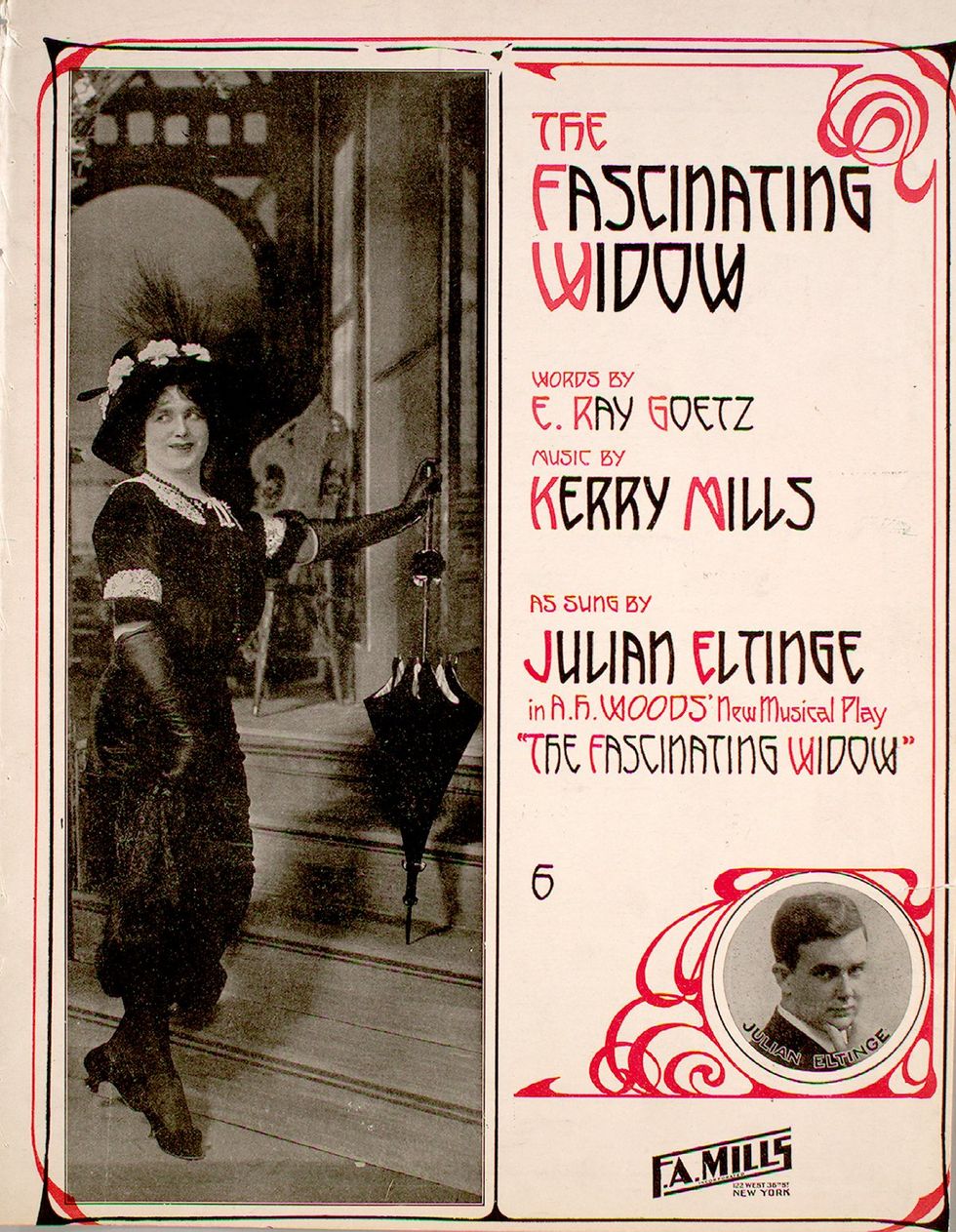
Sheet music cover featuring Julian Eltinge, 1910
Sheridan Libraries/Levy/Gado/Getty Images
But as Heidi Klum would tell her Project Runway contestants, "One day you're in. The next day, you're out." This sentiment is no more accurate than drag performers from the late 1920s onward. Though few like Julian Eltinge secured Broadway shows and even movie deals, the successive decades brought shifting tides of popularity toward drag and literal morality police flexing anti-crossdressing laws to control drag, queer, and trans bodies in public and private spaces. Tides began to move again and, well, the rest is history — or yet to be written.
At heart, drag is about performance and fashion. But it's also freedom. For one night, a janitor could be a duchess. A church choirman could be a siren. And a Black queer body, so often criminalized and marginalized, could be revered like royalty.
"Whether it be Oscar Van Rhijn or Queen Charlotte's butler, we aren't really getting the opportunity to experience queer characters in historical drama that feel complex or real, but rather sanitized to appeal to the target demographic when compared to their heterosexual counterparts," Carlsen says, reflecting on the appearance of queer characters in historical dramas like Gilded Age and Bridgerton. "No matter the genre, the choice to include queer storylines needs to be an active choice and not a keeping-up-with-the-Joneses dogfight between streaming series."
And that active choice for visibility, now more than ever, is something we can all tip our tiaras to.