'%3E%3Cpath d='M16.3574 35.6519H12.9537L15.0491 18.8873L16.3574 35.6519ZM30.4229 54.0093L22.309 0.994385H7.91795L0 54.0093H10.6634L11.5802 46.3855H17.4014L17.9914 54.0093H30.4229Z' fill='%23971B20'/%3E%3Cpath d='M48.2073 41.8813C48.2073 43.4049 47.4892 44.0011 46.1144 44.0011H43.7595V11.0687H46.1144C47.4892 11.0687 48.2073 11.6636 48.2073 13.1885V41.8813ZM59.5273 43.6695V11.3326C59.5273 3.71323 53.5729 0.994385 47.8157 0.994385H31.7213V54.0093H47.8157C53.5729 54.0093 59.5273 51.29 59.5273 43.6695Z' fill='%23971B20'/%3E%3Cpath d='M90.183 0.994385H78.6039L75.0711 30.6157L71.9955 0.994385H59.4346L69.2474 54.0093H80.373L90.183 0.994385Z' fill='%23971B20'/%3E%3Cpath d='M107.063 42.3448C107.063 43.7359 105.951 44.5974 104.643 44.5974C103.269 44.5974 102.157 43.7359 102.157 42.3448V12.658C102.157 11.2676 103.269 10.4058 104.643 10.4058C105.951 10.4058 107.063 11.2676 107.063 12.658V42.3448ZM119.233 43.2723V11.7312C119.233 6.36384 112.952 -3.8147e-06 104.643 -3.8147e-06C96.2667 -3.8147e-06 89.9867 6.36384 89.9867 11.7312V43.2723C89.9867 48.6393 96.2667 55 104.643 55C112.952 55 119.233 48.6393 119.233 43.2723Z' fill='%23971B20'/%3E%3Cpath d='M150.976 43.9349V33.7309H139.069V42.3448C139.069 43.7359 137.957 44.5974 136.582 44.5974C135.076 44.5974 133.964 43.7359 133.964 42.3448V12.658C133.964 11.2676 135.076 10.4058 136.582 10.4058C137.957 10.4058 139.069 11.2676 139.069 12.658V21.2723H150.976V11.0687C150.976 5.70107 145.283 -3.8147e-06 136.582 -3.8147e-06C127.75 -3.8147e-06 121.796 5.70107 121.796 11.0687V43.9349C121.796 49.3022 127.75 55 136.582 55C145.283 55 150.976 49.3022 150.976 43.9349Z' fill='%23971B20'/%3E%3Cpath d='M167.478 35.6519H164.076L166.17 18.8873L167.478 35.6519ZM181.544 54.0093L173.432 0.994385H159.037L151.123 54.0093H161.785L162.704 46.3855H168.523L169.114 54.0093H181.544Z' fill='%23971B20'/%3E%3Cpath d='M205.412 10.4058V0.994385H177.081V10.4058H185.392V54.0093H197.428V10.4058H205.412Z' fill='%23971B20'/%3E%3Cpath d='M230.002 54.0093V43.9349H218.914V31.8746H226.635V21.8028H218.914V10.4058H230.002V0.994385H206.875V54.0093H230.002Z' fill='%23971B20'/%3E%3C/g%3E%3Cdefs%3E%3CclipPath id='clip0_260_7080'%3E%3Crect width='230' height='55' fill='white'/%3E%3C/clipPath%3E%3C/defs%3E%3C/svg%3E)

This story originally appeared on Them.
The best acting performance of the year and the one with the most compelling metanarrative don’t always line up. Think of the long tradition of the “legacy Oscar,” in which the prize is doled out to an actor whose entire body of work merits recognition from the Academy, even though no one is going to remember The Revenant in 10 years. Fortunately, this year, the answer is clear: Andrew Scott delivers both the best acting performance of the year in Elsinore and his win would establish an important precedent for LGBTQ+ storytelling in Hollywood.
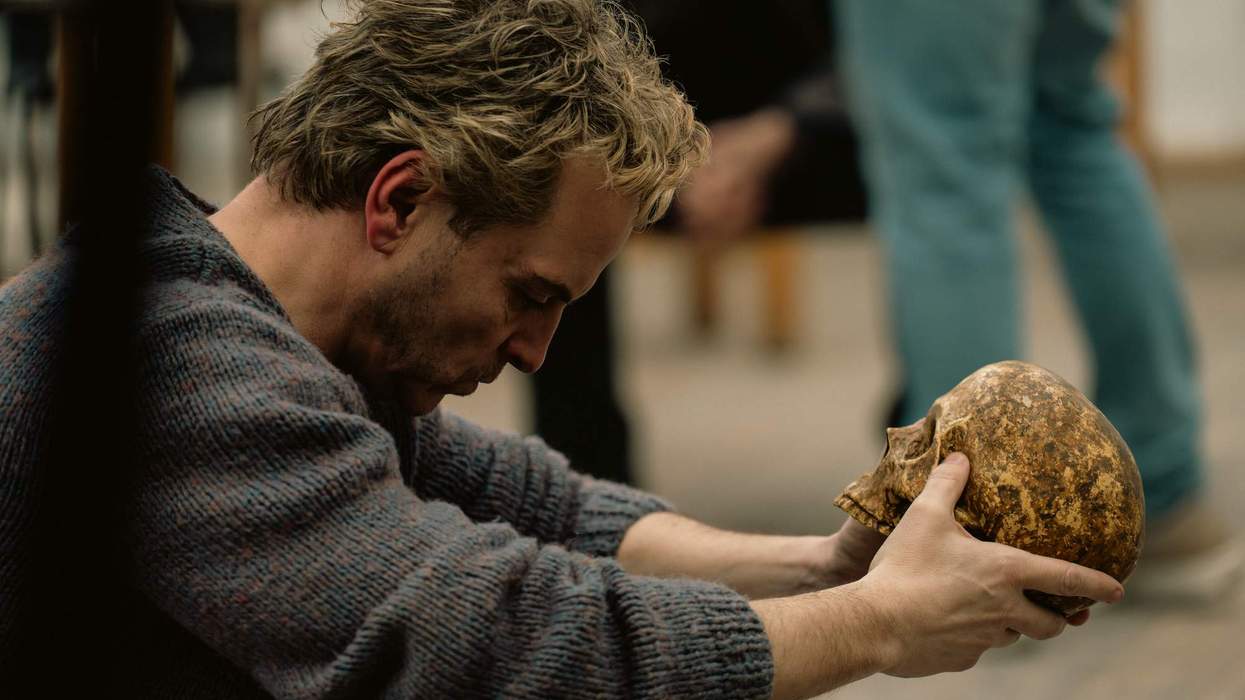
Scott is characteristically fantastic in the film, which dramatizes gay actor Ian Charleson’s portrayal of Hamlet in his final days, as he was dying of AIDS-related complications. As Charleson, Scott never makes the sort of painfully direct ploys for audience sympathy that many actors portraying terminal illness are tempted to indulge. Yes, if you have a pulse, this movie will make you cry, but one never gets the sense that tearjerking is Scott’s aim here. He embodies the symptoms of pneumonia and side effects of chemotherapy to painful effect, but he keeps his performance within his body, abandoning any vanity without any sort of hyperconsciousness of how those moments will play on camera.
But Scott also captures Charleson’s steely determination to play the role of a lifetime, packing mountains of vulnerability into microexpressions. A lesser actor would want to go big in Elsinore more often, but a generational talent like Scott, working off a fairly restrained script from Stephen Beresford, knows that a glance can say more than a shout. That makes the moments when Charleson does have uninhibited reactions, like during a painful conversation with his parents, hit like lightning bolts in a cloudy sky. If anything, Elsinore could be more of a showcase for Scott’s talents even though he occupies nearly every frame. The film’s montage-heavy third act feels like a departure from what makes the rest of the runtime so gripping to watch.
Still, there’s more than enough here to declare Scott the finest actor of the year, easily outperforming some Oscar frontrunners, like Matt Damon for The Odyssey, and edging out others, like John Malkovich for Wild Horse Nine. This is Scott at the peak of his abilities turning in a performance that still feels wholeheartedly committed to the real-life subject he portrays, without the burden of outside expectation.
But make no mistake, his win would be massive for LGBTQ+ artistry in Hollywood. Much has been made of the fact that he would be the first out gay man to win a best actor Oscar. But what would be seismic about a win, in my view, would be that Scott would take home the trophy for playing a gay man. In 2024, when Them contributor Michael Cuby ran a tally, over 80 Oscar nominations had gone to straight, cisgender actors for playing LGBTQ+ roles across the history of the filmmaking honors, and about 19% of them had won! Meanwhile, LGBTQ+ actors have been all but shut out.
The message this has sent is clear. It’s as though Hollywood has been saying, “We will take your stories as long as they are divorced from your bodies” — a stance the industry took toward transgender people to especially cruel effect in the era of Dallas Buyers Club and The Danish Girl. This approach ignores the fact that our narratives have been written by our flesh and, in the case of stories like Charleson’s, paid for with our very lives. Giving Scott an Oscar is one, very small step toward correcting this extractive approach to the LGBTQ+ community, but an important one nonetheless.
It makes it all the easier that Scott has certainly earned the trophy on the merits. The Academy should give him the honor for a part well played; leave it to us to celebrate its monumentality.
Get the best of what’s queer. Sign up for Them’s newsletters.