'%3E%3Cpath d='M16.3574 35.6519H12.9537L15.0491 18.8873L16.3574 35.6519ZM30.4229 54.0093L22.309 0.994385H7.91795L0 54.0093H10.6634L11.5802 46.3855H17.4014L17.9914 54.0093H30.4229Z' fill='%23971B20'/%3E%3Cpath d='M48.2073 41.8813C48.2073 43.4049 47.4892 44.0011 46.1144 44.0011H43.7595V11.0687H46.1144C47.4892 11.0687 48.2073 11.6636 48.2073 13.1885V41.8813ZM59.5273 43.6695V11.3326C59.5273 3.71323 53.5729 0.994385 47.8157 0.994385H31.7213V54.0093H47.8157C53.5729 54.0093 59.5273 51.29 59.5273 43.6695Z' fill='%23971B20'/%3E%3Cpath d='M90.183 0.994385H78.6039L75.0711 30.6157L71.9955 0.994385H59.4346L69.2474 54.0093H80.373L90.183 0.994385Z' fill='%23971B20'/%3E%3Cpath d='M107.063 42.3448C107.063 43.7359 105.951 44.5974 104.643 44.5974C103.269 44.5974 102.157 43.7359 102.157 42.3448V12.658C102.157 11.2676 103.269 10.4058 104.643 10.4058C105.951 10.4058 107.063 11.2676 107.063 12.658V42.3448ZM119.233 43.2723V11.7312C119.233 6.36384 112.952 -3.8147e-06 104.643 -3.8147e-06C96.2667 -3.8147e-06 89.9867 6.36384 89.9867 11.7312V43.2723C89.9867 48.6393 96.2667 55 104.643 55C112.952 55 119.233 48.6393 119.233 43.2723Z' fill='%23971B20'/%3E%3Cpath d='M150.976 43.9349V33.7309H139.069V42.3448C139.069 43.7359 137.957 44.5974 136.582 44.5974C135.076 44.5974 133.964 43.7359 133.964 42.3448V12.658C133.964 11.2676 135.076 10.4058 136.582 10.4058C137.957 10.4058 139.069 11.2676 139.069 12.658V21.2723H150.976V11.0687C150.976 5.70107 145.283 -3.8147e-06 136.582 -3.8147e-06C127.75 -3.8147e-06 121.796 5.70107 121.796 11.0687V43.9349C121.796 49.3022 127.75 55 136.582 55C145.283 55 150.976 49.3022 150.976 43.9349Z' fill='%23971B20'/%3E%3Cpath d='M167.478 35.6519H164.076L166.17 18.8873L167.478 35.6519ZM181.544 54.0093L173.432 0.994385H159.037L151.123 54.0093H161.785L162.704 46.3855H168.523L169.114 54.0093H181.544Z' fill='%23971B20'/%3E%3Cpath d='M205.412 10.4058V0.994385H177.081V10.4058H185.392V54.0093H197.428V10.4058H205.412Z' fill='%23971B20'/%3E%3Cpath d='M230.002 54.0093V43.9349H218.914V31.8746H226.635V21.8028H218.914V10.4058H230.002V0.994385H206.875V54.0093H230.002Z' fill='%23971B20'/%3E%3C/g%3E%3Cdefs%3E%3CclipPath id='clip0_260_7080'%3E%3Crect width='230' height='55' fill='white'/%3E%3C/clipPath%3E%3C/defs%3E%3C/svg%3E)
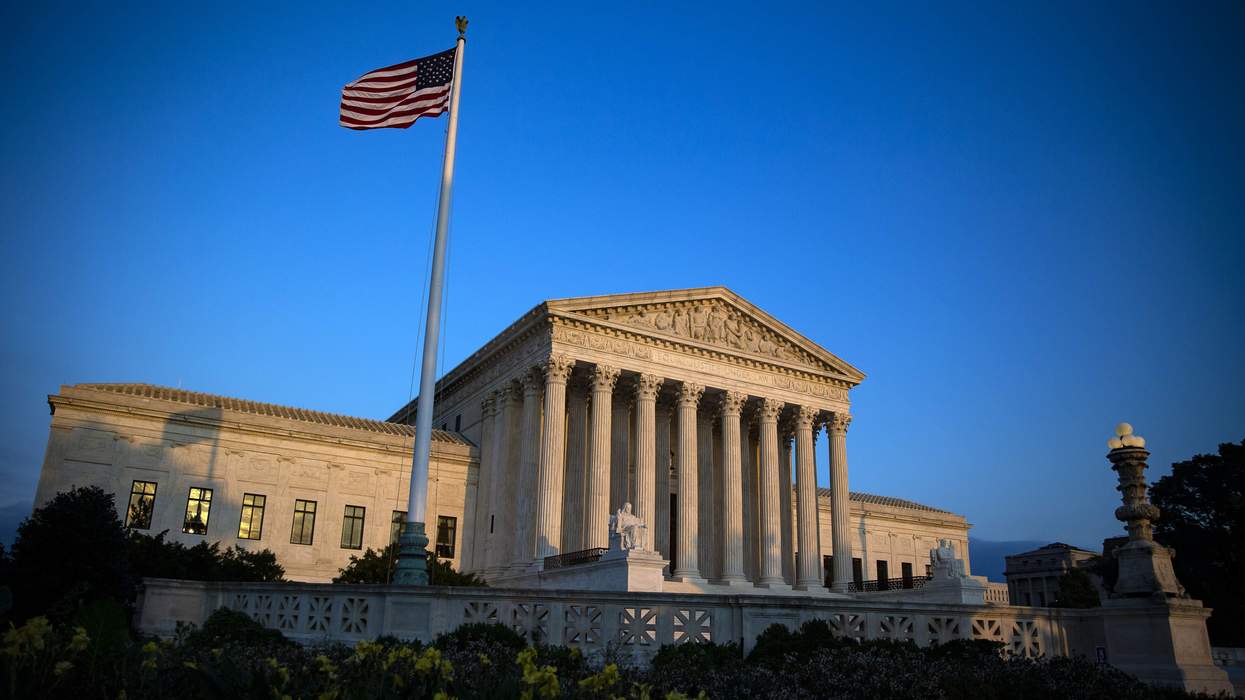

A coalition of civil rights groups filed an amicus brief today in the U.S. Supreme Court urging it to reconsider the deportation of LGBTQ+ migrants to countries where they face risk of persecution due to their identity.
In the brief, attorneys with Lambda Legal and Immigration Equality allege that the United States is aware of the risks these migrants face upon deportation to anti-LGBTQ+ countries, and is not doing enough to ensure their safety.
“The government cannot, in good faith, accept diplomatic assurances that LGBTQ people will not be persecuted or tortured in countries that still criminalize, harm, and fail to protect LGBTQ people,” the brief reads.
Related: Trump asks Supreme Court to intervene ahead of trial so the Pentagon can fire transgender troops
Also involved in the brief were the Council for Global Equality (CGE); Oasis Legal Services; Outright International; the Organization for Refuge, Asylum & Migration (ORAM), and Rainbow Railroad.
Under President Donald Trump, immigration officials began to deport undocumented immigrants to third-party countries in 2025 — often to countries with records of human rights violations where they have no prior ties. Many of these migrants are never given the chance to appeal their deportations in court.
The U.S. has signed deals with at least 37 countries to accept migrants from other nations, according to the brief. At least 19 of those countries criminalize same-sex intimacy, and anti-LGBTQ+ societal violence is prevalent in at least 28 of them, the brief reads.
The attorneys are not asking the government to block deportations to any particular country, but urge the Supreme Court to require prior notification before third-country deportations — and a more thorough chance to appeal these deportations over concerns related to violence or persecution.
“For LGBTQ people, that opportunity can be the difference between safety and the very harm the U.S. has already found they are likely to suffer,” the brief reads.
The filing highlights the “life-or-death consequences” that LGBTQ+ migrants face upon deportation to anti-LGBTQ+ countries, said co-author Jenny Pizer, senior director of strategic initiatives at Lambda Legal, in a written statement.
Third-country deportations immediately came under fire over ethical concerns, including how they would impact LGBTQ+ refugees and migrants. Yet the U.S. Supreme Court upheld the practice of third-country deportations in October.
“The administration knows full well that many of these countries criminalize LGBTQ+ people simply for existing, with some even imposing the death penalty, and many more subject them to pervasive societal violence with no access to police protection,” Pizer said.
Related: Supreme Court passes on case over outing trans students
Many LGBTQ+ refugees come to the United States seeking safety from anti-LGBTQ+ violence abroad. Since third-country deportations began, reports of LGBTQ+ migrants facing danger, violence, and anti-LGBTQ+ discrimination abroad have become increasingly common.
The Trump administration sent Andry Hernández Romero, a gay Venezuelan hairdresser, to an El Salvador megaprison in 2025 without trial. Upon release, Hernández Romero came forward to detail experiences of physical and sexual abuse. “It was an encounter with torture and death,” he told journalists in August 2025.
In 2025, the Trump administration deported a gay migrant from Guatemala, first sending him to Mexico — a country where he was previously kidnapped and raped. Also under Trump, immigration officials deported a Ghanaian man to Equatorial Guinea despite a judge’s order prohibiting his removal, Keifer Buckingham, managing director of the Council for Global Equality, said in a written statement issued Monday.
Related: Anti-LGBTQ+ hate group loses Supreme Court bid over right to misgender transgender people
Last year, immigration officials ordered a gay woman from Morocco to be sent to Cameroon, where same-sex intimacy is illegal. And in October, reports surfaced of a transgender woman originally from Cuba hiding in fear in her government-issued apartment in the Central African Republic.
“The [Trump] administration is actively deporting LGBTQI+ people who have a credible fear of persecution or torture to third countries where they have no ties or support, and face precarious, emergency conditions,” said Oliver Williams, U.S. policy and advocacy officer at Rainbow Railroad, in a written statement Monday. “The United States has a legal and moral duty not to send people to countries where they will face imminent danger.”