'%3E%3Cpath d='M16.3574 35.6519H12.9537L15.0491 18.8873L16.3574 35.6519ZM30.4229 54.0093L22.309 0.994385H7.91795L0 54.0093H10.6634L11.5802 46.3855H17.4014L17.9914 54.0093H30.4229Z' fill='%23971B20'/%3E%3Cpath d='M48.2073 41.8813C48.2073 43.4049 47.4892 44.0011 46.1144 44.0011H43.7595V11.0687H46.1144C47.4892 11.0687 48.2073 11.6636 48.2073 13.1885V41.8813ZM59.5273 43.6695V11.3326C59.5273 3.71323 53.5729 0.994385 47.8157 0.994385H31.7213V54.0093H47.8157C53.5729 54.0093 59.5273 51.29 59.5273 43.6695Z' fill='%23971B20'/%3E%3Cpath d='M90.183 0.994385H78.6039L75.0711 30.6157L71.9955 0.994385H59.4346L69.2474 54.0093H80.373L90.183 0.994385Z' fill='%23971B20'/%3E%3Cpath d='M107.063 42.3448C107.063 43.7359 105.951 44.5974 104.643 44.5974C103.269 44.5974 102.157 43.7359 102.157 42.3448V12.658C102.157 11.2676 103.269 10.4058 104.643 10.4058C105.951 10.4058 107.063 11.2676 107.063 12.658V42.3448ZM119.233 43.2723V11.7312C119.233 6.36384 112.952 -3.8147e-06 104.643 -3.8147e-06C96.2667 -3.8147e-06 89.9867 6.36384 89.9867 11.7312V43.2723C89.9867 48.6393 96.2667 55 104.643 55C112.952 55 119.233 48.6393 119.233 43.2723Z' fill='%23971B20'/%3E%3Cpath d='M150.976 43.9349V33.7309H139.069V42.3448C139.069 43.7359 137.957 44.5974 136.582 44.5974C135.076 44.5974 133.964 43.7359 133.964 42.3448V12.658C133.964 11.2676 135.076 10.4058 136.582 10.4058C137.957 10.4058 139.069 11.2676 139.069 12.658V21.2723H150.976V11.0687C150.976 5.70107 145.283 -3.8147e-06 136.582 -3.8147e-06C127.75 -3.8147e-06 121.796 5.70107 121.796 11.0687V43.9349C121.796 49.3022 127.75 55 136.582 55C145.283 55 150.976 49.3022 150.976 43.9349Z' fill='%23971B20'/%3E%3Cpath d='M167.478 35.6519H164.076L166.17 18.8873L167.478 35.6519ZM181.544 54.0093L173.432 0.994385H159.037L151.123 54.0093H161.785L162.704 46.3855H168.523L169.114 54.0093H181.544Z' fill='%23971B20'/%3E%3Cpath d='M205.412 10.4058V0.994385H177.081V10.4058H185.392V54.0093H197.428V10.4058H205.412Z' fill='%23971B20'/%3E%3Cpath d='M230.002 54.0093V43.9349H218.914V31.8746H226.635V21.8028H218.914V10.4058H230.002V0.994385H206.875V54.0093H230.002Z' fill='%23971B20'/%3E%3C/g%3E%3Cdefs%3E%3CclipPath id='clip0_260_7080'%3E%3Crect width='230' height='55' fill='white'/%3E%3C/clipPath%3E%3C/defs%3E%3C/svg%3E)
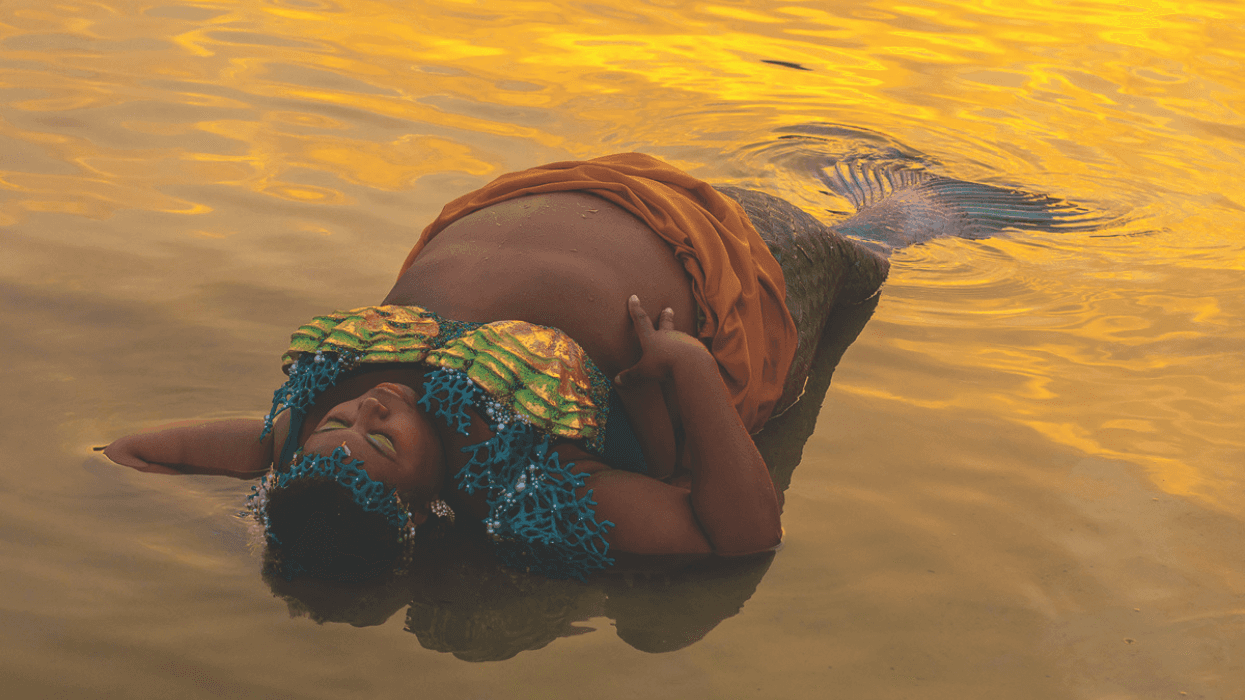

In her youth, Chè Monique remembers the life-changing experience of watching the 1989 animated Disney film The Little Mermaid. “I would love to be part of that world,” Monique recalls thinking of that underwater fantasia and its magical finned denizens. Afterward, she felt a special connection with water and the ocean — and also something of a pull.
While The Little Mermaid sparked her youthful fascination with mermaids, it was the 2012 Capital Pride Parade in Washington, D.C., which crystallized this calling as an adult. The theme of that parade was “What’s Your Fantasy?” The answer, of course, was to become a mermaid, and this response marked the beginning of a surprising career.
Today, Monique is very much part of the merfolk world. These are no legendary sea creatures, but real-life people who adorn tails, cosplay, and find creativity and community with one another. Across the world, merfolk — many of them, like Monique, are also queer — gather at conventions, stage underwater ballets, perform in pageants and children’s pool parties, and advocate for water conservation. Monique herself is a model, a “mertivational” speaker, and a certified professional who instructs others in swimming and water safety.
It’s not easy being a merperson. For one, the cost can be prohibitive. At the time of Monique’s mer-awakening, a tail crafted from silicone was, at minimum, $3,000. But in recent years, retailers like Mertailor, Fin Folk, and Fin Fun have begun offering more affordable options out of fabric, with an entry point of only $100.
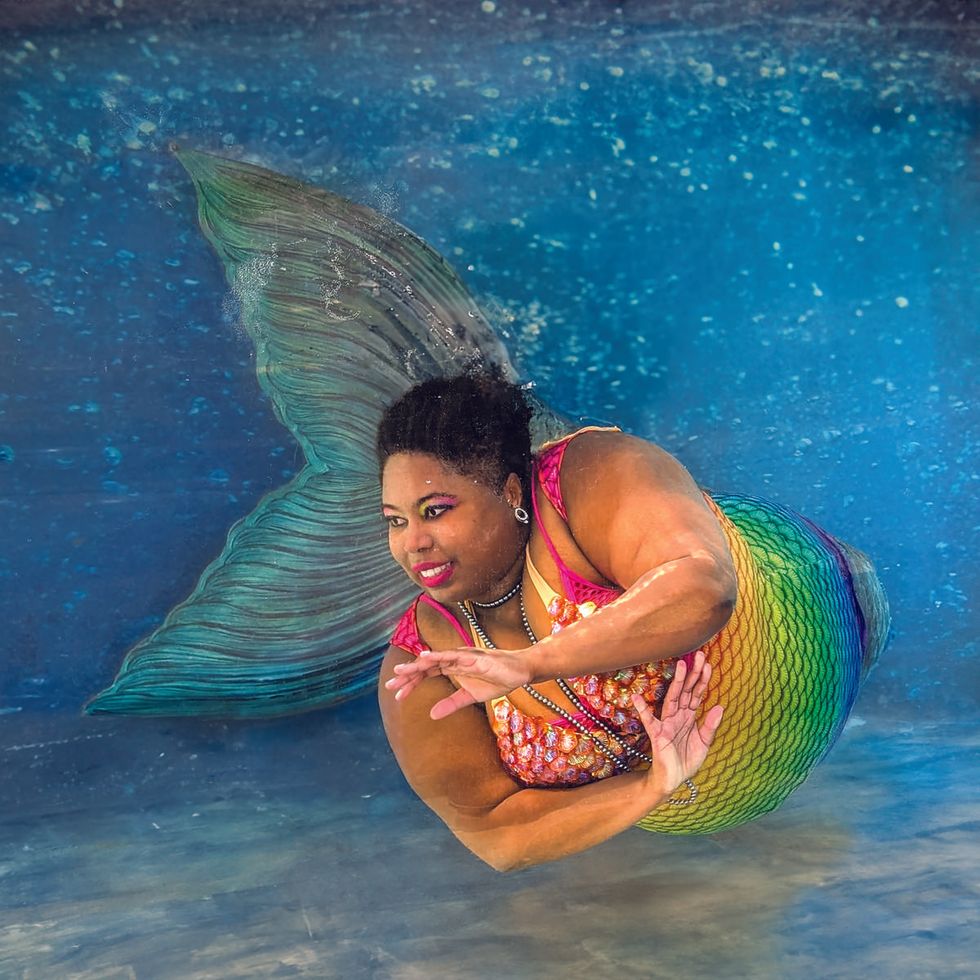 Chè MoniquePhoto by Izriella/edited by Mermaid Mystika
In addition to cash, Monique has observed that human cultural expectations can make this world feel inaccessible. She recalls once seeing a fat Latina woman wearing an Ariel shirt — and she was inspired to create clothing that was more representative than that slim white character. Monique thought at the time, “It would be really rad if someone who looked more like Ariel wore a shirt with a mermaid who looked more like me.”
So, in 2015, Monique founded the Society of Fat Mermaids, which promotes size inclusion and diversity within the merfolk community. The group, which offers both apparel and a “pod” of support, now boasts 5,000 members on Facebook and over 10,000 followers on Instagram @societyoffatmermaids.
The work of creating inclusion and fighting fatphobia is important to Monique. The mermaid, who has a background in burlesque, recalls the first experience of going viral due to body-positive photography of her in a tail. The trolls be damned, “I realized in that moment that just because I sit at so many intersections, just showing up is pretty profound liberation work,” she says.
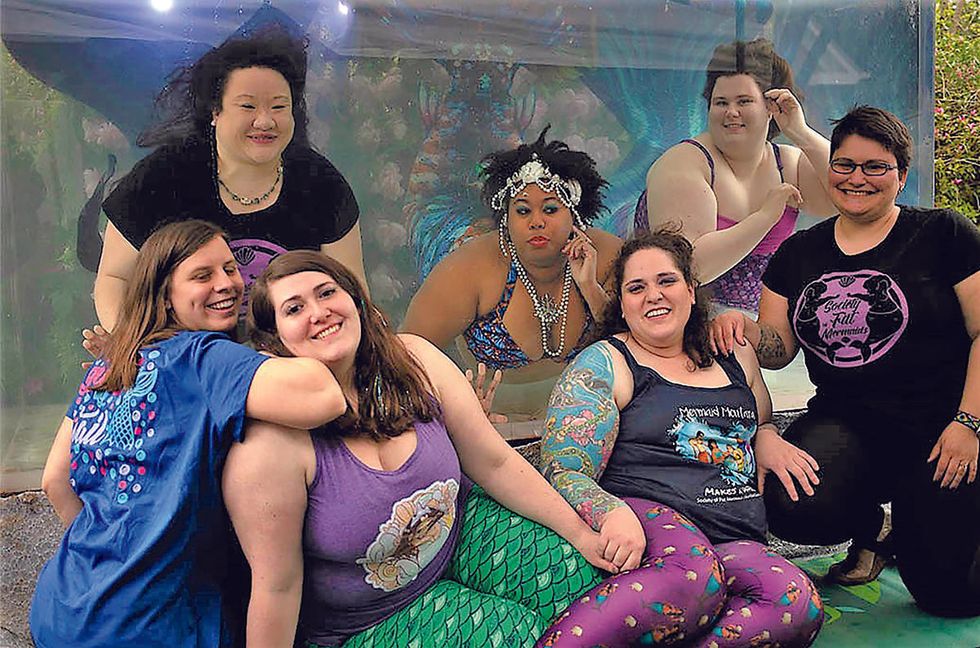 Members of the Society of Fat MermaidMorgana Alba
The world is seeing this work. In 2023, the Society’s mission reached a platform of millions with the release of the Netflix docuseries MerPeople, which included Monique’s story, among others who practice “mermaiding,” in what is now estimated to be a half-billion-dollar industry.
In addition to Netflix, Monique also received a wave of press tied to the release of the 2023 live-action version of The Little Mermaid, which notably cast a Black actress, Halle Bailey, as the lead. The casting caused consternation and online outrage among some right-wingers, but Monique found that, overall, there was a sea of support.
“I felt like the, Of course mermaids can be Black voices were louder than the, Oh my gosh, Black mermaids voices,” she shares.
Today, Monique’s work with the Society continues. She is preparing to launch a “School for Fish,” an online resource that provides beginner lessons in mermaiding as well as panel discussions on topics like gender diversity in the field. “Mermaiding is one of the few spaces where men are underrepresented,” she notes.
“I’m very excited about School for Fish just as a space for people to have access to this community in a deeper way than a cool TikTok,” she adds.
Above all, Monique hopes that her work allows others to pursue their dreams, as fantastical as they may seem. “Don’t let people’s stress response dictate your life. Be you,” she urges.
And for queer people on both land and sea, Monique shares a timely message for Pride season as well: “We have always been, we will always be.”
This article is part of The Advocate's July-Aug 2026 print issue, on newsstands July 7. Support queer media and subscribe — or download the issue now through Apple News+, Zinio, Nook, or PressReader.