'%3E%3Cpath d='M16.3574 35.6519H12.9537L15.0491 18.8873L16.3574 35.6519ZM30.4229 54.0093L22.309 0.994385H7.91795L0 54.0093H10.6634L11.5802 46.3855H17.4014L17.9914 54.0093H30.4229Z' fill='%23971B20'/%3E%3Cpath d='M48.2073 41.8813C48.2073 43.4049 47.4892 44.0011 46.1144 44.0011H43.7595V11.0687H46.1144C47.4892 11.0687 48.2073 11.6636 48.2073 13.1885V41.8813ZM59.5273 43.6695V11.3326C59.5273 3.71323 53.5729 0.994385 47.8157 0.994385H31.7213V54.0093H47.8157C53.5729 54.0093 59.5273 51.29 59.5273 43.6695Z' fill='%23971B20'/%3E%3Cpath d='M90.183 0.994385H78.6039L75.0711 30.6157L71.9955 0.994385H59.4346L69.2474 54.0093H80.373L90.183 0.994385Z' fill='%23971B20'/%3E%3Cpath d='M107.063 42.3448C107.063 43.7359 105.951 44.5974 104.643 44.5974C103.269 44.5974 102.157 43.7359 102.157 42.3448V12.658C102.157 11.2676 103.269 10.4058 104.643 10.4058C105.951 10.4058 107.063 11.2676 107.063 12.658V42.3448ZM119.233 43.2723V11.7312C119.233 6.36384 112.952 -3.8147e-06 104.643 -3.8147e-06C96.2667 -3.8147e-06 89.9867 6.36384 89.9867 11.7312V43.2723C89.9867 48.6393 96.2667 55 104.643 55C112.952 55 119.233 48.6393 119.233 43.2723Z' fill='%23971B20'/%3E%3Cpath d='M150.976 43.9349V33.7309H139.069V42.3448C139.069 43.7359 137.957 44.5974 136.582 44.5974C135.076 44.5974 133.964 43.7359 133.964 42.3448V12.658C133.964 11.2676 135.076 10.4058 136.582 10.4058C137.957 10.4058 139.069 11.2676 139.069 12.658V21.2723H150.976V11.0687C150.976 5.70107 145.283 -3.8147e-06 136.582 -3.8147e-06C127.75 -3.8147e-06 121.796 5.70107 121.796 11.0687V43.9349C121.796 49.3022 127.75 55 136.582 55C145.283 55 150.976 49.3022 150.976 43.9349Z' fill='%23971B20'/%3E%3Cpath d='M167.478 35.6519H164.076L166.17 18.8873L167.478 35.6519ZM181.544 54.0093L173.432 0.994385H159.037L151.123 54.0093H161.785L162.704 46.3855H168.523L169.114 54.0093H181.544Z' fill='%23971B20'/%3E%3Cpath d='M205.412 10.4058V0.994385H177.081V10.4058H185.392V54.0093H197.428V10.4058H205.412Z' fill='%23971B20'/%3E%3Cpath d='M230.002 54.0093V43.9349H218.914V31.8746H226.635V21.8028H218.914V10.4058H230.002V0.994385H206.875V54.0093H230.002Z' fill='%23971B20'/%3E%3C/g%3E%3Cdefs%3E%3CclipPath id='clip0_260_7080'%3E%3Crect width='230' height='55' fill='white'/%3E%3C/clipPath%3E%3C/defs%3E%3C/svg%3E)
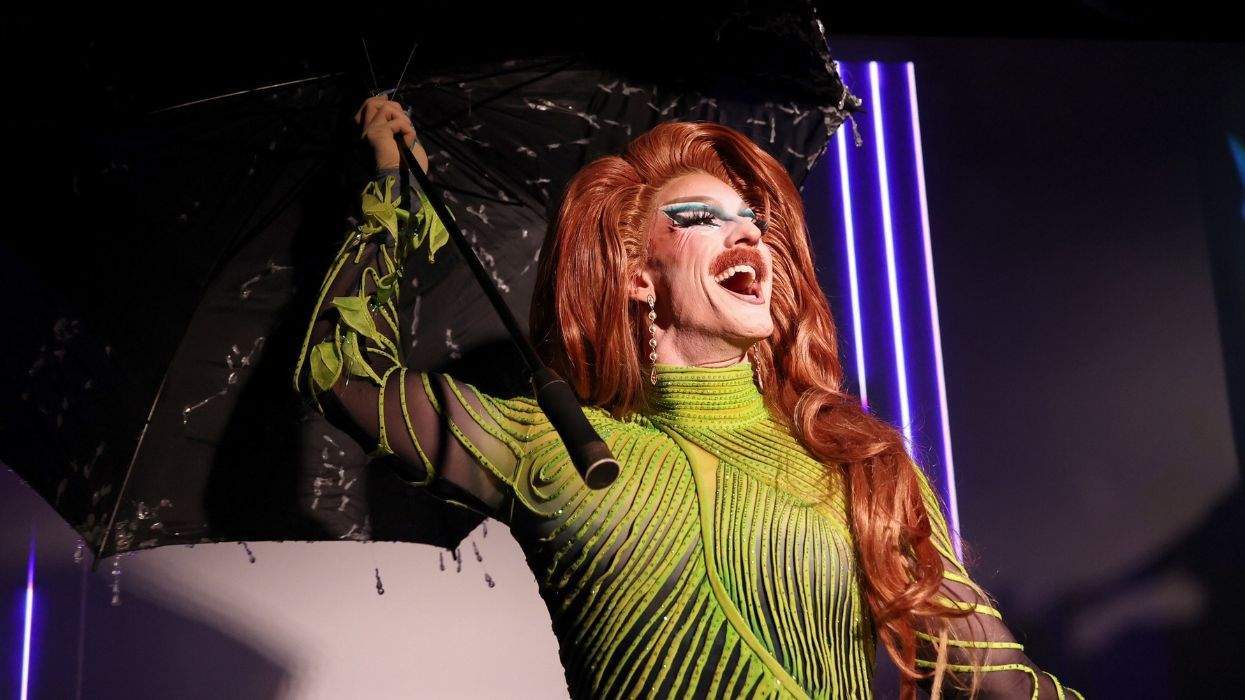

The first time Pattie Gonia saw a drag show, she could hardly imagine joining the performers onstage. In college in Lincoln, Nebraska, she watched queens at what she described as her hometown’s only gay bar. Their confidence stayed with her. So did the thought it provoked: “I could never give myself that much freedom or that permission.”
She eventually did. But freedom, she has learned, can unsettle other people.
“When I came out of the closet, a lot of people in my family or my friends were like, ‘How could you do this to me?’” she told Eric Eubank on the podcast I’m Feeling Queer Today! “And what I think I’ve processed now, what they actually meant to say was, ‘How dare you show me what freedom looks like?’”
Their conversation was recorded before outdoor apparel company Patagonia sued the drag artist and climate activist in January over her name and its use on merchandise. Released Thursday, the interview offers an account of the experiences and relationships behind the name now at the center of the dispute.
Eubank, a 20-year-old nonbinary writer who uses they/them pronouns, interviewed the drag queen and climate activist for the Future Perfect Project’s podcast, produced by LGBTQ+ young people. In a separate interview with The Advocate, Eubank said the pairing felt natural. Pattie Gonia’s drag and environmental advocacy, like the project’s work with queer youth, often attracts public attention without giving the people involved much say in how they are understood.
“They’re both often very dismissed and underestimated and used as talking points, but not invited to the conversation,” Eubank said.
Eubank first encountered the Future Perfect Project at 16. Their high school’s gay-straight alliance adviser connected students in Glendale, California, with the organization for a weeklong writing workshop. The students reflected on their experiences and ended the week by performing for community members, family, and allies.
At the time, Eubank said, it was a chance to voice things they had kept to themselves. Its effect lasted longer. “I think it was a space where I had permission to just share without having to filter and police my own thoughts and language and identity,” they said. The experience helped them see that they had something worth saying.
That history shaped how Eubank approached Pattie Gonia. They said their nonbinary identity is grounded in living as themselves without being confined by others’ expectations. They were interested in how someone else could take familiar structures — including expectations about gender, drag and who belongs outdoors — and transform them.
Pattie Gonia described growing up with expressions of love that came with limits on how she could present herself. She did not start doing drag until she was 27. By then, she said, she had learned to be openly queer while still giving up parts of herself to keep others comfortable.
“Love with conditions isn’t love,” she told Eubank. Drag gave her room to experiment beyond those conditions. “Drag at its best is permission.”
Related: Patagonia sues drag queen Pattie Gonia for trademark infringement
For Eubank, speaking with an artist they admired made that idea personal. The interview reminded them, they said, “that I do have permission to exist in the world how I choose to, and that power is no one else’s but my own.” The Future Perfect Project can offer young people a platform, they added, but it does not create their power.
That question of belonging runs through Pattie Gonia’s account of the outdoors. Nature was among the first places where she felt comfortable as a queer child, she said, before homophobia made sports, Boy Scouts and other outdoor experiences feel unsafe. Through drag, she returned to those spaces and began advocating for broader access.
At a 2024 rally in Washington, Pattie Gonia brought queer people and environmental advocates together to press for protections for mature and old-growth forests, then took the cause to lawmakers on Capitol Hill. In the podcast interview, she described a more personal aim beneath her activism: helping people see themselves as part of nature.
Her work has also helped her find people to share it with. Pattie Gonia told Eubank about meeting Oakland drag king Vera on a group hike. The two went on to create SAVE HER!, a drag show that has toured nationally. As some new relationships grew, others fell away.
“When I started doing drag, a lot of people in my hometown, home state, family decided to quietly walk out of my life,” she said. “That was really hard and really painful.”
The lawsuit has since placed the name attached to that work under scrutiny. As The Advocate previously reported, Patagonia alleges that Pattie Gonia’s branded merchandise and use of designs resembling its logo could confuse consumers. The company also objects to her 2025 application to register “Pattie Gonia” as a trademark for goods and services, including apparel.
Pattie Gonia broke her public silence in May, saying the case threatened her ability to use her name and could impose legal costs far beyond the dollar amount Patagonia sought in damages. The company says it tried for years to reach an agreement that would protect its trademarks. The parties dispute what they previously agreed to and what a resolution would require. Trademark lawyers interviewed by Out, The Advocate’s sibling publication, differed over the strength of Patagonia’s claims, including whether consumers are likely to believe the company is affiliated with Pattie Gonia’s work.
Related: Pattie Gonia: Patagonia is trying to 'bully' and 'erase' her with lawsuit
Eubank said they did not know the details of those negotiations. Learning about the lawsuit after their interview, however, reinforced for them how many obstacles can confront queer artists and activists, “especially in places that we might not expect them to come from.”
It also sharpened a question Eubank had brought to the podcast: Who gets to speak when queer lives become subjects of public debate? Young people, they told The Advocate, can come away from those debates feeling that their voices carry little weight.
“There are so many conversations about youth,” Eubank said, “but seldom do those conversations actually include the youth that are being spoken about.” Through the Future Perfect Project, they said, they learned that people would listen.
Near the end of their exchange, Eubank asked Pattie Gonia how she keeps working without burning out. She spoke about getting outside and finding people she can “exhale around.” Later, Eubank said the conversation had reminded them that joy belongs in difficult conversations, too.
“This podcast has been a reminder that joy has a seat at the table,” they said.
Watch the interview with Pattie Gonia below.
- YouTube www.youtube.com