'%3E%3Cpath d='M16.3574 35.6519H12.9537L15.0491 18.8873L16.3574 35.6519ZM30.4229 54.0093L22.309 0.994385H7.91795L0 54.0093H10.6634L11.5802 46.3855H17.4014L17.9914 54.0093H30.4229Z' fill='%23971B20'/%3E%3Cpath d='M48.2073 41.8813C48.2073 43.4049 47.4892 44.0011 46.1144 44.0011H43.7595V11.0687H46.1144C47.4892 11.0687 48.2073 11.6636 48.2073 13.1885V41.8813ZM59.5273 43.6695V11.3326C59.5273 3.71323 53.5729 0.994385 47.8157 0.994385H31.7213V54.0093H47.8157C53.5729 54.0093 59.5273 51.29 59.5273 43.6695Z' fill='%23971B20'/%3E%3Cpath d='M90.183 0.994385H78.6039L75.0711 30.6157L71.9955 0.994385H59.4346L69.2474 54.0093H80.373L90.183 0.994385Z' fill='%23971B20'/%3E%3Cpath d='M107.063 42.3448C107.063 43.7359 105.951 44.5974 104.643 44.5974C103.269 44.5974 102.157 43.7359 102.157 42.3448V12.658C102.157 11.2676 103.269 10.4058 104.643 10.4058C105.951 10.4058 107.063 11.2676 107.063 12.658V42.3448ZM119.233 43.2723V11.7312C119.233 6.36384 112.952 -3.8147e-06 104.643 -3.8147e-06C96.2667 -3.8147e-06 89.9867 6.36384 89.9867 11.7312V43.2723C89.9867 48.6393 96.2667 55 104.643 55C112.952 55 119.233 48.6393 119.233 43.2723Z' fill='%23971B20'/%3E%3Cpath d='M150.976 43.9349V33.7309H139.069V42.3448C139.069 43.7359 137.957 44.5974 136.582 44.5974C135.076 44.5974 133.964 43.7359 133.964 42.3448V12.658C133.964 11.2676 135.076 10.4058 136.582 10.4058C137.957 10.4058 139.069 11.2676 139.069 12.658V21.2723H150.976V11.0687C150.976 5.70107 145.283 -3.8147e-06 136.582 -3.8147e-06C127.75 -3.8147e-06 121.796 5.70107 121.796 11.0687V43.9349C121.796 49.3022 127.75 55 136.582 55C145.283 55 150.976 49.3022 150.976 43.9349Z' fill='%23971B20'/%3E%3Cpath d='M167.478 35.6519H164.076L166.17 18.8873L167.478 35.6519ZM181.544 54.0093L173.432 0.994385H159.037L151.123 54.0093H161.785L162.704 46.3855H168.523L169.114 54.0093H181.544Z' fill='%23971B20'/%3E%3Cpath d='M205.412 10.4058V0.994385H177.081V10.4058H185.392V54.0093H197.428V10.4058H205.412Z' fill='%23971B20'/%3E%3Cpath d='M230.002 54.0093V43.9349H218.914V31.8746H226.635V21.8028H218.914V10.4058H230.002V0.994385H206.875V54.0093H230.002Z' fill='%23971B20'/%3E%3C/g%3E%3Cdefs%3E%3CclipPath id='clip0_260_7080'%3E%3Crect width='230' height='55' fill='white'/%3E%3C/clipPath%3E%3C/defs%3E%3C/svg%3E)
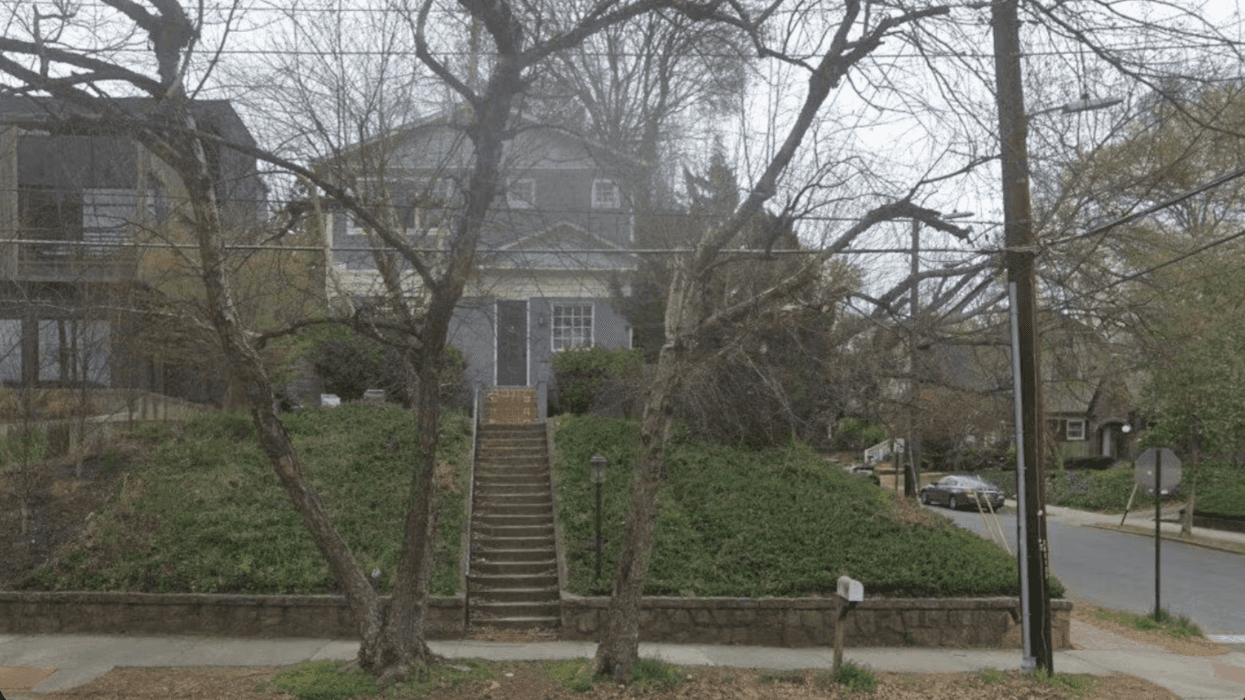

The Atlanta home where a gay man’s arrest led to one of the U.S. Supreme Court’s most consequential anti-LGBTQ+ rulings has been approved for demolition, despite efforts to preserve the piece of Georgia history.
Atlanta zoning officials approved a request on November 5 to demolish the house at 811 Ponce de Leon Place NE, where Michael Hardwick was arrested in 1982 for having sex with another man.
His challenge to that arrest became Bowers v. Hardwick, the landmark 1986 case in which the U.S. Supreme Court ruled 5-4 to uphold Georgia’s sodomy law as applied to consensual sex between men. The law criminalized oral and anal sex regardless of the participants’ sex.
The Supreme Court overruled that decision in 2003 in Lawrence v. Texas, which struck down laws criminalizing private, consensual sexual intimacy between adults of the same sex. Now, the house where Hardwick’s case began faces an uncertain future.
Related: The Court Cases That Changed Our World
In 1982, an Atlanta police officer went to Hardwick’s home with an invalid warrant and found him having oral sex with another man. Hardwick was arrested for sodomy, a felony that could have landed him in prison for up to 20 years.
“They kept moving me from cell to cell and announcing that I was in for cock sucking,” Hardwick told The Advocate in 1990. “I was already in shock and was having to physically defend myself from these prison brutes. I was like an animal — just thinking about survival.”
Though the local prosecutor declined to pursue the charge, the American Civil Liberties Union and other lawyers helped Hardwick challenge Georgia’s sodomy law.
“When people hear my name, they think of a radical cocksucker. People don’t know anything else about me,” Hardwick said.
Recalling his decision to challenge the law, he told the magazine, “I knew then I couldn’t walk away.”
Following the ruling, Hardwick moved out of Georgia and died in 1991. The house later changed hands and underwent renovations around 2016, according to RoughDraft Atlanta.
Related: How a 1969 screening of an Andy Warhol film became the ‘Stonewall of the South’
Those renovations became central to the demolition argument made by Stephen Rothman, the lawyer representing current owners Paul and Penny Gutierrez.
Rothman said the renovations were poorly constructed and cited black mold and deferred maintenance in arguing that restoring the house would cost more than replacing it. He also argued that the alterations had left the building substantially different from the home where Hardwick was arrested.
“To say you’ve got to preserve the house because of an event that occurred in a different kind of structure is as silly as saying, ‘We’ve discovered at the Walmart on Howell Mill there was a Civil War skirmish, so you’ve got to save the Walmart,’” Rothman said. “It’s the historical event and the thing that’s there now [has] no relationship.”
Advocates seeking to save the house pointed to its inclusion in Atlanta’s 2023 LGBTQ+ Historic Context Statement, which documents places associated with the city’s LGBTQ+ history. Inclusion in the report, however, does not itself establish landmark protection.
Related: Every Supreme Court decision that radically changed LGBTQ+ rights
The Atlanta City Council also approved a resolution on November 2 requesting that the city begin considering the property for landmark designation. That resolution did not itself designate the house a landmark, and zoning officials proceeded with their vote three days later.
The Gutierrezes, who plan to build a new house with a pool, have said they are open to installing a historical marker on the property to recognize its role in LGBTQ+ history.
NEW! Please make a tax-deductible donation to The Advocate Journalism Project to directly support LGBTQ+ journalism. Help us expand our Washington, D.C., bureau to bring you more breaking news from the nation's capital and fund crucial investigative reporting, compelling video reports, and sustain our 60-year print archive, a history of the queer civil rights movement.