'%3E%3Cpath d='M16.3574 35.6519H12.9537L15.0491 18.8873L16.3574 35.6519ZM30.4229 54.0093L22.309 0.994385H7.91795L0 54.0093H10.6634L11.5802 46.3855H17.4014L17.9914 54.0093H30.4229Z' fill='%23971B20'/%3E%3Cpath d='M48.2073 41.8813C48.2073 43.4049 47.4892 44.0011 46.1144 44.0011H43.7595V11.0687H46.1144C47.4892 11.0687 48.2073 11.6636 48.2073 13.1885V41.8813ZM59.5273 43.6695V11.3326C59.5273 3.71323 53.5729 0.994385 47.8157 0.994385H31.7213V54.0093H47.8157C53.5729 54.0093 59.5273 51.29 59.5273 43.6695Z' fill='%23971B20'/%3E%3Cpath d='M90.183 0.994385H78.6039L75.0711 30.6157L71.9955 0.994385H59.4346L69.2474 54.0093H80.373L90.183 0.994385Z' fill='%23971B20'/%3E%3Cpath d='M107.063 42.3448C107.063 43.7359 105.951 44.5974 104.643 44.5974C103.269 44.5974 102.157 43.7359 102.157 42.3448V12.658C102.157 11.2676 103.269 10.4058 104.643 10.4058C105.951 10.4058 107.063 11.2676 107.063 12.658V42.3448ZM119.233 43.2723V11.7312C119.233 6.36384 112.952 -3.8147e-06 104.643 -3.8147e-06C96.2667 -3.8147e-06 89.9867 6.36384 89.9867 11.7312V43.2723C89.9867 48.6393 96.2667 55 104.643 55C112.952 55 119.233 48.6393 119.233 43.2723Z' fill='%23971B20'/%3E%3Cpath d='M150.976 43.9349V33.7309H139.069V42.3448C139.069 43.7359 137.957 44.5974 136.582 44.5974C135.076 44.5974 133.964 43.7359 133.964 42.3448V12.658C133.964 11.2676 135.076 10.4058 136.582 10.4058C137.957 10.4058 139.069 11.2676 139.069 12.658V21.2723H150.976V11.0687C150.976 5.70107 145.283 -3.8147e-06 136.582 -3.8147e-06C127.75 -3.8147e-06 121.796 5.70107 121.796 11.0687V43.9349C121.796 49.3022 127.75 55 136.582 55C145.283 55 150.976 49.3022 150.976 43.9349Z' fill='%23971B20'/%3E%3Cpath d='M167.478 35.6519H164.076L166.17 18.8873L167.478 35.6519ZM181.544 54.0093L173.432 0.994385H159.037L151.123 54.0093H161.785L162.704 46.3855H168.523L169.114 54.0093H181.544Z' fill='%23971B20'/%3E%3Cpath d='M205.412 10.4058V0.994385H177.081V10.4058H185.392V54.0093H197.428V10.4058H205.412Z' fill='%23971B20'/%3E%3Cpath d='M230.002 54.0093V43.9349H218.914V31.8746H226.635V21.8028H218.914V10.4058H230.002V0.994385H206.875V54.0093H230.002Z' fill='%23971B20'/%3E%3C/g%3E%3Cdefs%3E%3CclipPath id='clip0_260_7080'%3E%3Crect width='230' height='55' fill='white'/%3E%3C/clipPath%3E%3C/defs%3E%3C/svg%3E)


This story originally appeared on Them.
A Spokane, Washington, coffee stand has taken down a transphobic and ableist sign after community backlash, according to local newspaper The Spokesman-Review.
2nd Base Espresso adjusted the reader board outside its business earlier this month to display the message “Trans women are retarded men.”
The sign was removed by July 14, per local NBC affiliate KHQ, but only after multiple residents lobbied city officials over the flagrantly offensive message. Despite these complaints, the mayor’s office originally said that the sign was protected as free speech.
“While we do not condone this type of messaging, it is our understanding that it’s protected under the First Amendment,” Erin Hut, the city’s director of communications and marketing, told KHQ. “Anyone who believes they’ve been subjected to a hate crime or bias incident is encouraged to call the Washington Hate Crimes and Bias Incidents Hot Line.”
Per the Spokesman-Review, 2nd Base Espresso is often known for putting up “offensive and often inappropriate signs.” (Indeed, the sign featuring the transphobic and ableist slur was reportedly replaced with one telling people to “Calm your tits.”)
In the past, the sign has included crude and demeaning references to sex, genitalia, deportations, and Mexican people. In 2017, 2nd Base Espresso put up a sign that said, “Why can’t u play Uno with Mexicans? They take all the green cards,” the Spokesman-Review reported at the time.
The business received a flood of negative reviews online after its most recent sign, leading Yelp to temporarily shut down its page. Several recent one-star reviews trash the business for its signage.
“This establishment should be ashamed of itself. The fact you think it’s funny to put such nasty messages about your fellow human beings on your sign is appalling,” one review stated, per the Spokesman-Review.
One local resident told the Spokesman-Review that, while the signage has had some offensive words in the past, this was the first time she remembers seeing a slur. Elbe Seaton, who is queer and has a special needs child, said “Spokane will make headlines for the wrong reasons. People will say, ‘Oh, that’s Spokane for you.’ But that’s not us. That’s not Hillyard.”.”
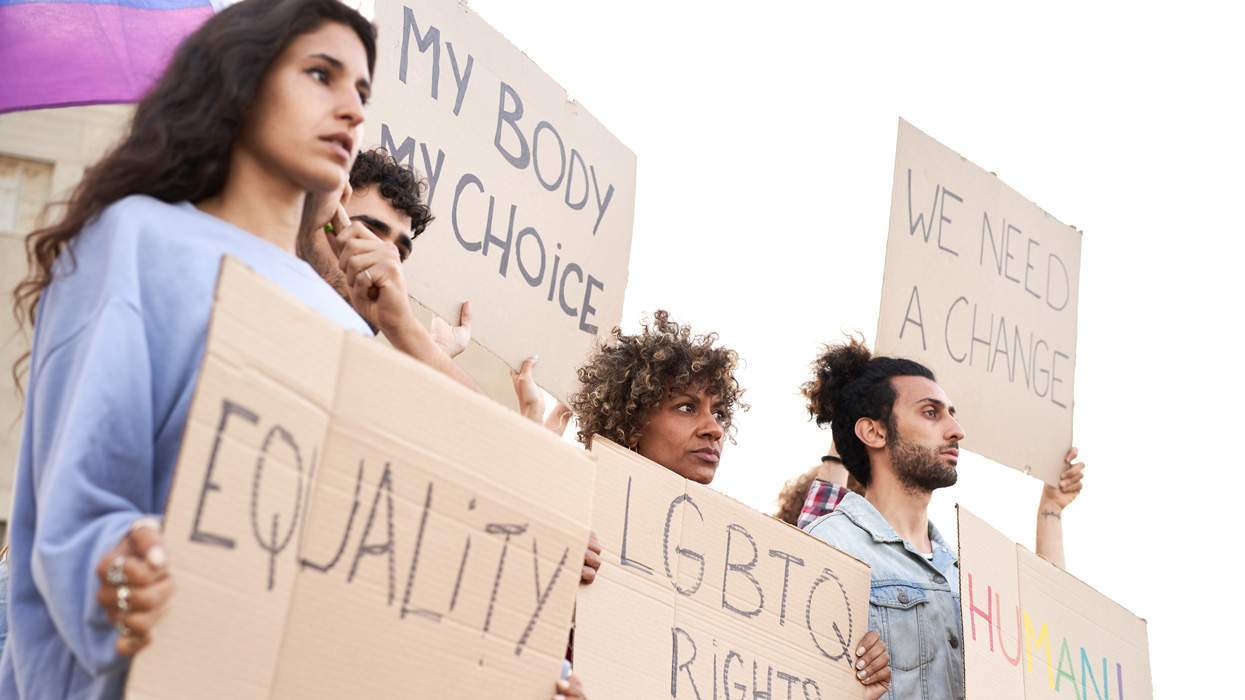
Though the business removed the sign, Spokane residents gathered in protest this past Sunday, July 19, saying they wanted a more positive environment in Spokane’s Hillyard neighborhood.
“I'm just tired of seeing hatred and ugliness in the world, and everyone's calling First Amendment, and she can put what she wants on her board,” the demonstrator told KHQ. “And I can stand out here and put what I want on my sign.”
"They used some pretty horrendous language targeting trans people. And I think that is obviously disgusting,” Daniel Jolley, another protester, told local affiliate KXLY. “I think we should come here and fight against that.”
The protest also drew counterprotesters, who said the sign was protected by the First Amendment.
Of course, as people really should learn in grade school, the First Amendment protects people from government censorship of speech, not public backlash for inflammatory speech.
Aside from the use of a transphobic slur, the sign’s use of the ableist slur “retarted” speaks to the unwelcome cultural resurgence of the word, once considered taboo. In an April 2025 episode of the Joe Rogan Experience, the host said, “The word ‘retarded’ is back, and it’s one of the great culture victories,” adding that the comeback was “probably spurred on by podcasts.”
Last year, highly public people, including Elon Musk and Kanye West used the word in public. The resurgence is part of an “apparent death of empathy” Adrienne Massanari, a professor at American University, told CNN.
“What you’re seeing now, people’s masks are off,” she said in a feature on the return of the slur. “This is not just misunderstanding but the mischaracterization and demonization of communities. The use of that kind of language is signaling a shift, a desire to sort of push the envelope.”
Get the best of what’s queer. Sign up for Them’s newsletters.