'%3E%3Cpath d='M16.3574 35.6519H12.9537L15.0491 18.8873L16.3574 35.6519ZM30.4229 54.0093L22.309 0.994385H7.91795L0 54.0093H10.6634L11.5802 46.3855H17.4014L17.9914 54.0093H30.4229Z' fill='%23971B20'/%3E%3Cpath d='M48.2073 41.8813C48.2073 43.4049 47.4892 44.0011 46.1144 44.0011H43.7595V11.0687H46.1144C47.4892 11.0687 48.2073 11.6636 48.2073 13.1885V41.8813ZM59.5273 43.6695V11.3326C59.5273 3.71323 53.5729 0.994385 47.8157 0.994385H31.7213V54.0093H47.8157C53.5729 54.0093 59.5273 51.29 59.5273 43.6695Z' fill='%23971B20'/%3E%3Cpath d='M90.183 0.994385H78.6039L75.0711 30.6157L71.9955 0.994385H59.4346L69.2474 54.0093H80.373L90.183 0.994385Z' fill='%23971B20'/%3E%3Cpath d='M107.063 42.3448C107.063 43.7359 105.951 44.5974 104.643 44.5974C103.269 44.5974 102.157 43.7359 102.157 42.3448V12.658C102.157 11.2676 103.269 10.4058 104.643 10.4058C105.951 10.4058 107.063 11.2676 107.063 12.658V42.3448ZM119.233 43.2723V11.7312C119.233 6.36384 112.952 -3.8147e-06 104.643 -3.8147e-06C96.2667 -3.8147e-06 89.9867 6.36384 89.9867 11.7312V43.2723C89.9867 48.6393 96.2667 55 104.643 55C112.952 55 119.233 48.6393 119.233 43.2723Z' fill='%23971B20'/%3E%3Cpath d='M150.976 43.9349V33.7309H139.069V42.3448C139.069 43.7359 137.957 44.5974 136.582 44.5974C135.076 44.5974 133.964 43.7359 133.964 42.3448V12.658C133.964 11.2676 135.076 10.4058 136.582 10.4058C137.957 10.4058 139.069 11.2676 139.069 12.658V21.2723H150.976V11.0687C150.976 5.70107 145.283 -3.8147e-06 136.582 -3.8147e-06C127.75 -3.8147e-06 121.796 5.70107 121.796 11.0687V43.9349C121.796 49.3022 127.75 55 136.582 55C145.283 55 150.976 49.3022 150.976 43.9349Z' fill='%23971B20'/%3E%3Cpath d='M167.478 35.6519H164.076L166.17 18.8873L167.478 35.6519ZM181.544 54.0093L173.432 0.994385H159.037L151.123 54.0093H161.785L162.704 46.3855H168.523L169.114 54.0093H181.544Z' fill='%23971B20'/%3E%3Cpath d='M205.412 10.4058V0.994385H177.081V10.4058H185.392V54.0093H197.428V10.4058H205.412Z' fill='%23971B20'/%3E%3Cpath d='M230.002 54.0093V43.9349H218.914V31.8746H226.635V21.8028H218.914V10.4058H230.002V0.994385H206.875V54.0093H230.002Z' fill='%23971B20'/%3E%3C/g%3E%3Cdefs%3E%3CclipPath id='clip0_260_7080'%3E%3Crect width='230' height='55' fill='white'/%3E%3C/clipPath%3E%3C/defs%3E%3C/svg%3E)
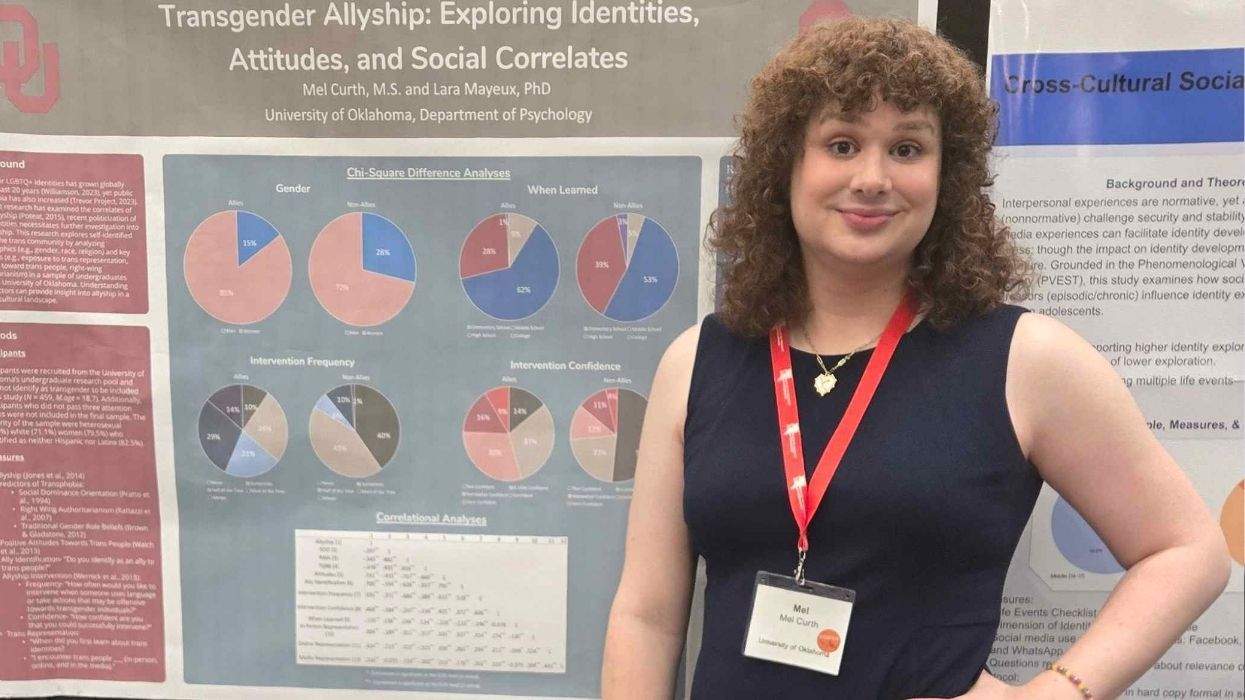
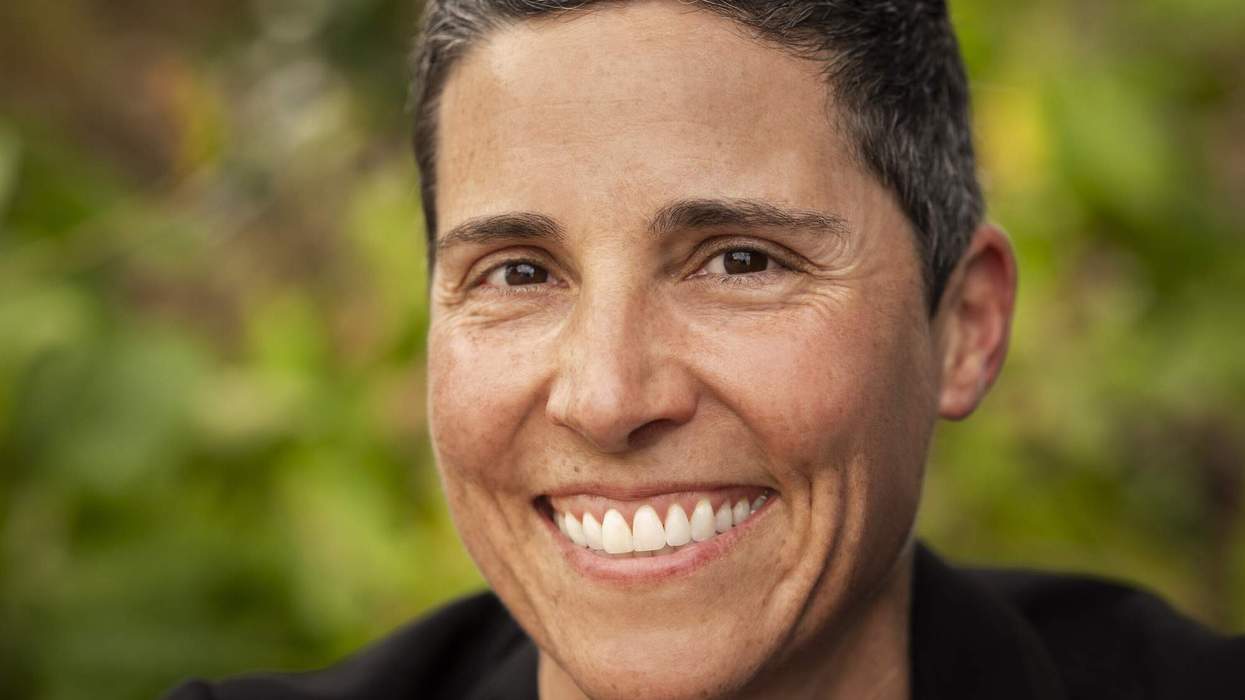
A transgender teaching assistant at the University of Oklahoma says she was thrust into a national debate after a routine grading dispute spiraled into death threats, media frenzy, and an outpouring of community support she never expected. She also says that the university made her the face of a national culture war and left much of the public with the false impression that she had been fired. She has not.
For months, Mel Curth existed mostly as an idea.
To conservatives, she became a symbol of what they saw as ideological intolerance inside higher education: a transgender instructor accused of punishing a student for expressing Christian beliefs about gender.
To many LGBTQ+ people, academics, and graduate students, she became something else entirely. To them, she was a young trans scholar caught in the machinery of a rapidly escalating culture war that transformed a classroom grading dispute into national political theater.
Related: Instructor who gave U of Oklahoma student a zero on anti-trans paper removed from teaching
Now, after the controversy exploded last fall, Curth is speaking extensively about what it felt like to live through it.
“I was just existing and doing my job,” Curth told The Advocate this week. “Yet everyone’s sort of projecting this idea onto me.”
The viral controversy began last November, when Samantha Fulnecky, then a junior at OU, received a zero on an essay assignment in a lifespan psychology course taught by Curth, a doctoral student and graduate teaching assistant. Fulnecky had argued that dismantling gender norms would move society "farther from God's original plan for humans," and later accused Curth of discriminating against her religious beliefs.
The dispute quickly escaped the boundaries of campus life. Oklahoma Republicans, including Gov. Kevin Stitt, conservative media figures, and Turning Point USA activists, amplified the story online. After Curth’s identity as a transgender woman became public, the backlash intensified.
 MEL CURTH
“There was one email that said, ‘You better watch your back because we’re going to get you,’” Curth recalled. At one point, she said, a reporter from Fox News showed up unannounced at her apartment door asking for an interview. “The escalation of it was certainly surreal,” she said.
The controversy became a vivid example of how quickly disputes involving transgender educators can metastasize into national political flashpoints, particularly as conservative activists increasingly target universities over LGBTQ+ inclusion and classroom discussions of gender.
Curth had only recently begun transitioning publicly in September 2024, just over a year before becoming a national headline.
“Finally finding a lot of congruence with myself,” she said, had given her confidence and reduced years of anxiety.
Then came the media storm.
On Thanksgiving, Curth said, a Turning Point-affiliated social media account posted her name, image, and transgender identity online, touching off a wave of harassment and national attention.
Related: Another University of Oklahoma instructor suspended in biblical psychology paper grading controversy
“I think my trans identity did play a role,” Curth said. “I think it touched a nerve of so many hot-button issues in the current zeitgeist.”
She believes the controversy would likely have remained local news had she not been trans. “I think it would’ve been local news still, but I do not necessarily think it elevated there,” she said.
In the months that followed, Curth watched herself be flattened into a caricature online — sometimes a villain, sometimes a folk hero.
“It felt like I sort of ascended into becoming a symbol for a lot of people,” she said.
She described strangers projecting broader fears and frustrations about transgender people, academia, and politics onto her.
“I think to the opposite side of these things, I did become a symbol of injustice,” Curth said. “People can project their frustrations for broader injustices onto just a single figure, a single person.”
Yet amid the hostility, she also encountered extraordinary public support.
“There was a protest in my honor on campus,” Curth said.
People bought her coffee. Others paid for her drinks at karaoke nights. A mother and her transgender child approached her after a haircut, handing her a card thanking her for “being a badass.”
“I almost wept,” Curth said.
The experience, she said, revealed a level of community solidarity she had never anticipated. “One of my biggest takeaways from all this is the ways in which the community really showed up for me,” she said.
Curth remains careful when discussing the original assignment itself, repeatedly declining to provide specifics due to student privacy protections under federal law. But she rejects the popular characterization that the dispute centered on transgender issues.
“I feel like not many people actually knew what that article was about,” she said, describing the assigned reading as focused on gender typicality, popularity in middle school, and long-term health outcomes. “Nothing to do with trans people.”
Related: From Riley Gaines to OU, conservatives are making their failures everyone else's problem
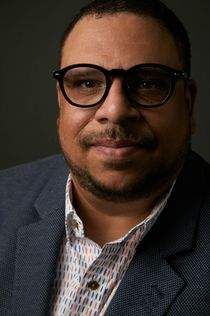
 Matt Tibbo
The university ultimately removed Curth from teaching duties but retained her as a research assistant. In a statement previously provided to The Oklahoman, a university spokesperson said the school’s review determined Curth “was arbitrary in the grading of this specific paper.” The university also said its review and appeal process concluded in January but declined to discuss specifics, saying, “It is our practice to not comment on investigation matters.”
Curth, however, says many people still misunderstand what happened. “I was not fired,” she said. “My financial situation has not changed before or after this entire debacle.”
While the university removed her from teaching duties, she remains employed with the same pay and benefits. Still, Curth sharply criticized aspects of OU's public handling of the situation. “I was very surprised,” she said, referring to the university’s public announcements about the outcome while much of the process itself remained confidential.
“It certainly made it seem like I was fired, which most people assumed,” she said. Curth described the months after her removal from teaching as emotionally destabilizing. “I was very much in a void,” she said. “For a while, I was too depressed to create any structure in my life.”
Originally planning to graduate this spring, she now intends to remain at OU another year while focusing on her dissertation and research. She says she still hopes to become a professor someday, though she now views academia differently and more cautiously.
“The job market is really rough right now,” Curth said. “I’m also queer, and I study trans psychology.”
The controversy has also drawn her into broader academic conversations about safety, political targeting, and how universities protect graduate students in increasingly polarized environments. Though online rumors have circulated claiming she plans to sue the university, Curth said no lawsuit has been filed. “I have not started any legal processes of suing the university or anything like that,” she said.
For now, she remains suspended somewhere between notoriety and uncertainty, recognizable enough to be stopped in public, but still trying to determine what comes next. “The weirdest part for me was when my friend sent me some TikTok fan cam of me,” Curth said, laughing at the absurdity of it all.
Then she paused.
“With attention, things do change,” she said. “Social power is a type of power.”