'%3E%3Cpath d='M16.3574 35.6519H12.9537L15.0491 18.8873L16.3574 35.6519ZM30.4229 54.0093L22.309 0.994385H7.91795L0 54.0093H10.6634L11.5802 46.3855H17.4014L17.9914 54.0093H30.4229Z' fill='%23971B20'/%3E%3Cpath d='M48.2073 41.8813C48.2073 43.4049 47.4892 44.0011 46.1144 44.0011H43.7595V11.0687H46.1144C47.4892 11.0687 48.2073 11.6636 48.2073 13.1885V41.8813ZM59.5273 43.6695V11.3326C59.5273 3.71323 53.5729 0.994385 47.8157 0.994385H31.7213V54.0093H47.8157C53.5729 54.0093 59.5273 51.29 59.5273 43.6695Z' fill='%23971B20'/%3E%3Cpath d='M90.183 0.994385H78.6039L75.0711 30.6157L71.9955 0.994385H59.4346L69.2474 54.0093H80.373L90.183 0.994385Z' fill='%23971B20'/%3E%3Cpath d='M107.063 42.3448C107.063 43.7359 105.951 44.5974 104.643 44.5974C103.269 44.5974 102.157 43.7359 102.157 42.3448V12.658C102.157 11.2676 103.269 10.4058 104.643 10.4058C105.951 10.4058 107.063 11.2676 107.063 12.658V42.3448ZM119.233 43.2723V11.7312C119.233 6.36384 112.952 -3.8147e-06 104.643 -3.8147e-06C96.2667 -3.8147e-06 89.9867 6.36384 89.9867 11.7312V43.2723C89.9867 48.6393 96.2667 55 104.643 55C112.952 55 119.233 48.6393 119.233 43.2723Z' fill='%23971B20'/%3E%3Cpath d='M150.976 43.9349V33.7309H139.069V42.3448C139.069 43.7359 137.957 44.5974 136.582 44.5974C135.076 44.5974 133.964 43.7359 133.964 42.3448V12.658C133.964 11.2676 135.076 10.4058 136.582 10.4058C137.957 10.4058 139.069 11.2676 139.069 12.658V21.2723H150.976V11.0687C150.976 5.70107 145.283 -3.8147e-06 136.582 -3.8147e-06C127.75 -3.8147e-06 121.796 5.70107 121.796 11.0687V43.9349C121.796 49.3022 127.75 55 136.582 55C145.283 55 150.976 49.3022 150.976 43.9349Z' fill='%23971B20'/%3E%3Cpath d='M167.478 35.6519H164.076L166.17 18.8873L167.478 35.6519ZM181.544 54.0093L173.432 0.994385H159.037L151.123 54.0093H161.785L162.704 46.3855H168.523L169.114 54.0093H181.544Z' fill='%23971B20'/%3E%3Cpath d='M205.412 10.4058V0.994385H177.081V10.4058H185.392V54.0093H197.428V10.4058H205.412Z' fill='%23971B20'/%3E%3Cpath d='M230.002 54.0093V43.9349H218.914V31.8746H226.635V21.8028H218.914V10.4058H230.002V0.994385H206.875V54.0093H230.002Z' fill='%23971B20'/%3E%3C/g%3E%3Cdefs%3E%3CclipPath id='clip0_260_7080'%3E%3Crect width='230' height='55' fill='white'/%3E%3C/clipPath%3E%3C/defs%3E%3C/svg%3E)
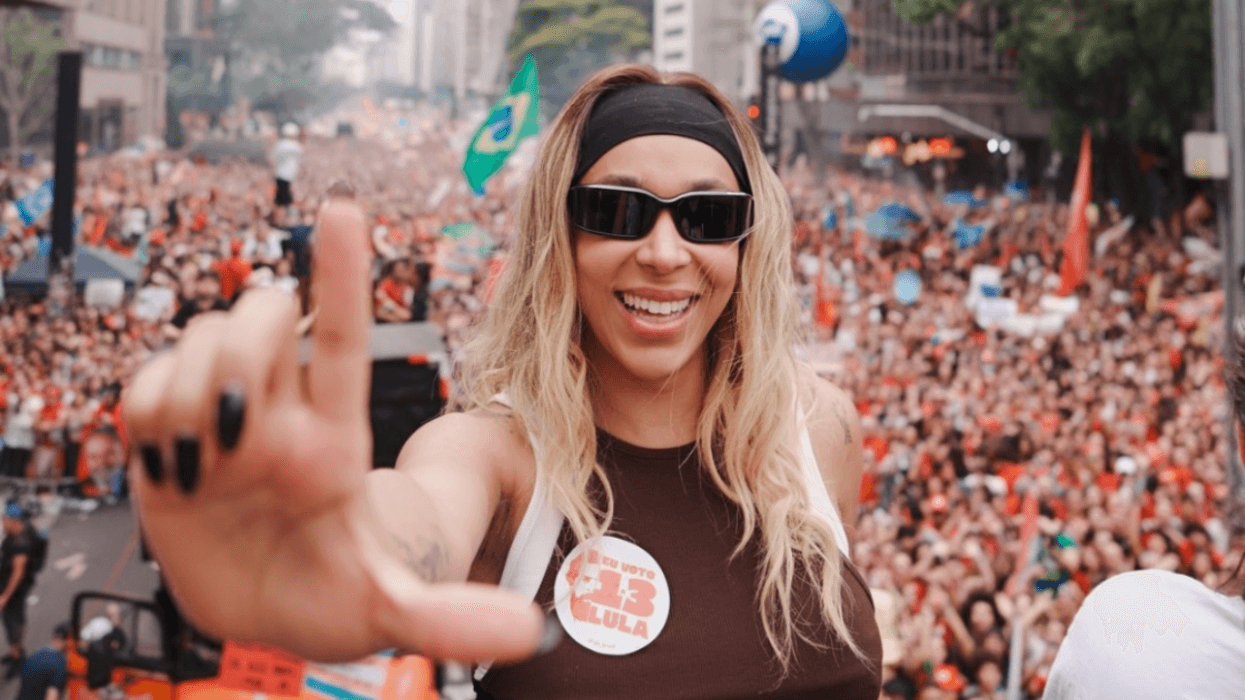

Brazil’s elections have delivered a remarkable result. After a first round that strengthened the far right, President Lula won reelection in a dramatic runoff. Amid this difficult political landscape, something extraordinary happened: LGBTQ+ candidates won more than 10.7 million votes, three times their 2022 total. Brazil elected 35 openly LGBTQ+ leaders, including 14 members of Congress, forming the largest queer congressional delegation in the Americas.
These victories deserve international attention, particularly from democracies struggling to contain the far right. They challenge some deeply entrenched assumptions about how progressive politics should respond to extremism.
The first lesson is that intersectionality builds political power.
At Instituto Plena Cidadania (IPC), the organization behind VoteLGBT, intersectionality has been central to our political strategy from the beginning. We understood that LGBTQ+ people are also women, Black, working-class, and members of many other communities. Our struggles overlap, and so do our opportunities to build power. This approach has allowed us to grow alongside feminist and Black women’s movements, drawing strength from their advances while contributing to a shared expansion of political representation.
That collective progress is visible in our newly elected delegation. Of the 35 leaders, 27 are women, and 22 are Black. Seven are trans women. These results reflect how different movements can reinforce one another, expanding their collective reach and creating new possibilities for political leadership.
The LGBTQ+ electorate is itself intersectional. Our political interests extend across race, gender, class, and territory. This gives queer leadership an extraordinary capacity to connect struggles that conventional politics often treats as competing priorities.
The second lesson is that identity can be a source of political strength.
Brazil’s winning LGBTQ+ candidates addressed the concerns of the wider population: jobs, housing, public services, education, inequality, and the country’s future.
But they did so with extraordinary pride in who they are.
They neither concealed their identities nor treated them as electoral liabilities. They became sources of political authority, bringing perspectives shaped by experiences that have long been excluded from institutional decision-making.
Erika Hilton, a Black trans woman, received more than 1.6 million votes, becoming the most-voted woman in Brazilian history. Her victory offers a compelling answer to those who believe progressive candidates must retreat from identity questions to reach a broader electorate.
Queer leaders bring a remarkable capacity for political invention at a time when old formulas are failing. Their creativity, fluency in digital culture and ability to turn online networks into collective mobilization offer new ways to engage people and respond to the changes our societies urgently demand.
The third lesson concerns the future of representative democracy itself.
Across the world, established political institutions are struggling to retain public trust. Far-right movements have exploited that crisis, presenting themselves as outsiders while advancing exclusionary political projects.
Democratic renewal requires expanding both who can seek political power and who participates in choosing their representatives.
At IPC, we have spent years working on both sides of that equation. When VoteLGBT began in 2014, we identified only three openly LGBTQ+ candidates in Brazil. A decade later, more than 3,000 ran for office in the 2024 elections. An identity once seen as an electoral liability is increasingly recognized as a political asset.
We also recognized political disaffection as one of democracy’s most urgent challenges. Through Votinho, we brought together more than 30 organizations working on issues as diverse as climate justice, gun violence prevention, youth engagement, and older voters’ rights. We also mobilized fan communities, including Brazil’s BTS fandom, tapping into their extraordinary capacity for collective action. Together, these efforts generated six million digital impressions and brought civic participation into popular culture and everyday life.
On election day, abstention fell to approximately 19.2 percent, its lowest level in two decades. No single initiative can claim credit for that result. But civil society worked to bring voters back to the polls, and IPC was part of that effort.
The far right remains a powerful force in Brazil, and violence against queer politicians continues. Yet these elections have demonstrated something democracies urgently need: the possibility of expanding political representation and participation together.
For years, progressive movements have been told that winning requires caution and retreat from identities that supposedly alienate voters. Brazil’s queer leaders have taken a different path. They have built alliances, embraced their identities, and won millions of votes.
And across the country, civil society helped make participation a collective project.
If democratic forces want to understand how to overcome rejection, bring people back to the polls and build new majorities, perhaps it is time to listen to what queer leaders have to say.
Gui Mohallem is the executive director of VoteLGBT (Institute for Full Citizenship), an organization dedicated to increasing LGBTQ+ and intersex representation in Brazilian politics.
Opinion is dedicated to featuring a wide range of inspiring personal stories and impactful opinions from the LGBTQ+ community and its allies. Visit Advocate.com/submit to learn more about submission guidelines. We welcome your thoughts and feedback on any of our stories. Email us at voices@equalpride.com. Views expressed in Voices stories are those of the guest writers, columnists, and editors, and do not directly represent the views of The Advocate or our parent company, equalpride.