'%3E%3Cpath d='M16.3574 35.6519H12.9537L15.0491 18.8873L16.3574 35.6519ZM30.4229 54.0093L22.309 0.994385H7.91795L0 54.0093H10.6634L11.5802 46.3855H17.4014L17.9914 54.0093H30.4229Z' fill='%23971B20'/%3E%3Cpath d='M48.2073 41.8813C48.2073 43.4049 47.4892 44.0011 46.1144 44.0011H43.7595V11.0687H46.1144C47.4892 11.0687 48.2073 11.6636 48.2073 13.1885V41.8813ZM59.5273 43.6695V11.3326C59.5273 3.71323 53.5729 0.994385 47.8157 0.994385H31.7213V54.0093H47.8157C53.5729 54.0093 59.5273 51.29 59.5273 43.6695Z' fill='%23971B20'/%3E%3Cpath d='M90.183 0.994385H78.6039L75.0711 30.6157L71.9955 0.994385H59.4346L69.2474 54.0093H80.373L90.183 0.994385Z' fill='%23971B20'/%3E%3Cpath d='M107.063 42.3448C107.063 43.7359 105.951 44.5974 104.643 44.5974C103.269 44.5974 102.157 43.7359 102.157 42.3448V12.658C102.157 11.2676 103.269 10.4058 104.643 10.4058C105.951 10.4058 107.063 11.2676 107.063 12.658V42.3448ZM119.233 43.2723V11.7312C119.233 6.36384 112.952 -3.8147e-06 104.643 -3.8147e-06C96.2667 -3.8147e-06 89.9867 6.36384 89.9867 11.7312V43.2723C89.9867 48.6393 96.2667 55 104.643 55C112.952 55 119.233 48.6393 119.233 43.2723Z' fill='%23971B20'/%3E%3Cpath d='M150.976 43.9349V33.7309H139.069V42.3448C139.069 43.7359 137.957 44.5974 136.582 44.5974C135.076 44.5974 133.964 43.7359 133.964 42.3448V12.658C133.964 11.2676 135.076 10.4058 136.582 10.4058C137.957 10.4058 139.069 11.2676 139.069 12.658V21.2723H150.976V11.0687C150.976 5.70107 145.283 -3.8147e-06 136.582 -3.8147e-06C127.75 -3.8147e-06 121.796 5.70107 121.796 11.0687V43.9349C121.796 49.3022 127.75 55 136.582 55C145.283 55 150.976 49.3022 150.976 43.9349Z' fill='%23971B20'/%3E%3Cpath d='M167.478 35.6519H164.076L166.17 18.8873L167.478 35.6519ZM181.544 54.0093L173.432 0.994385H159.037L151.123 54.0093H161.785L162.704 46.3855H168.523L169.114 54.0093H181.544Z' fill='%23971B20'/%3E%3Cpath d='M205.412 10.4058V0.994385H177.081V10.4058H185.392V54.0093H197.428V10.4058H205.412Z' fill='%23971B20'/%3E%3Cpath d='M230.002 54.0093V43.9349H218.914V31.8746H226.635V21.8028H218.914V10.4058H230.002V0.994385H206.875V54.0093H230.002Z' fill='%23971B20'/%3E%3C/g%3E%3Cdefs%3E%3CclipPath id='clip0_260_7080'%3E%3Crect width='230' height='55' fill='white'/%3E%3C/clipPath%3E%3C/defs%3E%3C/svg%3E)


This story from The 19th News was reported in partnership with Uncloseted Media, an LGBTQ-focused investigative news outlet.
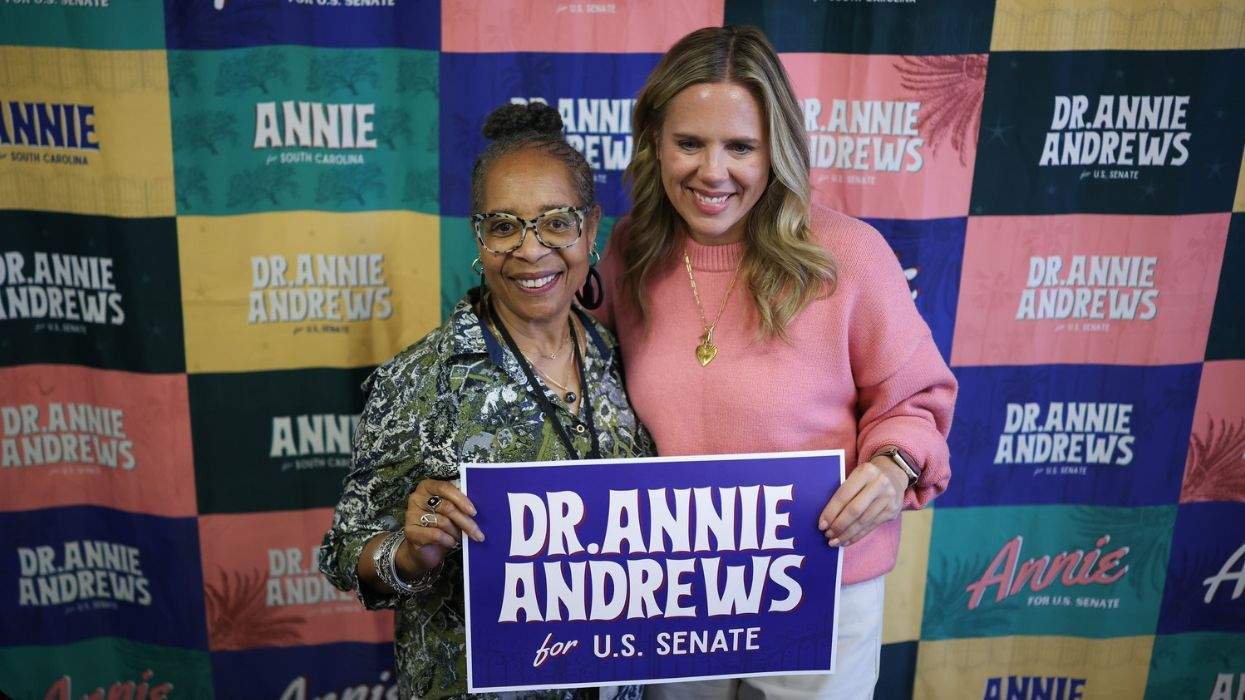
Max Sorgenfrey was sipping a coffee at a cafe in Charleston, South Carolina, in early October when her phone began lighting up with messages. People were sending her a new ad from Annie Andrews, the state’s Democratic Senate nominee, that referred to transgender women like Sorgenfrey as “biological men,” a marked shift in language that confounded many of her supporters.
Appearing in the direct-to-camera ad wearing a white lab coat and a stethoscope slung over her shoulders, Andrews, a pediatrician, said she would oppose “gender surgery for minors” and “men in women’s sports” as South Carolina’s first Democratic senator in more than 20 years. “I want you to hear me loud and clear,” Andrews said in the ad, released October 8, days after President Donald Trump had called her an anti-trans slur on social media.
The backlash to Andrews’ ad was swift. Twenty local LGBTQ+ rights groups signed an open letter denouncing “transphobic attacks, slurs, and fear-based political messages” in midterm races across South Carolina. “We deserve leaders who support transgender people as whole people worthy of safety, dignity, and care,” the groups wrote.
Sorgenfrey, a co-chair of the Charleston chapter of the Democratic Socialists of America, helped the organization draft its own statement. “What message does it send by showing Trump’s bullying works?” the Charleston DSA wrote on its Instagram page. “Why are so many of Democratic politicians willing to sacrifice everything but their personal comfort when fights come to their doorstep?”
Sorgenfrey struggled with what to do with her vote. She was frustrated and angry that Andrews, who had once called statewide restrictions on trans athletes “shameful” and criticized a South Carolina hospital system for suspending gender-affirming care for youth under pressure from Republicans, had appeared to have been moved by the same forces.
She’s still voting for Andrews on November 3.
“At the end of the day, her winning proves a lot about what’s possible in South Carolina,” Sorgenfrey said. “Her winning still pushes the momentum in a direction that is positive for the state, and hopefully, in the wake of that momentum, there can be stronger forms of accountability in terms of not backing down on LGBTQ values.”
Lorien Lucero is probably voting for her, too. Lucero is a consultant who met Andrews at a Pride event over the summer, where Andrews had asked her for her support in November and pledged to fight for trans people in Washington.
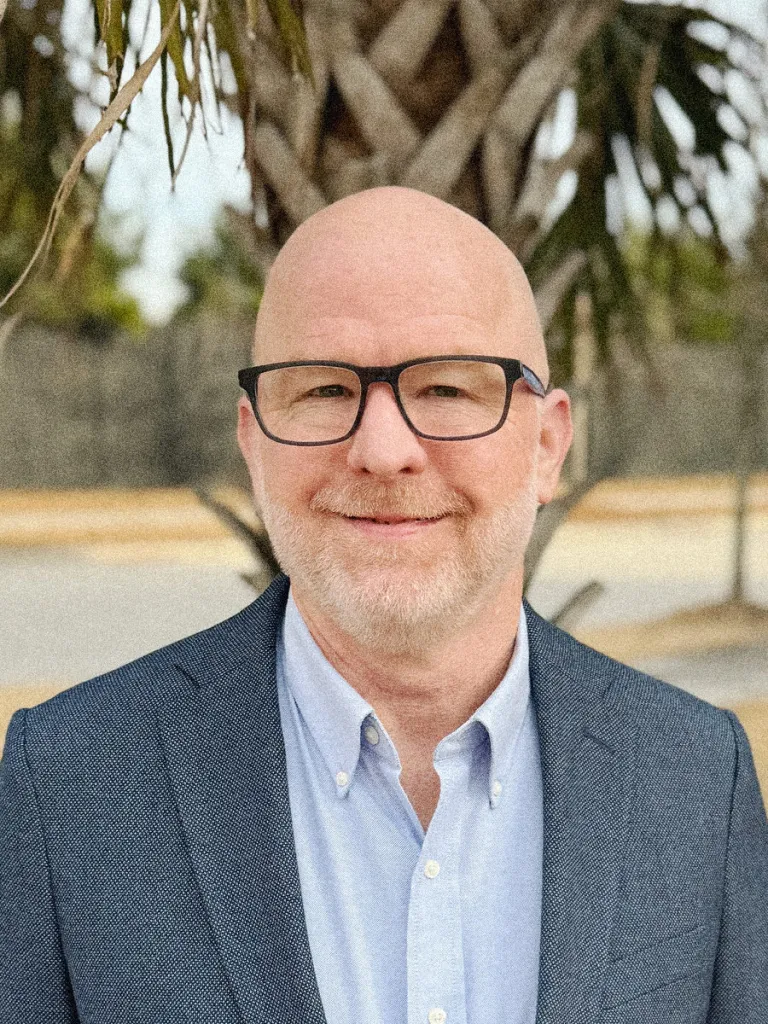 David Bell (Rebecca Bell)
David Bell already did. He’s a longtime South Carolina resident whose adult daughter is trans. He found Andrews’ choice of words in the ad “deeply, deeply hurtful.”
“Answering the way she did only solidifies that we’re leaving trans people behind, because she’s using the same rhetoric. It makes it feel like trans people are being thrown away,” he said.
In the United States, a years-long offensive on trans rights has been led largely by Republicans. Conservative lawmakers have introduced — and passed — hundreds of bills meant to restrict trans rights and gender expression in state legislatures nationwide. The Trump administration has also proposed and implemented multiple policies restricting the rights and recognition of trans people.
This year, some Republican-aligned groups have questioned whether focusing solely on “culture-war issues” may be enough to win in November, especially as polling shows trans issues are not a top concern for voters. But with public support for the president slipping and the cost of living rising, conservative candidates are leaning into those attacks, hoping they can tip the scales in their favor. Elon Musk, the world’s richest person, has spent hundreds of millions of dollars, including on ads with anti-trans messaging, to help Republicans win this fall. In a recent 19th/YouGov poll, nearly half of adults said they were more likely to vote for a candidate who supports banning trans athletes from girls’ and women’s sports, for instance, over one who does not.
And red state Democrats in competitive races are responding to the attacks and the polls, often by walking back their own previous support for trans people with language that purposefully misgenders them. Trans voters and their loved ones said they have grappled with difficult choices this election season as the party they have aligned with continues to disappoint them. Even so, most said they either have voted for Democrats or will.
The same dynamic is playing out in South Carolina, a state Trump won by 18 points in 2024. It’s also happening in Ohio, where Trump won by 11 points, Iowa (13 points) and Texas (14 points).
In June, Amy Acton, the Democratic nominee for governor of Ohio, drew outrage from LGBTQ+ leaders and progressive groups when she told a local newspaper that she does not support “boys” in girls’ sports. Equality Ohio, one of the state’s largest LGBTQ+ advocacy organizations, updated Acton’s status on its 2026 Candidate Scorecard from an “A” grade to “pending” in response.
“It was just really hurtful and betraying,” Kathleen Burns, a Democratic voter in Columbus, Ohio, said of Acton’s choice of words. Burns is not trans, but her spouse, whom she married last year, is trans and nonbinary. The couple would like to see a Democrat in the governor’s mansion next year, Burns said, but neither is planning to vote for Acton.
“I’ve just been asked too many times in my entire adult life to vote for a lesser evil,” she said. “I can’t do this anymore. I’m so tired.”
Burns said she plans to support other Ohio Democrats, including Sherrod Brown, a former senator running to unseat Sen. Jon Husted, a Republican endorsed by Trump.
“I wouldn’t say he’s like a staunch advocate for trans people, but it seems like the bar is low,” Burns said of Brown, whose campaign has faced a barrage of anti-trans attack ads from powerful Republican super PACs including the Senate Leadership Fund and Musk’s America PAC.
“Congress is kind of a political chess game that is at risk if I wouldn’t vote for him, so I probably will vote for him,” Burns said. “But I think I will leave the governor’s race blank.”
Kaden, a trans man in Geauga County, Ohio, who spoke on the condition that only his first name be used out of concern for his privacy, said he was unhappy with Acton but had still voted early for her. Acton seems more likely than her opponent, Vivek Ramaswamy — who has described being trans as a mental illness — to engage with trans people as governor, he said.
“Maybe we can sit down and talk and say, ‘Listen, you really need to think about this. You really need to understand that what you said hurt,’” he said. Kaden’s home in northeastern Ohio is largely rural and has voted for Republican presidential candidates since the mid-1960s.
But his community — including his three adult children and his parents, both in their late 80s — has accepted him all the same. He believes Acton will, too.
Democratic candidates in Iowa have faced similar backlash from some voters and LGBTQ+ advocacy organizations for how they’ve spoken about trans people. In an August campaign ad, Sarah Trone Garriott, a Democratic state lawmaker and congressional candidate, said she opposes “letting men in women's locker rooms,” despite voting against a bathroom bill in the legislature. Josh Turek, who is running for Senate, said that he does not believe that “biological males” should be allowed to compete in women’s sports and that he opposes “taxpayers paying for sex changes.”
In August, Rob Sand, Iowa’s state auditor and the Democratic nominee for governor, said, pointedly: “Girls' sports are for girls, and boys' sports are for boys.” Iowa’s Republican-controlled legislature banned trans student-athletes from competing in line with their gender identity in 2022.
 Aria Shipston (Aria Shipston)
Aria Shipston, a 29-year-old drag performer and LGBTQ+ rights advocate in Iowa, said Democrats adopting anti-trans rhetoric are falling into “a trap” laid by Republicans.
“They’re still harming trans people because they’re still perpetuating this idea of trans women being men,” she said. “Even if they’re thinking they’re being helpful, they’re still harming the public perception of trans people — and it hurts the trans people watching. When I hear the Democratic candidates that I’m supposed to be supporting saying that I’m a man in a women’s bathroom, it’s extremely disheartening.”
Shipston said she still plans to vote for Sand and other Democrats next month, but doesn’t see her vote as much of a choice. “Rob Sand doesn’t know how to talk about me and borrows a Republican framework that he just shouldn’t borrow, but Zach Lahn actively wants me to not be allowed to exist in public,” she said.
Lahn, a private school founder, has described being trans as a false identity and has repeatedly criticized Sand’s support for LGBTQ+ people, including his opposition to a 2025 law removing gender identity protections from Iowa’s civil rights code. In a recent Facebook post, Lahn questioned Sand’s attendance at a progressive Christian church that has hosted drag shows and featured a trans guest pastor.
During a September town hall in Iowa City, Sand acknowledged that some of his supporters may be “disappointed” by his support for restrictions on trans student-athletes but pledged to veto other “culture war bills” as governor.
Shipston said it can be painful to support a party that doesn’t appear to fully support her. It was refreshing, she said, when a recent campaign ad for Iowa state Rep. Christina Bohannan, a Democrat running to unseat Republican Rep. Mariannette Miller-Meeks, declined to directly engage with a claim that Bohannan had failed “to protect girls’ sports” by voting against restrictions on trans athletes in the legislature.
“As the only one in this race who ran track in high school, it matters to me that girls’ sports are fair. That’s why Mariannette Miller-Meeks’ false smear campaign is downright pathetic,” Bohannan said in the ad, taped on an outdoor track lined with hurdles. “What Miller-Meeks is doing in Washington, siding with the drug companies, taking their money and sticking it to Iowans, that’s what’s really unfair.”
“She intentionally didn’t use the framing ‘men in women's sports’ and rerouted the argument into, ‘Here's something actually harmful and unfair that my opponent is doing,’” Shipston said of Bohannan’s ad. “I thought that was a really good way to handle it. I would like to vote for her now, and I will.”
Annie Sarcone, a 34-year-old delivery driver in Des Moines, said they felt similarly about Bohannan — but had expected better from Trone Garriott, Turek and Sand, all of whom have been entrenched in Iowa politics for years.
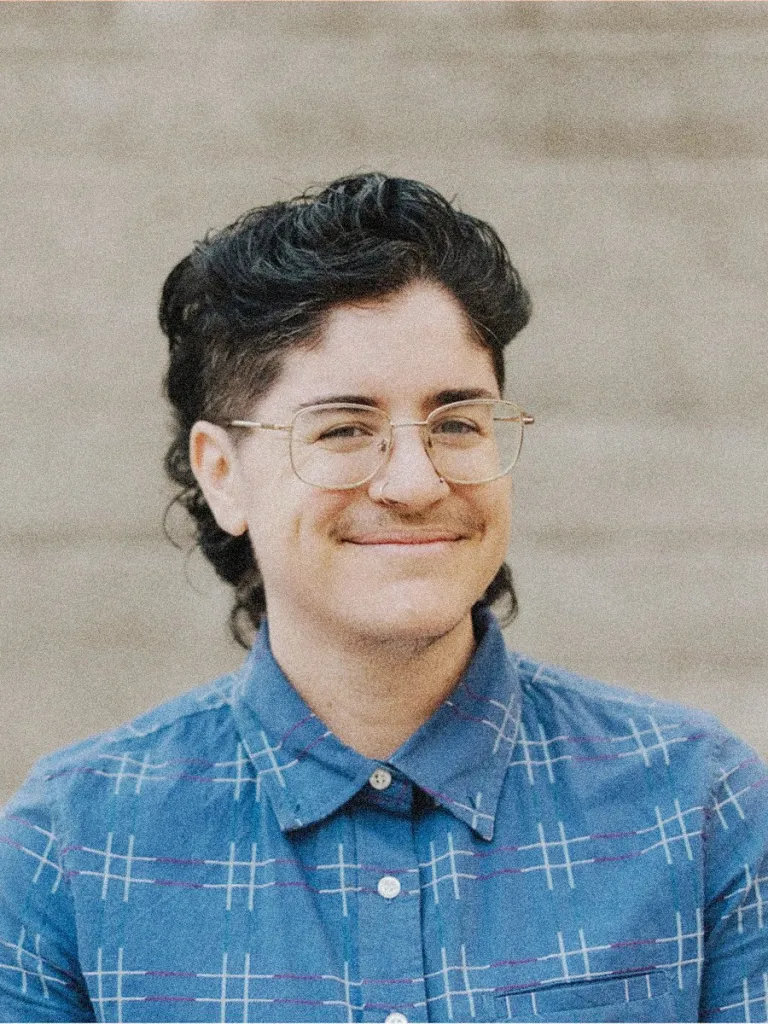 Annie Sarcone (Jasper Chung)
“From my perspective, I’m thinking, ‘How have you not prepared to answer some of these political attacks in a more thoughtful manner that doesn’t throw trans people under the bus?’” they said. “Like, you’ve been seeing this happen for years now.” In the last year alone, 30 bills targeting LGBTQ+ people were introduced in Iowa’s Republican-controlled legislature, according to the ACLU.
Sarcone, who volunteers at a local LGBTQ+ youth resource center they also founded, still plans to vote for all three. “I have decided that, and it’s hard. I’m not going to lie, it’s really hard,” they said. “But if we get them in office, we can’t stop — we have to keep their feet to the fire, and we have to keep voicing our concerns to them.”
Trans voters in Texas said they were similarly disappointed when state Rep. James Talarico, the Democratic nominee for Senate, said he opposed trans student-athletes in girls’ sports “if it risks safety or fairness” during an interview with Fox News. Talarico had opposed restrictions on trans athletes in the state House.
State and national Republicans have targeted the Democratic lawmaker over his previous support for trans people and past comments where he said “God is nonbinary” and that there are six sexes. Stephen Miller, the White House deputy chief of staff, has called Talarico trans on social media. During a rally in October, Vice President JD Vance implied that Talarico is gay.
“I’ll be the first to admit that I missed the mark on some of those old statements,” Talarico told NBC News in May.
In September, Gina Hinojosa, Texas’ Democratic nominee for governor, responded to an assertion from her Republican opponent that she is “too woke” for Texas with a campaign ad that said her “pronouns are mom, Texan and soon-to-be-governor.” Some saw the ad as minimizing threats to trans rights in Texas.
“I’ve had to abandon the desire and hope that they’ll say that they’re pro-trans, or actually just say something rather than just being silent or wishy-washy,” Bryanna Jenkins, an attorney in Houston, said of Talarico, Hinojosa and other Texas Democrats. She said she still plans to vote for them but that it is “more a decision of strategy” than a vote of confidence.
Hinojosa and Talarico’s Republican opponents — Texas Gov. Greg Abbott and Ken Paxton, the state’s attorney general — have openly rejected trans identities and played leading roles in enacting some of the nation’s most stringent and restrictive laws for trans people.
In a 2022 legal opinion, Paxton mused about whether allowing a minor to receive gender-affirming care may “legally constitute child abuse,” driving Abbott to call for statewide investigations into families with trans kids. In March, Paxton declared it illegal for mental healthcare providers in Texas to “transition” minors and threatened to revoke the licenses of practitioners who affirm a child’s gender identity over their sex assigned at birth. The state’s Republican-controlled legislature banned gender-affirming care for minors in 2023.
Texas Democrats, Jenkins said, hadn’t done enough to make her or others' lives any easier. She’s considered channeling her disappointment into a run for office, but has decided against it for now, citing concerns about her safety as a Black trans woman. She continues to work closely with state and national civil rights groups, and is holding out hope that grassroots organizing will usher in a “watershed” moment.
Avery Belyeu, CEO of the Montrose Center, an LGBTQ+ community center in Houston, said she planned to support Talarico and Hinojosa over Paxton and Abbott — and was excited to do so. Talarico, whom she had met personally at a fundraising event, had proven himself a particularly strong ally, she said.
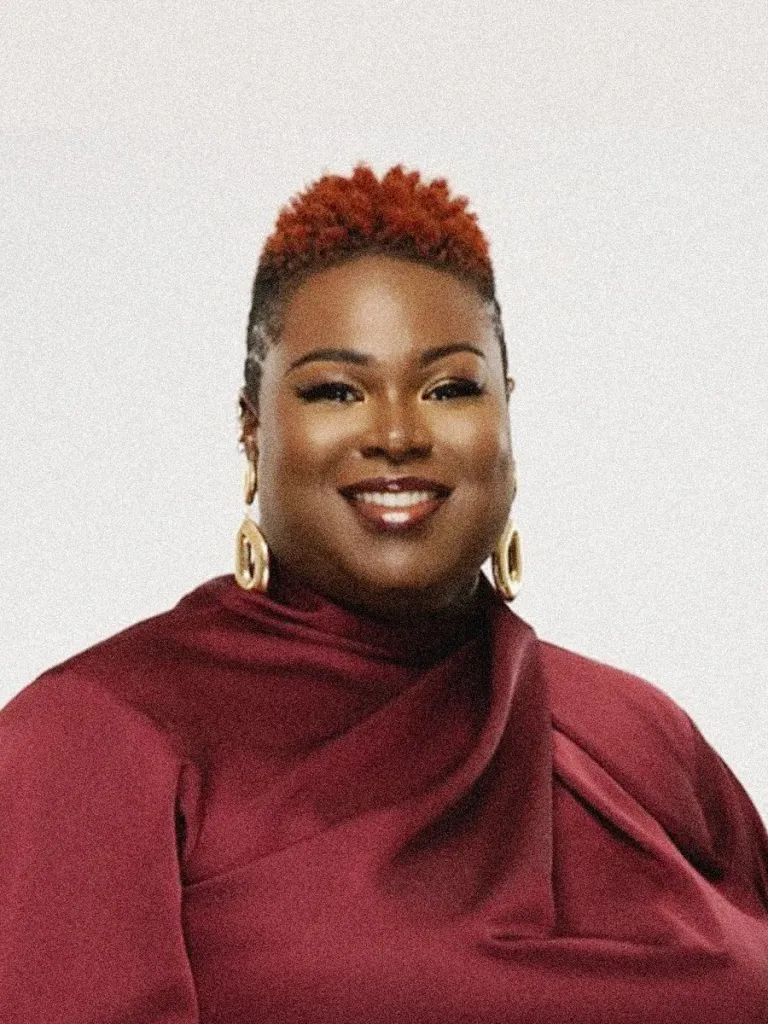 Bryanna Jenkins (Sway Ambrose)
"He's been very vocal in support of trans people, and he can't escape that record because he's been in the state legislature,” she said. “He’s spoken out and been very clear on his stance.”
Belyeu said national media attention on Talarico’s comments on trans athletes did not necessarily align with how she and other trans Texans felt about his candidacy or whether he would fight for them in Washington.
“The issue of transgender youth in sport is not a central issue of concern in this moment for transgender people,” she said. “We’re currently living in a state where there is a ban on trans youth receiving medical care, where a transgender adult cannot change their gender marker on their driver's license. So when you're living in that context, it's kind of Maslow's hierarchy of needs.”
Belyeu stressed the importance of turning out to vote in November. “I think the greatest danger we have in this moment is being demoralized and being discouraged and not claiming our power — our vote is our power.”
In South Carolina, Andrews’ opponent, Sen. Darline Graham, has opposed gender-affirming healthcare for trans youth and allowing trans students to compete on school sports teams matching their gender identity. South Carolina has banned both for over two years.
“I’m a conservative Republican,” Graham said in her very first campaign ad. “Every life is precious, men don't belong in women's sports and only American citizens should vote in our elections.”
Bell, a Navy veteran who previously ran as a Democrat for the South Carolina House, tied his early vote for Andrews to the potential impact in the Senate. “I voted for her, but I didn’t vote for her,” he said. “I voted for two Supreme Court picks in the next six years. In the long term, I think Annie being senator is the right move.”
Lucero, who moved to South Carolina more than two decades ago, said she disagreed with calls to vote for a third-party candidate instead.
“I’m an idealist, but I’m also a pragmatist,” she said. Even if Democrats were to learn that turning against trans people will not win them elections, that lesson “would be far outweighed by the actual harm that would be done if the conservative candidate wins.”
She’s largely lost trust that politicians will act in her best interest.
“It’s extremely frustrating to be constantly reduced every single day of my life to a controversy, rather than being seen as a human being, even by the people who are supposed to have our backs,” Lucero said. “It’s exhausting.”