'%3E%3Cpath d='M16.3574 35.6519H12.9537L15.0491 18.8873L16.3574 35.6519ZM30.4229 54.0093L22.309 0.994385H7.91795L0 54.0093H10.6634L11.5802 46.3855H17.4014L17.9914 54.0093H30.4229Z' fill='%23971B20'/%3E%3Cpath d='M48.2073 41.8813C48.2073 43.4049 47.4892 44.0011 46.1144 44.0011H43.7595V11.0687H46.1144C47.4892 11.0687 48.2073 11.6636 48.2073 13.1885V41.8813ZM59.5273 43.6695V11.3326C59.5273 3.71323 53.5729 0.994385 47.8157 0.994385H31.7213V54.0093H47.8157C53.5729 54.0093 59.5273 51.29 59.5273 43.6695Z' fill='%23971B20'/%3E%3Cpath d='M90.183 0.994385H78.6039L75.0711 30.6157L71.9955 0.994385H59.4346L69.2474 54.0093H80.373L90.183 0.994385Z' fill='%23971B20'/%3E%3Cpath d='M107.063 42.3448C107.063 43.7359 105.951 44.5974 104.643 44.5974C103.269 44.5974 102.157 43.7359 102.157 42.3448V12.658C102.157 11.2676 103.269 10.4058 104.643 10.4058C105.951 10.4058 107.063 11.2676 107.063 12.658V42.3448ZM119.233 43.2723V11.7312C119.233 6.36384 112.952 -3.8147e-06 104.643 -3.8147e-06C96.2667 -3.8147e-06 89.9867 6.36384 89.9867 11.7312V43.2723C89.9867 48.6393 96.2667 55 104.643 55C112.952 55 119.233 48.6393 119.233 43.2723Z' fill='%23971B20'/%3E%3Cpath d='M150.976 43.9349V33.7309H139.069V42.3448C139.069 43.7359 137.957 44.5974 136.582 44.5974C135.076 44.5974 133.964 43.7359 133.964 42.3448V12.658C133.964 11.2676 135.076 10.4058 136.582 10.4058C137.957 10.4058 139.069 11.2676 139.069 12.658V21.2723H150.976V11.0687C150.976 5.70107 145.283 -3.8147e-06 136.582 -3.8147e-06C127.75 -3.8147e-06 121.796 5.70107 121.796 11.0687V43.9349C121.796 49.3022 127.75 55 136.582 55C145.283 55 150.976 49.3022 150.976 43.9349Z' fill='%23971B20'/%3E%3Cpath d='M167.478 35.6519H164.076L166.17 18.8873L167.478 35.6519ZM181.544 54.0093L173.432 0.994385H159.037L151.123 54.0093H161.785L162.704 46.3855H168.523L169.114 54.0093H181.544Z' fill='%23971B20'/%3E%3Cpath d='M205.412 10.4058V0.994385H177.081V10.4058H185.392V54.0093H197.428V10.4058H205.412Z' fill='%23971B20'/%3E%3Cpath d='M230.002 54.0093V43.9349H218.914V31.8746H226.635V21.8028H218.914V10.4058H230.002V0.994385H206.875V54.0093H230.002Z' fill='%23971B20'/%3E%3C/g%3E%3Cdefs%3E%3CclipPath id='clip0_260_7080'%3E%3Crect width='230' height='55' fill='white'/%3E%3C/clipPath%3E%3C/defs%3E%3C/svg%3E)
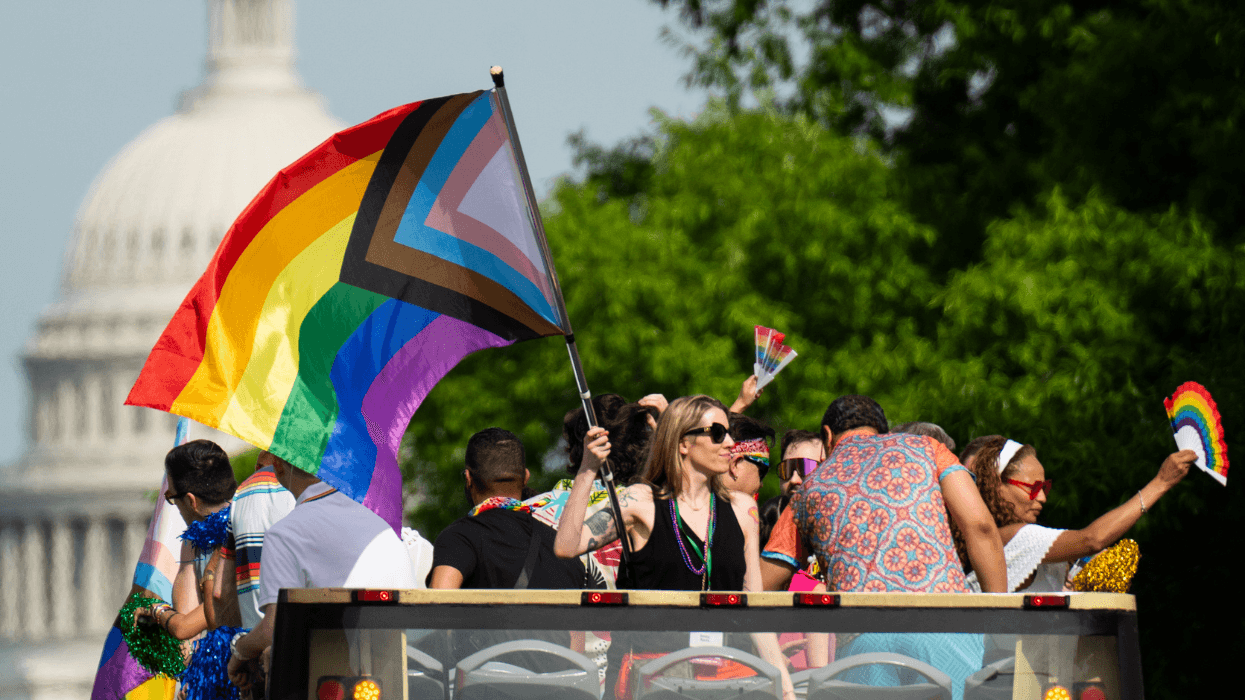

Pride organizations across America are facing a coordinated and escalating backlash, squeezed by political hostility toward LGBTQ+ people, corporate retreat from DEI commitments, and shrinking public funding. Facing this reality, many Pride organizers have dramatically scaled back what festivals and celebrations look like. Others have shut down their events and organizing bodies altogether as our federal government dismantles DEI.
Washington, D.C.'s Capital Pride Alliance (CPA) is no exception, and here, the pressure is about to get more acute. The fees charged by D.C. government agencies that support major events like Capital Pride have increased dramatically. If these costs are fully passed on to nonprofit organizations like CPA, events like ours, which are a major economic engine for both D.C. and the region, will no longer be able to function.
This uncertainty is compounded by a new mayoral administration taking office in D.C. in 2027. This change in administration brings new priorities, new budget pressures, and new decision-makers, making it increasingly harder for us to plan responsibly for the years ahead.
We know this isn't hypothetical because we just lived through a version of it. In June 2025, Washington, D.C., welcomed the global community for WorldPride. From the outside, the event looked like a remarkable success, with over one million visitors creating a significant economic impact for the area by patronizing local businesses, including hotels and restaurants, and increasing government revenue.
While WorldPride was a tremendous success for the city, it came at a high cost to the organization that made it happen. To keep WorldPride safe, welcoming, and successful, the organization had to draw from its reserves. The visitors and economic impact it brought to the city were real, but unfortunately, CPA's financial picture didn't reflect that success. Planned government funding and corporate sponsorships fell short of projections, and attendance from outside the region came in below expectations, with some people choosing not to travel amid political uncertainty.
We entered 2026 hopeful that the worst was behind us. Some corporate sponsors who had stepped back signaled they were ready to return. That optimism didn't hold.
Thousands of federal jobs were cut, and that rippled through the region's economy. There was a broader, more hostile political climate in the region affecting people's willingness to visit D.C. All these factors, along with a change in dates for Freedom 250 events, caused us to miss every major fundraising target we set for this year, with CPA having to go even deeper into its reserves.
That national pattern extends beyond Pride organizations. Nonprofits providing critical social services face the same constraints and are being asked to do more precisely as funding becomes less certain.
Some of that pressure traces back to brands retreating from public commitments amid political scrutiny. Under the current administration, companies have been quietly redirecting funding away from anything remotely associated with DEI, while at the same time, federal support for DEI programs is being cut. We understand why companies are navigating this carefully, but we cannot be a trend when it's convenient.
We thank the companies that continue to show up and find ways to continue their financial support despite the obstacles and outside pressure. This allyship needs to be acknowledged. We need more partners whose support holds up during challenging times and not only when it's self-serving.
The consequences of letting Pride organizations disappear go far beyond a parade and festival. Funding for our organizations supports health programs, educational initiatives, advocacy efforts, community grants, youth services, senior services, and volunteer programs year-round. This infrastructure exists long after the festival ends, and it must be sustained.
Pride is often the first place someone coming out discovers they are not alone. That need hasn't diminished, and as hostility toward LGBTQ+ people has grown, it has intensified. The organizations built to meet these needs, however, are being asked to do so with fewer resources and greater uncertainty.
If we don't act, we risk losing more than Pride festivals. We risk losing organizations that have spent decades building connections, providing services, and creating safe spaces where people can live authentically.
We must look at what will keep these organizations going. That means diversifying revenue, strengthening individual giving, investing in local philanthropy, and treating this as a year-round commitment rather than a seasonal one.
It also means showing up in more direct ways. In the coming weeks, we will issue a call for committee members and volunteers to help build Capital Pride 2027. We need people invested in carrying this organization and its mission forward.
WorldPride brought volunteers, donors, and partners out of the woodwork. Some stayed; others came for the moment and walked away. CPA and other Pride organizations cannot be sustained by one extraordinary moment. It will take ongoing commitment and shared responsibility.
For decades, Pride organizations, most of which are nonprofits, have shown up for our communities. Now, our communities need to show up for Pride organizations. Not because we're in crisis, but because what we have built together is worth protecting. Pride is visibility, equality, and dignity. Pride is belonging, and it cannot be sustained by attendance alone; belonging is worth sustaining for generations to come.
Ryan Bos is a leader at Capital Pride Alliance, the nonprofit organization behind Washington, D.C.'s annual Capital Pride celebrations and WorldPride 2025.
Opinion is dedicated to featuring a wide range of inspiring personal stories and impactful opinions from the LGBTQ+ community and its allies. Visit Advocate.com/submit to learn more about submission guidelines. We welcome your thoughts and feedback on any of our stories. Email us at voices@equalpride.com. Views expressed in Voices stories are those of the guest writers, columnists, and editors, and do not directly represent the views of The Advocate or our parent company, equalpride.