'%3E%3Cpath d='M16.3574 35.6519H12.9537L15.0491 18.8873L16.3574 35.6519ZM30.4229 54.0093L22.309 0.994385H7.91795L0 54.0093H10.6634L11.5802 46.3855H17.4014L17.9914 54.0093H30.4229Z' fill='%23971B20'/%3E%3Cpath d='M48.2073 41.8813C48.2073 43.4049 47.4892 44.0011 46.1144 44.0011H43.7595V11.0687H46.1144C47.4892 11.0687 48.2073 11.6636 48.2073 13.1885V41.8813ZM59.5273 43.6695V11.3326C59.5273 3.71323 53.5729 0.994385 47.8157 0.994385H31.7213V54.0093H47.8157C53.5729 54.0093 59.5273 51.29 59.5273 43.6695Z' fill='%23971B20'/%3E%3Cpath d='M90.183 0.994385H78.6039L75.0711 30.6157L71.9955 0.994385H59.4346L69.2474 54.0093H80.373L90.183 0.994385Z' fill='%23971B20'/%3E%3Cpath d='M107.063 42.3448C107.063 43.7359 105.951 44.5974 104.643 44.5974C103.269 44.5974 102.157 43.7359 102.157 42.3448V12.658C102.157 11.2676 103.269 10.4058 104.643 10.4058C105.951 10.4058 107.063 11.2676 107.063 12.658V42.3448ZM119.233 43.2723V11.7312C119.233 6.36384 112.952 -3.8147e-06 104.643 -3.8147e-06C96.2667 -3.8147e-06 89.9867 6.36384 89.9867 11.7312V43.2723C89.9867 48.6393 96.2667 55 104.643 55C112.952 55 119.233 48.6393 119.233 43.2723Z' fill='%23971B20'/%3E%3Cpath d='M150.976 43.9349V33.7309H139.069V42.3448C139.069 43.7359 137.957 44.5974 136.582 44.5974C135.076 44.5974 133.964 43.7359 133.964 42.3448V12.658C133.964 11.2676 135.076 10.4058 136.582 10.4058C137.957 10.4058 139.069 11.2676 139.069 12.658V21.2723H150.976V11.0687C150.976 5.70107 145.283 -3.8147e-06 136.582 -3.8147e-06C127.75 -3.8147e-06 121.796 5.70107 121.796 11.0687V43.9349C121.796 49.3022 127.75 55 136.582 55C145.283 55 150.976 49.3022 150.976 43.9349Z' fill='%23971B20'/%3E%3Cpath d='M167.478 35.6519H164.076L166.17 18.8873L167.478 35.6519ZM181.544 54.0093L173.432 0.994385H159.037L151.123 54.0093H161.785L162.704 46.3855H168.523L169.114 54.0093H181.544Z' fill='%23971B20'/%3E%3Cpath d='M205.412 10.4058V0.994385H177.081V10.4058H185.392V54.0093H197.428V10.4058H205.412Z' fill='%23971B20'/%3E%3Cpath d='M230.002 54.0093V43.9349H218.914V31.8746H226.635V21.8028H218.914V10.4058H230.002V0.994385H206.875V54.0093H230.002Z' fill='%23971B20'/%3E%3C/g%3E%3Cdefs%3E%3CclipPath id='clip0_260_7080'%3E%3Crect width='230' height='55' fill='white'/%3E%3C/clipPath%3E%3C/defs%3E%3C/svg%3E)

For years, I was in a situationship with someone I thought I understood. He was a political science major. He read the foreign-affairs pages I skimmed and could explain coalition and international politics over dinner, and I was entertained. I mistook his fluency for worldliness, and his worldliness for wisdom.
Bewitched, I sat through plenty of conversations so ordinary I almost didn’t notice what they revealed. My body noticed, though: a recoil here, a tightness there, signals I soothed and talked myself out of. It took the Cornell case, long after we’d parted ways, for me to finally understand what truths those conversations had been telling me.
One particular moment was a dinner at Franklin Avenue in Brooklyn in September 2025, in the middle of the mayoral race. A close friend of mine, who happens to be trans, was telling us why Zohran Mamdani’s platform gave them hope, at a time when trans people’s healthcare and safety were being debated in statehouses across the country.
Out of habit, before any consideration, he started arguing, the kind that has nothing to do with listening and everything to do with showing off what you know. My friend responded patiently, point by point. He doubled down anyway. By his expert analysis, Mamdani would be terrible for the city: too young, too radical, with promises the budget could never pay for. (The implication hung over the table: the safe choice, apparently, was Andrew Cuomo, who, as governor, was found by the state attorney general to have sexually harassed multiple women, findings Cuomo denied.)
When pressed after dinner, he said, "I was just playing devil’s advocate."
I remember sitting at that table thinking, Why is he doing this to my friend? Nothing was at stake for him; he could lose the argument and go home unchanged. He didn’t even live in New York at the time, whereas my friend and I had lived here for more than a decade combined. My friend would carry it home, cortisol still regulating long after the plates were cleared, a quiet violence to the body. He was treating my friend’s hope and safety as debate practice, at a table where we were supposed to be safe. Violence, or harm, rarely comes from strangers. It comes from the people we let sit closest to us, the ones we’ve given access.
Disagreement wasn’t the problem; New Yorkers argue for sport and thrive on differing views. What unsettled me was choosing to argue, hard and for fun, against someone for whom the stakes weren’t abstract.
Another time, we were walking the High Line in Chelsea when we passed a Palestinian restaurant, and I asked him what he thought about what was happening in Gaza.
He shrugged. “Well,” he said, “that’s what you get when people try things.”
Or something like that; I remember the feeling more than the exact words. I stopped walking. People streamed past us on the elevated walkway, and I couldn’t move. Something under my ribs recoiled, and the only thought I could form was: Wait. What? I looked at him, half expecting a joke. There wasn’t one. He wasn’t talking about the militants responsible for the attacks. He was talking about the families and children in the rubble. And the response came out of him easily, casually, as if he had either been trained or had picked it up in locker-room talk that never expects to be challenged.
Which brings me back to the recent Cornell case.
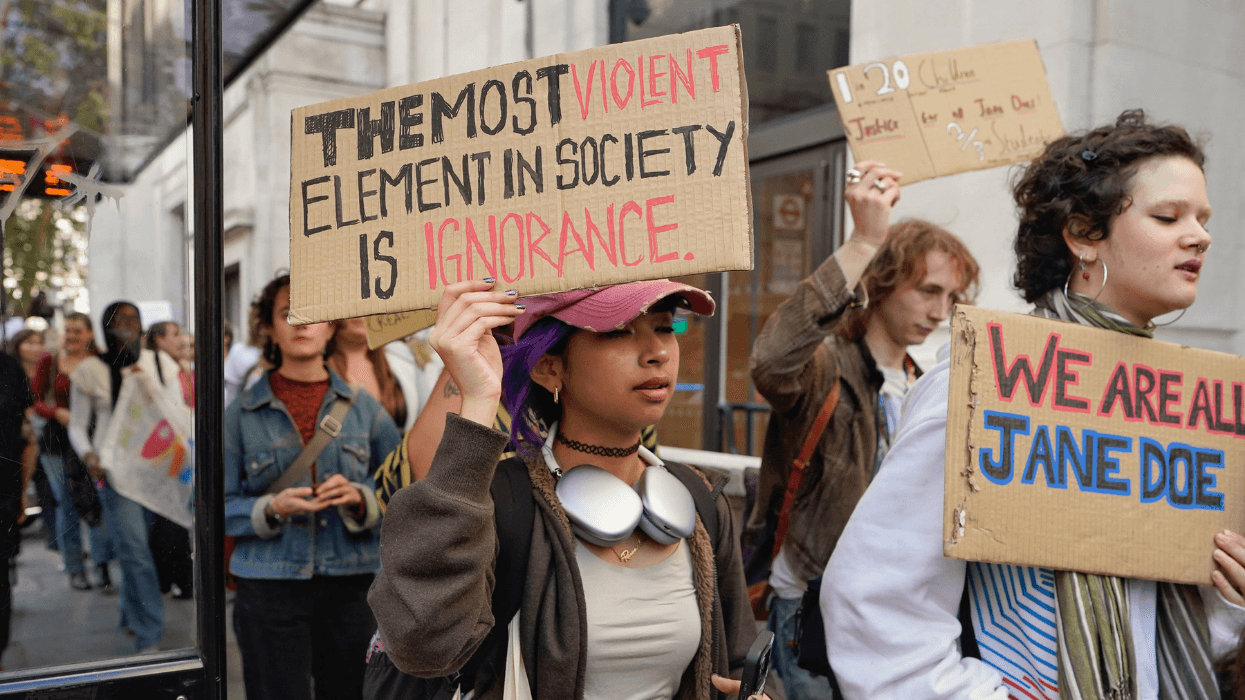
In a civil lawsuit filed last month, a former Cornell student, known in court papers as Jane Doe, recounts that in October 2024, seven members of the university’s Chi Phi fraternity drugged her and raped her over several hours. She says she entered the house with a male friend. No one has been criminally charged, and the Tompkins County district attorney has reopened the investigation and plans to bring the case to a grand jury.
While the events of that night will be weighed in the courtroom, the verdicts were rendered everywhere else, online: She’d been drinking. She went to a frat house. Women know what they’re getting into. The focus was rarely on the behavior and entitlement of the men inside that house, or the rape culture or environment that lets it go unquestioned. It was on her: what she had done to herself to have gotten into it.
Watching the news videos and reading the threads online, I recognized the cadence immediately. It was the same script I’d heard on the High Line, the same habitual move I’d watched him make at that Brooklyn dinner: devil’s advocacy. In a seminar room, sure, it sharpens one’s thinking. But aimed at the people with the most to lose, it does something else entirely. It turns people’s suffering into a debate. The advocate’s goal is to win, protect a reputation, show a quick mind, and be right. Recognizing the humanity of the person who was hurt was never part of the advocacy, and whoever names the harm starts to look unreasonable. This tactic has been rehearsed for centuries to excuse violent behavior, and it has become so insidiously familiar, so ingrained in our everyday speech, that we mistake it for empathy, or, as Cornell professor Kate Manne calls it, himpathy.
That’s what you get. The sentence works the same way whether it is aimed at a 20-year-old at a party or at a population under bombardment. It locates the cause of violence in the people who receive it.
As someone who studies how stigma decides who gets believed and who gets care, I know this reflex has a name. The psychologist Melvin Lerner called it in The Belief in a Just World: Our Need to Believe People Get What They Deserve. If she caused it, I am safe. If they brought it on themselves, I don’t have to feel anything. Its close cousin is collective blame, which lets us hold an entire people responsible for what a few have done, while rarely judging our own that way. Blame follows who counts as “us,” not who did the harm.
One detail in the Cornell case keeps coming back to me: Jane Doe says she walked into that house with a friend she trusted. Most of us do not walk into harm alone in a dark alley, but with someone we already believe is safe. Most sexual assaults are committed by someone the survivor knows. So what the people closest to us believe about violence is never just politics. It’s about safety.
We hand our access and our trust to friends, partners, and family long before we know what they’re made of. Usually, we find out by accident, often by asking casually and seeing what they're willing to excuse. What you're listening for is simple: Can they say, plainly, consistently, and with conviction, that killing children is wrong, that rape is wrong, before they reach for a but? Civilians aren’t responsible for violence committed in their name. A victim isn't responsible for the perpetrators who choose to hurt her. So if someone close to you needs a qualifier for either, listen closely. Cut through their views of politics, and they reveal something about their character.
We get to wrestle with their answer. It tells us who we are, too.
Some people deserve the chance to learn; I’ve changed my own mind about things I once said carelessly. Some don’t, and leaving is an answer too. When the situationship finally ended for good, I grieved it. But underneath the grief was relief, so sharp it surprised me. I had been spared building a life with someone who could argue for ‘advocacy’ against a friend’s hope and see a lesson opportunity in a starving child. He had never lacked knowledge. What he lacked was the heart to see the humanity on the other end of his arguments. It was a matter of character. I understood, with a clarity I still carry, that he would someday be the one to ask a woman what she was wearing.
In her Nobel lecture, Maria Ressa, who has spent her career documenting harm the powerful would rather excuse, asked an existential question I keep returning to: What are you willing to sacrifice for the truth? I think it belongs in everyday conversations and at the dinner table, too. Yet the truth about someone close to us can cost us the relationship, the future we imagined, the comfort of not knowing. Many of us quietly decide the price is too high.
So why don't more of us ask? I think I understand why, at least in part. So many of us, women and queer bodies especially, learn early that our pain arrives already on trial, that the burden of proof travels with the body that was harmed. We learn to pre-argue our own stories, to tidy them, to keep the peace. (Even after that walk on the High Line, I stayed. And at that Brooklyn dinner, I kept the peace, not wanting to lose him or my friend). Silence starts to feel like safety. Some of us carry it into the voting booth, matching a partner’s ballot even when we privately disagree, because one more argument at home feels costlier than a quiet compromise.
Looking back, though, now in my mid-30s, I’ve learned that not knowing costs more. These are the questions I ask these days, friends, dates, anyone I’m deciding whether to trust. Not: What’s your position on the Middle East? Instead: When you see a child pulled from rubble, what is the first thing you feel? When someone says they were harmed, what’s the first question you ask? How do you meet someone else’s hope, especially when you don’t share it?
Some answers won’t be what you hoped for, and knowing will cost you something- perhaps a version of someone you thought you knew. Pay it anyway. Sexual violence is violence. Harming children is violence. Neither requires understanding a victim’s résumé. Ask the people closest to you what they think. Then listen, not for how much they know, but for whom they have the heart to see.
Arjee Javellana Restar, PhD, MPH, is a social and legal epidemiologist and a co-founder of the DISCERN Collaborative, which works to counter disinformation in science and legislation. Her work has appeared in The New York Times, The Lancet, Health Affairs, Teen Vogue, Seattle Times, The Hill, The Advocate, and OUT Magazine.
Opinion is dedicated to featuring a wide range of inspiring personal stories and impactful opinions from the LGBTQ+ community and its allies. Visit Advocate.com/submit to learn more about submission guidelines. We welcome your thoughts and feedback on any of our stories. Email us at voices@equalpride.com. Views expressed in Voices stories are those of the guest writers, columnists, and editors, and do not directly represent the views of The Advocate or our parent company, equalpride.