'%3E%3Cpath d='M16.3574 35.6519H12.9537L15.0491 18.8873L16.3574 35.6519ZM30.4229 54.0093L22.309 0.994385H7.91795L0 54.0093H10.6634L11.5802 46.3855H17.4014L17.9914 54.0093H30.4229Z' fill='%23971B20'/%3E%3Cpath d='M48.2073 41.8813C48.2073 43.4049 47.4892 44.0011 46.1144 44.0011H43.7595V11.0687H46.1144C47.4892 11.0687 48.2073 11.6636 48.2073 13.1885V41.8813ZM59.5273 43.6695V11.3326C59.5273 3.71323 53.5729 0.994385 47.8157 0.994385H31.7213V54.0093H47.8157C53.5729 54.0093 59.5273 51.29 59.5273 43.6695Z' fill='%23971B20'/%3E%3Cpath d='M90.183 0.994385H78.6039L75.0711 30.6157L71.9955 0.994385H59.4346L69.2474 54.0093H80.373L90.183 0.994385Z' fill='%23971B20'/%3E%3Cpath d='M107.063 42.3448C107.063 43.7359 105.951 44.5974 104.643 44.5974C103.269 44.5974 102.157 43.7359 102.157 42.3448V12.658C102.157 11.2676 103.269 10.4058 104.643 10.4058C105.951 10.4058 107.063 11.2676 107.063 12.658V42.3448ZM119.233 43.2723V11.7312C119.233 6.36384 112.952 -3.8147e-06 104.643 -3.8147e-06C96.2667 -3.8147e-06 89.9867 6.36384 89.9867 11.7312V43.2723C89.9867 48.6393 96.2667 55 104.643 55C112.952 55 119.233 48.6393 119.233 43.2723Z' fill='%23971B20'/%3E%3Cpath d='M150.976 43.9349V33.7309H139.069V42.3448C139.069 43.7359 137.957 44.5974 136.582 44.5974C135.076 44.5974 133.964 43.7359 133.964 42.3448V12.658C133.964 11.2676 135.076 10.4058 136.582 10.4058C137.957 10.4058 139.069 11.2676 139.069 12.658V21.2723H150.976V11.0687C150.976 5.70107 145.283 -3.8147e-06 136.582 -3.8147e-06C127.75 -3.8147e-06 121.796 5.70107 121.796 11.0687V43.9349C121.796 49.3022 127.75 55 136.582 55C145.283 55 150.976 49.3022 150.976 43.9349Z' fill='%23971B20'/%3E%3Cpath d='M167.478 35.6519H164.076L166.17 18.8873L167.478 35.6519ZM181.544 54.0093L173.432 0.994385H159.037L151.123 54.0093H161.785L162.704 46.3855H168.523L169.114 54.0093H181.544Z' fill='%23971B20'/%3E%3Cpath d='M205.412 10.4058V0.994385H177.081V10.4058H185.392V54.0093H197.428V10.4058H205.412Z' fill='%23971B20'/%3E%3Cpath d='M230.002 54.0093V43.9349H218.914V31.8746H226.635V21.8028H218.914V10.4058H230.002V0.994385H206.875V54.0093H230.002Z' fill='%23971B20'/%3E%3C/g%3E%3Cdefs%3E%3CclipPath id='clip0_260_7080'%3E%3Crect width='230' height='55' fill='white'/%3E%3C/clipPath%3E%3C/defs%3E%3C/svg%3E)
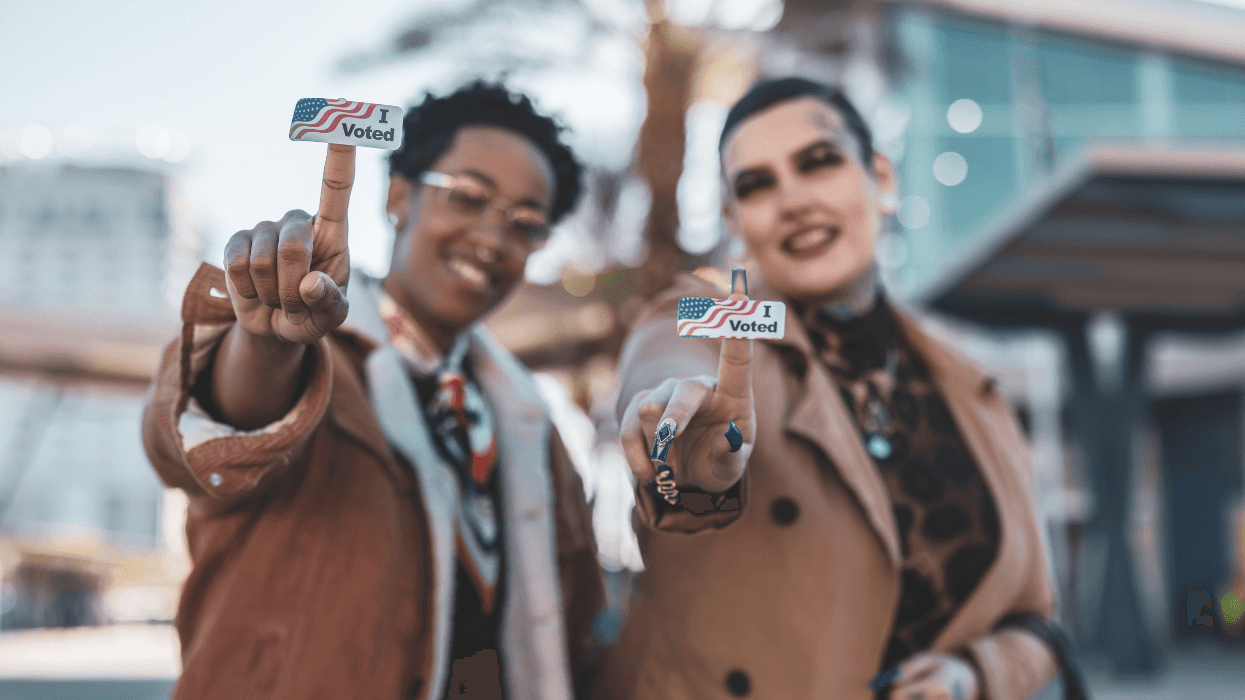
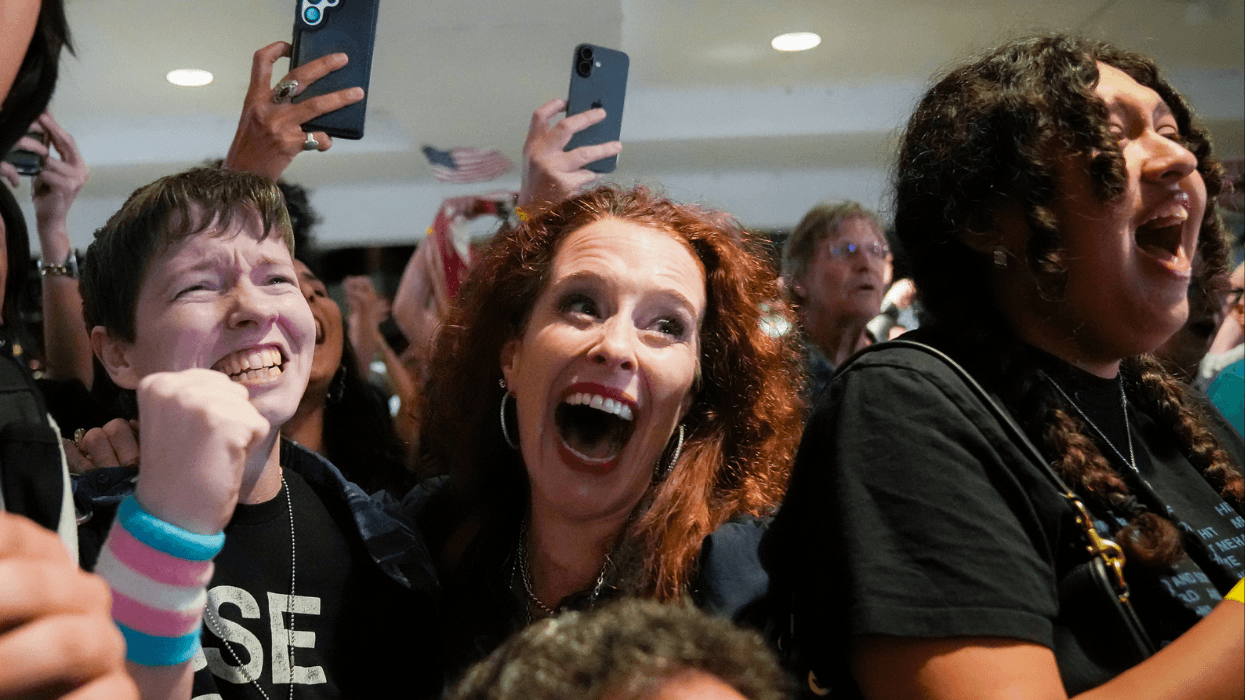
Democrats had a big night on November 3. They flipped Senate seats that few pundits thought they could win, elected a historic class of LGBTQ+ leaders, and are poised to control both chambers of Congress. Jaelynn Scott of Washington state will be the first Black trans woman to serve in a state legislature, and Allison Montgomery is set to become Alabama’s first transgender state lawmaker. “I’m not here for myself,” Scott said after her win.
Those gains in representation are worth celebrating. But two decades of organizing, advocacy and work to change the culture have taught me that celebration without a reckoning is how winning coalitions lose the next fight. Winning is the start of the work.
I know what it means to be cast as a wedge. I spent years organizing Asian Americans, a community often held up as a “model minority” and pitted against Black Americans. That work meant confronting anti-Blackness in Filipino and Asian American communities and building solidarity with Black communities. It meant bringing a delegation of artists to Ferguson. It also meant following the lead of Marissa Miller, a Black trans woman, and supporting partnerships for the first National Trans Visibility March. The lesson has stayed with me. Solidarity means following the lead of the people most affected.
On the same ballots that delivered this wave, voters in four states approved five measures targeting transgender people. Arizona and Nebraska passed sports restrictions by wide margins. Arizona’s measure also restricts access to school restrooms. Washington, where Democrats hold most state and federal offices, approved Measure 638, a ban on trans girls competing in girls’ sports. “Look at 638 and know that we’re going to fight, and we’re going to fight hard, to undo it,” Scott said. Colorado approved both a sports ban and a ban on gender-affirming surgery for minors. Only Missouri’s Amendment 3, which paired an abortion rollback with a ban on care for trans youth, went down.
Advocates have called this a paradox. Most candidates who ran anti-trans attack ads lost. Republicans spent an estimated $183 million on anti-trans TV ads through late October, even though only about 1 in 10 voters named transgender issues among their top concerns. About 8 in 10 named the economy or the cost of living. Voters rejected the messengers, but in too many places they still accepted the message and the policies tied to it.
To the Democrats returning to office, those taking office for the first time, those competing to lead them, and every elected leader who says they believe in freedom, closing that gap is your responsibility. It’s part of the mandate voters gave you.
The temptation will be to read these results as a warning and quietly back away. Some strategists will call trans rights a distraction or a bargaining chip to trade for other priorities. That would be a mistake, morally and strategically. As Shelby Chestnut of the Transgender Law Center wrote in The Advocate two days after the election, “Trans people are not pieces in a game to be picked up or thrown aside when it’s politically convenient.” A wedge only works when the people it targets are left to fend for themselves. Every time party leaders treat a vulnerable group as expendable, they show opponents exactly where to aim in the next election.
Anti-trans politics was never only about trans people. As Montgomery put it, “We the people know corporate interests use these issues to pit us against one another while they pick our pockets.” The question is whether fear aimed at kids can split communities that otherwise want many of the same things — lower prices for gas and groceries, a doctor they can see when they’re sick, and a democracy where everyone has a say, regardless of identity or income. The people being targeted already live at the sharpest edge of the failures that agenda is meant to fix.
Consider who carries the heaviest weight. From Nov. 1, 2025, through Oct. 31, 2026, the Trans Remembrance Project documented the killings of 28 trans people in the United States. Fourteen were Black trans women. Other harms draw less attention. In the 2022 U.S. Transgender Survey, the unemployment rate among respondents was 18 percent, and 34 percent lived in poverty. Nearly half of those who saw a health care provider reported being mistreated because of who they are. In the previous survey, the unemployment rate among Black trans respondents was 20 percent, double the rate for Black Americans overall.
These are questions of health care, housing, jobs, and public safety, the very issues Democrats were elected to address. When systems fail, they fail Black trans women hardest. Policies designed with Black trans women at the center can benefit everyone else, too.
So here is what a blue wave should look like.
First, say plainly that trans people are part of the mandate. Don’t trade away their rights in negotiations, and don’t go quiet when the next attack ad runs. Silence is a position, and allies and opponents alike will read it as one.
Second, put trans people in the room. Hire trans staff in congressional offices, statehouses, and agencies. When you sit down to make policy on health care, the economy, or democracy, give trans people a seat at that table, too. Their expertise extends well beyond listening sessions on “LGBTQ issues.” Our joy fuels our power. When trans people are free, they build community, shift culture and bring the courage institutions need to change.
Third, fund the people already doing the work. Organizations led by and centered on Black trans women have kept people housed, helped them stay safe and given them a place to organize and be heard, even in years when few elected officials would say their names. They include the Marsha P. Johnson Institute, the National Trans Visibility March, Atlanta’s Solutions Not Punishment Collaborative and My Sistah’s House in Memphis, Tennessee. In Washington state, Scott leads Lavender Rights Project. Party committees, foundations and allied donors should fund these groups as essential community institutions.
Finally, close the familiarity gap. According to GLAAD and GROUND Media’s “Here We Are” campaign, 71 percent of Americans believe they’ve never met a trans person. That leaves room for myths and for the misinformation that flooded this election cycle. Elected leaders can help by giving trans constituents opportunities to tell their own stories.
Those of us who are lesbian, gay, bisexual, cisgender, or non-Black people of color have a responsibility, too. We can follow the lead of Black trans women and hold our elected leaders and one another accountable. The wave happened because people showed up. The work continues only if we keep showing up.
On November 20, Transgender Day of Remembrance, we honor those we’ve lost and reckon with how far we’ve come and how far we have to go. This year, the people newly in power and those who elected them can carry that remembrance into the decisions they make — whose rights they defend, whose voices they seek out and whose work they fund.
A wave lifts everyone only if no one is left on the shore.
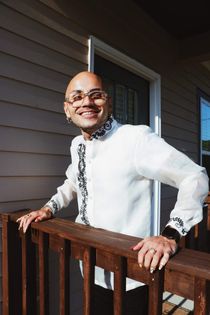
Gregory Allan Datu Cendana is president and co-founder of Can’t Stop! Won’t Stop! Consulting. He was the youngest person and the first openly gay person to serve as executive director of the Asian Pacific American Labor Alliance, AFL-CIO.
Opinion is dedicated to featuring a wide range of inspiring personal stories and impactful opinions from the LGBTQ+ community and its allies. Visit Advocate.com/submit to learn more about submission guidelines. We welcome your thoughts and feedback on any of our stories. Email us at voices@equalpride.com. Views expressed in Voices stories are those of the guest writers, columnists, and editors, and do not directly represent the views of The Advocate or our parent company, equalpride.